Practical, flavor-industry style optimized Maillard / thermal reaction systems for coffee, cocoa, chicken, pork, bakery, beef flavor, chocolate, cabbage, popcorn, maple flavor and honey
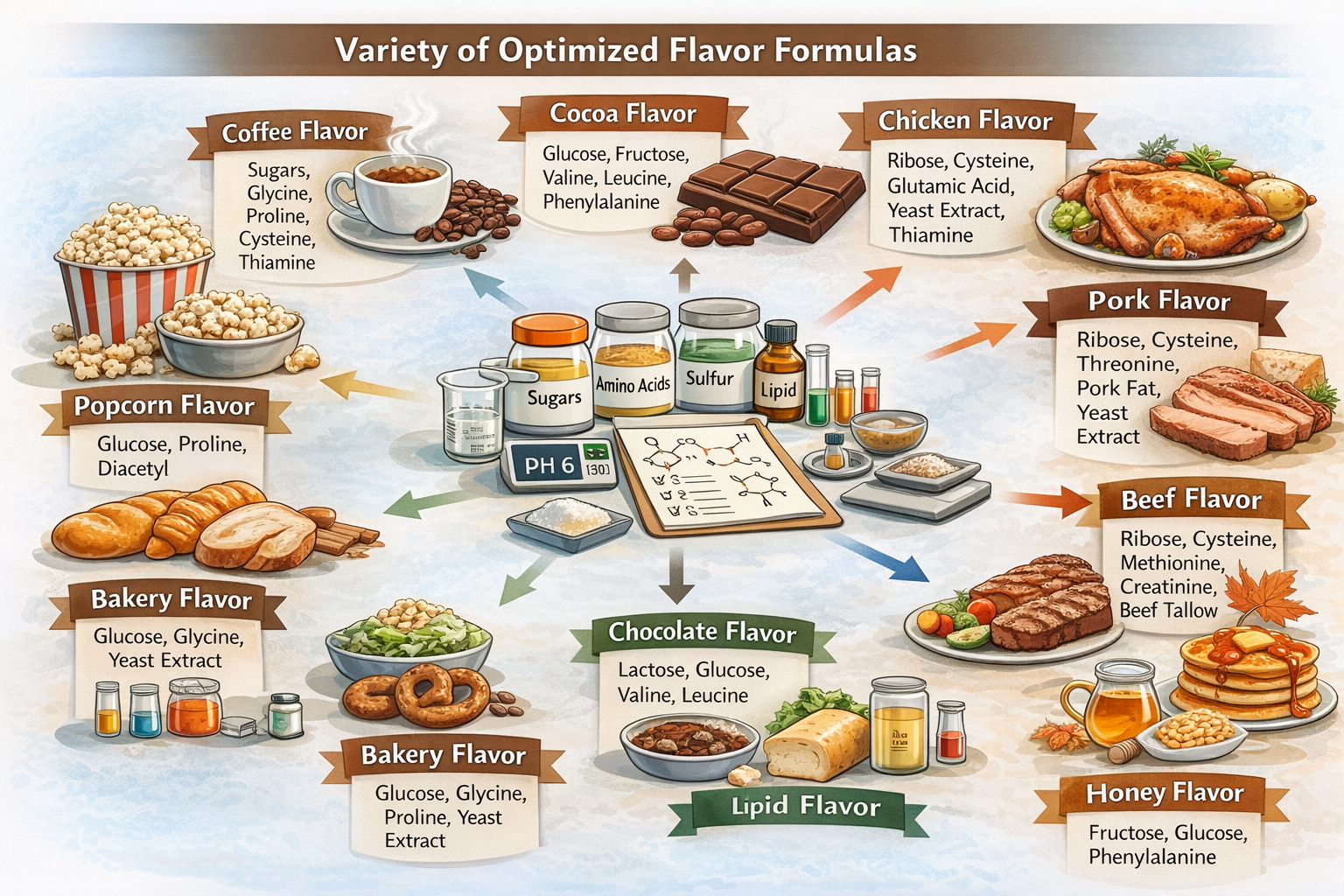
Below are optimized reaction systems for coffee flavor, cocoa flavor, chicken flavor, pork flavor, bakery flavor, beef flavor, chocolate flavor, cabbage flavor, popcorn flavor, maple flavor, honey flavor, provided by AI. Note that the reaction systems are incomplete in terms of the ingredients that are needed for a specific flavor.
These are practical, flavor-industry style optimized Maillard / thermal reaction systems for each target profile.
These are designed for controlled reaction flavor generation (paste reactor or pressure vessel), not for uncontrolled kitchen cooking.
The AI agency structure each system as:
• Key precursors
• Functional enhancers
• Recommended ratios
• Reaction conditions
• Expected key impact molecules
• Process control notes
1️⃣ COFFEE Flavor Reaction System
Objective
Roasty, coffee, slightly sulfurous, cocoa-like top notes.
Core Precursors
- D-Glucose
- L-Cysteine
- L-Proline
- Glycine
- Thiamine (trace)
Optimized Formula (% dry basis)
- Glucose – 40%
- Glycine – 20%
- Proline – 10%
- Cysteine – 8%
- Yeast extract – 15%
- Thiamine – 0.5%
- Water – 200% (processing)
Conditions
- pH: 6.5–7.2
- Temp: 125–140°C
- Time: 45–90 min
- Slightly reducing atmosphere
Key Molecules
- 2-Furfurylthiol (coffee impact)
- 2-Methylpyrazine
- 2,3-Dimethylpyrazine
- 2-Acetylpyrrole
- Methional
2️⃣ COCOA Flavor Reaction System
Objective
Chocolate, nutty, brown, slightly fruity
Precursors
- Glucose
- Fructose
- Valine
- Leucine
- Phenylalanine
Formula
- Glucose – 35%
- Fructose – 15%
- Valine – 15%
- Leucine – 15%
- Phenylalanine – 10%
- Cocoa powder – 10%
Conditions
- pH: 6.0
- Temp: 120–135°C
- Time: 60 min
Key Molecules
- 2,3,5-Trimethylpyrazine
- 2-Phenylacetaldehyde
- 3-Methylbutanal
- 2-Acetylpyrazine
3️⃣ CHICKEN Flavor System
Objective
Meaty, brothy, roasted poultry
Precursors
- Ribose
- Cysteine
- Thiamine
- Glutamic acid
Formula
- Ribose – 30%
- Cysteine – 10%
- Hydrolyzed vegetable protein – 40%
- Glutamic acid – 15%
- Thiamine – 0.5%
Conditions
- pH: 6.5
- Temp: 110–125°C
- Time: 45 min
Key Molecules
- 2-Methyl-3-furanthiol
- Bis(2-methyl-3-furyl) disulfide
- Methional
- 2-Acetylthiazole
4️⃣ PORK Flavor System
Objective
Fatty, savory, slightly sweet roasted meat
Additions
- Ribose
- Cysteine
- Threonine
- Added pork fat
Formula
- Ribose – 25%
- Cysteine – 8%
- Threonine – 12%
- Pork fat – 20%
- Yeast extract – 30%
Conditions
- pH: 6.8
- Temp: 125–140°C
- Slight oxidation allowed
Key Molecules
- 2-Acetylthiazole
- 3-Methylbutanal
- Alkylpyrazines
- Lipid-derived aldehydes
5️⃣ BAKERY Flavor System
Objective
Fresh bread crust, toasted, nutty
Precursors
- Glucose
- Proline
- Glycine
- Yeast extract
Formula
- Glucose – 45%
- Glycine – 20%
- Proline – 15%
- Yeast extract – 20%
Conditions
- pH: 7.0
- Temp: 135–150°C
- Dry heating preferred
Key Molecules
- 2-Acetyl-1-pyrroline
- 2-Acetylpyrazine
- 2,3-Dimethylpyrazine
6️⃣ BEEF Flavor System
Objective
Deep roasted, steak, umami
Precursors
- Ribose
- Cysteine
- Methionine
- Creatinine
Formula
- Ribose – 30%
- Cysteine – 8%
- Methionine – 8%
- Creatinine – 5%
- Beef tallow – 20%
- HVP – 29%
Conditions
- pH: 6.5
- Temp: 125–145°C
- 60–90 min
Key Molecules
- 2-Methyl-3-furanthiol
- 2-Acetylthiazole
- Strecker aldehydes
- Alkylpyrazines
7️⃣ CHOCOLATE Flavor System
Objective
Milk chocolate, creamy cocoa
Precursors
- Lactose
- Glucose
- Valine
- Leucine
- Milk solids
Conditions
- pH: 6.3
- Temp: 120–135°C
Key Molecules
- 2,3,5-Trimethylpyrazine
- 2-Phenylacetaldehyde
- Maltol
- Isomaltol
8️⃣ CABBAGE Flavor System
Objective
Sulfurous, green, cooked brassica
Precursors
- Cysteine
- Methionine
- Glucose
Conditions
- pH: 6
- Temp: 105–115°C
- Short reaction (30–45 min)
Key Molecules
- Dimethyl trisulfide
- Methanethiol
- 3-Methylthiopropanal
9️⃣ POPCORN Flavor System
Objective
Buttery, toasted corn
Precursors
- Glucose
- Proline
- Diacetyl (added post-reaction)
Conditions
- pH: 7.2
- Temp: 140–150°C
- Dry reaction preferred
Key Molecules
- 2-Acetyl-1-pyrroline
- 2-Acetylpyrazine
- Diacetyl
🔟 MAPLE Flavor System
Objective
Maple syrup, caramelized sugar
Precursors
- Sucrose
- Fructose
- Threonine
Conditions
- pH: 5.5
- Temp: 115–130°C
Key Molecules
- Sotolon
- Maltol
- Cyclotene
1️⃣1️⃣ HONEY Flavor System
Objective
Floral caramel sweetness
Precursors
- Fructose
- Glucose
- Phenylalanine
Conditions
- pH: 4.5–5
- Temp: 100–120°C
Key Molecules
- Phenylacetaldehyde
- Hydroxymethylfurfural
- Norisoprenoids
🔬 Industrial Optimization Tips
- Ribose dramatically increases meaty impact vs glucose.
- Cysteine controls sulfur potency — >10% gives harsh burnt notes.
- Thiamine is powerful for meat — keep <1%.
- pH above 7 increases pyrazines.
- Slight oxygen improves roasted meat authenticity.
- Vacuum concentration post-reaction enhances intensity.
###