An Overview of Controlling Maillard Pathways to Generate Flavors (ACS Symposium Series 1042)
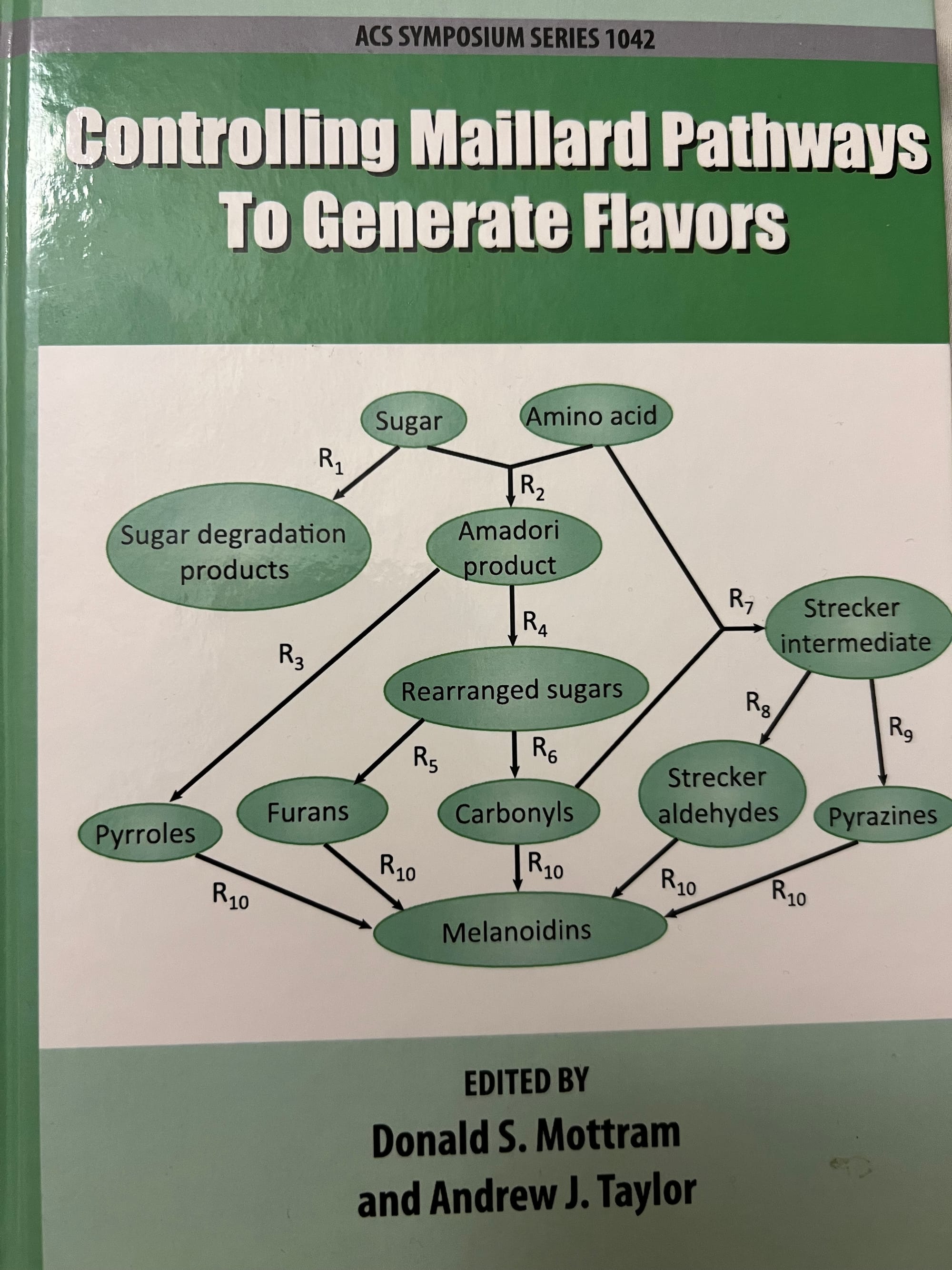
An Overview of Controlling Maillard Pathways to Generate Flavors (ACS Symposium Series 1042)
The Maillard reaction, a complex network of chemical reactions between amino acids and reducing sugars, is fundamental to the development of color, aroma, and taste in cooked foods . For decades, food scientists have meticulously mapped its intricate pathways, identifying hundreds of potential flavor compounds. However, the central challenge has long been translating this fundamental knowledge into practical strategies for consistently and predictably generating specific flavors in real food systems. The ACS Symposium Series volume 1042, Controlling Maillard Pathways to Generate Flavors, edited by two leading figures in the field, Donald S. Mottram and Andrew J. Taylor, directly confronts this challenge . This 2010 collection, published by the American Chemical Society, brings together contributions from a distinguished group of international academics and industry professionals to provide a comprehensive overview of the principles and recent advancements in steering the Maillard reaction toward desired flavor profiles .
The Central Paradigm: From Observation to Control
The book's foundational premise is the critical transition from passive observation to active control. Early Maillard research necessarily focused on deciphering the reaction's fundamental chemistry, often using simplified model systems—such as a single amino acid heated with a single sugar. While these studies were invaluable for mapping reaction pathways and identifying the precursors of characteristic aromas (e.g., the role of proline in bread flavor), they fell short of explaining the complexity of real foods. This volume directly addresses this "application gap" by exploring the multifaceted factors that govern the reaction in complex, real-world matrices.
Structure and Thematic Content
The book is organized into a series of research chapters, each presented by experts in their respective areas, effectively building a multi-layered understanding of Maillard control. A full table of contents is available, detailing the specific contributions . The topics can be grouped into several key themes:
1. Foundational Principles and Predictive Modeling
The opening chapters lay the groundwork by examining the core kinetic and chemical principles that dictate the reaction's course. A SWOT analysis (Strengths, Weaknesses, Opportunities, Threats) of predictive modeling, presented by M.A.J.S. van Boekel, provides a strategic overview of the potential and limitations of using mathematical models to forecast flavor formation . This theme is extended in subsequent chapters that delve into kinetic modeling, such as the chapter on volatile compound formation in heated beef extracts containing added ribose. These contributions underscore the move toward quantitative, predictive science as a tool for control, a field that continues to evolve with studies on amino acid regulation and predictive modeling of compounds like PhIP and pyrazines .
2. The Role of Key Intermediates and Reaction Partners
A significant portion of the book is dedicated to the chemical "levers" that can be pulled to influence the final flavor outcome. A major focus is on dicarbonyl intermediates, highly reactive compounds formed during the early stages of the Maillard reaction. Chapters by Chi-Tang Ho and by M.A. Glomb and colleagues explore how these intermediates act as critical control points, directing the reaction down specific pathways . By understanding how different sugars (like glucose vs. maltose) degrade into various dicarbonyls, scientists can begin to predict and manipulate the downstream flavor compounds. The book also expands the scope beyond just amino acids and sugars, with a chapter on the interaction of hydroxycinnamic acids—a type of phenolic compound found in plants—with the Maillard reaction, highlighting the interplay between different classes of food components.
3. From Model Systems to Real Food Applications
Bridging the gap between simple models and complex foods is a central theme. Several chapters demonstrate how researchers apply fundamental knowledge to real-world scenarios. For instance, the flavor development in meat-based pet food containing added glucose and glycine is investigated, showing how precursor manipulation can enhance palatability in a commercial product. Similarly, the generation of the key aroma compound 4-hydroxy-2,5-dimethyl-3(2H)-furanone (HDMF) during extrusion cooking is examined through a multidisciplinary lens, considering the impact of the unique thermal and mechanical conditions of this industrial process. A chapter on meat flavor generation explicitly moves toward "complex Maillard model systems" that better mimic the multi-component nature of real food.
4. Impact of Physical Parameters and Food Matrices
The book robustly addresses the often-overlooked influence of a food's physical properties. A chapter dedicated to the effect of physical properties—such as viscosity, water activity, and matrix structure—on the Maillard reaction emphasizes that the reaction does not occur in a chemical vacuum . The physical environment dictates reactant mobility and reaction kinetics, a factor that is crucial for translating results from liquid model systems to solid or semi-solid foods. This is complemented by discussions on the control of color formation by ionic species and the overall strategies for managing the reaction during cooking. Research published subsequently, such as studies on the impact of starch gelatinization on Maillard kinetics in potato systems, further validates the importance of the food matrix highlighted in this volume . A particularly pertinent chapter examines the effects of storage on both aroma formation and the potentially toxic compound acrylamide in heated potatoes, linking fundamental chemistry with food safety and quality concerns.
5. Creative Flavorism and New Avenues
Beyond the strictly analytical, the book also touches upon the art and serendipity of flavor creation. A chapter titled "Science and Serendipity: The Maillard Reaction and the Creative Flavorist" acknowledges the role of intuition and experience in harnessing the reaction's complexity for innovative flavor design. Furthermore, the exploration of novel compounds, such as methionine-containing cyclic dipeptides, highlights the ongoing discovery of new flavor molecules and their sensory contributions, expanding the palette of compounds available to flavorists.
Significance and Conclusion
Controlling Maillard Pathways to Generate Flavors stands as a significant contribution to the food science literature. Its primary strength lies in its unified focus on the practical application of Maillard chemistry. By bringing together contributors who study the reaction from kinetic, chemical, physical, and sensory perspectives, the editors have created a holistic resource. The book successfully demonstrates that controlling the Maillard reaction is not a matter of a single switch but rather a sophisticated exercise in managing a complex system through a combination of precursor selection, environmental manipulation (pH, temperature, water content), and an understanding of the food matrix.
For researchers, food technologists, and flavorists, this volume offers both a solid review of the state of the art as of 2010 and a practical guide for developing strategies to enhance flavor quality in food products. It underscores the idea that the Maillard reaction, while inherently complex, is not an uncontrollable mystery but a powerful and tunable tool for creating the rich sensory experiences that define so many of our favorite foods. d