Jammy flavor, Jammy note, all things jammy flavorists need to know Manipulation of jammy note is a requirement by the Society of Flavor Chemists and questions regarding jamminess may be raised when candidates take the SFC qualification test/interview. This page shows you all things you possibly need to know when formulating a flavor with jammy note. By definition, the “jammy”
Members only Cardamom as a Natural Flavoring: A comprehensive Technical Guide Here is a comprehensive technical guide for Cardamom, structured in the same format as the previous guides. All key information for flavorists has been incorporated. Cardamom as a Natural Flavoring: A Comprehensive Technical Guide The Society of Flavor Chemists requires certified flavorists to be able to identify the plant part
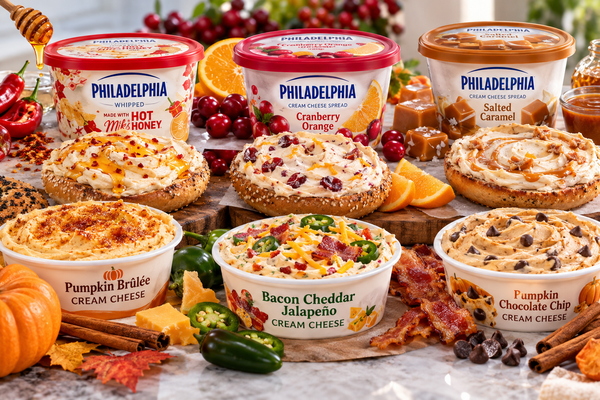
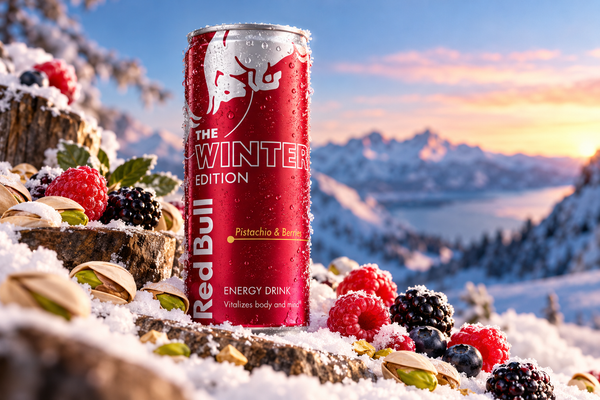
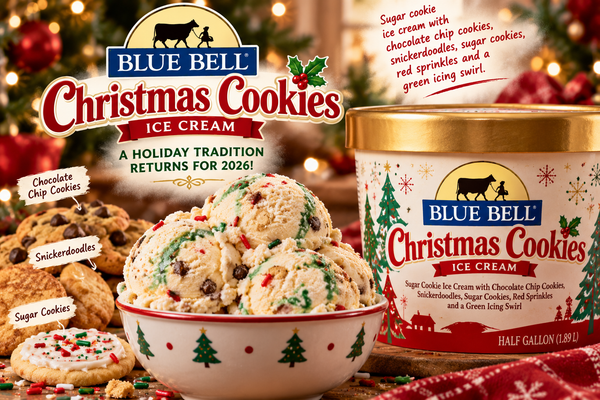
Global Food and Flavor Industry Product News Digest: March 14-27, 2026 North America Here is a summary of product news in the North American food and flavor industry from March 14 through March 27, 2026. Häagen-Dazs Shops (March 26, 2026), Häagen-Dazs Shops partnered with Miami-based Vicky Bakery to launch the limited-time Pastelito Dazzler dessert in South Florida, available from March 25
Global Food and Flavor Industry Law & Regulation Digest: March 14–27, 2026 Here is a summary of law and regulation news in the North American food and flavor industry from March 14 through March 27, 2026. USDA Product of USA Labeling Standard (March 25-26, 2026), the U.S. Department of Agriculture launched a national public awareness campaign to promote the new voluntary
Members only Full Patent Document: One Strawberry Flavor - CN 102321502 B Original patent document in Chinese strawberry patent in chinese 2013strawberry patent in chinese 2013.pdf465 KBdownload-circle This is a highly informative patent document detailing the creation of a strawberry flavor. It’s an excellent read that will benefit flavorists at all levels—from junior to senior. To access the English
128 Important Synthetic Flavor Compounds Every Flavorist Needs to Know and Work with This is a quick-reference list of the flavor compounds John Wright recommends in Flavor Creation as essential for every flavorist to know and work with. Details for each compound are provided in multiple parts—Parts 1 through 13. Here are the complete series: Important Synthetic Flavor Compounds - Complete Series
Can Your Reaction Flavor Be Made in a Large Reactor? Editor's note While every reactor has a finite cooling rate, that rate depends not only on the vessel’s size and configuration but also on the reaction composition itself. If a formulation becomes too viscous—due to gums or low water content—it may cool too slowly to
Caraway: What Flavorists Need to Know, According to the SFC Certified flavorists are required by the Society of Flavor Chemists to be able to identify the part(s) of the plant used, derivatives, organoleptic characteristics, and the major chemical component(s) which characterizes the aroma/flavor of the 80 natural flavorings listed on its Syllabus for the SFC qualification test/
Aldol Condensation in Flavor Chemistry: Mechanisms, Conditions, and Impact on Shelf Life Aldol condensation is one of a handful reactions the Society of Flavor Chemists requires flavorists to understand and consider when formulating flavors. 1) Chemical Groups Involved and Conditions Required Key Functional Groups Aldol condensation is a carbon–carbon bond-forming reaction between carbonyl compounds. The essential groups include: * Aldehydes (–CH=O)
Spectrophotometer vs. Colorimeter: A Complete Guide for the Flavor Industry Introduction In the flavor industry, visual perception shapes taste expectations. Before a consumer ever tastes a product, they evaluate its color. This makes precise color measurement essential for quality control, shelf-life testing, and formulation development. Two instruments dominate this field: the colorimeter and the spectrophotometer. While both measure light interaction
Registration Opens for 2026 IFT Food Expo in Chicago CHICAGO – Organizers have announced that registration is now open for a leading annual gathering focused on food science, research, and technology, scheduled to take place July 12–15, 2026, at McCormick Place in Chicago. The event brings together professionals from industry, academia, and government to explore advancements in areas such
Character Impact Flavor Compounds for Common Flavors/Foods For many flavors—though not all—there is a compound that serves as the characteristic component. Menthol, for example, is the characterizing compound of mint flavor. Below is a list of flavors along with their corresponding characterizing compound(s), including descriptions of their odor or taste and their perception thresholds
Industry Meeting Announcement: Midwest Flavor Chemists Gathering Event Date: April 16, 2026 Location: Oasis Conference Center, 902 Loveland-Miamiville Road, Loveland, OH 45140 Event Hours: 11:00 AM – 6:00 PM EST This is a professional gathering for flavor industry specialists, featuring presentations, vendor showcases, and networking opportunities. Event Schedule Time Activity 8:00 – 10:00 AM Organizing
A Comprehensive Guide to Karl Fischer Titration and Moisture Analyzers Here is a comprehensive, detailed guide to Karl Fischer Titration and Moisture Analyzers. The Society of Flavor Chemists requires flavorists to know the basics about this analytical method/instrument. In the realm of analytical chemistry and industrial quality control, accurate moisture analysis is not merely a specification—it is a
Strecker Degradation: What Flavorists Need to Know, According to the SFC Strecker degradation is one of the most important secondary pathways within Maillard chemistry, especially for flavor generation and long-term flavor evolution. The Society of Flavor Chemists requires all certified flavorists to understand the basics about this reaction and its applications or implications in flavors. The Strecker degradation is a chemical
Important Synthetic Flavor Compounds - Part 13 (2-methoxy 3-isobutyl pyrazine, 2-isopropyl 4-methyl thiazole, 2-isobutyl thiazole, pyridine 2-acetyl pyridine, 2,4,5-trimethyl oxazole, trithioacetone) Part 13 (2-methoxy 3-isobutyl pyrazine 2-isopropyl 4-methyl thiazole 2-isobutyl thiazole pyridine 2-acetyl pyridine 2,4,5-trimethyl oxazole trithioacetone.) These are among the 128 synthetic flavor compounds that John Wright, in his book Flavor Creation, suggests every flavorist should know and work with. Part 13 is the last part of the
Important Synthetic Flavor Compounds - Part 12 (difurfuryl sulfide, maltol, ethyl maltol, indole, 2,3-dimethyl pyrazine, trimethyl pyrazine, tetramethyl pyrazine, 2-acetyl pyrazine, 2-methoxy-3-methyl pyrazine, 2-methoxy 3-ethyl pyrazine) Part 12 (difurfuryl sulfide maltol ethyl maltol indole 2,3-dimethyl pyrazine trimethyl pyrazine tetramethyl pyrazine 2-acetyl pyrazine 2-methoxy-3-methyl pyrazine 2-methoxy 3-ethyl pyrazine) These are among the 128 synthetic flavor compounds that John Wright, in his book Flavor Creation, suggests every flavorist should know and work with. Here's the
A Detailed Review of Henry B. Heath's Book "Flavor Technology: Profiles, Products, Applications" For professionals in the food and flavor industry, certain texts stand as milestones that define a field. Henry B. Heath's Flavor Technology: Profiles, Products, Applications is one such seminal work. Published in 1978 by AVI Publishing Company , this book has served as a critical reference for flavorists, food
Patent Summary: Method for Judgment of Cheddar Grade Based on Identification Characteristic Flavor Composition - US Patent 11,293,906 B2 Summary Here's a detailed summary of US Patent 11,293,906 B2, titled "Method for Judgment of Cheddar Grade Based on Identification Characteristic Flavor Composition." What the Patent Is About This patent presents a scientific, instrument-based method for determining the quality grade of cheddar cheese by
Buchu as a Natural Flavoring: A Comprehensive Guide The Society of Flavor Chemists requires certified flavorists to be able to identify the plant part used, derivatives, organoleptic characteristics, and major chemical component(s) characterizing the aroma and flavor of the 80 natural flavorings listed on its syllabus for the qualification test and interview. Buchu is included among these
Featured Flavor Formulas for Sale: Unlock a Legend's Flavor Vault - Launch Your Next Sensational Products with 186 Proven Flavor Formulas There are 186 flavor formulas for sale now at flavorist.com. This offer may not be always available and could be withdrawn without prior notice.
Weekly Law and Regulation News Digest for Global Food and Flavor Industry: March 15-16, 2026 Major Law & Regulation News for the Food & Flavor Industry in North America: March 15–20, 2026 Between March 15 and March 20, 2026, the North American food regulatory landscape saw significant developments across federal and state levels—from a groundbreaking Texas food additive warning label law to USDA
Members only How to formulate a taro flavor using the note method Based on the document Preparation and simulation of a taro flavor by Zhu et al., here is a detailed summary of the methodology and insights, followed by the formula. 1) The Note Method The "note method" is a foundational approach in flavor creation, treating a flavor as a
Members only The Chemistry of Schiff Base Formation: Impact on Flavor, Aging, and Shelf Life Schiff base formation is one of about 20 chemical reactions/physical processes that the Society of Flavor Chemists requires certified flavorists to know and consider when formulating flavors. Schiff base formation is a fundamental chemical reaction with profound implications in food science, particularly in the world of flavors. Understanding this
A Comprehensive Guide to Flash Point Testing: Theory, Applications in Flavor, and Method Evaluation The Society of Flavor Chemists requires certified flavorists to understand and operate more than a dozen instruments used for testing food and flavor products. These instruments are listed on the syllabus for the Society's qualification exam. The flash point tester is one of these required instruments. Introduction In