Anise: What the SFC wants every flavorist to know
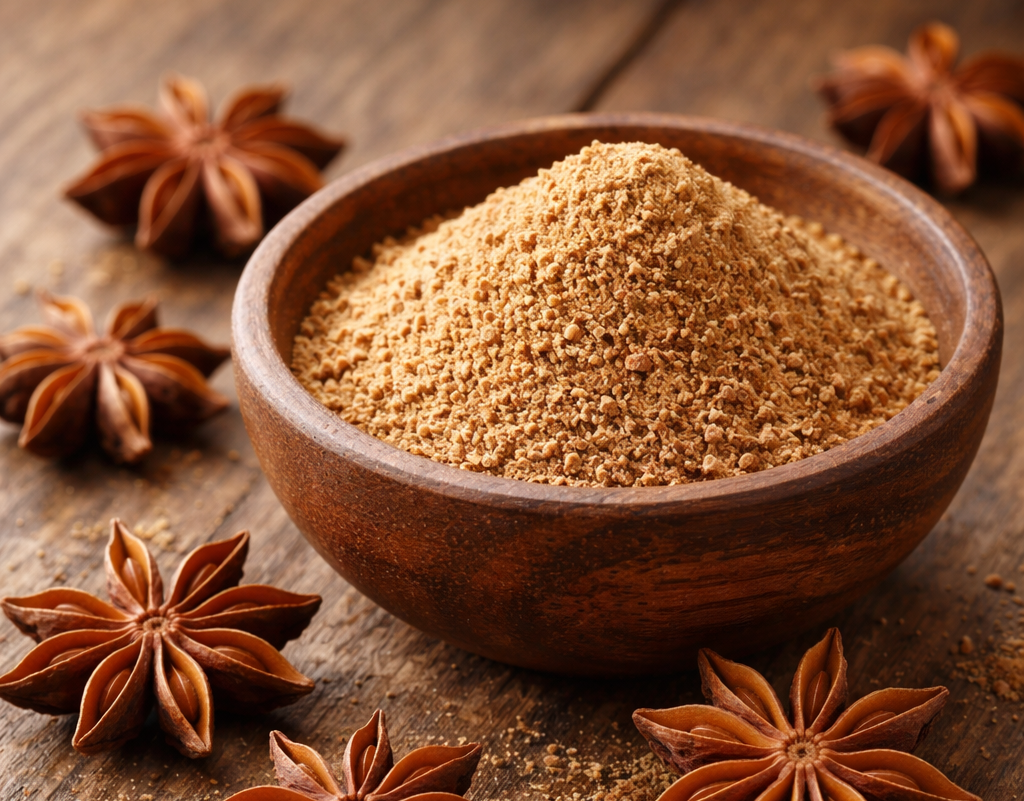
Identify the part(s) of the plant used, derivatives, organoleptic characteristics, and the major chemical component(s) which characterizes the aroma/flavor of anise
1. Plant Used
The flavor anise primarily comes from the plant:
- Pimpinella anisum (commonly called anise or aniseed)
Part(s) used:
- Seeds (technically fruits) — the dried schizocarps of the plant
- Occasionally essential oil extracted from the seeds
These seeds contain the aromatic compounds responsible for the characteristic licorice-like aroma.
2. Derivatives Used in Flavoring
Common commercial derivatives include:
- Anise seed
- Whole or ground
- Used in baked goods, confectionery, liqueurs, and spice blends
- Anise essential oil
- Steam-distilled from crushed seeds
- Highly concentrated flavoring ingredient
- Anise oleoresin
- Solvent-extracted resin containing volatile and non-volatile components
- Used in flavor manufacturing
- Anise extract
- Alcohol extract of anise seeds
- Used in bakery and confectionery products
3. Organoleptic Characteristics
Typical sensory properties:
| Attribute | Description |
|---|---|
| Aroma | Sweet, warm, licorice-like |
| Flavor | Sweet, slightly spicy, aromatic |
| Top notes | Sweet herbal |
| Middle notes | Licorice, fennel-like |
| Base notes | Warm spice, slightly balsamic |
| Mouthfeel | Cooling sweetness with mild pungency |
Anise flavor is often described as similar to licorice or fennel, though slightly sweeter and lighter.
4. Major Chemical Components Responsible for Aroma
The aroma of anise is dominated by phenylpropanoid compounds, especially:
| Compound | Typical Level | Aroma Description |
|---|---|---|
| trans-Anethole | 80–95% of oil | Sweet, licorice, anise |
| Estragole (methyl chavicol) | 1–6% | Sweet herbal |
| Anisaldehyde | <1% | Sweet, almond-like |
| Anisyl alcohol | trace | sweet balsamic |
| Limonene | trace | citrus |
| Linalool | trace | floral |
Key character impact compound:
- Anethole (especially trans-anethole)
- Responsible for the signature sweet licorice-like aroma of anise.
5. Related Plants with Similar Aroma
Other plants with similar flavor due to high anethole include:
- Illicium verum (star anise)
- Foeniculum vulgare (fennel)
These share similar aroma chemistry but have slightly different minor compounds that change the flavor nuance.
✅ Summary
| Category | Details |
|---|---|
| Plant | Pimpinella anisum |
| Part used | Seeds (fruits) |
| Derivatives | Essential oil, oleoresin, extract |
| Organoleptic profile | Sweet, licorice-like, warm, aromatic |
| Key aroma compound | trans-anethole |
A compound flavor formula designed to replicate the sensory profile of anise
Below is a typical flavorist-style compound flavor formula designed to reproduce the sensory profile of anise.
This is similar to what flavor houses use as a reconstruction base for candies, beverages, baked goods, and liqueurs.
The profile is dominated by trans-Anethole, the principal odor compound of anise.
Compound Anise Flavor Formula (Flavorist Reconstruction)
Target profile
Sweet, licorice-like, warm, slightly herbal, mildly spicy.
Solvent base
Propylene glycol or ethanol.
| Ingredient | CAS | Function | % in formula |
|---|---|---|---|
| trans-Anethole | 4180-23-8 | Main anise character | 90.00 |
| Estragole | 140-67-0 | Sweet herbal note | 3.00 |
| Anisaldehyde | 123-11-5 | Sweet almond-like nuance | 1.50 |
| Anisyl alcohol | 105-13-5 | Sweet balsamic body | 1.00 |
| Linalool | 78-70-6 | Floral lift | 0.80 |
| Limonene | 138-86-3 | Fresh top note | 0.70 |
| p-Anisyl acetate | 104-21-2 | Sweet fruity nuance | 0.50 |
| Eugenol | 97-53-0 | Warm spice background | 0.30 |
| Anisyl formate | 104-19-8 | Sweet floral nuance | 0.20 |
| γ-Terpinene | 99-85-4 | Herbal freshness | 0.20 |
| Total | 100.00 |
Flavor Structure (Flavor Pyramid)
Top Notes
- limonene
- γ-terpinene
- linalool
Heart Notes
- estragole
- anisaldehyde
- anisyl acetate
Base Notes
- trans-anethole
- anisyl alcohol
- eugenol
Usage Levels (Typical)
| Application | Usage |
|---|---|
| Candy / lozenges | 0.05–0.15% |
| Liqueurs | 0.02–0.08% |
| Baked goods | 0.03–0.10% |
| Chewing gum | 0.10–0.25% |
| Pharmaceutical syrups | 0.01–0.05% |
Sensory Profile Achieved
- Immediate sweet licorice aroma
- Warm herbal body
- Slight floral lift
- Long sweet spicy finish
A natural version of this formula that replicates the flavor profile of anise
Below is a natural-label anise flavor reconstruction designed to replicate the sensory profile of anise while using natural flavor sources or naturally derived isolates.
The profile is still dominated by trans-Anethole, naturally obtained from Illicium verum (star anise) or Foeniculum vulgare (fennel).
Natural Anise Flavor Formula (Flavorist Style)
Solvent
- Organic ethanol or vegetable glycerin
Natural flavor composition
| Ingredient (Natural Source) | Major Natural Compound | Function | % |
|---|---|---|---|
| Star anise essential oil | trans-Anethole | Primary anise body | 75.00 |
| Fennel sweet essential oil | trans-Anethole, fenchone | Sweet herbal complexity | 10.00 |
| Anise seed oleoresin from Pimpinella anisum | anethole, estragole | Authentic seed note | 5.00 |
| Natural estragole isolate | Estragole | Sweet herbal nuance | 3.00 |
| Natural anisaldehyde isolate | Anisaldehyde | Sweet almond-like nuance | 2.00 |
| Natural anisyl alcohol | Anisyl alcohol | Balsamic sweetness | 1.50 |
| Coriander seed oil | linalool | Floral top note | 1.00 |
| Sweet orange oil | limonene | Fresh top note | 1.00 |
| Clove bud extract | eugenol | Warm spice background | 0.50 |
| Natural p-anisyl acetate | p-Anisyl acetate | Fruity sweetness | 1.00 |
Total = 100%
Flavor Structure
Top Notes
- orange oil (fresh citrus lift)
- coriander oil (light floral)
Heart Notes
- estragole
- anisaldehyde
- anisyl acetate
Base Notes
- star anise oil (dominant)
- fennel oil
- anisyl alcohol
Organoleptic Profile
- Strong sweet licorice-like aroma
- Warm herbal middle notes
- Slight citrus freshness
- Long sweet spicy finish
This closely mimics the aroma of Pimpinella anisum seeds.
Typical Use Levels
| Application | Use Level |
|---|---|
| Confectionery | 0.05–0.15% |
| Liqueurs | 0.03–0.10% |
| Baked goods | 0.05–0.12% |
| Herbal teas | 0.02–0.08% |
| Pharmaceutical syrups | 0.01–0.05% |
Natural flavorings that are similar to anise in terms of flavor notes
Several natural flavorings have aroma profiles similar to anise because they contain phenylpropanoids, especially trans-Anethole, which gives the characteristic sweet, licorice-like aroma. However, each source has distinct secondary compounds that modify the flavor profile.
Below is a comparison used by flavorists.
Natural Flavorings Similar to Anise
| Natural Source | Key Compounds | Flavor Notes | Differences vs Anise | Typical Applications |
|---|---|---|---|---|
| Illicium verum (Star anise) | trans-Anethole, shikimic acid, limonene | Sweet, licorice, slightly spicy | Stronger and sharper than anise | Asian cuisine, liqueurs, confectionery |
| Foeniculum vulgare (Fennel) | trans-Anethole, fenchone | Sweet, herbal, licorice | More herbal and green than anise | Sausages, breads, herbal teas |
| Artemisia dracunculus (Tarragon) | Estragole, anethole | Sweet, herbal, slightly licorice | Much greener and more herbal | Sauces, pickles, savory foods |
| Glycyrrhiza glabra (Licorice root) | Glycyrrhizin, anethole traces | Sweet, licorice, woody | Much heavier and root-like | Candy, beverages, tobacco flavor |
| Ocimum basilicum (Sweet basil) | Estragole, linalool | Sweet herbal, mild anise | Fresher and more leafy | Italian foods, sauces |
| Myrrhis odorata (Sweet cicely) | Anethole | Sweet anise-like | Softer and sweeter | Herbal liqueurs, desserts |
| Pimpinella anisum (Anise seed) | trans-Anethole, estragole | Sweet licorice, warm spice | Reference profile | Bakery, candies, spirits |
Flavorist Comparison (Relative Profile)
| Ingredient | Sweetness | Licorice Strength | Herbal Notes | Spicy Notes |
|---|---|---|---|---|
| Star anise | Medium | Very high | Low | Medium |
| Fennel | Medium | High | Medium | Low |
| Tarragon | Low | Medium | High | Low |
| Licorice root | Very high | Medium | Low | Woody |
| Basil | Low | Low | High | Low |
| Sweet cicely | Medium | Medium | Low | Very low |
Key Aroma Compounds Shared with Anise
The similarity between these plants mainly comes from:
- trans-Anethole — sweet licorice character
- Estragole — sweet herbal anise nuance
- Anisaldehyde — sweet almond-like tone
Different ratios of these molecules create the variation in flavor profiles.
✅ Flavorist insight:
For natural flavor formulation, a blend of star anise oil + fennel oil + small amounts of tarragon or basil extracts can reproduce the complexity of anise seed oil quite closely.
Flavorist anise substitution matrix
Below is a flavorist-style anise substitution matrix used when true anise seed flavor is unavailable or when formulators want to adjust the profile. The reference flavor is the seed of Pimpinella anisum, whose character is mainly driven by trans-Anethole.
Flavorist Anise Substitution Matrix
| Substitute | Typical Replacement Level* | Flavor Similarity | Key Differences | Applications |
|---|---|---|---|---|
| Illicium verum (Star anise) | 0.7–1.0× | Very high | Slightly sharper and more spicy | Liqueurs, confectionery, syrups |
| Foeniculum vulgare (Fennel seed/oil) | 1.0–1.3× | High | More herbal, green, slightly camphoraceous | Sausage, bread, savory foods |
| Artemisia dracunculus (Tarragon) | 0.4–0.7× | Moderate | Strong herbal note due to Estragole | Sauces, pickles |
| Glycyrrhiza glabra (Licorice root) | 0.3–0.6× | Moderate | Much sweeter, root-like and woody | Candy, beverages |
| Ocimum basilicum (Sweet basil) | 0.5–0.8× | Low–moderate | Green, leafy, aromatic | Savory dishes |
| Myrrhis odorata (Sweet cicely) | 0.8–1.2× | High | Softer, sweeter, less spicy | Desserts, herbal teas |
*Replacement levels assume equal intensity target compared to anise seed flavor.
Flavorist Blend Substitutions (Closest Replication)
Blend A – Classic anise replacement
- 70% star anise oil
- 20% fennel oil
- 10% tarragon extract
Produces a balanced licorice-like profile very close to anise.
Blend B – Confectionery profile
- 80% star anise oil
- 10% fennel oil
- 10% licorice extract
Produces sweet candy-style anise flavor.
Blend C – Savory profile
- 60% fennel oil
- 25% star anise oil
- 15% tarragon extract
Produces herbal savory anise note for sausages and sauces.
Key Aroma Compounds Driving Similarity
The substitutes resemble anise mainly because they contain:
- trans-Anethole – dominant sweet licorice aroma
- Estragole – sweet herbal nuance
- Anisaldehyde – sweet almond-like tone
Different ratios of these compounds determine the final flavor profile.
✅ Flavorist tip:
For most food applications, star anise oil alone can replace anise at ~80–90% of the usage level, because its anethole concentration is usually higher. t
Applications of Anise
Anise refers mainly to the plant Pimpinella anisum, whose seeds and essential oil are widely used in food, beverage, fragrance, and pharmaceutical industries. Its characteristic aroma is dominated by the compound anethole, giving a sweet, licorice-like, warm spicy profile.
Below are the major applications of anise and its derivatives.
1. Food Flavoring Applications 🍬
A. Confectionery
Anise is widely used to impart a sweet licorice-like flavor in candies and sweets.
Typical products
- Hard candies
- Jelly beans
- Licorice candy
- Chewing gum
- Pastilles and lozenges
Function
- Provides sweet spicy top note
- Enhances perceived sweetness
- Masks bitterness in herbal candies
Key flavor molecule
- trans-anethole
B. Baked Goods
Anise seeds or oil are used in bakery products for a warm, sweet spice note.
Examples
- Italian biscotti
- German springerle cookies
- Anise breads
- Cakes and sweet pastries
Role in formulation
- Top to mid flavor note
- Works well with vanilla, cinnamon, and fennel
C. Savory Foods
Although mostly sweet, anise can contribute subtle complexity in savory dishes.
Applications
- Sausages
- Pickles
- Tomato sauces
- Asian braised meats
- Seafood marinades
Flavor function
- Adds mild sweetness
- Rounds fatty or rich flavors
2. Alcoholic Beverage Applications 🍸
Anise is extremely important in spirits and liqueurs.
Classic anise spirits
- Ouzo
- Pastis
- Sambuca
- Rakı
- Absinthe
Function
- Dominant flavoring agent
- Provides sweet herbal character
- Creates the “louche effect” (cloudiness when diluted with water due to anethole precipitation)
3. Flavor Industry Applications (Professional Flavor Formulation) 🧪
Anise and anethole are widely used by flavor chemists.
A. Flavor profiles where anise is used
| Flavor Type | Function |
|---|---|
| Licorice flavors | Primary character note |
| Root beer | Background sweetness |
| Cola flavors | Minor spicy nuance |
| Herbal liqueur flavors | Top aromatic note |
| Fruit flavors (berry, citrus) | Sweet enhancer |
| Tobacco flavors | Aromatic modifier |
B. Derivatives used in flavor chemistry
Important molecules derived from anise oil include:
- trans-Anethole
- Anisaldehyde
- Anisyl alcohol
- Anisyl acetate
- Anethole oxide
These compounds are used to build sweet, balsamic, and licorice flavor accords.
4. Pharmaceutical and Medicinal Applications 💊
Traditionally, anise has been used in herbal medicine.
Common uses
- Digestive aid
- Carminative (reduces gas)
- Cough remedies
- Expectorant syrups
- Breath fresheners
Anise oil is often included in cough syrups and throat lozenges because its sweet aroma helps mask medicinal bitterness.
5. Fragrance and Personal Care Applications 🌿
Anise oil is used in perfumery and toiletries.
Applications
- Toothpaste
- Mouthwash
- Soap
- Perfume accords
- Aromatherapy oils
Function
- Sweet spicy top note
- Provides a clean herbal freshness
6. Agricultural and Insect Applications 🐜
Anise oil also has biological activity.
Uses include:
- Natural insect attractant
- Fish bait flavoring
- Mild insect repellent
- Livestock feed flavoring
7. Tobacco Flavoring 🚬
Anise compounds are used in tobacco products to:
- Add sweetness
- Mask harsh smoke notes
- Provide aromatic top notes
✅ Summary
Anise is a highly versatile flavor material used in:
- confectionery
- bakery
- alcoholic beverages
- savory foods
- pharmaceuticals
- fragrances
- tobacco products
Its applications stem mainly from anethole, which produces the distinctive sweet licorice aroma that blends well with both sweet and herbal flavor systems.
###