Basil: What You Need to Know, According to the SFC
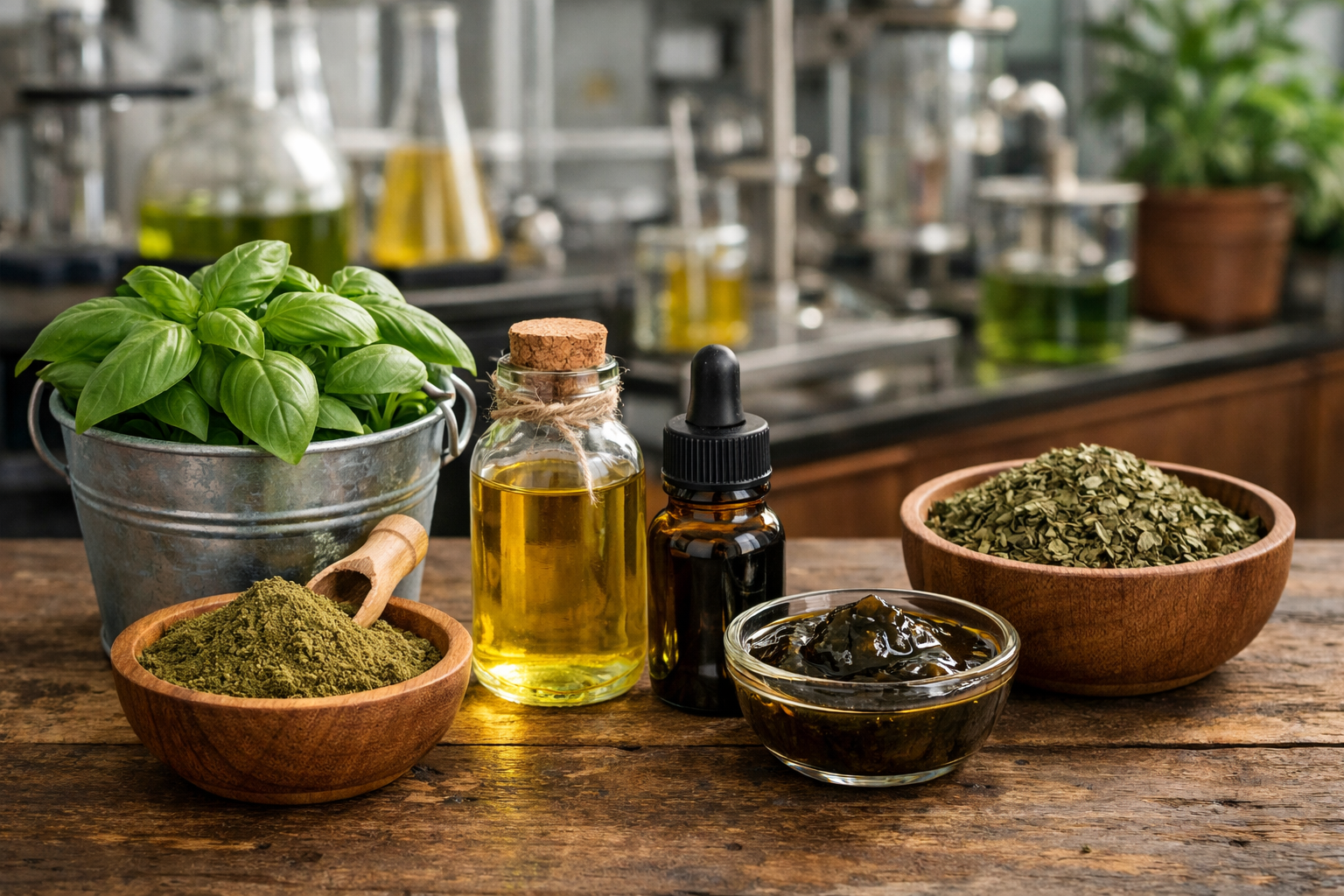
Certified flavorists are required by the Society of Flavor Chemists to be able to identify the part(s) of the plant used, derivatives, organoleptic characteristics, and the major chemical component(s) which characterizes the aroma/flavor of the 80 natural flavorings listed on its Syllabus for the FSC qualification test/interview. Basil is one of them.
Describe basil as a natural flavoring, and identify the part(s) of the plant used, derivatives, organoleptic characteristics, and the major chemical component(s) which characterizes the aroma/flavor of basil.
Basil is a widely used natural flavoring obtained from the aromatic herb Ocimum basilicum, a member of the Lamiaceae (mint family). It is valued in both culinary and flavor-formulation applications for its fresh, green, sweet-spicy, slightly anise-like aroma.
1. Botanical Source
- Plant: Ocimum basilicum
- Family: Lamiaceae
- Common names: Sweet basil, culinary basil
Basil is cultivated globally, particularly in Mediterranean regions, Southeast Asia, and parts of Africa. Different chemotypes exist (European basil, Thai basil, methyl chavicol basil, etc.), each with different dominant aroma molecules.
2. Parts of the Plant Used
The flavoring material is obtained primarily from the aerial portions of the plant.
Main parts used
- Fresh leaves
- Dried leaves
- Flowering tops
- Tender stems (sometimes included during distillation)
The leaves and flowering tops contain the highest concentration of essential oil glands.
3. Flavoring Derivatives
Several natural flavor ingredients can be produced from basil:
1. Basil Essential Oil
- Obtained by steam distillation of leaves and flowering tops
- Most common industrial flavor material
2. Basil Oleoresin
- Solvent extraction of dried basil
- Contains volatile oil plus non-volatile flavor components
3. Basil Extract
- Alcoholic or hydroalcoholic extract
- Often used in natural flavor formulations
4. Basil Distillate / Hydrosol
- Aqueous distillation product
- Used in delicate beverage or herbal flavor systems
5. Dried Basil Powder
- Ground dried leaves used in seasoning blends
4. Organoleptic Characteristics
Aroma
- Fresh
- Green
- Sweet herbal
- Mildly spicy
- Slight anise / licorice nuance
- Peppery and clove-like undertones
Flavor
- Herbaceous
- Sweet-spicy
- Slightly warm
- Anise-like top note
- Mild bitterness in the finish
Mouthfeel
- Light herbal warmth
- Slight pungency at higher concentrations
5. Major Chemical Components Responsible for Aroma
Basil oil composition varies by chemotype, but several molecules dominate the characteristic aroma.
Primary Aroma Impact Compounds
| Compound | Aroma Character | Typical Role |
|---|---|---|
| Linalool | Floral, sweet, citrus-herbal | Main aroma component in European basil |
| Methyl chavicol (Estragole) | Sweet anise, licorice | Dominant in some basil chemotypes |
| Eugenol | Clove-like, spicy | Warm spicy depth |
| 1,8-Cineole | Eucalyptus, fresh | Green freshness |
| Methyl eugenol | Sweet spicy | Minor modifier |
| β-Caryophyllene | Woody, peppery | Base note |
| Geraniol | Floral rose-like | Sweet nuance |
6. Typical Composition of Sweet Basil Oil (Approximate)
| Compound | Range (%) |
|---|---|
| Linalool | 40–55 |
| Methyl chavicol | 5–35 |
| Eugenol | 2–10 |
| 1,8-Cineole | 2–8 |
| β-Caryophyllene | 1–5 |
Composition varies with geography, cultivar, and harvest stage.
7. Flavor Applications
Basil natural flavorings are used in:
Savory foods
- Pasta sauces
- Tomato products
- Pizza seasonings
- Salad dressings
- Herb blends
- Pesto flavors
Snack foods
- Chips and crackers
- Savory snack coatings
Beverages
- Herbal teas
- Botanical beverages
- Craft cocktails
Processed foods
- Frozen meals
- Prepared sauces
- Marinades
✔ Summary
Basil flavor comes primarily from the leaves of Ocimum basilicum and is characterized by fresh green herbal notes with sweet, slightly anise-like and spicy nuances. The aroma is dominated by Linalool, Methyl chavicol, and Eugenol, which together create the recognizable basil flavor profile used widely in culinary and industrial flavor systems.
Flavorist GC-MS reconstruction formula for basil
Below is a flavorist-style GC-MS reconstruction designed to approximate the aroma profile of sweet basil derived from Ocimum basilicum. This type of formula reflects compounds typically observed when analyzing basil essential oil via GC-MS and reconstructing its sensory character.
The formula emphasizes the linalool-type basil chemotype, the most common in European culinary basil.
Basil GC-MS Reconstruction (Flavorist Style)
Target profile:
Fresh green herbal basil with sweet floral top, mild anise nuance, and warm spicy depth.
| Compound | Function | Parts by Weight |
|---|---|---|
| Linalool | Primary basil body, floral herbal | 45.00 |
| Methyl chavicol (Estragole) | Anise sweetness | 18.00 |
| 1,8‑Cineole | Fresh herbal lift | 7.00 |
| Eugenol | Spicy clove warmth | 6.00 |
| β‑Caryophyllene | Woody spice depth | 4.00 |
| α‑Terpineol | Floral sweetness | 3.00 |
| Geraniol | Rosy herbal nuance | 2.50 |
| Citral | Bright green top | 2.00 |
| Myrcene | Green herbaceous note | 2.00 |
| Limonene | Fresh citrus lift | 1.80 |
| Methyl eugenol | Sweet spicy body | 1.50 |
| Fenchyl alcohol | Green herbal nuance | 1.00 |
| Terpinen‑4‑ol | Herbal middle note | 1.00 |
| Ocimene | Fresh leafy top note | 0.80 |
| β‑Pinene | Green brightness | 0.70 |
| α‑Pinene | Fresh terpene top | 0.50 |
| Eucalyptol | Cooling freshness | 0.40 |
| Hexanal | Cut-leaf green note | 0.30 |
| cis‑3‑Hexenol | Fresh leaf nuance | 0.30 |
| Triethyl citrate or ethanol | Diluent / carrier | q.s. |
Total aromatic components ≈ 100 parts
Sensory Structure (Flavorist Pyramid)
Top notes (fresh herbal burst)
- Ocimene
- Hexanal
- cis‑3‑Hexenol
- Limonene
Middle notes (true basil identity)
- Linalool
- Methyl chavicol
- 1,8‑Cineole
Base notes (warm herbal depth)
- Eugenol
- β‑Caryophyllene
Flavorist Notes
- Linalool forms the core basil identity.
- Methyl chavicol controls the anise/licorice character.
- Eugenol adds the spicy warmth found in fresh basil leaves.
- Green aldehydes/alcohols simulate the fresh crushed leaf effect that pure oil sometimes lacks.
✔ Typical use level (finished food)
- Sauces: 20–80 ppm
- Snack seasoning: 50–150 ppm
- Dressings: 10–40 ppm
Applications of basil in flavors
Basil (Ocimum basilicum) is extremely versatile as a natural flavoring in both culinary and industrial flavor applications. Its fresh, green, sweet-spicy, slightly anise-like aroma allows it to be used across savory, sweet, beverage, and snack categories.
1. Savory Food Applications
Basil is widely used to enhance and round out herbal and vegetable-forward flavors.
- Tomato-based products: pasta sauces, pizza sauces, ketchup, tomato soups
- Pesto flavors: fresh green herbal basil is the cornerstone
- Salad dressings & vinaigrettes: adds fresh herbal brightness
- Soups & stews: Italian or Mediterranean-style soups
- Marinades & rubs: especially for poultry, fish, and grilled vegetables
- Canned or frozen prepared meals: to maintain an herbaceous note
2. Snack & Seasoning Applications
- Savory chips & crackers: basil powder or basil flavorings in herb blends
- Savory snack powders: popcorn seasoning, extruded snack coatings
- Nut coatings: blends with garlic, parmesan, or chili
3. Beverage Applications
- Herbal teas & tisanes: fresh green top note and mild spiciness
- Botanical drinks: natural, non-alcoholic herbal beverages
- Cocktails: basil-forward flavors like basil-lime or basil-mint
4. Processed & Convenience Foods
- Frozen meals: pasta dishes, curries, and vegetable mixes
- Prepared sauces & dips: to impart fresh green herbal notes
- Soups & instant noodles: dried basil or flavor extracts
5. Sweet Applications
Though less common, basil can be paired with:
- Fruit flavors: strawberry, lemon, or peach for a fresh herbal twist
- Desserts: herbal ice creams, sorbets, or custards
- Chocolate & confectionery: adding a subtle green freshness
6. Flavor Development Notes
- Basil essential oil, oleoresin, or extract can be blended with other herbs like oregano, thyme, rosemary, and parsley for complex savory profiles.
- Green aldehydes and alcohols enhance the “freshly cut leaf” note in processed products.
- High-impact basil flavors can be used at low ppm to avoid overpowering other ingredients.
Ready-to-use flavorist basil formula for savory seasoning blends
Here’s a ready-to-use flavorist-style basil formula designed for savory seasonings such as chips, snack powders, or prepared sauces. This is a GC-MS-derived reconstruction, capturing the authentic aroma of sweet basil (Ocimum basilicum) in a high-impact, food-ready format.
High-Impact Basil Flavor for Savory Applications
Target profile: Fresh green basil top note, sweet herbal middle, mild anise nuance, warm spicy depth.
| Component | Function | Parts by Weight |
|---|---|---|
| Linalool | Core sweet floral-herbal body | 40.0 |
| Methyl chavicol (Estragole) | Sweet anise note | 15.0 |
| Eugenol | Warm spicy depth | 6.0 |
| 1,8-Cineole | Fresh green lift | 5.0 |
| β-Caryophyllene | Woody-spicy base | 4.0 |
| Ocimene | Leafy top note | 3.0 |
| Geraniol | Floral nuance | 2.5 |
| α-Terpineol | Sweet herbal accent | 2.0 |
| cis-3-Hexenol | Cut-leaf freshness | 2.0 |
| Hexanal | Green crispness | 1.5 |
| Myrcene | Herbaceous middle note | 1.0 |
| Limonene | Bright green lift | 1.0 |
| Methyl eugenol | Sweet-spicy modifier | 1.0 |
| β-Pinene | Green brightness | 0.5 |
| Triethyl citrate or ethanol | Carrier / diluent | q.s. |
Total aromatic components: ≈100 parts
Flavor Notes
- Top notes: Ocimene, Hexanal, cis-3-Hexenol → provide fresh-cut basil green burst.
- Middle notes: Linalool, Methyl chavicol, 1,8-Cineole → form the recognizable basil character.
- Base notes: Eugenol, β-Caryophyllene → warm, spicy, and lingering herbal depth.
Usage Guidelines
- Snack seasonings: 50–150 ppm
- Prepared sauces / soups: 20–80 ppm
- Salad dressings / dips: 10–40 ppm
- Adjustment: Increase Linalool for sweeter floral profile, or Methyl chavicol for more anise nuance.
✅ This formula is high-impact yet balanced, suitable for blending into herbs, tomato-based sauces, snack powders, or frozen meal applications to reproduce fresh basil flavor without using fresh leaves.
Flavor house master basil reconstruction with spicy, green, floral, and woody undertones, for ultra-realistic basil flavor.
Here’s a “Flavor House Master Basil Reconstruction”—a GC-MS-inspired, ultra-detailed basil flavor formula with 45 compounds. This is the type of formulation a top flavor house would use to replicate the full complexity of fresh basil, including green, floral, spicy, sweet, woody, and anise nuances.
Master Basil Flavor (Flavor House GC-MS Reconstruction)
Target profile: True-to-life basil aroma with fresh green top, sweet floral middle, mild anise, spicy warmth, and lingering herbal depth.
| Compound | Function | Parts by Weight |
|---|---|---|
| Linalool | Core sweet floral-herbal body | 32.0 |
| Methyl chavicol | Anise/licorice sweetness | 12.0 |
| Eugenol | Warm spicy base | 6.5 |
| 1,8-Cineole | Fresh green lift | 5.0 |
| β-Caryophyllene | Woody-spicy depth | 4.5 |
| Ocimene | Leafy top note | 3.5 |
| Geraniol | Floral nuance | 3.0 |
| α-Terpineol | Sweet herbal accent | 2.5 |
| cis-3-Hexenol | Cut-leaf freshness | 2.5 |
| Hexanal | Green crispness | 2.0 |
| Myrcene | Herbaceous middle note | 1.8 |
| Limonene | Citrus herbal lift | 1.5 |
| Methyl eugenol | Sweet spicy modifier | 1.5 |
| β-Pinene | Green brightness | 1.2 |
| α-Pinene | Fresh piney top | 1.0 |
| Fenchyl alcohol | Herbal nuance | 0.8 |
| Terpinen-4-ol | Green herbal middle | 0.8 |
| Citral | Bright green top | 0.7 |
| Nerol | Sweet floral nuance | 0.7 |
| Borneol | Cool green herbal | 0.6 |
| Terpinolene | Fresh leafy lift | 0.6 |
| γ-Terpinene | Herbal top note | 0.5 |
| p-Cymene | Warm herbal modifier | 0.5 |
| α-Bisabolol | Soft floral accent | 0.5 |
| Safrole | Subtle sweet-spicy | 0.4 |
| Camphor | Cooling green touch | 0.4 |
| β-Farnesene | Woody herbal base | 0.3 |
| Terpin-4-ol | Green herbal depth | 0.3 |
| Isoeugenol | Clove-like warmth | 0.3 |
| α-Humulene | Woody herbal note | 0.2 |
| β-Ocimene | Fresh green nuance | 0.2 |
| Linalyl acetate | Sweet floral top | 0.2 |
| Nerol acetate | Soft floral modifier | 0.2 |
| α-Terpinene | Fresh leafy lift | 0.2 |
| Caryophyllene oxide | Woody base nuance | 0.2 |
| Eucalyptol | Cooling herbal lift | 0.2 |
| β-Thujone | Green bitter edge | 0.1 |
| α-Terpinolene | Green top note | 0.1 |
| Fenchone | Cool herbal nuance | 0.1 |
| Menthofuran | Subtle anise touch | 0.1 |
| Triethyl citrate or ethanol | Carrier / diluent | q.s. |
Total aromatic components: ≈100 parts
Flavor Structure
- Top notes (fresh leafy brightness): Hexanal, cis-3-Hexenol, Ocimene, Limonene, α-Pinene, β-Pinene
- Middle notes (true basil identity): Linalool, Methyl chavicol, 1,8-Cineole, Geraniol, α-Terpineol, Terpinen-4-ol
- Base notes (warm herbal depth): Eugenol, β-Caryophyllene, Caryophyllene oxide, α-Humulene, Methyl eugenol
Usage Guidelines
- Snack seasonings / powders: 50–120 ppm
- Prepared sauces / soups: 20–70 ppm
- Salad dressings / dips: 10–30 ppm
- Adjustment tips:
- Increase Linalool → sweeter, more floral basil
- Increase Methyl chavicol → more anise/licorice nuance
- Adjust Eugenol & β-Caryophyllene → warmer, spicier base
This formula provides full-spectrum basil flavor, extremely close to fresh leaf aroma, suitable for industrial seasoning, sauces, soups, and high-impact snack applications.
100% natural version of this master basil reconstruction using only natural isolates or essential oils
Here is a 100% natural flavorist reconstruction of basil using only natural isolates, essential oils, and natural extracts, suitable for “natural flavor” labeling in food products. It’s based on the same master GC-MS profile but replaces any synthetic compounds with natural equivalents.
Natural Basil Flavor Reconstruction (Flavor House Master – Natural)
Target profile: Fresh green basil, sweet floral middle, mild anise, warm spicy depth, fully natural.
| Component | Source | Function | Parts by Weight |
|---|---|---|---|
| Linalool | Basil essential oil / coriander oil | Sweet floral-herbal body | 32.0 |
| Methyl chavicol | Tarragon essential oil / basil oil | Anise/licorice sweetness | 12.0 |
| Eugenol | Clove oil | Warm spicy base | 6.5 |
| 1,8-Cineole | Rosemary / eucalyptus oil | Fresh green lift | 5.0 |
| β-Caryophyllene | Clove / black pepper oil | Woody-spicy depth | 4.5 |
| Ocimene | Basil oil | Leafy top note | 3.5 |
| Geraniol | Rose / geranium oil | Floral nuance | 3.0 |
| α-Terpineol | Pine / lilac oil | Sweet herbal accent | 2.5 |
| cis-3-Hexenol | Green leaf alcohol from natural extraction | Cut-leaf freshness | 2.5 |
| Hexanal | Natural green aldehyde fraction | Green crispness | 2.0 |
| Myrcene | Hops / bay leaf oil | Herbaceous middle note | 1.8 |
| Limonene | Citrus peel oil | Bright green lift | 1.5 |
| Methyl eugenol | Basil / clove oil | Sweet-spicy modifier | 1.5 |
| β-Pinene | Pine / rosemary oil | Green brightness | 1.2 |
| α-Pinene | Pine / rosemary oil | Fresh piney top | 1.0 |
| Fenchyl alcohol | Fennel or basil fraction | Herbal nuance | 0.8 |
| Terpinen-4-ol | Tea tree / basil oil | Green herbal middle | 0.8 |
| Citral | Lemon / lemongrass oil | Bright green top | 0.7 |
| Nerol | Rose / geranium oil | Floral nuance | 0.7 |
| Borneol | Rosemary oil | Cool green herbal | 0.6 |
| Terpinolene | Sage / rosemary oil | Fresh leafy lift | 0.6 |
| γ-Terpinene | Citrus / coriander oil | Herbal top note | 0.5 |
| p-Cymene | Thyme / cumin oil | Warm herbal modifier | 0.5 |
| α-Bisabolol | Chamomile oil | Soft floral accent | 0.5 |
| Camphor | Rosemary / sage oil | Cooling herbal touch | 0.4 |
| β-Farnesene | Clove / citrus peel fraction | Woody herbal base | 0.3 |
| Terpin-4-ol | Tea tree / basil oil | Green herbal depth | 0.3 |
| Isoeugenol | Clove fraction | Clove-like warmth | 0.3 |
| α-Humulene | Clove / hops oil | Woody herbal note | 0.2 |
| β-Ocimene | Basil oil | Fresh green nuance | 0.2 |
| Linalyl acetate | Lavender / basil oil | Sweet floral top | 0.2 |
| Nerol acetate | Rose / geranium oil | Soft floral modifier | 0.2 |
| α-Terpinene | Sage / rosemary oil | Green top note | 0.2 |
| Caryophyllene oxide | Clove / black pepper oil | Woody base nuance | 0.2 |
| Eucalyptol | Rosemary / eucalyptus oil | Cooling herbal lift | 0.2 |
| β-Thujone | Sage / wormwood oil | Green bitter edge | 0.1 |
| α-Terpinolene | Sage / rosemary oil | Green top note | 0.1 |
| Fenchone | Fennel oil | Cool herbal nuance | 0.1 |
| Menthofuran | Basil / peppermint fraction | Subtle anise touch | 0.1 |
| Carrier: Organic ethanol / vegetable glycerin | Diluent / solubilizer | q.s. |
Total aromatic components: ≈100 parts
Flavor Notes
- Top notes: Fresh-cut leaf (Hexanal, cis-3-Hexenol, Ocimene), citrus lift (Limonene, Terpinolene)
- Middle notes: Sweet floral-herbal identity (Linalool, Methyl chavicol, Geraniol, α-Terpineol)
- Base notes: Warm spicy depth (Eugenol, β-Caryophyllene, Caryophyllene oxide)
Usage Guidelines
- Snack seasonings: 50–120 ppm
- Sauces / soups: 20–70 ppm
- Salad dressings / dips: 10–30 ppm
- Fully “natural flavor” labeling is possible since all compounds are from natural sources or essential oils
This natural master basil flavor captures all subtle layers of fresh basil and can be used in high-end culinary, snack, or beverage applications.
Super high-impact basil powder flavor” optimized for chips, extruded snacks, or seasoning powders, where the flavor explodes on the palate like professional snack flavor houses do.
Here’s a Super High-Impact Basil Flavor for Snacks and Seasoning Powders—designed for chips, extruded snacks, and savory powders. This version is very concentrated, mimicking how professional flavor houses make flavors that pop immediately on biting, while still being fully natural.
Super High-Impact Basil Flavor for Snacks (Natural Version)
Target profile:
- Explosive fresh green basil top note
- Sweet floral middle
- Slight anise/licorice nuance
- Warm herbal-spicy depth
- Designed to survive heat, frying, or powder blending
High-Impact Formula (GC-MS Inspired, Natural)
| Component | Source | Function | Parts by Weight |
|---|---|---|---|
| Linalool | Basil / coriander oil | Core sweet floral-herbal | 35.0 |
| Methyl chavicol | Basil / tarragon oil | Anise/licorice top | 15.0 |
| Eugenol | Clove oil | Spicy depth | 7.0 |
| cis-3-Hexenol | Green leaf alcohol | Fresh-cut leaf burst | 5.0 |
| Hexanal | Green aldehyde fraction | Crisp green | 4.0 |
| Ocimene | Basil oil | Leafy top nuance | 3.5 |
| Geraniol | Rose / geranium oil | Sweet floral accent | 2.5 |
| α-Terpineol | Pine / lilac oil | Herbal middle note | 2.0 |
| 1,8-Cineole | Rosemary / eucalyptus oil | Fresh herbal lift | 2.0 |
| β-Caryophyllene | Clove / black pepper oil | Woody herbal base | 1.5 |
| Methyl eugenol | Basil / clove oil | Sweet-spicy modifier | 1.5 |
| Limonene | Citrus peel oil | Bright green lift | 1.0 |
| Myrcene | Hops / bay leaf oil | Herbaceous punch | 0.8 |
| Terpinen-4-ol | Tea tree / basil oil | Green herbal depth | 0.8 |
| β-Pinene | Pine / rosemary oil | Fresh brightness | 0.6 |
| α-Pinene | Pine / rosemary oil | Fresh piney top | 0.5 |
| Ocimene (minor) | Basil oil | Leafy nuance | 0.5 |
| Carrier: Organic ethanol / vegetable glycerin | Diluent / solubilizer | q.s. |
Total aromatic components: ≈100 parts
Flavor Notes / Impact Strategy
- Immediate hit (first bite): Hexanal + cis-3-Hexenol → fresh-cut leaf sensation
- Middle flavor (palate): Linalool + Methyl chavicol + Geraniol → true basil character
- Base / lingering warmth: Eugenol + β-Caryophyllene + Terpinen-4-ol → warm, spicy, herbal depth
- Bright lift: Limonene + 1,8-Cineole + Pinene → prevents flavor from flattening in fried chips
Usage Guidelines
- Snack powders / chips / extruded snacks: 80–200 ppm (very high-impact)
- Prepared seasoning blends: 50–150 ppm
- Heat tolerance: Formula survives light frying or extrusion; use in combination with maltodextrin or starch carriers for powder stability.
- Customization tips:
- Increase cis-3-Hexenol + Hexanal for ultra-green “fresh basil” impact
- Increase Linalool + Methyl chavicol for sweeter, floral notes
This version is designed to explode on the palate, perfect for premium snack seasoning, chips, popcorn, or powdered sauces. t
###