Black pepper: What the SFC wants Flavorists to Know
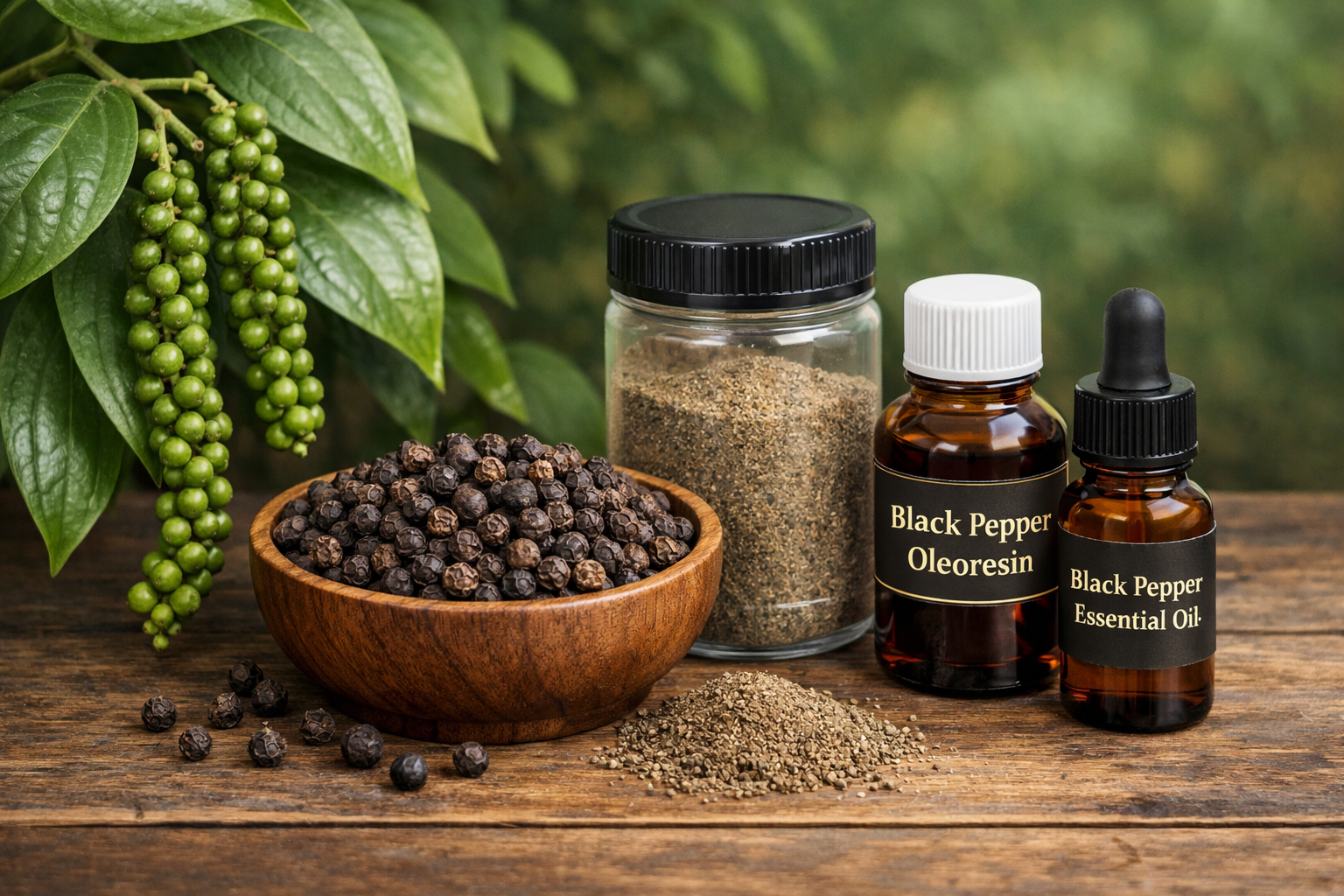
The Society of Flavor Chemists requires certified flavorists to be able to identify the plant part used, derivatives, organoleptic characteristics, and major chemical component(s) characterizing the aroma and flavor of the 80 natural flavorings listed on its syllabus for the qualification test and interview. Black pepper is included among these essential items.
Describe Black Pepper as a natural flavoring, and identify the part(s) of the plant used, derivatives, organoleptic characteristics, and the major chemical component(s) which characterizes the aroma/flavor of Black Pepper
Here’s a detailed overview of Black Pepper as a natural flavoring:
Botanical Source
- Plant: Piper nigrum
- Part Used: The dried unripe fruit (peppercorn). Black pepper is made by harvesting the green berries and drying them, which darkens the outer skin.
Derivatives
- Black Pepper Essential Oil – Steam-distilled from peppercorns; used for high-impact aroma in flavors and perfumery.
- Black Pepper Oleoresin – Solvent-extracted concentrate containing both volatile and non-volatile components; widely used in food flavoring.
- Ground Black Pepper – Milled dried peppercorns; includes both flavor and pungency.
Organoleptic Characteristics
- Aroma: Warm, woody, pungent, slightly citrusy, with a sharp green note in freshly ground pepper.
- Taste: Pungent, biting heat (from piperine), slightly fruity and resinous undertones.
- Mouthfeel: Tingling, peppery heat; stimulates salivation.
Major Chemical Components
The flavor and aroma of black pepper are defined by both volatile essential oils and non-volatile alkaloids:
Volatile Components (Aroma)
- β-Caryophyllene – Woody, spicy, slightly sweet; major contributor to aroma.
- Limonene – Citrus-like top note.
- Pinene (α- and β-) – Piney, resinous freshness.
- Sabinene – Sharp, green, slightly peppery.
- Myrcene – Herbal, balsamic nuance.
Non-Volatile Components (Taste/Pungency)
- Piperine – Alkaloid responsible for the characteristic pungent heat of black pepper; bitter and warming.
- Chavicine – Isomer of piperine; contributes to sharp taste in freshly cracked pepper.
Summary
Black pepper combines volatile aromatic oils that give it a woody, citrusy, and resinous fragrance with alkaloids like piperine that provide the distinctive pungent heat. The synergy between aroma and pungency makes it one of the most versatile spices in culinary and flavor applications.
Characteristic compounds for black pepper or for characteristic flavor note of black pepper or its derivatives.
Listed below are the key compounds that give black pepper its characteristic flavor and aroma, whether in whole peppercorns, essential oil, or oleoresin.
1. Aroma-Active Volatile Compounds (Essential Oil / Fragrance)
These compounds are primarily responsible for the woody, spicy, green, citrusy, and resinous notes of black pepper:
| Compound | Aroma Character / Note |
|---|---|
| β-Caryophyllene | Woody, warm, slightly sweet; dominant in black pepper aroma |
| Limonene | Citrus, fresh top note |
| α-Pinene / β-Pinene | Piney, resinous, fresh |
| Sabinene | Green, peppery, slightly sharp |
| Myrcene | Herbal, balsamic, slightly fruity |
| δ-3-Carene | Sweet, resinous undertone |
| α-Thujene | Sharp, green-spicy note |
| Linalool (minor) | Floral, slightly sweet nuance |
These volatiles collectively define the “fragrance” of black pepper — what you smell when you crush a fresh peppercorn.
2. Non-Volatile Compounds (Pungency & Taste)
These are mainly alkaloids and related compounds responsible for the heat, bite, and lingering warmth of black pepper:
| Compound | Taste / Note |
|---|---|
| Piperine | Main pungent alkaloid; warm, biting heat, slightly bitter |
| Chavicine | Isomer of piperine; contributes sharper bite in fresh cracked pepper |
| Piperettine & Piperanine (minor) | Mildly pungent, complementary warmth |
| Oleoresin components (resins, fatty acids) | Provide body, lingering mouthfeel, and enhance volatile aroma |
3. Key Takeaways for Characteristic “Black Pepper Note”
- Woody-spicy-resinous aroma: Mainly β-caryophyllene, sabinene, myrcene
- Citrus-fresh top note: Limonene
- Pungent bite/heat: Piperine
- Sharp, green nuance: Sabinene, α-thujene
In flavor formulation, piperine is used to provide the signature peppery heat, while the volatile oil fraction provides the aromatic complexity.
Comparison of each form of black pepper—whole, ground, essential oil, and oleoresin
Each form has the same basic compounds but in different profiles and proportions, with some differences due to volatility, processing, and extraction method.
1. Whole Black Peppercorns / Ground Pepper
- Composition: Mostly intact essential oils, piperine, resins, and minor alkaloids.
- Volatiles: β-Caryophyllene, Sabinene, Myrcene, Pinene, Limonene, δ-3-Carene, α-Thujene.
- Non-volatiles: Piperine, Chavicine, minor piperamides.
- Notes:
- Crushing (grinding) releases volatile aroma, but some highly volatile compounds (like limonene) start to evaporate quickly after grinding.
- Retains full spectrum of both aroma and pungency, but aroma decays faster in ground form due to oxidation and loss of volatiles.
Summary: Closest to “natural” pepper character; all compounds are present, but the balance shifts slightly after grinding.
2. Black Pepper Essential Oil
- Composition: Volatile fraction distilled from peppercorns.
- Volatiles Dominant: β-Caryophyllene, Sabinene, Myrcene, Pinene, Limonene, α-Thujene.
- Non-volatiles: Mostly absent; piperine is not volatile, so it is minimal or missing.
- Notes:
- Aroma is concentrated, clear, intense; pungent bite is very low.
- Used when aroma is the target, not the pungency.
Key Difference: Piperine and other non-volatiles are absent, so no heat; only fragrance compounds remain.
3. Black Pepper Oleoresin
- Composition: Solvent-extracted (often with ethanol or hexane) concentrate containing both volatile and non-volatile fractions.
- Volatiles Present: β-Caryophyllene, Sabinene, Myrcene, Pinene, Limonene, etc.
- Non-volatiles Present: Piperine, Chavicine, piperamides.
- Notes:
- Provides both aroma and pungency.
- Less volatile aroma intensity than essential oil because part of the volatiles is bound in the resin fraction.
- Shelf-stable and standardized for flavor formulations.
Key Difference: Contains both heat and aroma, unlike essential oil (no heat) or ground pepper (more variable aroma).
4. Comparison Table
| Form | Volatile Aroma Compounds | Non-Volatile Pungent Compounds | Notes / Differences |
|---|---|---|---|
| Whole / Ground Pepper | Full spectrum (β-Caryophyllene, Sabinene, Myrcene, Pinene, Limonene, etc.) | Piperine, Chavicine | All compounds present; aroma decays after grinding |
| Essential Oil | Same volatiles as above (concentrated) | Almost none | Aroma-only; no heat |
| Oleoresin | Volatiles + Non-volatiles (piperine, chavicine) | Piperine, Chavicine | Aroma + heat; shelf-stable; less volatile top-note than EO |
| Powdered / Ground (stored) | Some volatiles lost (limonene, myrcene) | Piperine mostly intact | Aroma weaker than fresh; pungency intact |
Summary
- Volatile aroma compounds are present in all forms but concentrated in essential oil.
- Pungency compounds (piperine, chavicine) are present in whole, ground, and oleoresin, but absent in essential oil.
- Ground pepper loses some of the more volatile aroma compounds quickly after grinding.
- Oleoresin is the most practical for flavor formulation because it balances aroma + pungency in a stable form.
Black pepper derivatives for their optimal flavor applications.
In flavor formulation, the choice depends on whether you want aroma, heat, or both, and how the product will be processed or stored. Here’s a detailed comparison:
1. Whole Black Peppercorns
- Composition: Full spectrum of volatiles + piperine.
- Applications:
- Culinary / seasoning applications (soups, sauces, stocks).
- Specialty blends where grinding at point of use preserves freshness.
- Slow infusion for oils, vinegars, pickling brines.
- Advantages: Long shelf life; flavor releases over time; natural “crunch and aroma.”
- Limitations: Not suitable for flavoring liquids where uniform dispersion is needed.
2. Ground Black Pepper (Powdered)
- Composition: Similar to whole pepper, but some volatiles (limonene, myrcene) may have partially evaporated. Pungency intact.
- Applications:
- Spice blends, rubs, bakery items, snacks.
- Sauces or marinades where rapid release of aroma and heat is desired.
- Ready-to-use formulations in food manufacturing.
- Advantages: Convenient, fast flavor release.
- Limitations: Aroma fades faster; less aromatic top notes than whole pepper or essential oil.
3. Black Pepper Essential Oil
- Composition: Concentrated volatile aroma compounds; little to no piperine (heat).
- Applications:
- High-end beverages, soft drinks, teas, confections, and perfumery.
- Aromatic accents in soups, sauces, or condiments where pungency is not desired.
- Encapsulated flavors for long shelf life and strong aromatic impact.
- Advantages: Intense aroma; easily standardized; can impart fresh, green, woody notes.
- Limitations: No heat; can be overpowering if not carefully dosed.
4. Black Pepper Oleoresin
- Composition: Both volatile aroma and non-volatile pungency (piperine) present.
- Applications:
- Processed foods: sauces, snacks, chips, soups, seasonings.
- Meat products, marinades, ready-to-eat meals requiring both heat and aroma.
- Flavor systems where uniformity, stability, and shelf life are essential.
- Advantages: Balanced aroma + heat; easy to dose; stable in formulations.
- Limitations: Aroma less intense than essential oil; more expensive than powdered pepper.
5. Application Guide / Quick Reference Table
| Derivative | Aroma (Volatiles) | Heat / Pungency | Best Use Cases |
|---|---|---|---|
| Whole Pepper | Full, natural | Full | Culinary seasoning, slow infusion, gourmet cooking |
| Ground / Powder | Mostly intact, some volatiles lost | Full | Spices, rubs, ready-to-use products, quick flavor release |
| Essential Oil | Highly concentrated | Minimal / none | Beverages, confectionery, perfumery, aroma accents |
| Oleoresin | Moderate | Full | Processed foods, sauces, snacks, uniform flavor systems |
Summary
- Aroma-only applications → Essential Oil
- Heat-only applications → Ground Pepper or Oleoresin with standardized piperine
- Balanced aroma + heat in processed foods → Oleoresin
- Culinary, slow-release, or whole-spice experience → Whole Peppercorns
Alternatives for black pepper
There are several alternatives or replacements for black pepper depending on whether you want to mimic pungency, aroma, or both. Each has its own flavor profile and functional nuances. Here’s a detailed overview:
1. White Pepper (Piper nigrum – ripe seed)
- Source: Same plant as black pepper, but ripe seeds with outer skin removed.
- Flavor Profile: Milder aroma than black pepper, still pungent, slightly earthy.
- Use Case: Light-colored sauces, soups, or dishes where black specks are undesirable.
2. Long Pepper (Piper longum)
- Flavor Profile: Similar pungency to black pepper, but with slightly sweet, smoky, and complex notes.
- Use Case: Indian, Indonesian, or specialty gourmet recipes; more exotic flavor than black pepper.
3. Grains of Paradise (Aframomum melegueta)
- Flavor Profile: Warm, peppery, slightly citrusy, with hints of cardamom and ginger.
- Use Case: African cuisine, gin distillation, craft spice blends; can replace black pepper in savory dishes.
4. Szechuan / Sichuan Peppercorns (Zanthoxylum spp.)
- Flavor Profile: Not truly pepper — more tingling, numbing, citrusy sensation.
- Use Case: Asian cuisine; adds unique mouthfeel and aromatic complexity.
5. Pink Peppercorns (Schinus molle or S. terebinthifolia)
- Flavor Profile: Fruity, mild, slightly resinous; less heat than black pepper.
- Use Case: Garnishes, light sauces, salads, and desserts; visually striking alternative.
6. Pungency-Focused Chemical Alternatives (for processed foods)
- Piperine substitutes: Synthetic or natural alkaloids like capsaicin (from chili) or piperine-rich extracts.
- Use Case: Foods where black pepper flavor needs to be standardized or intensified without using actual pepper.
Summary Table
| Alternative | Flavor Profile | Pungency | Typical Use |
|---|---|---|---|
| White Pepper | Earthy, mild aroma | Moderate | Light-colored sauces, soups |
| Long Pepper | Sweet, smoky, complex | High | Gourmet, ethnic cuisines |
| Grains of Paradise | Citrus, warm, peppery | Medium | African cuisine, spice blends |
| Sichuan Pepper | Tingling, citrusy | Low heat, numbing | Asian cuisine, flavor accent |
| Pink Pepper | Fruity, resinous | Mild | Garnish, salads, desserts |
| Piperine / Capsaicin Extracts | Pepper-like heat | High | Processed foods, standardized flavoring |
✅ Key Considerations:
- For aroma-centric applications, long pepper or grains of paradise are better.
- For pungency, white pepper or piperine-rich extracts work well.
- For visual appeal, pink peppercorns are ideal.
- No alternative perfectly duplicates the combined woody aroma + pungency of black pepper, so blending can be used to mimic it.
compare these peppers for their characteristic flavor note and applications, that is, what is different, and what should be used for a specific flavor?
Side-by-side comparison of various pepper
This is exactly how flavorists think when choosing a pepper for a formulation.
1. Black Pepper (Piper nigrum, dried unripe fruit)
- Characteristic Flavor Notes: Woody, spicy, resinous, slightly citrusy, pungent heat.
- Heat: Medium-high (from piperine).
- Aroma: Strong, pungent, earthy, woody.
- Applications:
- Universal savory spice
- Sauces, soups, stocks, meats
- Processed foods (via oleoresin for aroma + heat)
2. White Pepper (ripe seed of Piper nigrum, skin removed)
- Characteristic Flavor Notes: Earthy, musty, slightly fermented aroma; milder than black pepper.
- Heat: Moderate (piperine intact).
- Aroma: Less volatile top notes; less woody, more earthy.
- Applications:
- Light-colored sauces, cream soups, mashed potatoes
- Culinary where black specks are visually undesirable
3. Long Pepper (Piper longum)
- Characteristic Flavor Notes: Sweet-spicy, smoky, slightly camphoraceous, complex woody undertones.
- Heat: Medium-high, slightly warmer than black pepper.
- Aroma: More exotic, sweet, and aromatic than black pepper.
- Applications:
- Gourmet, ethnic, or historical recipes
- Spice blends where complexity and sweetness are desired
4. Grains of Paradise (Aframomum melegueta)
- Characteristic Flavor Notes: Peppery, warm, citrusy, slightly ginger-like, nutty undertones.
- Heat: Medium, mild compared to black pepper.
- Aroma: Fresh, zesty, slightly floral-citrus.
- Applications:
- African cuisine, craft distillation (gin), savory spice blends
- Lightly peppery notes in sauces, soups, and snacks
5. Sichuan / Szechuan Peppercorn (Zanthoxylum spp.)
- Characteristic Flavor Notes: Tingling, numbing, citrusy; not traditional “pepper” flavor.
- Heat: Low in piperine; numbing sensation dominates.
- Aroma: Lemon-tinged, floral, unique “electric” mouthfeel.
- Applications:
- Asian cuisine (Sichuan dishes)
- Specialty flavoring where numbing effect is desired
6. Pink Peppercorns (Schinus molle / S. terebinthifolia)
- Characteristic Flavor Notes: Fruity, resinous, slightly sweet, very mild pungency.
- Heat: Low
- Aroma: Bright, fruity, light, aromatic; lacks traditional black pepper woody note.
- Applications:
- Garnishes, salads, desserts
- Blending with black pepper for visual effect and mild peppery accent
Quick Comparison Table
| Pepper | Characteristic Flavor Notes | Heat | Aroma | Best Use / Application |
|---|---|---|---|---|
| Black Pepper | Woody, spicy, resinous, slightly citrusy | Medium-high | Strong, pungent | Universal savory; sauces, meats, oleoresin for processed foods |
| White Pepper | Earthy, mild | Moderate | Earthy, musty | Light-colored sauces, soups, mashed potatoes |
| Long Pepper | Sweet, smoky, complex, woody | Medium-high | Exotic, aromatic | Gourmet, ethnic, spice blends |
| Grains of Paradise | Peppery, citrusy, warm, nutty | Medium | Fresh, zesty | African cuisine, beverages, spice blends |
| Sichuan Pepper | Tingling, numbing, citrusy | Low (numbing effect) | Lemon-tinged, floral | Asian cuisine, specialty flavoring |
| Pink Pepper | Fruity, resinous, mild | Low | Bright, fruity | Garnishes, desserts, mild blends, visual effect |
Summary / Application Guide
- For traditional peppery aroma + heat: Black pepper (whole, ground, or oleoresin).
- For mild, earthy, visually “clean” dishes: White pepper.
- For sweet-spicy, exotic flavor: Long pepper.
- For zesty, citrusy, slightly peppery flavor: Grains of Paradise.
- For numbing, tingling, unique mouthfeel: Sichuan pepper.
- For visual appeal or fruity accent: Pink peppercorns.
###