Bois de rose: What the SFC Wants Flavorists to Know
Content of the Page
| * Basics of Bois de Rose; |
| * Construct a bois de rose base, and how to use the base; |
| * Applications of bois de rose in flavor formulation |
| * Examples formula for each application; |
| * Substitutes for bois de rose. |
1) Basics of Bois de Rose
Describe in detail bois de rose as a natural flavoring, and identify the part(s) of the plant used, derivatives, organoleptic characteristics, and the major chemical component(s) which characterizes the aroma/flavor of Bois de Rose
🌳 Bois de Rose as a Natural Flavoring
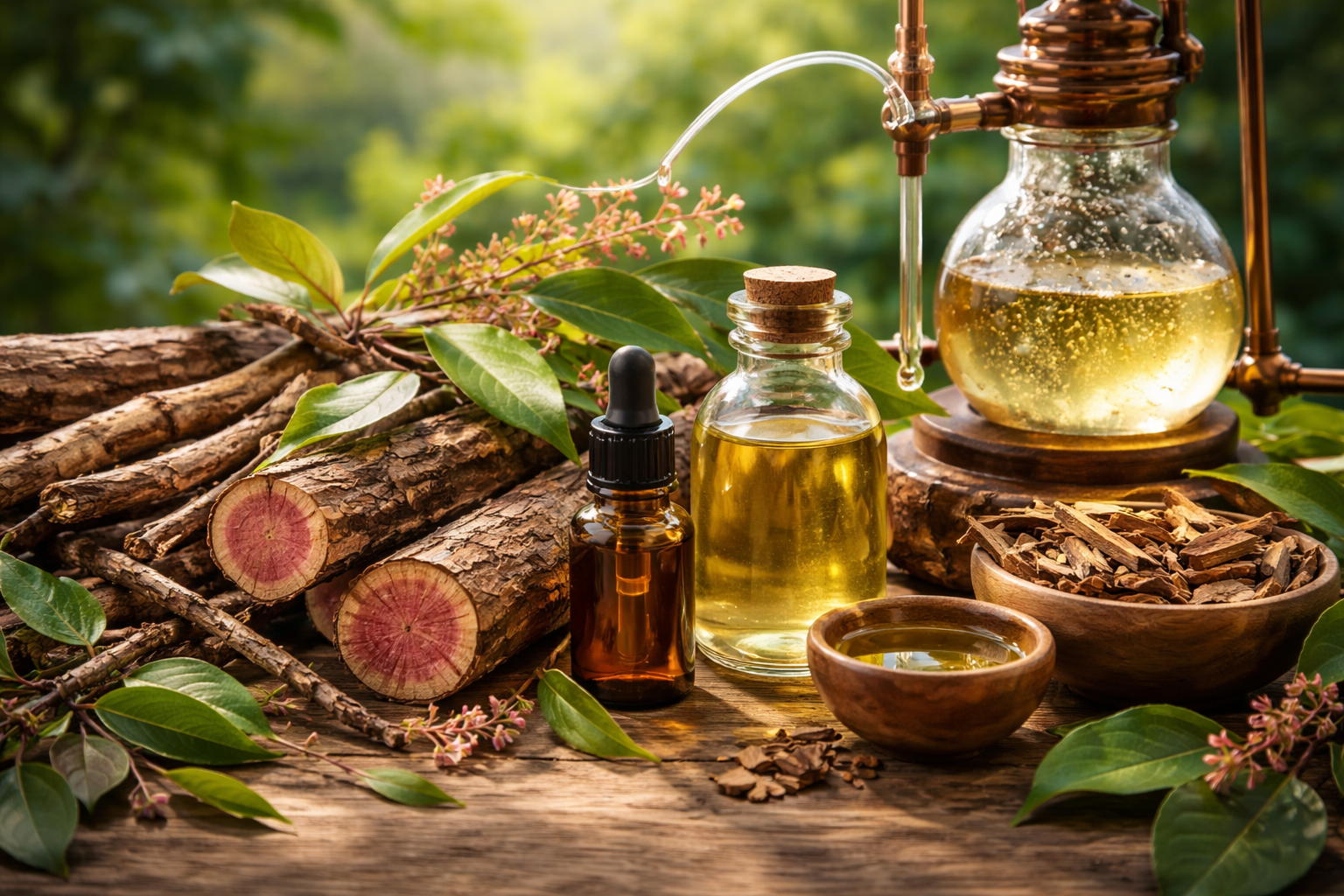
Bois de rose (often called rosewood oil) is an aromatic material obtained from the Amazonian tree Aniba rosaeodora, a member of the Lauraceae family. Although it is more widely known in perfumery, the essential oil has historically been used in fine flavor work, especially in floral citrus, berry, tea, and confectionery profiles where a delicate rosy-linalool character is required.
1. Botanical Origin
- Scientific name: Aniba rosaeodora
- Family: Lauraceae
- Common names:
- Bois de rose
- Brazilian rosewood
- Rosewood oil tree
Geographic Origin
Native primarily to:
- Amazon Basin (Brazil, Peru, Guyana)
Because the tree was heavily harvested for essential oil, it is now protected in many regions, and commercial material often comes from managed plantations or leaf distillation.
2. Plant Parts Used
Traditionally several parts were used:
| Plant Part | Usage | Notes |
|---|---|---|
| Heartwood (main traditional source) | Steam distilled | Highest oil yield historically |
| Wood chips / trunk pieces | Distillation | Common in older commercial oil production |
| Branches | Distillation | Lower yield but sustainable |
| Leaves and twigs | Distillation | Modern sustainable source |
Today, leaf and branch distillation is preferred to avoid destroying the tree.
3. Derivatives Used in Flavor Work
1. Bois de Rose Essential Oil
- Obtained by steam distillation
- Clear to pale yellow liquid
- Extremely linalool-rich oil
Applications:
- Citrus flavors
- Berry flavors
- Tea flavors
- Floral modifiers
- Confectionery
2. Rectified Bois de Rose Oil
Fractionally distilled oil with:
- Reduced terpenes
- Increased purity of key aroma compounds
Benefits:
- Cleaner floral tone
- Greater stability
- Better flavor reproducibility
3. Natural Linalool Fraction
Because the oil contains very high linalool, flavor houses often isolate natural linalool from it.
Uses:
- Citrus flavors
- Lavender flavors
- Berry flavors
- Tea aromas
4. Extract / Distillate Fractions
Selective fractions emphasize:
- floral sweetness
- rosy notes
- citrus freshness
4. Organoleptic Characteristics
Bois de rose is known for an exceptionally soft floral character.
Aroma
- Sweet floral
- Rosy
- Fresh citrus-floral
- Slightly woody
- Delicate lavender-like
- Subtle fruity nuance
Flavor
- Soft rose
- Sweet citrus floral
- Mild woody sweetness
- Slight spice nuance
- Smooth and round mouthfeel
Flavor Impact
- Moderate intensity
- Very smooth
- Used primarily as a modifier rather than a primary flavor
5. Flavor Profile Structure
Professional flavorists often perceive Bois de rose as:
Top notes
- citrus floral
- fresh linalool brightness
Middle notes
- rose
- lavender-like floral
Base notes
- light wood
- warm sweet tone
6. Major Chemical Components
Bois de rose oil is one of the most linalool-rich natural materials known.
| Compound | Approximate % | Aroma Contribution |
|---|---|---|
| Linalool | 80–93% | Floral, citrus, lavender |
| α-Terpineol | 1–5% | Lilac, floral |
| Geraniol | 0.5–2% | Rosy sweetness |
| Nerol | trace–1% | Fresh rose |
| Linalool oxides | trace | Floral freshness |
| β-Caryophyllene | trace | Light woody spice |
| Geranyl acetate | trace | Fruity floral |
7. Key Character Impact Molecule
⭐ Linalool
Linalool is responsible for most of the sensory character.
Aroma description
- floral
- lavender
- citrus blossom
- rose
Role in flavors
- floral modifier
- citrus rounder
- berry enhancer
- tea aroma builder
Bois de rose oil was historically the world’s main natural source of linalool before synthetic production became common.
8. Flavor Applications
Bois de rose is rarely used as the main flavor; it is usually a top-note enhancer.
Citrus Flavors
- orange
- bergamot
- mandarin
- lemon
Enhances:
- floral top note
- smoothness
Berry Flavors
- raspberry
- strawberry
- blackberry
Adds:
- floral realism
- natural fruit blossom tone
Tea Flavors
Especially:
- Earl Grey
- jasmine tea
- floral black tea
Provides:
- blossom nuance
- smooth floral roundness
Confectionery
- Turkish delight
- rose candies
- floral syrups
Beverage Flavors
- botanical drinks
- herbal teas
- floral sodas
9. Typical Use Levels in Flavor Formulation
Extremely small quantities are used.
Typical ranges:
- 0.1 – 10 ppm in finished food
- Trace levels in flavor concentrate
Too much produces:
- perfumey taste
- soapy note
10. Comparison with Other Linalool-Rich Materials
| Material | Linalool % | Flavor Character |
|---|---|---|
| Bois de rose oil | 80–93% | clean floral |
| Coriander seed oil | 60–75% | citrus spicy |
| Lavender oil | 25–45% | herbal floral |
| Bergamot oil | 20–40% | citrus floral |
Bois de rose is the purest floral-linalool profile.
11. Sustainability Considerations
Because of historical overharvesting:
- The species Aniba rosaeodora is CITES-listed
- Sustainable production uses:
- leaf distillation
- plantation cultivation
Many flavor houses now replace it with:
- natural linalool
- coriander seed oil fractions
✅ Summary
| Attribute | Bois de Rose |
|---|---|
| Botanical source | Aniba rosaeodora |
| Plant part used | Wood, branches, leaves |
| Primary derivative | Essential oil |
| Key aroma | soft rose-floral citrus |
| Major compound | Linalool (80–93%) |
| Flavor role | floral modifier and top note |
How professional flavorists construct a Bois-de-Rose flavor base (a training formula used in flavor houses). This is actually a classic perfumery-style flavor accord used in citrus and berry flavors.
2) Constructing a Bois-de-Rose Flavor Base (Professional Flavorist Approach)
A Bois-de-Rose base is a small aroma accord built around the floral–citrus alcohol profile dominated by Linalool. Flavorists use this base as a modifying building block to add natural floral softness and blossom notes to fruit, tea, citrus, and confectionery flavors.
The natural oil comes from the Amazon tree Bois de Rose and is one of the richest natural sources of linalool.
1. The Flavorist Philosophy Behind a Bois-de-Rose Base
Professional flavorists do not simply use the natural oil. Instead they reconstruct or extend the aroma profile for several reasons:
• improve stability
• control floral intensity
• reduce woody off-notes
• reduce cost
• allow precise tuning in different flavors
The base is typically built around three aroma layers:
| Layer | Role |
|---|---|
| Top | fresh citrus-floral brightness |
| Heart | rose-linalool floral body |
| Base | soft woody sweetness |
2. Core Structural Molecules
Primary Structural Note
80–90% of the base character
- Linalool
- citrus blossom
- lavender-floral
- slightly sweet
This provides the signature Bois-de-Rose aroma.
Floral Reinforcement Notes
These give the rosy nuance missing from pure linalool.
Key materials:
- Geraniol
- Nerol
- α‑Terpineol
Effects:
| Compound | Flavor effect |
|---|---|
| Geraniol | sweet rose |
| Nerol | fresh rose petal |
| α-Terpineol | lilac floral smoothness |
Floral Freshness Modifiers
Small amounts of oxygenated terpenes recreate the natural complexity of rosewood oil.
Important components:
- Linalool oxide
- Geranyl acetate
These add:
• citrus blossom freshness
• slightly fruity nuance
• lift to the floral heart
Soft Woody Base Notes
Natural Bois-de-Rose contains subtle woody molecules that prevent the floral note from becoming perfumey or artificial.
Typical additions:
- β‑Caryophyllene
- Phenethyl alcohol
Effects:
| Molecule | Effect |
|---|---|
| β-Caryophyllene | warm woody spice |
| Phenethyl alcohol | honey-rose softness |
3. Typical Professional Bois-de-Rose Base Formula
A classic training formula used in flavor labs might look like:
| Ingredient | Parts |
|---|---|
| Linalool | 80 |
| α-Terpineol | 6 |
| Geraniol | 4 |
| Nerol | 2 |
| Phenethyl alcohol | 4 |
| Geranyl acetate | 2 |
| Linalool oxide | 1 |
| β-Caryophyllene | 1 |
Total: 100 parts
This produces a very realistic rosewood floral profile.
4. How Flavorists Adjust the Base for Different Applications
Citrus Flavors
Add small citrus terpenes:
- Limonene
- Citral
Effect:
• citrus blossom character
• orange flower nuance
Used in:
- bergamot
- orange
- grapefruit
Berry Flavors
To make a raspberry or strawberry floral top note, flavorists add:
- Raspberry ketone
- Ethyl maltol
This gives the fruit-flower interaction typical of real berries.
Tea Flavors
In Earl Grey or floral tea, Bois-de-Rose bases reinforce:
- Bergamot oil character
They smooth harsh citrus notes and create a blossom-like aroma.
5. Typical Usage Levels in Finished Flavor
Because the base is strong:
| Product | Use level |
|---|---|
| Citrus beverage | 1–10 ppm |
| Berry candy | 2–20 ppm |
| Tea flavor | 1–5 ppm |
| Floral confectionery | 5–30 ppm |
Overuse causes soapy or perfumey taste.
6. How Flavor Houses Modify the Base
Large flavor companies often produce several Bois-de-Rose variants:
| Type | Purpose |
|---|---|
| Light floral | citrus beverages |
| Rosy floral | confectionery |
| Woody floral | tea flavors |
| Green floral | botanical drinks |
7. Quick Aroma Map of the Base
Top
- citrus blossom
- fresh floral
Heart
- rose
- lilac
- lavender-like floral
Base
- warm wood
- honey-rose sweetness
✅ Key Insight
A Bois-de-Rose base is essentially a linalool-centric floral accord, carefully balanced with rose alcohols, floral esters, and soft woody terpenes to reproduce the delicate aroma of natural rosewood oil.
3) Applications of Bois de Rose in Flavor Formulation
Bois de rose (rosewood oil) is used in flavor chemistry mainly as a floral modifier and aroma rounder rather than a dominant flavor. Its sensory profile is driven primarily by Linalool, which gives a soft citrus-floral, rose-like, slightly woody aroma.
Because of this chemical composition, the ingredient is extremely versatile and appears in many fruit, floral, tea, and botanical flavor systems.
Today many flavor houses replace the natural oil with linalool-rich blends, but the functional role remains the same.
1. Citrus Flavor Applications
Bois de rose is most commonly used as a citrus blossom modifier.
Citrus oils naturally contain linalool and related terpenes, so Bois de rose enhances their realism.
Typical citrus flavors:
- orange
- lemon
- lime
- grapefruit
- bergamot
Example compounds interacting in citrus systems:
- Limonene – citrus peel
- Citral – lemon brightness
- Linalool – blossom note
Functional role
• citrus blossom nuance
• smoothing harsh peel terpenes
• improving naturalness
2. Berry Flavors
Real berries contain floral terpenes in small quantities. Bois de rose provides this flower-like nuance.
Common berry applications:
- strawberry
- raspberry
- blackberry
- blueberry
Example interactions:
- Raspberry ketone – berry character
- fruit esters
- linalool from Bois de rose
Flavor effect
• berry blossom aroma
• natural fruit complexity
• reduced “candy-like” character
3. Stone Fruit Flavors
Stone fruits often require floral notes to simulate orchard fruit blossoms.
Typical flavors:
- peach
- apricot
- nectarine
- plum
Important compounds interacting with Bois de rose:
- γ-Decalactone – peach body
- linalool – blossom nuance
Flavor role
• fresh orchard character
• juicy perception
• balanced fruit sweetness
4. Apple and Pear Flavors
Apple and pear flavors benefit from subtle floral modifiers.
Key compounds:
- Ethyl hexanoate – apple fruit note
- linalool – apple blossom nuance
Flavor role
• fresh apple blossom aroma
• increased fruit realism
5. Tea Flavor Applications
Bois de rose is often used in tea flavor systems because floral terpenes naturally occur in tea aroma.
Applications include:
- black tea flavors
- jasmine tea
- Earl Grey
Important supporting materials:
- oils from Bergamot
- linalool derivatives
Flavor role
• floral softness
• aromatic lift
• natural tea bouquet
6. Floral Confectionery
Traditional sweets frequently include floral flavor elements.
Typical applications:
- rose candy
- Turkish delight
- floral syrups
- botanical candies
Important background compounds:
- Phenethyl alcohol – rose honey note
- geraniol
Flavor role
• rose-like sweetness
• perfumery-style floral nuance
7. Botanical and Herbal Beverages
Modern beverage trends use botanical flavor systems, where Bois de rose provides subtle floral complexity.
Examples:
- botanical sodas
- herbal sparkling drinks
- tonic-style beverages
- craft sodas
Functional role
• floral lift
• balancing herbal bitterness
• aromatic complexity
8. Alcoholic Beverage Flavoring
Bois de rose can appear in flavor formulations for:
- gin-style beverages
- liqueurs
- aperitif drinks
- vermouth-type flavors
Flavor role
• botanical floral note
• integration with citrus oils
9. Tropical Fruit Flavors
Many tropical fruits contain trace floral components.
Applications include:
- mango
- guava
- passion fruit
- pineapple
Important supporting compounds:
- Ethyl butyrate – pineapple note
- linalool – floral freshness
Flavor role
• fruity freshness
• enhanced juiciness
10. Dairy and Dessert Flavors
Small amounts can improve dessert flavors.
Applications:
- yogurt fruit flavors
- ice cream
- custard fruit systems
Example base notes:
- Vanillin
- lactones
Flavor role
• smooth floral sweetness
• softening creamy flavors
11. Beverage Flavor Systems
Bois de rose is particularly useful in carbonated beverages, because linalool releases efficiently with carbonation bubbles.
Applications:
- citrus sodas
- berry sodas
- flavored sparkling water
Typical use level:
1–10 ppm in finished beverage
12. Flavor-Technical Roles
Beyond specific flavor categories, Bois de rose performs several technical formulation roles.
1. Floral Modifier
Adds natural blossom nuance.
2. Top-Note Enhancer
Improves aroma impact.
3. Flavor Rounder
Smooths harsh aldehydes or esters.
4. Naturalness Enhancer
Reduces synthetic character in artificial fruit systems.
13. Typical Use Levels
Because the material is potent, levels are small.
| Application | Typical Level |
|---|---|
| Beverages | 1–10 ppm |
| Candy | 5–20 ppm |
| Tea flavors | 1–5 ppm |
| Fruit flavors | 1–15 ppm |
Overuse produces:
• perfumey notes
• soapy character
14. Modern Replacement Strategies
Due to sustainability issues with Aniba rosaeodora, many flavor houses now replace natural Bois de rose with blends of:
- Linalool
- Geraniol
- α-Terpineol
These mixtures reproduce the rosewood floral profile.
✅ Summary of Major Flavor Applications
| Category | Typical Products |
|---|---|
| Citrus flavors | orange, lemon, grapefruit |
| Berry flavors | strawberry, raspberry |
| Stone fruit | peach, apricot |
| Orchard fruit | apple, pear |
| Tea flavors | Earl Grey, jasmine |
| Confectionery | rose candy |
| Botanical drinks | herbal sodas |
| Alcoholic beverages | gin, liqueurs |
| Tropical fruit | mango, pineapple |
| Desserts | yogurt, ice cream |
4) Professional-level illustrative flavor formulas for each major application of Bois de Rose, showing how a flavorist would build the flavor system
They include typical supporting esters, aldehydes, and terpene alcohols. These are example formulas used for training and conceptual understanding; exact commercial formulas are proprietary.
1. Citrus Flavors (Orange / Bergamot / Lemon)
Purpose: Enhance citrus blossom and freshness using Bois de Rose as a floral modifier.
| Ingredient | Function | Parts (arbitrary unit) |
|---|---|---|
| Limonene | citrus peel | 60 |
| Citral | lemon aldehyde | 5 |
| Ethyl butyrate | juicy orange | 10 |
| Linalool (from Bois de Rose) | citrus blossom | 5 |
| α-Terpineol | lilac floral, smoothness | 3 |
| Geraniol | rose nuance | 2 |
| Ethyl acetate | volatile lift | 5 |
| Linalyl acetate | soft floral lift | 2 |
| Nerol | fresh floral | 3 |
Effect: Sweet, fresh, natural citrus with subtle floral notes from Bois de Rose.
2. Berry Flavors (Strawberry / Raspberry)
Purpose: Add fruit blossom nuance and reduce candy-like artificiality.
| Ingredient | Function | Parts |
|---|---|---|
| Methyl butyrate | strawberry top note | 15 |
| Ethyl butyrate | ripe fruit juiciness | 10 |
| Raspberry ketone | berry character | 5 |
| Linalool | floral lift, Bois de Rose | 3 |
| Geraniol | soft rose nuance | 2 |
| Hexyl acetate | green fresh fruit | 2 |
| Phenethyl alcohol | honey-floral support | 1 |
| Linalyl acetate | soft floral | 2 |
Effect: Juicy, natural berries with a gentle blossom character.
3. Stone Fruit Flavors (Peach / Apricot / Nectarine)
Purpose: Create orchard fruit realism with floral lift.
| Ingredient | Function | Parts |
|---|---|---|
| γ-Decalactone | peach/creamy | 20 |
| Ethyl butyrate | ripe fruit juiciness | 10 |
| Ethyl 2-methylbutyrate | fruit top note | 5 |
| Linalool | blossom nuance (Bois de Rose) | 3 |
| α-Terpineol | lilac floral | 2 |
| Geraniol | rose sweetness | 1 |
| Ethyl acetate | volatile lift | 3 |
| Linalyl acetate | smooth floral | 1 |
Effect: Juicy orchard fruits with delicate floral bouquet.
4. Apple / Pear Flavors
Purpose: Introduce fresh blossom nuances over fruit sweetness.
| Ingredient | Function | Parts |
|---|---|---|
| Ethyl hexanoate | apple flesh | 15 |
| Ethyl butyrate | fruity juiciness | 10 |
| Linalool | apple blossom, Bois de Rose | 4 |
| Nerol | fresh rose-like lift | 2 |
| α-Terpineol | floral smoothing | 2 |
| Phenethyl alcohol | sweet floral | 1 |
| Hexyl acetate | green apple note | 3 |
| Ethyl acetate | lift | 3 |
Effect: Realistic apple/pear with subtle floral bloom.
5. Tea Flavors (Black Tea / Jasmine / Earl Grey)
Purpose: Add floral complexity and aromatic lift.
| Ingredient | Function | Parts |
|---|---|---|
| Linalool | floral lift, Bois de Rose | 5 |
| Linalyl acetate | soft floral | 3 |
| α-Terpineol | lilac floral | 2 |
| Citral | fresh top note | 2 |
| Bergamot oil | citrus-floral | 8 |
| Phenethyl alcohol | honey-floral | 1 |
| Ethyl butyrate | fruity touch | 2 |
| Myrcene | herbal undertone | 2 |
Effect: Natural tea aroma with subtle floral and citrus notes.
6. Floral Confectionery (Rose Candy / Turkish Delight)
Purpose: Provide rose-like sweetness and soft floral nuance.
| Ingredient | Function | Parts |
|---|---|---|
| Linalool | Bois de Rose floral | 5 |
| Geraniol | rose | 3 |
| Phenethyl alcohol | honey-floral | 4 |
| Linalyl acetate | soft floral | 2 |
| Ethyl butyrate | light fruitiness | 2 |
| Benzyl acetate | sweet floral lift | 1 |
Effect: Classic rose-floral candy aroma with sweetness and depth.
7. Botanical / Herbal Beverages
Purpose: Enhance botanical complexity with floral lift.
| Ingredient | Function | Parts |
|---|---|---|
| Linalool | floral lift (Bois de Rose) | 4 |
| Geraniol | rose-like lift | 2 |
| Nerol | fresh floral | 2 |
| Citral | lemon top note | 5 |
| Limonene | citrus peel backbone | 25 |
| Ethyl butyrate | fruity juiciness | 5 |
| Myrcene | herbal depth | 4 |
Effect: Balanced botanical flavor with subtle floral sophistication.
8. Alcoholic Beverage Flavors (Gin, Liqueurs, Vermouth)
Purpose: Floral top note and smooth integration of botanicals.
| Ingredient | Function | Parts |
|---|---|---|
| Linalool | floral lift (Bois de Rose) | 5 |
| Geraniol | rose sweetness | 3 |
| α-Terpineol | lilac / floral smoothing | 2 |
| Citrus oils (orange / lemon) | top notes | 20 |
| Juniper oil | botanical backbone | 8 |
| Myrcene | herbal depth | 3 |
| Ethyl butyrate | fruity hint | 2 |
Effect: Elegant gin/liqueur flavor with floral lift and citrus freshness.
9. Tropical Fruit Flavors (Mango / Pineapple / Passion Fruit)
Purpose: Add floral freshness and boost juiciness.
| Ingredient | Function | Parts |
|---|---|---|
| Ethyl butyrate | pineapple top note | 15 |
| Ethyl 2-methylbutyrate | tropical top note | 5 |
| Linalool | floral lift (Bois de Rose) | 3 |
| Geraniol | sweet floral | 2 |
| Hexyl acetate | green tropical | 2 |
| γ-Decalactone | creamy tropical | 3 |
| Nerol | fresh floral | 1 |
Effect: Juicy tropical fruits with floral sophistication.
10. Dairy / Dessert Flavors (Yogurt, Ice Cream, Custard Fruit Systems)
Purpose: Smooth floral sweetness and fruit realism.
| Ingredient | Function | Parts |
|---|---|---|
| Linalool | soft floral, Bois de Rose | 3 |
| Geraniol | rose nuance | 2 |
| Ethyl butyrate | juicy fruit | 10 |
| Ethyl hexanoate | apple/pear body | 5 |
| γ-Decalactone | creamy peach | 8 |
| Vanillin | creamy dessert | 3 |
| Linalyl acetate | smooth floral lift | 2 |
Effect: Balanced creamy fruit flavor with subtle floral notes.
✅ Key Takeaways
- In all formulas, Bois de Rose / Linalool is used in low ppm levels (1–5%) to provide floral lift, not to dominate.
- Supporting molecules (esters, aldehydes, lactones) provide fruit body, sweetness, and juiciness.
- Terpene alcohols (α-terpineol, nerol, geraniol, linalyl acetate) integrate the floral layer with fruit esters for realistic complexity.
- Overuse of Bois de Rose can create soapy or perfumey notes, so precise control is critical.
5) The Bois-de-Rose Substitution Ladder Used in Flavor Formulation
The Bois-de-Rose substitution ladder is a practical strategy used by flavor chemists to replace or extend the aroma of the natural oil from Bois de Rose. Because the natural material is expensive, limited in supply, and regulated in some regions, flavor houses often recreate its effect using other natural oils or isolated molecules.
The ladder ranks substitutes according to how closely they reproduce the aroma function of Bois-de-Rose.
The characteristic odor is dominated by Linalool, which typically represents 80–93% of the natural oil.
1. Level 1 – Direct Molecular Replacement (Closest Match)
These substitutes reproduce the aroma profile almost exactly, because they contain the same dominant molecule.
Primary substitute
- Linalool
Often combined with small modifiers such as:
- Geraniol
- α-Terpineol
Typical reconstruction formula:
| Ingredient | Parts |
|---|---|
| Linalool | 85 |
| α-Terpineol | 7 |
| Geraniol | 4 |
| Nerol | 2 |
| Phenethyl alcohol | 2 |
Result: very close to natural Bois-de-Rose oil
2. Level 2 – Linalool-Rich Essential Oils
Some natural essential oils contain large amounts of linalool, making them excellent substitutes.
Most commonly used
• Coriander seed oil
(linalool often 60–75%)
Other options
• Ho Wood oil
(linalool up to 90%)
These oils provide:
• floral sweetness
• citrus blossom notes
• natural botanical character
3. Level 3 – Floral Terpene Oils
These oils contain moderate levels of linalool plus related floral molecules, giving a somewhat similar effect.
Examples include:
• Lavender oil
• Bergamot oil
Important supporting compounds in these oils:
- Linalyl acetate
- Nerol
Resulting flavor character
• floral
• citrus-blossom
• slightly herbal
Not identical to Bois-de-Rose but useful in citrus or tea flavors.
4. Level 4 – Floral Alcohol Blends
Flavorists sometimes create a synthetic floral accord instead of using an essential oil.
Common components:
| Compound | Aroma Role |
|---|---|
| Phenethyl alcohol | honey-rose |
| Geraniol | rose |
| α-Terpineol | lilac |
These blends reproduce the floral softness but lack the distinctive citrus-blossom brightness of linalool.
5. Level 5 – Citrus Blossom Systems
For some applications, flavorists replace Bois-de-Rose with citrus terpene combinations.
Typical blend:
| Ingredient | Purpose |
|---|---|
| Limonene | citrus peel |
| Citral | lemon brightness |
| linalool | blossom nuance |
This approach works well in orange, lemon, and grapefruit flavors.
6. Practical Substitution Ladder
Flavor chemists often visualize the replacement options like this:
Closest match
│
│  Pure Linalool Reconstruction
│
│  Ho Wood Oil
│
│  Coriander Seed Oil
│
│  Lavender Oil
│
│  Bergamot Oil
│
│  Floral Alcohol Blends
│
│  Citrus Blossom Systems
│
Most distant match
The higher the level, the closer the aroma to natural Bois-de-Rose.
7. Choosing the Right Substitute
Flavorists select substitutes based on flavor application.
| Application | Preferred Substitute |
|---|---|
| Citrus beverages | linalool + citrus terpenes |
| Berry flavors | linalool + geraniol |
| Tea flavors | bergamot oil |
| Botanical drinks | coriander oil |
| Floral candy | phenethyl alcohol blends |
8. Why Substitution Is Common
The substitution ladder became important because:
- Limited supply of natural rosewood
- Environmental protection regulations
- Cost considerations
- Consistency requirements in industrial flavor production
Modern flavor systems often use reconstructed blends rather than the natural oil itself.
9. Functional Role That Must Be Preserved
When replacing Bois-de-Rose, flavorists try to preserve three key sensory functions:
• floral top-note brightness
• fruit blossom nuance
• smooth transition between citrus and fruit esters
These effects are mainly produced by linalool and related terpene alcohols.
✅ Key Insight
The Bois-de-Rose substitution ladder shows that the material’s function in flavor chemistry is primarily that of a linalool-based floral modifier. Because the aroma is dominated by one molecule, flavorists can reproduce its effect using:
- pure linalool
- linalool-rich essential oils
- floral terpene blends
while maintaining nearly the same flavor performance in beverages, fruit flavors, and botanical systems. t
###