Braising-Specific Flavor Compounds in Braised Foods
Braising-Specific Flavor Compounds in Braised Foods
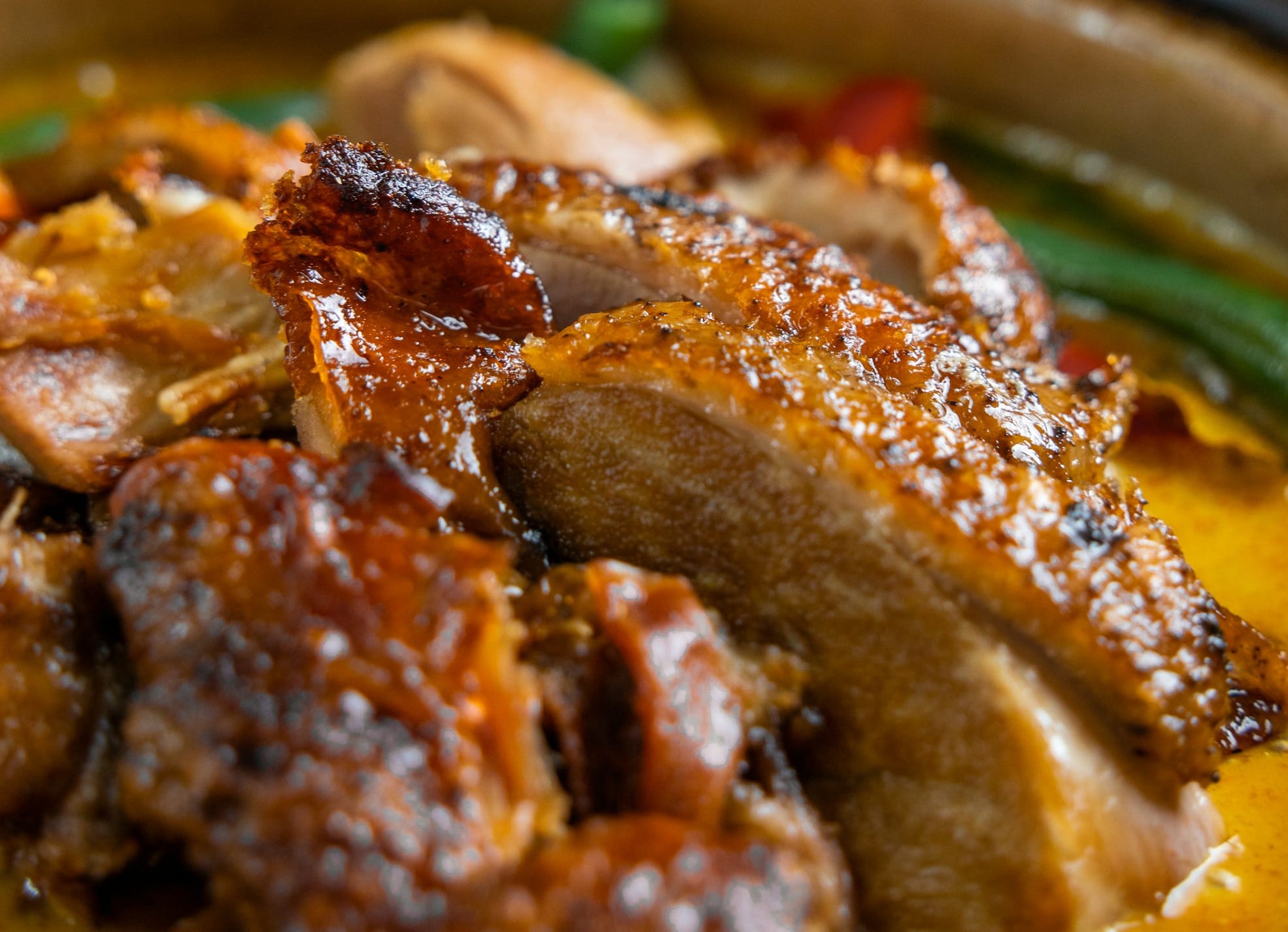
Braising generates unique flavor compounds primarily through combination cooking: initial searing followed by moist-heat cooking in a covered vessel with liquid at relatively low temperatures (80-180°C). Key chemical pathways include hydrolytic reactions (proteolysis, collagen conversion), diffusion and exchange between food and braising liquid, slow Maillard reactions at liquid interfaces, and extraction of flavor compounds into the braising medium. Braising-specific compounds often include hydrolysis products, savory peptides, lipid-emulsion compounds, and unique reaction products formed at the solid-liquid interface.
Key Chemical Pathways in Braising vs. Other Cooking Methods:
- Two-phase cooking: Dry heat (searing) → Moist heat (braising) creates sequential reaction pathways
- Closed environment: Trapped volatiles recirculate and react rather than escaping
- Liquid medium: Hydrolysis dominates over pyrolysis, with solubilization of compounds
- Extended time at moderate temperature: Collagen → gelatin conversion, connective tissue breakdown
- Solid-liquid exchange: Flavor compounds migrate between food and liquid, creating integrated flavor
- Temperature gradient: Lower than roasting/frying allows different reaction selectivity
1. BRAISED MEATS (Pot Roast, Osso Buco, Coq au Vin, Beef Bourguignon)
Braising-specific compounds:
- Glutamyl peptides – umami, savory (γ-glutamyl peptides from slow proteolysis)
- Inosine 5'-monophosphate (IMP) and guanosine 5'-monophosphate (GMP) – umami synergists from nucleotide breakdown
- Collagen hydrolysis products: Hydroxyproline, proline-rich peptides, glycine
- Lipid hydrolysis products: Free fatty acids that emulsify into sauce
- Methional (3-methylthiopropanal) – potato-like, from methionine in moist heat
- 2-Furfural and 5-methylfurfural – caramel, sweet from sugar degradation in liquid phase
- Strecker aldehydes (3-methylbutanal, phenylacetaldehyde) – but at different ratios than dry-heat methods
- Pyrazines with oxygen substituents (methoxypyrazines) – from vegetable contributions in braising liquid
- Wine/acid-derived compounds: Ethyl esters, acetates from alcohol in braising liquid
Key References:
- Nishimura, T., & Kato, H. (1988). Taste of free amino acids and peptides. Food Reviews International, 4(2), 175-194.
→ Details umami peptides relevant to braised meat flavor. - Kato, H., Rhue, M. R., & Nishimura, T. (1989). Role of free amino acids and peptides in food taste. In Flavor Chemistry: Trends and Developments (pp. 158-174). ACS Symposium Series 388.
→ Explains peptide contribution to savory flavors in braised dishes. - Spanier, A. M., & Miller, J. A. (1993). Role of proteins and peptides in meat flavor. In Food Flavor and Safety (pp. 78-97). ACS Symposium Series 528.
→ Discusses protein breakdown products in moist-heat cooking.
2. BRAISED VEGETABLES (Braised Greens, Glazed Carrots/Onions)
Braising-specific compounds:
- Methional – cooked potato, from methionine in vegetables
- Dimethyl sulfide – canned corn, from S-methylmethionine in vegetables
- β-Damascenone – cooked apple, fruity from carotenoid degradation
- Linalool oxides – floral, from linalool oxidation in moist heat
- Acids from vegetable breakdown: Malic, citric, oxalic acids that modify braising liquid pH
- Pectin degradation products: Galacturonic acid, methanol (traces)
- Glucosinolate hydrolysis products (in cabbage family): Isothiocyanates, nitriles, thiocyanates – but different profile than raw/steamed due to extended heating
Key References:
- Buttery, R. G., Seifert, R. M., Guadagni, D. G., & Ling, L. C. (1971). Characterization of additional volatile components of tomato. Journal of Agricultural and Food Chemistry, 19(3), 524-529.
→ Though tomato-focused, includes compounds relevant to braised vegetables. - Macleod, A. J., & Macleod, G. (1970). Flavor volatiles of some cooked vegetables. Journal of Food Science, 35(6), 734-738.
→ Compares cooking methods for vegetables.
3. BRAISED FISH/SEAFOOD (Fish en Papillote, Braised Octopus)
Braising-specific compounds:
- Trimethylamine oxide (TMAO) thermal degradation products:
- Dimethylamine – fishy
- Formaldehyde – from TMAO at temperatures >60°C
- Inosine and hypoxanthine – bitter, from ATP degradation (different balance than in fresh fish)
- Cysteine derivatives: Cystine, cysteine peptides from connective tissue breakdown
- TMAO-dimethylamine-formaldehyde system: Unique to fish braising vs. meat braising
- Seaweed/konbu contributions (in Japanese braising): Glutamic acid, alanine, fructose
Key References:
- Konosu, S., & Yamaguchi, K. (1982). The flavor components in fish and shellfish. In Chemistry & Biochemistry of Marine Food Products (pp. 367-404). AVI Publishing.
→ Details fish flavor chemistry relevant to braising. - Sikorski, Z. E., & Kolakowska, A. (1994). Changes in proteins in frozen stored fish. In Seafood Proteins (pp. 99-112). Springer.
→ Protein changes relevant to moist-heat fish cooking.
4. BRAISED DISHES WITH SAUCES (Stews, Ragù, Curries)
Braising-specific compounds from sauce integration:
- Emulsion-stabilized compounds: Lipid oxidation products trapped in oil-in-water emulsions
- Starch-thickened systems: Gelatinized starch-flavor complexes that modify release
- Tomato-based systems: Lycopene degradation products, isovaleraldehyde from tomato amino acids
- Wine/beer reductions: Concentrated fermentation esters, phenolics
- Spice extraction: Oil-soluble spice compounds (capsaicin, piperine, curcumin) at different extraction efficiencies than in dry cooking
- Maillard reaction in concentrated sauce phase: Melanoidins, reductones at sauce surface
Key References:
- Ames, J. M. (1998). Applications of the Maillard reaction in the food industry. Food Chemistry, 62(4), 431-439.
→ Discusses Maillard in complex systems like stews. - McGorrin, R. J. (2001). Character-impact flavor compounds. In Sensory-Directed Flavor Analysis (pp. 223-267). CRC Press.
→ Includes analysis of complex dish flavors.
5. ASIAN BRAISED DISHES (Hong Shao Rou, Teriyaki, Adobo)
Braising-specific compounds from unique ingredients:
- Soy sauce-derived: 4-Hydroxy-2(or 5)-ethyl-5(or 2)-methyl-3(2H)-furanone (HEMF) – sweet caramel note
- Rice wine-derived: Ethyl esters (ethyl lactate, ethyl acetate)
- Sugar caramelization in liquid phase: Maltol, isomaltol, cyclotene
- Spice extraction in oil-water system: Different terpene profiles than dry toasting
- Ginger/garlic hydrolysis products: Zingerone, gingerols → shogaols; allicin → diallyl disulfide/trisulfide
- Star anise/five-spice: Anethole, safrole (trace), estragole extraction dynamics
Key References:
- Shi, Y. C., & Ho, C. T. (1994). The flavour of poultry meat. In Flavor of Meat and Meat Products (pp. 52-69). Springer.
→ Includes Asian cooking methods. - Fujio, Y., & Doi, Y. (1991). Flavor of cooked rice. Journal of the Japanese Society for Food Science and Technology, 38(2), 175-181.
→ Though rice-focused, methodology applies to braised dishes.
6. BRAISED LEGUMES/BEANS (Cassoulet, Feijoada, Dal)
Braising-specific compounds:
- Saponin hydrolysis products: Sapogenins (reduced bitterness)
- Oligosaccharide reduction: Raffinose, stachyose → simpler sugars reducing flatulence factors
- Phytic acid degradation: Inositol phosphates → free minerals
- Lectin deactivation: Protein conformational changes
- Phenolic compound leaching: Tannins, phenolic acids migrate to braising liquid
- Leghemoglobin derivatives (in beans): Porphyrin degradation products
Key References:
- Reddy, N. R., Pierson, M. D., & Salunkhe, D. K. (1989). Legume-based fermented foods. CRC Press.
→ Though fermentation-focused, includes thermal processing of legumes.
7. POT-AU-FEU / BOILED DINNER
Braising-specific compounds from multiple components:
- Bone marrow extraction: Phospholipids, glycerol, minerals
- Cartilage breakdown: Chondroitin sulfate → sugars, amino sugars
- Vegetable-broth interactions: Volatile exchange between components
- Fat emulsification: Marrow fat forms stable emulsion with gelatin
- Integrated flavor: Compounds not present when components cooked separately
Key References:
- Galt, A. M., & MacLeod, G. (1984). Headspace sampling of cooked beef aroma using Tenax GC. Journal of Agricultural and Food Chemistry, 32(1), 59-64.
→ Methodology for analyzing complex food aromas.
BRAISING-SPECIFIC CHEMICAL SIGNATURES:
- High peptide content: Di- and tri-peptides from partial proteolysis (not complete as in hydrolysis)
- Gelatin presence: Hydroxyproline, glycine-proline sequences
- Integrated flavor compounds: Compounds formed by interaction between components
- Liquid-phase Maillard products: Different from dry-phase due to water participation
- Extracted compounds: Spice, herb, vegetable compounds in braising liquid
COMPARISON WITH OTHER COOKING METHODS:
| Compound/Characteristic | Braising | Boiling | Steaming | Roasting |
|---|---|---|---|---|
| Free amino acids | High | High | Medium | Medium |
| Peptides (2-10 AA) | Very High | High | Low | Low |
| Collagen → gelatin conversion | Complete | Complete | Partial | Partial |
| Pyrazines | Low-Medium | Very Low | None | Very High |
| Furans (furfural, HMF) | Medium | Low | None | High |
| Lipid oxidation products | Medium* | Low | Low | High |
| Emulsified compounds | High | Medium | None | None |
| *In emulsion, different profile |
KEY CHEMICAL MECHANISMS IN BRAISING:
- Hydrolytic degradation:
- Proteins → peptides → amino acids
- Collagen (triple helix) → gelatin (random coil) at 60-70°C in moist heat
- Triglycerides → fatty acids + glycerol (partial)
- Diffusion and partitioning:
- Flavor compounds migrate between solid and liquid phases
- Oil-water partitioning affects which compounds remain in meat vs. sauce
- Temperature affects diffusion rates
- Interfacial reactions:
- Maillard reactions at air-liquid interface of braising liquid
- Lipid oxidation at oil-water interfaces in emulsion
- Volatile trapping and reaction:
- Closed lid prevents volatile loss
- Condensation-redistribution cycle on lid
PRACTICAL FLAVOR CREATION FOR BRAISED NOTES:
Key target compounds:
- Glutamyl peptides (γ-Glu-X) – umami, mouthfulness
- Hydroxyproline – gelatinous, broth character
- Methional – cooked potato, savory
- Inosine 5'-monophosphate (IMP) – umami synergist
- 2-Furfural – sweet, caramel (liquid-phase)
- Diacetyl – buttery (from Maillard in moist environment)
References for flavor creation:
- Maggi, M., et al. (2021). The sensory properties and metabolic activity of a novel yeast strain isolated from Chinese soy sauce. Food Chemistry, 339, 127857.
→ Modern analysis of fermentation flavors relevant to braising sauces. - Sun, W., Zhao, M., Yang, B., Zhao, H., & Cui, C. (2011). Oxidation of sarcoplasmic proteins during processing of Cantonese sausage in relation to their aggregation behaviour and in vitro digestibility. Meat Science, 88(3), 462-467.
→ Protein oxidation in moist-heat processing.
CRITICAL FACTORS IN BRAISING CHEMISTRY:
- Temperature control:
- Below 100°C: Hydrolysis dominates
- 100-120°C (pressure braising): Accelerated reactions
- Time:
- Short (1-2 hours): Partial breakdown
- Long (4-8 hours): Complete connective tissue breakdown, more peptide formation
- Liquid composition:
- Acidic (wine, tomato): Different hydrolysis patterns
- Alkaline (baking soda in some Asian braising): Different protein breakdown
- Enzyme-containing (ginger, pineapple, papaya): Accelerated tenderization
- Vessel material:
- Cast iron: Even heating, some iron migration
- Clay pots: Moisture retention, mineral exchange
- Stainless steel: Minimal interaction
120°C: More Maillard, less hydrolysis
MODEL SYSTEM FOR BRAISING FLAVOR STUDY:
A representative model could include:
- Protein source: Collagen + muscle proteins
- Lipid source: Marrow fat + muscle lipids
- Liquid phase: Water + wine + soy sauce
- Vegetables: Onion, carrot, celery
- Herbs: Thyme, bay leaf
- Cooking: 3 hours at 90°C after initial browning
BRAISING VS. OTHER MOIST-HEAT METHODS:
| Aspect | Braising | Boiling | Stewing | Steaming |
|---|---|---|---|---|
| Liquid amount | Partial cover | Full immersion | Full immersion | Vapor only |
| Initial browning | Yes | No | Sometimes | No |
| Lid | Covered | Usually open | Covered | Covered |
| Temperature | 80-180°C | 100°C | 80-100°C | 100°C |
| Final sauce | Reduced, integrated | Discarded or served | Served as part | None |
The combination of initial dry-heat reactions followed by extended moist-heat cooking with flavor exchange between components creates the unique, integrated flavor profiles characteristic of braised dishes. The partial liquid coverage allows for both hydrolysis and some concentration/reaction at the exposed surfaces, creating complexity not found in fully immersed cooking methods.