Buchu as a Natural Flavoring: A Comprehensive Guide
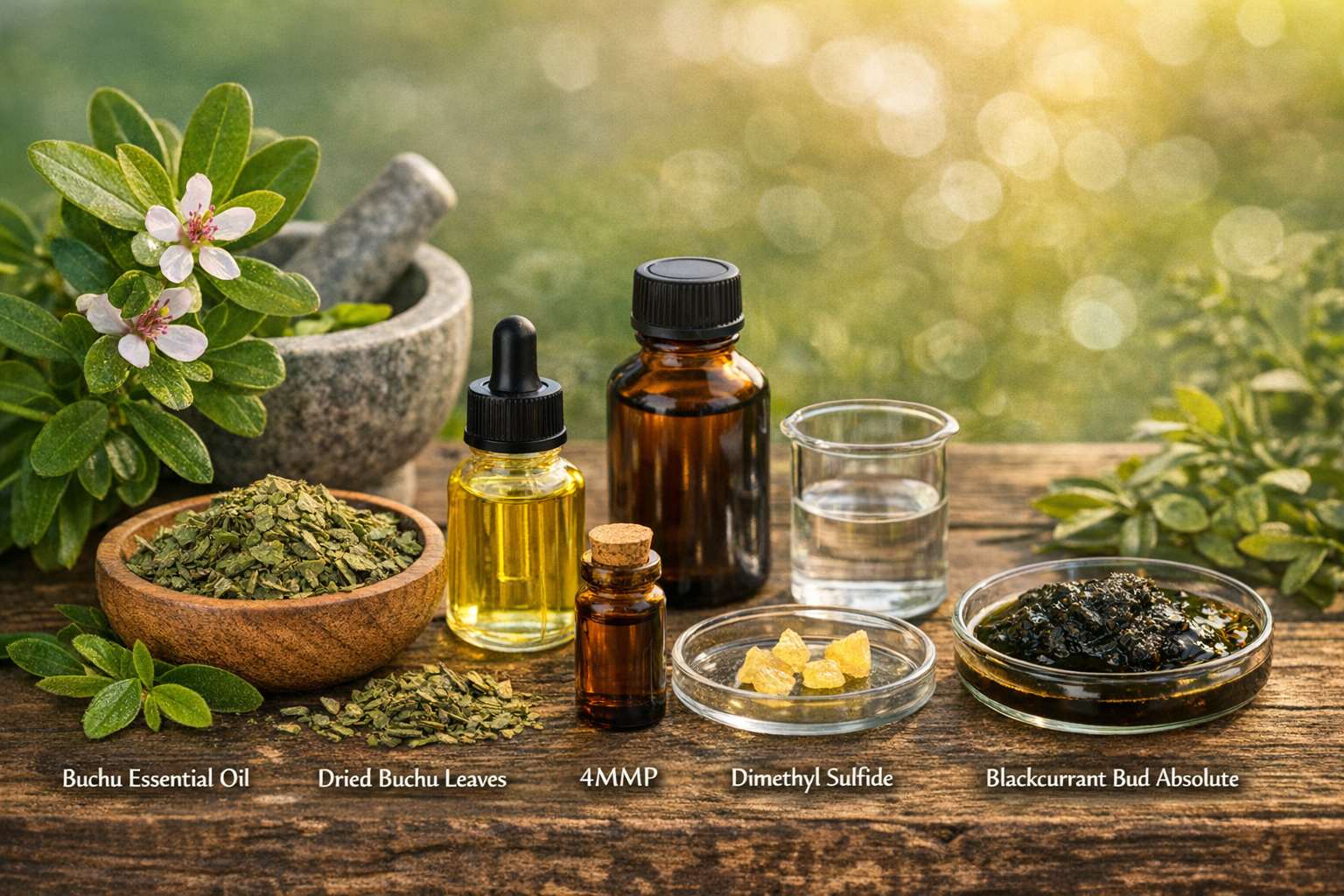
The Society of Flavor Chemists requires certified flavorists to be able to identify the plant part used, derivatives, organoleptic characteristics, and major chemical component(s) characterizing the aroma and flavor of the 80 natural flavorings listed on its syllabus for the qualification test and interview. Buchu is included among these essential items.
Introduction
Buchu (pronounced boo-koo) is a distinctive natural flavoring native to the Western Cape region of South Africa. This aromatic shrub from the Rutaceae (citrus) family offers a unique flavor profile prized by flavorists and food manufacturers worldwide.
Plant Parts Used
The leaves are the sole part of the buchu plant used for flavoring purposes. These distinctive leaves are:
- Thick and leathery in texture
- Glossy in appearance
- Approximately 20 mm in length (for Agathosma betulina)
- Covered with visible oil glands that contain aromatic compounds
The leaves are harvested, typically during March and April, then dried before processing.
Derivatives
Buchu is commercially available in several forms:
| Derivative | Production Method | Description |
|---|---|---|
| Essential Oil | Steam distillation of dried leaves | Yellowish-brown to deep brown liquid; becomes thicker with age |
| Dried Leaves | Air-drying of harvested foliage | Used whole or ground for teas and culinary applications |
| Tincture | Alcohol extraction | Traditional preparation for medicinal and flavor uses |
| Powdered Extract | Solvent extraction and concentration | Standardized flavoring for commercial applications |
Organoleptic Characteristics
Aroma Profile
When diluted, buchu oil reveals a complex aromatic profile:
- Blackcurrant (cassis): The most prominent and prized note
- Green and leafy undertones
- Minty medicinal character
- Herbaceous hints reminiscent of rosemary
Taste Characteristics
- Sweet and fresh initially
- Bitter undertones that contribute complexity
- Tart-fruity profile that enhances berry flavors
- Mentholated cooling sensation
The Key to Buchu's Unique Flavor
The unmistakable blackcurrant character comes from trace amounts of sulfur-containing compounds, specifically cis- and trans-8-mercapto-p-menthane-3-ones. These compounds represent only a small percentage of the oil but are responsible for the characteristic aroma that makes buchu valuable to flavorists.
Major Chemical Components
Agathosma betulina (Round Leaf Buchu)
The essential oil contains:
- (Iso)menthone: Major component
- (Psi)-diosphenol: Significant percentage
- cis- and trans-8-mercapto-p-menthane-3-ones: Key aroma compounds
- Limonene: Present in notable quantities
- Menthone and pulegone: Present in smaller amounts
Agathosma crenulata (Oval Leaf Buchu)
This species has a distinct chemical profile dominated by:
- Pulegone: Primary component
- trans-8-acetylthio-p-menthan-3-one: Characteristic compound
Two Chemotypes of A. betulina
For commercial purposes, A. betulina is categorized into:
- Diosphenol chemotype: Higher diosphenol content
- Isomenthone chemotype: Higher isomenthone content
Both types contain limonene, menthone, and pulegone in varying proportions.
Non-Volatile Components
The leaves also contain beneficial flavonoids, including diosmin and various quercetin derivatives.
Applications in Flavoring
Regulatory Status
Buchu leaf oil is approved as a natural flavoring substance in multiple jurisdictions:
- United States: Listed under 21 CFR §172.510 as a natural flavoring substance
- European Union: Permitted for use in food flavorings
- China: Approved food flavor under GB 2760
Typical Usage Levels (mg/kg)
| Application | Typical Concentration Range |
|---|---|
| Non-alcoholic beverages | 1–4 mg/kg |
| Alcoholic beverages | 0.5–11 mg/kg |
| Baked goods | 5–14 mg/kg |
| Hard candy | up to 25 mg/kg |
| Frozen dairy | 5–12 mg/kg |
| Gelatins and puddings | 7–16 mg/kg |
| Chewing gum | 0.2–1 mg/kg |
Note: These ranges represent typical industry usage. Actual concentrations vary based on formulation goals and regulatory requirements.
Flavor Applications
When used in small doses, buchu oil serves as an effective flavor modifier for:
- Blackcurrant and other berry profiles
- Raspberry and strawberry
- Grapefruit and other citrus
- Mango and tropical fruits
- Mint and herbaceous blends
Fragrance Applications
Buchu's diffusive properties make it valuable in perfumery for:
- Cologne bases
- Green and herbal compositions
- Citrus fragrance accords
Example Formula: Buchu-Enhanced Blackcurrant Beverage Base
The following is an illustrative formula demonstrating typical usage of buchu in a commercial-style beverage application. This formula is provided for educational purposes and represents standard industry practices.
Blackcurrant-Buchu Beverage Concentrate
| Component | Percentage (%) | Function |
|---|---|---|
| Water | 75.0 | Solvent and base |
| Sugar | 15.0 | Sweetener |
| Blackcurrant juice concentrate | 8.0 | Primary fruit flavor |
| Citric acid | 0.8 | Acidity regulator |
| Natural blackcurrant flavor | 0.5 | Flavor enhancement |
| Buchu essential oil | 0.005 | Flavor modifier |
| Natural coloring (anthocyanins) | 0.2 | Visual appearance |
| Preservative (potassium sorbate) | 0.1 | Shelf stability |
| Total | 100.0 |
Preparation Method
- Dissolve sugar in water with gentle heating
- Cool to room temperature
- Dilute buchu essential oil in a small portion of the blackcurrant flavor or food-grade alcohol
- Combine all liquid ingredients with the sugar solution
- Adjust pH with citric acid to target range
- Filter and package
Usage Instructions
Dilute concentrate at a ratio of 1:5 with carbonated or still water. Serve chilled.
Traditional and Culinary Applications
Traditional Preparations
- Buchu brandy: A traditional South African infusion
- Herbal tea: Dried leaves steeped in hot water
- Medicinal tinctures: Historically used in traditional medicine
Culinary Pairings
Buchu pairs well with:
- Berries, particularly blackcurrant and raspberry
- Citrus fruits
- Mint and other cooling herbs
- Honey
- Game meats and poultry
Safety Considerations
General Safety
Buchu is generally recognized as safe for use as a flavoring at approved levels. The essential oil should be used in accordance with industry guidelines and regulatory limits.
Important Considerations
- Pregnancy and breastfeeding: Concentrated buchu products should be avoided
- Kidney conditions: Buchu has diuretic properties
- Medication interactions: May interact with certain medications
Skin Safety
Buchu essential oil may cause skin irritation in sensitive individuals and should always be properly diluted for topical applications.
Sustainability and Sourcing
Cultivation Practices
Modern buchu production emphasizes:
- Cultivated crops rather than wild harvesting
- Sustainable irrigation methods
- Ethical sourcing practices
- Biodiversity conservation
Quality Considerations
When sourcing buchu, consider:
- Botanical identity verification (Agathosma betulina vs. crenulata)
- Chemotype specification for flavor applications
- Essential oil analysis for quality confirmation
- Sustainable sourcing certifications
Summary
Buchu stands as a distinctive natural flavoring with a unique combination of blackcurrant, mint, and herbaceous notes. Its sulfur-containing aroma compounds provide a character that is difficult to replicate with other ingredients. When used skillfully at appropriate concentrations, buchu enhances berry, citrus, and tropical fruit profiles across beverages, baked goods, and confectionery applications.
References and Further Reading
The information presented in this guide is synthesized from publicly available sources including:
- Regulatory documents from FDA and international food safety authorities
- Published scientific literature on Agathosma species
- Standard textbooks on natural flavoring materials
- Traditional knowledge documented in public domain sources
Disclaimer: This article is for informational purposes only. When using buchu in commercial products, always verify current regulatory status in your jurisdiction, conduct appropriate safety assessments, and source ingredients from reputable suppliers who can provide documentation of botanical identity and quality. The formulas and usage levels provided are illustrative examples and may require adjustment based on specific product requirements and regulatory compliance.
Complete Buchu Flavor Application Formulas
Building on the comprehensive overview of buchu as a natural flavoring, this section provides detailed, practical formulas for each major application category. These recipes demonstrate how buchu—in its various forms including fresh leaves, dried leaves, essential oil, and infused preparations—can be incorporated across the culinary landscape.
Important Note on Buchu Varieties
Before diving into the formulas, it's essential to understand that "buchu" refers to different plants depending on context:
| Variety | Botanical Name | Flavor Profile | Primary Use |
|---|---|---|---|
| Buchu (South African) | Agathosma betulina | Blackcurrant, mint, citrus, herbal | Flavoring, beverages, baked goods |
| Lemon Buchu | Agathosma species | Herbal lemon scent, similar to lemon zest | Baking, desserts, teas |
| Garlic Buchu | Agathosma species | Garlic aroma, robust earthy flavor | Savory dishes, meat preparations |
| Buchu (Korean) | Allium tuberosum | Mild onion with delicate garlic flavor | Kimchi, savory Asian dishes |
The formulas below specify which variety to use for optimal results.
1. Beverage Applications
1.1 Buchu and Mint Granita (Non-Alcoholic)
This refreshing frozen dessert showcases buchu's minty and citrus notes in a simple, elegant format.
| Ingredient | Amount | Function |
|---|---|---|
| Fresh buchu leaves (A. betulina) | 100g | Primary flavoring agent |
| Water | 3 cups (750ml) | Base liquid |
| Fresh lemon juice | ¼ cup (60ml) | Acidity and citrus enhancement |
| Honey | ½ cup (120ml) | Natural sweetener |
| Fresh mint leaves | Handful + 2 tbsp chopped | Complementary herbaceous note |
| Lemon slices | For garnish | Visual appeal and aroma |
Method:
- Place a baking sheet in the freezer to chill
- Combine buchu leaves, water, lemon juice, and mint in a saucepan
- Bring to a boil, allowing buchu to infuse into the mixture
- Mix through chopped fresh mint
- Remove from heat and pour onto the chilled baking sheet
- Cover with plastic wrap and freeze for 8 hours or until firm
- Using a fork, scrape the mixture to create ice crystals
- Garnish with fresh mint and lemon slices before serving
Flavor Profile: Minty, blackcurrant, and citrus notes with a refreshing frozen texture
1.2 Blackcurrant-Buchu Sparkling Beverage
This formula demonstrates buchu's synergy with berry flavors—a core application in commercial flavoring.
| Ingredient | Amount | Function |
|---|---|---|
| Carbonated water | 500 ml | Base |
| Organic blackcurrant juice concentrate | 15 ml | Primary fruit flavor |
| Buchu essential oil (A. betulina) | 0.5 mg | Flavor modifier/enhancer |
| Organic agave syrup | 10 ml | Sweetener |
| Citric acid | 0.2 g | Acidity adjustment |
| Natural raspberry extract | 0.5 ml | Supporting fruit note |
Method:
- Dilute buchu essential oil in a small amount of alcohol or glycerin
- Mix all liquid ingredients except carbonated water
- Add the buchu mixture and stir thoroughly
- Combine with carbonated water just before serving
- Serve chilled with fresh mint garnish
1.3 Buchu Simple Syrup
A versatile base for cocktails, lemonades, and other beverages.
| Ingredient | Amount | Function |
|---|---|---|
| Castor sugar | 100g | Sweetener base |
| Water | 100g | Solvent |
| Fresh buchu leaves (or 1 tbsp dried) | Large handful | Flavoring agent |
| Lemon juice | 30ml | Acidity and preservation |
Method:
- Combine sugar and water in a saucepan
- Bring to a boil, stirring to dissolve sugar
- Add buchu leaves and remove from heat
- Allow to steep for 30 minutes
- Strain, add lemon juice, and cool
- Store refrigerated for up to 2 weeks
This syrup can be used in cocktails, iced tea, or drizzled over fresh fruit.
2. Baked Goods Applications
2.1 Buchu Shortbread
This classic recipe demonstrates how buchu's herbal, peppermint-rosemary notes translate beautifully into butter-based baked goods.
| Ingredient | Amount | Function |
|---|---|---|
| Salted butter | 470g (approximately 2 cups) | Fat base, tenderness |
| Sugar | 200ml (approximately ¾ cup) | Sweetness, structure |
| Cake flour | 5 cups (approximately 625g) | Structure |
| Powdered buchu leaves or buchu essence | To taste | Flavoring agent |
| Castor sugar | ½ cup (100g) | Finishing sprinkle |
Method:
- Preheat oven to 160°C (320°F)
- Cream sugar and butter with buchu powder or essence until light and fluffy
- Add sifted flour and combine until a dough forms
- Press dough into a baking tray
- Prick all over with a fork to prevent bubbling
- Bake for approximately 35 minutes until lightly golden
- While still hot, sprinkle with castor sugar and cut into squares or strips
- Allow to cool completely before serving
Flavor Profile: Herbal taste described as a spicy combination between rosemary and peppermint
2.2 Lemon Buchu and Amasi Loaf Cake
This recipe showcases lemon buchu—a variety with a herbal lemon scent that can replace lemon zest in baking.
| Ingredient | Amount | Function |
|---|---|---|
| Loaf Cake | ||
| Butter, softened | 127g | Fat base |
| Castor sugar | 200g | Sweetness |
| Lemon buchu, finely chopped | 2 large sprigs | Primary flavor |
| Lemon zest | 1 lemon | Citrus enhancement |
| Large eggs | 2 | Structure, moisture |
| Amasi (or buttermilk) | 90ml | Tenderizing, tangy flavor |
| Lemon juice | 10ml (2 tsp) | Acidity |
| Cake flour | 200g | Structure |
| Bicarbonate of soda | 1.25ml (¼ tsp) | Leavening |
| Baking powder | 1.25ml (¼ tsp) | Leavening |
| Butter Icing | ||
| Cream | 30ml (2 tbsp) | Liquid base |
| Lemon buchu sprigs | 2 | Infused flavor |
| Butter, softened | 115g | Icing base |
| Icing sugar, sifted | 175g | Sweetness, texture |
| Lemon buchu, finely chopped | 2.5ml (½ tsp) | Flavor |
| Lemon zest | ½ lemon | Aroma |
Method:
- Preheat oven to 180°C (350°F). Grease a 23cm x 13cm loaf tin
- Cream butter for 4 minutes until light in color
- Combine castor sugar, chopped lemon buchu, and lemon zest. Rub between fingertips for 2 minutes until fragrant
- Add sugar mixture to butter and cream for 3 minutes
- Whisk in eggs one by one
- Whisk in amasi and lemon juice until combined
- Sift together dry ingredients and fold into the mixture
- Transfer to loaf tin and bake for 50 minutes, or until a skewer comes out clean
- Cool in fridge for at least 40 minutes before removing from tin
For the Icing:
- Gently simmer cream with lemon buchu sprigs, then strain and cool
- Cream butter for 4 minutes until light
- Gradually add icing sugar, whisking between additions
- Add chopped lemon buchu, lemon zest, and infused cream
- Whisk until light and fluffy
- Spread over cooled cake and garnish with lemon zest and chopped lemon buchu
Flavor Profile: Zesty lemon-herbal with a tender, tangy crumb from the amasi
2.3 Pumpkin Buchu Stovetop Bread
This savory bread incorporates garlic buchu (Allium tuberosum) for a rich, allium flavor profile.
| Ingredient | Amount | Function |
|---|---|---|
| Dough | ||
| Kabocha squash, cooked and mashed | 200g (¾ cup) | Moisture, sweetness, earthy flavor |
| Kosher salt | 4g (1 tsp) | Seasoning |
| All-purpose flour | 227g (1¾ cups) | Structure |
| Whole wheat flour | 98g (¾ cup) | Flavor, texture |
| Dark brown sugar | 15g (1 tbsp) | Light sweetness |
| Instant yeast | 4g (2 tsp) | Leavening |
| Water | 50ml (¼ cup) | Hydration |
| Butter, melted and cooled | 24g (2 tbsp) | Tenderness, flavor |
| Filling | ||
| Flour | 1½ tbsp | Thickener |
| Black sesame seeds | 1 tbsp | Flavor, visual |
| Kosher salt | 1 tsp | Seasoning |
| Ground coriander | ¾ tsp | Citrusy spice |
| Ground black pepper | ¼ tsp | Heat |
| Vegetable oil | 36g (3 tbsp) + extra | Fat for filling and cooking |
| Garlic buchu, cut into ¼-inch lengths | 170g (2¼ cups) | Primary savory flavor |
Method:
- Combine pureed squash with salt until dissolved
- Mix flours, sugar, and yeast in a large bowl
- Add pumpkin puree, mixing until shaggy. Add butter and enough water to form a medium-soft dough
- Knead for 10 minutes until smooth. Place in oiled bowl and let rise 1 hour
- For filling: heat oil until smoking, pour over flour-spice mixture, stir, and cool completely
- Toss cut buchu with 1 tsp oil
- Roll dough into 48cm x 36cm rectangle
- Spread oil mixture over dough, leaving 1-inch border at top edge
- Sprinkle buchu over oil, press gently into dough
- Roll tightly from bottom edge into a log
- Stretch to 56cm, coil into flat loaf, cover and rest 30 minutes
- Gently roll into 23cm circle
- Heat skillet over medium heat. Add oil, then loaf. Cover and cook 7 minutes per side, flipping four times total until internal temperature reaches 94°C (200°F)
- Cool completely before slicing
Flavor Profile: Earthy squash, full garlic flavor heightened by sweetness, with citrusy coriander notes
2.4 Red Wine Brownie with Buchu Salt Finish
This modern dessert uses buchu as a finishing salt, demonstrating its versatility as a flavor accent.
| Ingredient | Amount | Function |
|---|---|---|
| Brownie batter | 1 batch (your preferred recipe) | Base |
| Red wine | 100ml (3.5 fl oz) | Syrup base |
| Sugar | 50g (¼ cup) | Sweetener for syrup |
| Buchu & Red Wine Blend salt | ½ tsp (2g) | Finishing flavor |
Method:
- Prepare and bake brownies according to your preferred method
- While baking, simmer red wine and sugar in a small saucepan over medium heat until thickened (10–12 minutes)
- Allow brownies to cool completely
- Slice brownies and brush or drizzle with red wine syrup
- Finish with a light sprinkle of Buchu & Red Wine Blend salt
Flavor Profile: Deep chocolate and red wine notes with a complex, herbal salt finish
Recipe Note: Use sparingly—the buchu salt flavor is strong and best used as a finisher
3. Dessert and Confectionery Applications
3.1 Blueberry Buchu Gel
This gel demonstrates buchu's affinity for berries, creating an elegant dessert component.
| Ingredient | Amount | Function |
|---|---|---|
| Buchu fynbos herb | 1 tsp | Flavoring agent |
| Fresh or frozen blueberries | 500g | Primary fruit |
| Water | 125ml | Liquid base |
| Lemon zest | 1 tsp | Citrus enhancement |
| Lemon juice | Juice of 1 lemon | Acidity |
| Sugar | 120g | Sweetener |
| Gelatin (sheets or powder) | 20g (4 sheets) | Gelling agent |
Method:
- Bloom gelatin in cold water
- Toast buchu herb gently for 5 minutes to release flavor
- Blend toasted buchu with sugar
- Combine blueberries, water, buchu sugar, and lemon zest in a saucepan
- Bring to boil and cook for 15 minutes
- Strain mixture to remove solids
- Add bloomed gelatin and stir to dissolve
- Pour into molds and refrigerate until firm (30–60 minutes)
Flavor Profile: Intense blueberry with complex herbal-buchu undertones
3.2 Buchu-Infused Honey
A simple infusion that captures buchu's aromatic compounds for use across multiple applications.
| Ingredient | Amount | Function |
|---|---|---|
| Raw honey | 250ml | Base |
| Fresh buchu leaves | 15-20 large leaves | Flavoring agent |
| Lemon zest (optional) | 1 tsp | Citrus enhancement |
Method:
- Gently warm honey in a double boiler (do not boil)
- Lightly bruise buchu leaves to release oils
- Add leaves and optional lemon zest to warm honey
- Remove from heat and allow to steep for 2-4 hours
- Strain and store in an airtight container
Uses: Drizzle over cheese, add to tea, glaze roasted vegetables, or incorporate into salad dressings
4. Savory Applications
4.1 Garlic Buchu Braid (Boerewors and Buchu Puff Pastry)
This South African-inspired recipe uses garlic buchu for its robust, earthy flavor similar to rosemary.
| Ingredient | Amount | Function |
|---|---|---|
| Filling | ||
| Onion, diced | ½ (100g) | Aromatic base |
| Garlic, minced | 30ml (2 tbsp) | Savory depth |
| Garlic buchu | 30ml (2 tbsp) | Primary herbal flavor |
| Rosemary | 10ml (2 tsp) | Complementary herb |
| Boerewors sausage, meat removed from casing | 400g | Protein base |
| Feta cheese | 60ml (¼ cup/100g) | Creamy saltiness |
| Apples, grated | 2 (200g) | Sweetness, moisture |
| Large eggs, whisked | 2 | Binder |
| Braid | ||
| Puff pastry, thawed | 400g | Encasing |
| Large egg, whisked | ½ | Egg wash |
| To Serve | ||
| Parsley, finely chopped | 10ml (2 tsp) | Garnish |
| Mayonnaise | 125ml (½ cup) | Dipping sauce |
Method:
- Sauté half the onion, half the garlic, half the garlic buchu, and rosemary in oil over low heat for 10 minutes until softened
- Combine boerewors meat with remaining raw onions, feta, grated apple, sautéed aromatics, remaining buchu, and whisked eggs
- Test seasoning by cooking a small spoonful of filling
- Preheat oven to 180°C (350°F) and line a baking tray
- Roll out thawed pastry slightly
- Place filling in a log shape down the center, leaving 2cm border at top and bottom
- Cut strips on either side of pastry, leaving 2cm border around filling
- Braid by crossing alternating strips over the filling
- Seal top and bottom ends
- Brush with egg wash and bake for 30-45 minutes until golden and crisp
- Garnish with parsley and serve with mayonnaise
Flavor Profile: Robust, earthy buchu flavor similar to rosemary, complemented by sweet apple and savory boerewors
4.2 Garlic Buchu Kimchi (Korean Buchu)
This formula uses Korean garlic chives (Allium tuberosum), demonstrating the "buchu" name's application in Asian cuisine.
| Ingredient | Amount | Function |
|---|---|---|
| Garlic chives (buchu) | 500g | Base vegetable |
| Red chili pepper flakes (gochugaru) | 4 tbsp | Heat, color |
| Fish sauce (myeolchiaekjeot) | 3 tbsp | Saltiness, umami |
| Salted shrimp (saeujeot), finely chopped | 1 tbsp (optional) | Additional umami |
| Sugar | 1 tsp (or to taste) | Balancing sweetness |
| Glutinous rice powder | 1 tbsp | Thickener, fermentation aid |
| Sesame seeds | 1 tsp | Finish |
Method:
- Whisk glutinous rice powder with ½ cup water. Simmer over low heat, stirring occasionally, until thickened to a thin paste. Cool
- Wash chives thoroughly 2-3 times, gently shaking to remove dirt between blades. Drain
- Cut chives into 2-3 sections crosswise
- Mix all seasoning ingredients with ½ cup water
- Add seasoning mixture to chives and gently rub to coat evenly
- Let stand at room temperature for 2-3 hours until chives wilt and reduce in volume
- Transfer to airtight container and refrigerate
Storage: Keeps well for 2-3 weeks in refrigerator. Can be eaten immediately but flavor develops with fermentation
Flavor Profile: Spicy, savory, with mild onion-garlic flavor characteristic of garlic chives
5. Summary: Application Guidelines
| Application Category | Recommended Buchu Form | Usage Notes |
|---|---|---|
| Beverages | Fresh leaves, essential oil | Use low concentrations (0.5–12 mg/kg for oil) |
| Baked Goods | Powdered leaves, fresh leaves (lemon buchu) | Rub with sugar to release oils |
| Desserts | Fresh leaves, infused honey, finishing salt | Use as subtle accent or primary flavor |
| Savory Dishes | Garlic buchu, fresh leaves | Robust applications; can be used generously |
| Confectionery | Essential oil, infused sugar | Very low concentrations; dilute properly |
Conclusion
These detailed formulas demonstrate the remarkable versatility of buchu across virtually every culinary category. From the intensely herbal, peppermint-rosemary notes of traditional South African buchu in baked goods, to the bright citrus character of lemon buchu in cakes, to the robust savory depth of garlic buchu in meat dishes—and even the completely different application of Korean garlic chive buchu in kimchi—this ingredient proves that one name encompasses a world of flavor possibilities.
When working with buchu essential oil, always remember that its intense aromatic power requires careful dilution and restraint. With fresh leaves, the opposite is often true: generous handfuls can be used to create deeply infused bases. Whether you're developing commercial flavor systems or experimenting in your home kitchen, these formulas provide a comprehensive foundation for exploring everything buchu has to offer.
Disclaimer: These recipes are provided for informational and culinary exploration purposes. When developing products for commercial sale, always verify regulatory compliance, conduct appropriate safety assessments, and source ingredients from reputable suppliers.