Cardamom as a Natural Flavoring: A comprehensive Technical Guide
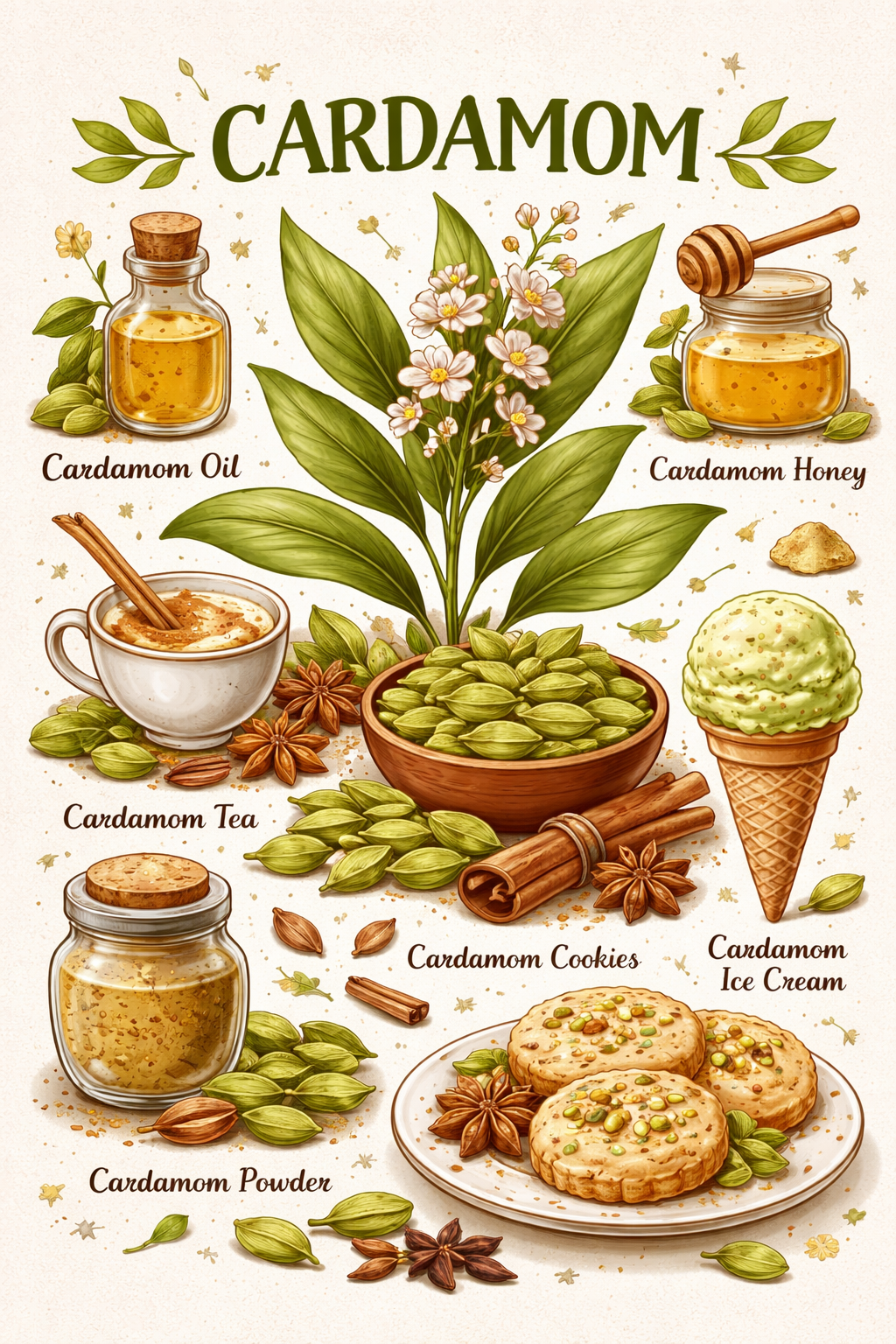
Here is a comprehensive technical guide for Cardamom, structured in the same format as the previous guides. All key information for flavorists has been incorporated.
Cardamom as a Natural Flavoring: A Comprehensive Technical Guide
The Society of Flavor Chemists requires certified flavorists to be able to identify the plant part used, derivatives, organoleptic characteristics, and major chemical component(s) characterizing the aroma and flavor of the 80 natural flavorings listed on its syllabus for the qualification test and interview. Cardamom is included among these essential items.
Introduction
Cardamom, often called the "Queen of Spices," is one of the most prized and expensive spices in the world. True cardamom (Elettaria cardamomum (L.) Maton), also known as green cardamom or Malabar cardamom, is a perennial herbaceous plant native to the Western Ghats of southern India and Sri Lanka. It belongs to the Zingiberaceae (ginger) family, which also includes ginger, turmeric, and galangal.
For flavorists, cardamom offers a uniquely complex aromatic profile—intensely fragrant, sweet, floral, citrusy, spicy, and slightly camphoraceous—that is unlike any other spice. Its versatility spans sweet applications (baked goods, chai, ice cream) to savory (Middle Eastern and Indian cuisine, meat dishes) to beverages (coffee, tea, liqueurs). The two primary commercial types—green cardamom (Elettaria cardamomum) and black cardamom (Amomum subulatum)—have distinctly different flavor profiles and applications.
The essential oil is dominated by 1,8-cineole (eucalyptol) and α-terpinyl acetate, a combination that produces the characteristic fresh, eucalyptus-like top note balanced by sweet, floral, and spicy warmth.