Cedarwood as a Natural Flavoring: A Comprehensive Technical Guide
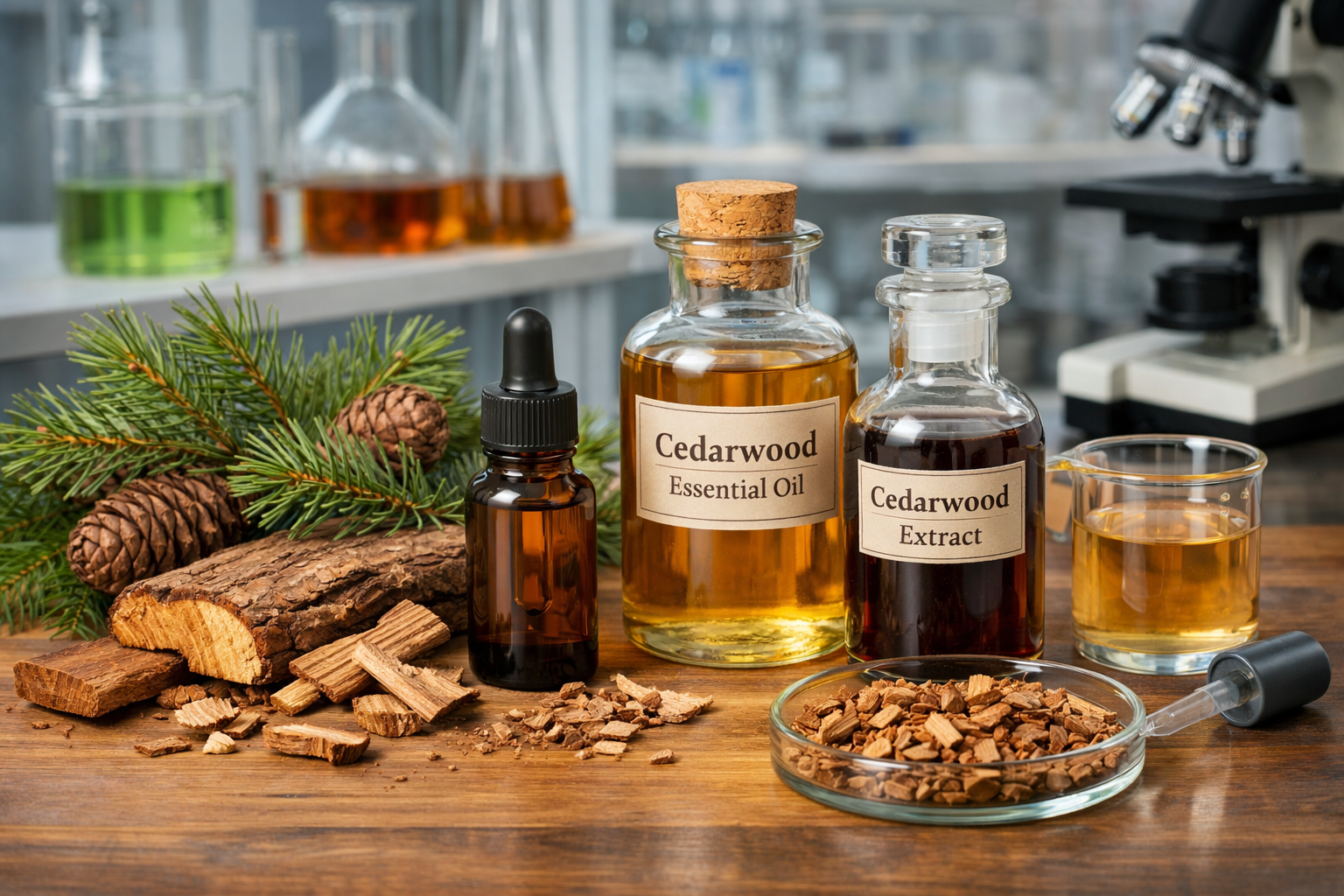
Here is a comprehensive technical guide for Cedarwood, structured in the same format as the previous guides. All key information for flavorists has been incorporated.
Cedarwood as a Natural Flavoring: A Comprehensive Technical Guide
The Society of Flavor Chemists requires certified flavorists to be able to identify the plant part used, derivatives, organoleptic characteristics, and major chemical component(s) characterizing the aroma and flavor of the 80 natural flavorings listed on its syllabus for the qualification test and interview. Cedarwood is included among these essential items.
Introduction
Cedarwood oil is derived from several species of coniferous trees belonging to the genera Cedrus (true cedars) and Juniperus (junipers), with the most commercially significant sources being Juniperus virginiana (Eastern Red Cedar, Virginia Cedarwood) and Cedrus atlantica (Atlas Cedarwood). Despite the name "cedarwood," the primary flavoring material is not from the true cedar (Cedrus) but from the juniper species, which produces a rich, warm, balsamic, woody, and slightly sweet oil with a distinctive pencil-like aroma.
For flavorists, cedarwood oil is valued not as a primary flavor but as a sophisticated modifier and fixative. It adds depth, warmth, woody complexity, and a natural, grounding character to a wide range of flavor systems, including cola, root beer, citrus blends, berry flavors, and savory applications. Its primary components—cedrol, cedrene, and thujopsene—provide a tenacious, long-lasting base note that enhances the overall persistence and complexity of a flavor.