Cinnamon (Ceylon) as a Natural Flavoring: A Comprehensive Technical Guide
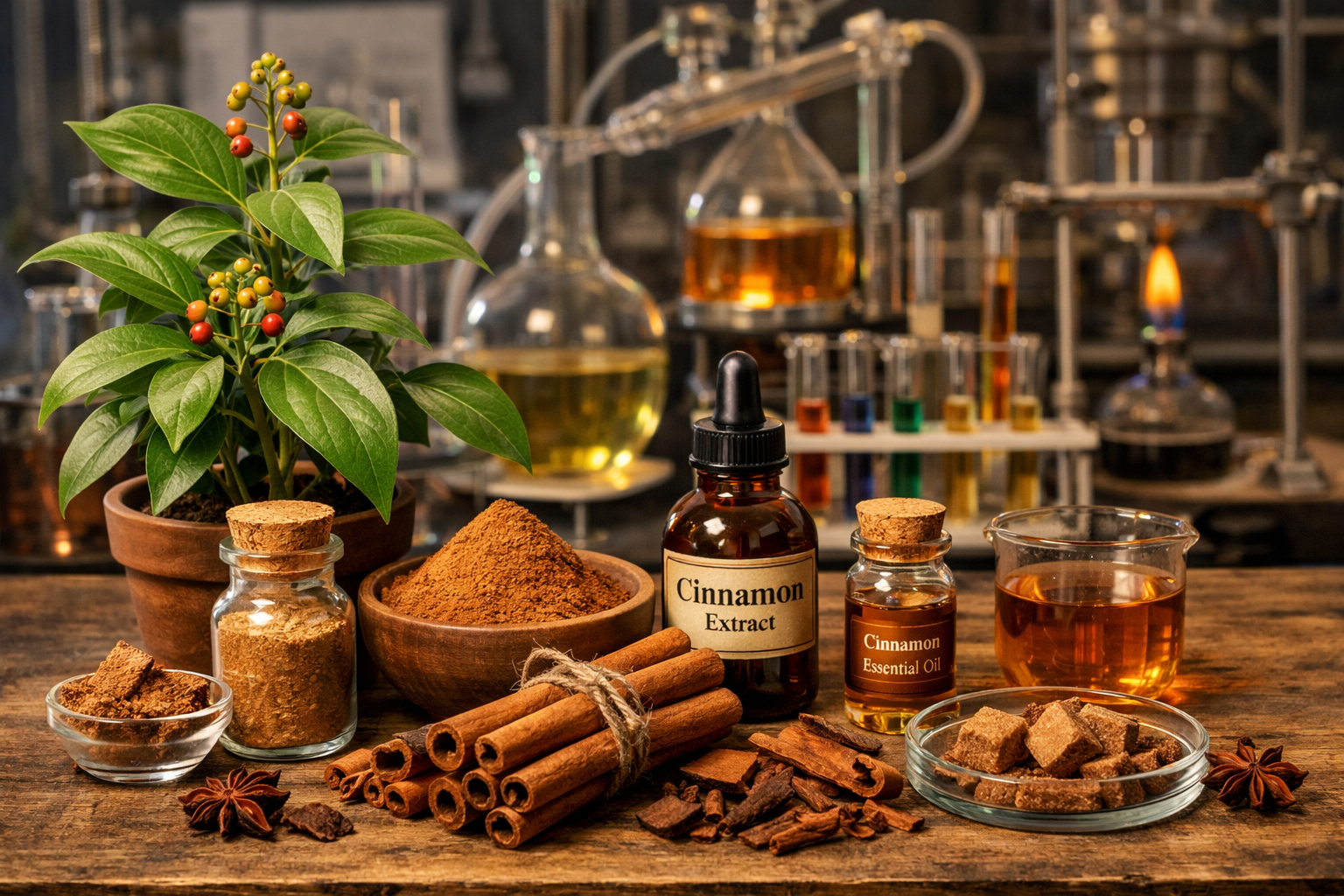
Here is a comprehensive technical guide for Cinnamon (Ceylon Cinnamon), structured in the same format as the previous guides. All key information for flavorists has been incorporated.
Cinnamon (Ceylon) as a Natural Flavoring: A Comprehensive Technical Guide
The Society of Flavor Chemists requires certified flavorists to be able to identify the plant part used, derivatives, organoleptic characteristics, and major chemical component(s) characterizing the aroma and flavor of the 80 natural flavorings listed on its syllabus for the qualification test and interview. Cinnamon is included among these essential items.
Introduction
Cinnamon is one of the world's oldest and most beloved spices, prized for its warm, sweet, delicate, and complex aroma. However, the term "cinnamon" is often used loosely to refer to two distinct spices: Ceylon Cinnamon (Cinnamomum verum J. Presl, syn. Cinnamomum zeylanicum), known as "true cinnamon," and Cassia (Cinnamomum cassia, C. loureiroi, C. burmannii), which is more common in commerce but has a different flavor profile. For flavorists, this distinction is critical, as Ceylon cinnamon offers a more delicate, sweet, and complex character compared to the bold, pungent profile of cassia.
Ceylon cinnamon, native to Sri Lanka (formerly Ceylon), has been treasured for millennia. It was one of the most sought-after spices in the ancient world, driving trade routes and exploration. Today, it remains a cornerstone of sweet and savory flavor systems, from baked goods and confectionery to beverages, spice blends, and savory dishes. Its essential oil is dominated by cinnamaldehyde but with a more balanced profile that includes eugenol, linalool, and other compounds that contribute to its refined character.
Plant Parts Used
The inner bark is the plant part used for flavoring purposes. The following characteristics are notable:
- Source Tree: Cinnamomum verum J. Presl (syn. Cinnamomum zeylanicum)
- Family: Lauraceae (laurel family)
- Tree Characteristics: Evergreen tree, native to Sri Lanka and southern India, reaching 10–15 meters in height.
- Bark Description: Thin, papery, light brown to tan bark. The inner bark is carefully peeled from young branches, and the layers are rolled into quills. Ceylon cinnamon quills are composed of multiple thin layers (like a cigar), unlike cassia quills, which are a single thick layer.
- Harvesting: The bark is harvested from coppiced trees (cut back to ground level). The outer bark is scraped off, and the inner bark is peeled and rolled. The quills are dried, during which they curl and tighten.
The essential oil is obtained by steam distillation of the dried bark (or sometimes the leaves). The bark oil is the primary flavoring material; leaf oil has a different composition (higher eugenol) and is used more in fragrance.
Ceylon Cinnamon vs. Cassia: Critical Distinction
Flavorists must distinguish between Ceylon cinnamon and cassia, as they have different flavor profiles, compositions, and regulatory considerations.
| Characteristic | Ceylon Cinnamon (Cinnamomum verum) | Cassia (Cinnamomum cassia, etc.) |
|---|---|---|
| Common Names | True cinnamon, Mexican cinnamon | Chinese cinnamon, Saigon cinnamon, Indonesian cinnamon |
| Origin | Sri Lanka, India, Madagascar | China, Vietnam, Indonesia |
| Bark Appearance | Thin, papery, multi-layered quills; light brown | Thick, hard, single-scroll quills; reddish-brown |
| Primary Component | Cinnamaldehyde (50–70%) | Cinnamaldehyde (70–90%) |
| Eugenol Content | 2–10% (significant) | trace–2% (low) |
| Coumarin Content | Very low (<0.02%) | High (0.5–2.5%) |
| Aroma Profile | Delicate, sweet, warm, complex, floral | Bold, pungent, sweet, slightly bitter |
| Flavor Intensity | Mild, sweet | Strong, pungent |
| Typical Use | Delicate pastries, hot chocolate, light spice blends | Baked goods, colas, savory dishes, heavy spice blends |
| FEMA No. | 2258 (bark oil), 2259 (bark) | 2256 (bark oil), 2257 (bark) |
Derivatives
Ceylon cinnamon is commercially available in several forms. The following details include technical specifications important for procurement and formulation.
Essential Oil (Bark Oil)
Production Method: Steam distillation of dried Ceylon cinnamon bark.
Description: Pale yellow to amber-yellow mobile liquid with a characteristic warm, sweet, delicate, and complex cinnamon aroma. The oil is lighter in color and more subtle than cassia oil.
Technical Notes: Yield is typically 0.5–1.5% from dried bark. The oil is composed primarily of cinnamaldehyde (50–70%) with significant amounts of eugenol (2–10%), linalool, and cinnamyl acetate. Storage in a cool, dry place away from light is recommended.
Bark (Whole Quills and Pieces)
Production Method: Harvesting, peeling, and drying of the inner bark.
Description: Thin, papery, multi-layered quills or broken pieces, light brown to tan in color. The aroma is warm, sweet, and delicate.
Technical Notes: Whole bark maintains potency longer than ground bark. Store in airtight containers away from light and heat.
Ground Cinnamon
Production Method: Milling of dried Ceylon cinnamon bark to the desired particle size.
Description: Light brown to tan powder with a characteristic warm, sweet, delicate cinnamon aroma.
Technical Notes: Ground cinnamon loses volatile oils rapidly. Store in airtight containers away from light and heat; use within 6–12 months.
Leaf Oil
Production Method: Steam distillation of Ceylon cinnamon leaves.
Description: Yellow to amber mobile liquid with a strong, spicy, clove-like aroma due to high eugenol content (70–90%). Leaf oil is used primarily in fragrance and as a eugenol source.
Technical Notes: Leaf oil is not typically used as a cinnamon flavor due to its high eugenol and low cinnamaldehyde content.
CO₂ Extract
Production Method: Supercritical carbon dioxide extraction of Ceylon cinnamon bark.
Description: Yields a clean, solvent-free extract containing the full spectrum of volatile components. Often considered superior in freshness and fidelity to the original bark.
Technical Notes: CO₂ extracts capture the complete aromatic profile, including heavier, less volatile compounds.
Organoleptic Characteristics
Aroma Profile
When evaluated, Ceylon cinnamon bark oil reveals a delicate, sweet, and complex aromatic profile:
- Primary Note: Warm, sweet, delicate, cinnamon-like
- Cinnamaldehyde Character: Sweet, warm, spicy—the signature cinnamon note, but softer than in cassia
- Floral: Delicate, rose-like, slightly perfumed notes (from eugenol and linalool)
- Spicy: Gentle, clove-like warmth (from eugenol)
- Sweet: Rich, balsamic-like sweetness (from cinnamyl acetate)
- Citrus: Very subtle, fresh top notes
- Woody: Slight, dry, cedar-like undertones
The overall aroma is often described as "delicate, sweet, warm, and complex with floral and clove-like undertones"—significantly more refined than the bold, pungent character of cassia.
Taste Characteristics
At typical usage levels, Ceylon cinnamon provides:
- Sweet: Pleasant, pronounced sweetness
- Warm: Gentle, lingering warmth
- Cinnamon: Distinct, delicate cinnamon character
- Floral: Subtle, sweet floral notes
- Spicy: Gentle, clove-like warmth
- Slightly Bitter: Very subtle, pleasant bitterness that adds complexity
- Smooth: Rounded, less sharp than cassia
The Key to Ceylon Cinnamon's Unique Flavor
Ceylon cinnamon's delicate, sweet, and complex character is the result of a balanced combination of cinnamaldehyde and supporting compounds:
Primary Components:
- Cinnamaldehyde (50–70%): A phenylpropanoid that provides warm, sweet, spicy, cinnamon-like notes—the core character, but present at lower levels than in cassia
- Eugenol (2–10%): A phenolic compound that contributes spicy, clove-like, warm notes, adding complexity and rounding the profile
- Cinnamyl Acetate (1–5%): An ester that contributes sweet, floral, balsamic notes
- Linalool (1–5%): A terpene alcohol that contributes fresh, floral, lavender-like notes
Supporting Components:
- β-Caryophyllene (1–5%): Contributes woody, spicy notes
- Benzyl Benzoate (trace–1%): Contributes faint, sweet, balsamic notes
- α-Pinene (trace): Contributes fresh, pine-like top notes
The lower cinnamaldehyde content and higher levels of eugenol, linalool, and other modifiers give Ceylon cinnamon its characteristic delicacy, complexity, and floral-woody undertones—a stark contrast to the singularly bold, pungent profile of cassia.
Major Chemical Components
Key Aroma Compounds (Ceylon Cinnamon Bark Oil)
| Component | Typical Percentage | Organoleptic Contribution | CAS No. |
|---|---|---|---|
| Cinnamaldehyde | 50–70% | Warm, sweet, spicy, cinnamon-like | 104-55-2 |
| Eugenol | 2–10% | Spicy, clove-like, warm, rounding | 97-53-0 |
| Cinnamyl Acetate | 1–5% | Sweet, floral, balsamic | 103-54-8 |
| Linalool | 1–5% | Fresh, floral, lavender-like | 78-70-6 |
| β-Caryophyllene | 1–5% | Woody, spicy, clove-like | 87-44-5 |
| Benzyl Benzoate | trace–1% | Faint, sweet, balsamic | 120-51-4 |
| α-Pinene | trace–1% | Fresh, pine | 80-56-8 |
| Limonene | trace–1% | Fresh, citrus | 138-86-3 |
| Methyl Cinnamate | trace | Sweet, fruity, strawberry-like | 103-26-4 |
| Benzaldehyde | trace | Sweet, almond-like | 100-52-7 |
Comparison: Ceylon Cinnamon vs. Cassia Bark Oil
| Component | Ceylon Cinnamon Oil | Cassia Oil |
|---|---|---|
| Cinnamaldehyde | 50–70% | 70–90% |
| Eugenol | 2–10% | trace–2% |
| Cinnamyl Acetate | 1–5% | 1–5% |
| Linalool | 1–5% | trace |
| β-Caryophyllene | 1–5% | 1–5% |
| Coumarin | <0.02% | 0.5–2.5% |
| Overall Profile | Delicate, sweet, complex, floral | Bold, pungent, less complex |
| FEMA No. | 2258 | 2256 |
Applications in Flavoring
Regulatory Status
Ceylon cinnamon and its derivatives are approved as natural flavoring substances:
- United States: Ceylon cinnamon is generally recognized as safe (GRAS). Cinnamon bark oil (Ceylon) is listed under 21 CFR §182.20 (FEMA No. 2258 for oil, 2259 for bark).
- European Union: Permitted for use in food flavorings under Regulation (EC) No 1334/2008.
- China: Approved food flavor under GB 2760.
Coumarin Note: Ceylon cinnamon has very low coumarin content (<0.02%), making it the preferred choice for applications where coumarin is a regulatory concern (e.g., EU markets).
Typical Usage Levels (mg/kg)
The following usage levels are based on FEMA GRAS determinations and industry standards:
| Application | Ceylon Cinnamon Oil (mg/kg) | Ground Ceylon Cinnamon (mg/kg) |
|---|---|---|
| Non-alcoholic beverages | 5–30 | N/A |
| Alcoholic beverages | 10–60 | 100–500 (infusion) |
| Baked goods | 15–80 | 500–2,000 |
| Hard candy | 15–70 | N/A |
| Frozen dairy | 8–40 | 100–500 |
| Gelatins and puddings | 8–50 | 200–800 |
| Soft candy | 10–60 | N/A |
| Chewing gum | 15–80 | N/A |
| Chocolate confections | 20–100 | 500–2,000 |
| Hot chocolate | 20–80 | 500–1,500 |
Note: These ranges represent typical industry usage. Ceylon cinnamon oil is used at levels similar to cassia oil but may be preferred for delicate applications.
Usage & Dosage Best Practices
Flavorists should observe the following guidelines when working with Ceylon cinnamon:
Use for Delicate Applications: Ceylon cinnamon is ideal for applications where a subtle, complex, and sweet cinnamon character is desired. It is preferred over cassia for delicate pastries, hot chocolate, custards, and light spice blends.
Pre-Dilution: Pre-dilute in ethanol or propylene glycol for easier handling and more even dispersion in aqueous applications.
Emulsification: For clear beverages, use an emulsifier such as gum acacia or modified starch.
Flavor Synergies: Ceylon cinnamon pairs exceptionally well with:
- Fruits: Apple, pear, stone fruits (peach, plum, apricot), citrus (orange, lemon), banana
- Spices: Clove, nutmeg, cardamom, ginger, star anise, vanilla
- Florals: Rose, lavender, orange blossom
- Chocolate: Enhances and rounds chocolate, especially in hot chocolate and Mexican-style preparations
- Nuts: Almond, hazelnut, pistachio
- Dairy: Cream, milk, custard, ice cream
- Sweeteners: Honey, brown sugar, maple, caramel
- Beverages: Coffee, tea, mulled wine, hot cider
Flavor Applications: Ceylon cinnamon serves as a primary flavor or modifier in:
- Delicate baked goods: Mexican cinnamon cookies, shortbread, puff pastries, croissants
- Chocolate: Mexican hot chocolate, chocolate truffles, chocolate cakes
- Dairy: Custards, rice pudding, ice cream, crème brûlée
- Beverages: Horchata, spiced hot chocolate, chai tea (in combination with cassia or as a lighter version)
- Spice blends: Light, sweet spice blends for pastries and desserts
- Fruit dishes: Apple pie, poached pears, fruit compotes
- Savory: Very light touch in Moroccan and Middle Eastern dishes
Fragrance Applications
Ceylon cinnamon oil is valued in perfumery for:
- Oriental fragrances: Adds warmth, sweetness, and complexity
- Floral compositions: Adds a spicy, warm undertone
- Gourmand fragrances: Contributes to edible, cinnamon-like profiles
- Fine fragrances: Preferred over cassia for its delicate, refined character
Blends well with: Rose, jasmine, orange blossom, vanilla, sandalwood, patchouli, clove, nutmeg, bergamot.
Example Formula: Mexican Hot Chocolate Flavor
The following formula demonstrates the use of Ceylon cinnamon in a traditional Mexican hot chocolate flavor system.
Mexican Hot Chocolate Flavor Concentrate
| Component | Percentage (%) | Function | Technical Note |
|---|---|---|---|
| Ceylon Cinnamon oil | 20.0 | Primary spice | Delicate, sweet cinnamon character |
| Cocoa extract (natural) | 40.0 | Chocolate base | Provides rich chocolate note |
| Vanilla extract (natural) | 15.0 | Sweet enhancement | Adds creaminess |
| Almond oil (bitter) | 5.0 | Nutty note | Traditional Mexican flavor |
| Brown sugar flavor | 10.0 | Sweetness | Adds caramel notes |
| Chili pepper extract (mild) | 5.0 | Heat | Adds warmth (optional) |
| Orange oil | 3.0 | Citrus brightness | Adds complexity |
| Ethanol | 2.0 | Solvent | Food grade |
| Total | 100.0 |
Usage Instructions: Use at 0.1–0.3% in finished hot chocolate beverages. For dry mixes, spray onto a carrier or blend with cocoa powder.
Alternative: Ceylon Cinnamon for Apple Desserts
| Component | Percentage (%) | Function |
|---|---|---|
| Ceylon Cinnamon oil | 50.0 | Primary spice |
| Apple flavor (natural) | 25.0 | Fruit character |
| Brown sugar flavor | 10.0 | Sweet, caramel note |
| Lemon oil | 5.0 | Citrus brightness |
| Nutmeg oil | 5.0 | Warm spice |
| Butter flavor | 5.0 | Richness |
| Total | 100.0 |
Usage Instructions: Use at 0.05–0.2% in apple pie fillings, baked goods, and desserts.
Alternative: Ceylon Cinnamon Tincture
| Component | Percentage (%) | Function |
|---|---|---|
| Ceylon Cinnamon bark (crushed) | 20.0 | Active ingredient |
| Ethanol (190 proof) | 80.0 | Solvent |
Method: Crush cinnamon quills into small pieces. Combine with ethanol in a sealed container. Allow to macerate for 7–14 days, shaking daily. Filter. Store in amber glass bottles.
Usage Instructions: Use 0.1–0.5% in finished products.
Shelf Stability & Storage
Understanding the stability of cinnamon ingredients is critical for maintaining flavor quality.
Essential Oil (Bark Oil)
Storage Recommendation: Store in a full, airtight container in a cool, dry place away from light. Refrigeration is recommended for long-term storage.
Stability Notes: Cinnamaldehyde is susceptible to oxidation, forming cinnamic acid and other products, resulting in loss of fresh, sweet character and development of a musty, resinous off-note. Polymerization can also occur. Ceylon cinnamon oil has better stability than cassia oil due to the presence of eugenol, which has antioxidant properties. Shelf life is typically 18–30 months when properly stored.
Bark (Whole)
Storage Recommendation: Store in airtight containers in a cool, dry, dark place.
Stability Notes: Whole quills maintain potency for 2–3 years.
Ground Cinnamon
Storage Recommendation: Store in airtight, opaque containers; use within 6–12 months.
Stability Notes: Ground cinnamon loses volatile oils rapidly.
Stability in Finished Products
- Heat stability: Cinnamaldehyde is relatively heat-stable but can degrade or volatilize during high-temperature baking.
- pH stability: Stable in neutral to slightly acidic conditions.
- Oxidation: Susceptible to oxidation; use antioxidants for long-shelf-life products.
- Light sensitivity: Protect from light to prevent photo-oxidation.
Safety Considerations
General Safety
Ceylon cinnamon and its derivatives are generally recognized as safe (GRAS) for use as flavorings at approved levels (FEMA 2258, 2259).
Important Considerations
- Coumarin Content (Key Advantage): Ceylon cinnamon has very low coumarin content (<0.02%), compared to cassia (0.5–2.5%). For applications where coumarin is a regulatory concern (EU markets), Ceylon cinnamon is the preferred choice.
- Cinnamaldehyde Sensitivity: Cinnamaldehyde is a known skin sensitizer. Ceylon cinnamon oil contains lower levels of cinnamaldehyde than cassia oil, but caution is still warranted.
- Allergies: Cinnamon is a known allergen in sensitive individuals.
- Pregnancy: Safe in food amounts; concentrated essential oil should be avoided during pregnancy.
- Mucous Membrane Irritation: Cinnamon oil can be irritating to mucous membranes.
Maximum Usage Levels (IFRA)
For fragrance applications, cinnamon oil is subject to IFRA restrictions due to its cinnamaldehyde content. Flavorists developing products for topical applications should consult current IFRA standards.
Skin Safety
- Essential oil: May cause irritation and sensitization; dilute properly for topical applications.
- Protective measures: Wear suitable gloves when handling concentrated essential oil.
Quality Control & Sourcing
Flavorists should implement the following quality checks when sourcing Ceylon cinnamon ingredients.
Essential Requirements for Certificates of Analysis (COA)
For Ceylon Cinnamon Bark Oil:
- Botanical identity: Confirmation of Cinnamomum verum J. Presl (syn. Cinnamomum zeylanicum)
- Origin: Sri Lanka (Ceylon), India, Madagascar
- Cinnamaldehyde content: 50–70% (GC analysis)
- Eugenol content: 2–10%
- Coumarin content: <0.02% (important for regulatory compliance)
- Physical properties: Specific gravity (1.010–1.050), refractive index (1.570–1.590)
For Ground Cinnamon:
- Botanical identity: Cinnamomum verum
- Essential oil content: 0.5–1.5%
- Coumarin content: <0.02%
- Physical appearance: Light brown to tan powder
Common Adulteration Risks
- Essential oil: Substitution with cassia oil (different profile, higher coumarin); dilution with synthetic cinnamaldehyde; mislabeling of origin
- Ground cinnamon: Adulteration with cassia (much higher coumarin); addition of other fillers
Sourcing Considerations
| Origin | Characteristics |
|---|---|
| Sri Lanka | Traditional origin; highest quality; most complex, delicate profile |
| India | Good quality; similar to Sri Lankan |
| Madagascar | Good quality; increasing production |
| Seychelles | Smaller production; good quality |
Traditional and Culinary Applications
Traditional Uses
- Sri Lankan: Essential in Sri Lankan cuisine; used in curries, rice dishes, and desserts
- Mexican: Mexican cinnamon (ceylon) is essential in horchata, Mexican hot chocolate, and baked goods
- Middle Eastern: Used in spice blends (baharat), meat dishes, and desserts
- European: Used in delicate pastries, cakes, and mulled wine
- Indian: Used in garam masala and some sweet dishes
- Hot Chocolate: The classic pairing in Mexican cuisine
Culinary Pairings
Ceylon cinnamon pairs well with:
- Fruits: Apple, pear, peach, plum, apricot, banana, citrus
- Spices: Clove, nutmeg, cardamom, ginger, star anise, vanilla
- Florals: Rose, lavender, orange blossom
- Chocolate: Dark chocolate, cocoa
- Nuts: Almond, hazelnut, pistachio
- Dairy: Cream, milk, custard, ice cream
- Sweeteners: Honey, brown sugar, maple, caramel
- Beverages: Coffee, tea, hot chocolate, mulled wine
Sustainability and Sourcing
Cultivation Practices
Ceylon cinnamon is primarily cultivated in Sri Lanka:
- Sri Lanka: World's largest producer; highest quality; traditional cultivation and processing methods. Cinnamon is a major export crop.
- India: Smaller production; similar quality.
- Madagascar: Growing production; good quality.
- Processing: The bark is harvested from coppiced trees, scraped, peeled, and rolled into quills by hand—a labor-intensive process.
Quality Considerations
When sourcing Ceylon cinnamon, consider:
- Origin: Sri Lankan (Ceylon) cinnamon is the traditional and highest-quality source.
- Coumarin content: Essential to verify for regulatory compliance.
- Processing: Proper drying and storage preserve volatile oils.
- Certifications: Organic, non-GMO, fair trade.
Sustainability Challenges
- Labor-intensive: Harvesting and processing are labor-intensive; fair trade practices support workers.
- Climate vulnerability: Sensitive to drought and weather conditions.
- Geopolitical factors: Sri Lankan production faces economic challenges.
Summary
Ceylon cinnamon (Cinnamomum verum), known as "true cinnamon," is a delicate, sweet, and complex natural flavoring prized for its refined character. Its essential oil is dominated by cinnamaldehyde (50–70%) but balanced by significant levels of eugenol (2–10%), linalool, and cinnamyl acetate, which contribute floral, clove-like, and sweet nuances absent in cassia.
Key characteristics:
- Primary component: Cinnamaldehyde (50–70%)
- Distinctive components: Eugenol (2–10%), linalool (1–5%), cinnamyl acetate (1–5%)
- Aroma profile: Delicate, sweet, warm, complex, floral, with clove-like undertones
- Typical usage: Essential oil 5–100 mg/kg; ground 100–2,000 mg/kg
- Primary applications: Delicate pastries, Mexican hot chocolate, horchata, light spice blends, dairy desserts
Critical considerations for flavorists:
- Distinguish from cassia: Ceylon cinnamon is more delicate, complex, and contains very low coumarin (<0.02%).
- Coumarin advantage: Preferred for EU markets and applications with coumarin restrictions.
- Flavor synergies: Pairs with chocolate, vanilla, fruits, and floral notes.
- Origin matters: Sri Lankan cinnamon is the highest quality.
- Stability: Better than cassia due to eugenol's antioxidant properties.
References and Further Reading
The information presented in this guide is synthesized from:
- Regulatory documents from FDA, FEMA (Nos. 2258, 2259), and international food safety authorities.
- Published scientific literature on Cinnamomum verum.
- Standard textbooks on natural flavoring materials.
- Industry technical data from major suppliers.
- Traditional culinary knowledge documented in public domain sources.
Key References:
- FEMA Flavor Ingredient Library: Cinnamon Bark Oil (Ceylon) (FEMA 2258), Cinnamon Bark (Ceylon) (FEMA 2259)
- USP Food Chemicals Codex (FCC) monographs
- Journal of Agricultural and Food Chemistry: Cinnamon oil composition studies
- TGSC Information System: Cinnamon Oil
Disclaimer: This article is for informational purposes only. When using Ceylon cinnamon in commercial products, always verify current regulatory status in your jurisdiction, conduct appropriate safety assessments, and source ingredients from reputable suppliers who can provide documentation of botanical identity, origin, coumarin content, and quality. Ceylon cinnamon and cassia are not interchangeable; Ceylon cinnamon has a delicate profile and very low coumarin content. The formulas and usage levels provided are illustrative examples and may require adjustment based on specific product requirements and regulatory compliance.
###