Density Meter in the Flavor Industry: Complete Guide to Theory, Applications, and Benefits
A density meter (densitometer) is a precision analytical instrument that measures the density of liquids with exceptional accuracy. In the flavor and fragrance industry, these devices are essential for quality assurance, raw material verification, and process control.
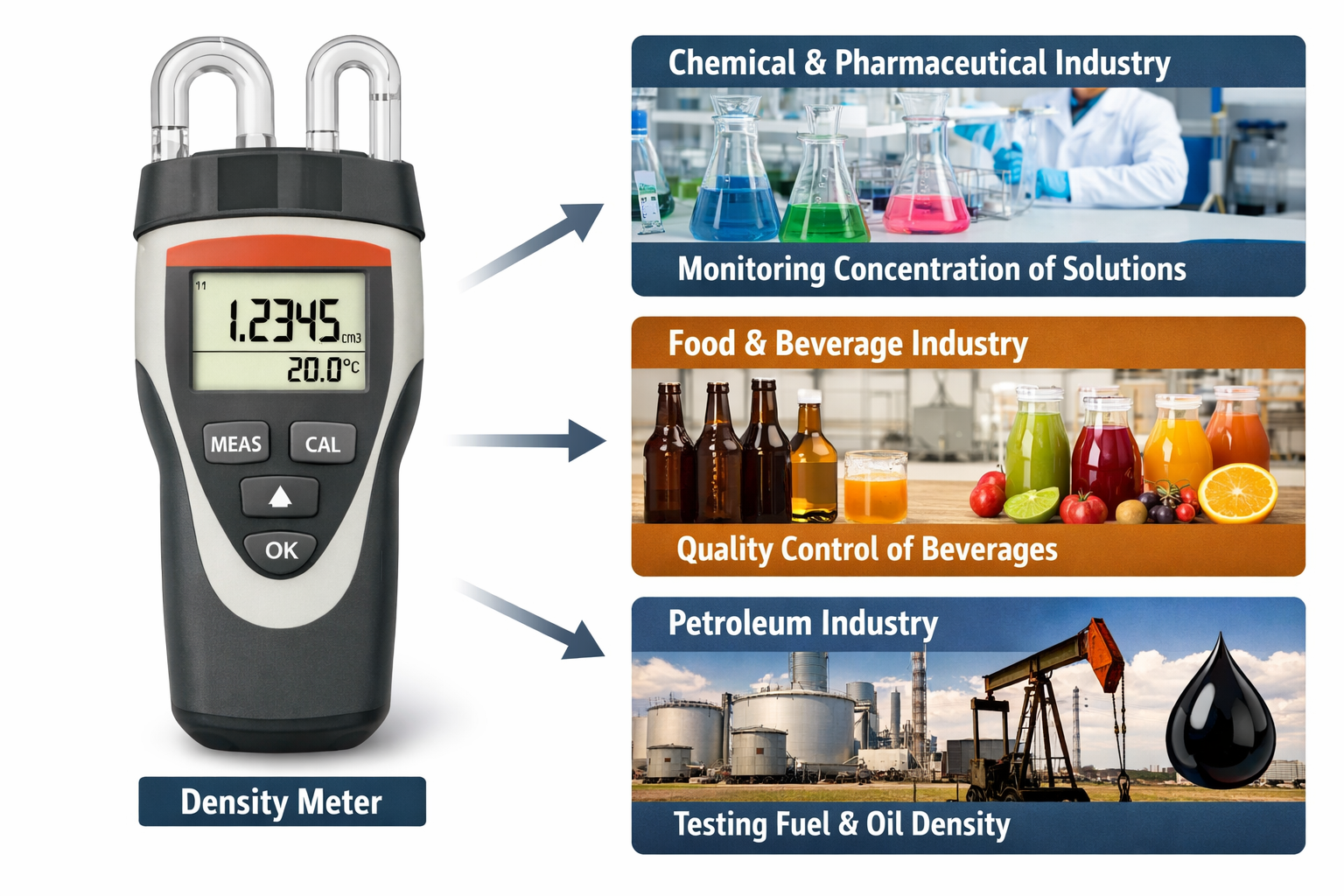
The Society of Flavor Chemists requires flavorists to understand and operate more than a dozen instruments used for testing food and flavor products. These instruments are listed on the syllabus for the Society's qualification exam. The density meter is one of these required instruments.
Meta Description: Discover how density meters revolutionize quality control in the flavor industry. Learn about oscillating U-tube technology, key applications for essential oils and flavor concentrates, and the advantages of digital density measurement.
Introduction to Density Meters
A density meter (also called a densitometer in industrial settings) is a precision analytical instrument that measures the density of liquids with exceptional accuracy. In the flavor and fragrance industry, these devices are essential for quality assurance, raw material verification, and process control.
Modern density meters primarily use digital oscillating U-tube technology, which has become the global standard for laboratory and industrial density measurement.
1. Theory, Function, and Reporting
How Density Meters Work: The Oscillating U-Tube Theory
The operating principle of a digital density meter is based on electromagnetic excitation of a hollow glass tube. Here's the science behind the measurement:
- Core Mechanism: The instrument contains a U-shaped borosilicate glass tube that is electronically vibrated at its natural resonance frequency—similar to how a tuning fork works
- Mass-Frequency Relationship: When filled with a liquid sample, the tube's oscillation frequency changes based on the sample's mass. Denser liquids increase the total mass, causing lower oscillation frequencies
- Precision Measurement: Optical sensors capture these frequency variations with extremely high accuracy, while built-in microprocessors convert the data into density values using calibrated formulas
The mathematical foundation is the mass-spring principle, where the period of oscillation (T) relates to density (ρ) through the equation:
ρ = K × (T² - B)
Where K and B are instrument-specific calibration constants.
Step-by-Step Operating Function
1. Sample Introduction
- Liquid samples (typically 1-2 mL) are introduced via manual syringe or automated pump
- Small volume requirement preserves valuable flavor samples
2. Temperature Control
- Built-in Peltier elements maintain precise temperature (e.g., 20.00°C ±0.02°C)
- Critical because density varies significantly with temperature
3. Oscillation Measurement
- U-tube oscillates at resonance frequency
- Optical sensors capture thousands of oscillations for statistical accuracy
4. Viscosity Compensation
- Advanced meters automatically correct for viscous samples that would otherwise dampen oscillation
5. Result Calculation
- Microprocessor applies calibration data and temperature compensation
- Results displayed within seconds
Density Meter Results and Reporting Formats
Modern density meters output data in multiple formats for maximum utility:
| Parameter | Typical Units | Application |
|---|---|---|
| Density | g/cm³, kg/m³, lb/gal | Primary measurement |
| Specific Gravity | Unitless (ratio) | Comparison to water density |
| % Brix | °Bx, % sucrose | Sugar content in fruit flavors |
| % Alcohol | % v/v, % w/w | Alcohol content in tinctures |
| API Gravity | °API | Petroleum-derived flavors |
| Concentration | %, g/L, °Baumé | Custom user-defined scales |
Data Management Features:
- Internal storage for thousands of measurements
- USB, LAN, and Bluetooth connectivity
- LIMS compatibility for full traceability
- Audit trails for regulatory compliance (FDA, GMP)
2. Relevance to the Flavor Industry
Density measurement is indispensable throughout the flavor production lifecycle—from incoming raw materials to finished product release.
Key Applications in Flavor Manufacturing
✅ Raw Material Verification
- Essential oils: Verify authenticity of citrus, mint, and spice oils against supplier specifications
- Solvents: Confirm density of propylene glycol, ethanol, and glycerin
- Extracts: Validate vanilla, coffee, and botanical extracts
Why it matters: Density deviations can indicate adulteration, incorrect sourcing, or degradation during transport.
✅ Finished Product Quality Control
- Batch consistency: Ensure every production batch matches the reference standard
- Customer specifications: Certify that flavors meet buyer density requirements
- Shelf-life studies: Monitor density changes during product aging
✅ Concentration Determination
- Sugar content: Measure Brix in fruit juice concentrates and sweet flavor systems
- Alcohol content: Verify ethanol concentration in flavor tinctures and beverage bases
- Salt content: Monitor brine solutions for savory flavors
✅ Process Control
- Mixing verification: Confirm proper dilution ratios during batching
- Evaporation monitoring: Track concentration during distillation or concentration processes
- CIP verification: Ensure cleaning solutions are at correct strength
✅ Research and Development
- New formulations: Characterize physical properties of novel flavor molecules
- Ingredient interaction: Study density changes when combining multiple components
- Stability testing: Monitor physical stability of emulsions and suspensions
Industry Standards and Compliance
Flavor manufacturers must meet strict regulatory requirements. Density meters help comply with:
- FDA 21 CFR Part 11 (electronic records)
- ISO 9001 quality management
- FEMA GRAS specifications
- Pharmacopeia standards (USP, EP, JP) for pharmaceutical flavors
3. Advantages and Limitations of Density Meters
Understanding both the strengths and constraints helps optimize your investment and measurement practices.
✅ Advantages of Digital Density Meters
| Advantage | Impact on Flavor Industry |
|---|---|
| Exceptional Accuracy (±0.00002 g/cm³) | Detect subtle variations in expensive essential oils |
| Small Sample Volume (1-2 mL) | Preserve valuable flavor samples; test limited R&D batches |
| Rapid Results (30-60 seconds) | Increase QC throughput; release products faster |
| Automated Temperature Control | Eliminate external water baths; ensure repeatable measurements |
| Minimal Human Error | Digital readout removes subjective interpretation |
| Viscosity Compensation | Measure thick flavor syrups and concentrates accurately |
| Multiple Output Formats | Report in Brix, alcohol %, specific gravity—no manual conversion |
| Data Traceability | Full audit trails for regulatory compliance |
⚠️ Limitations and Considerations
| Limitation | Mitigation Strategy |
|---|---|
| High Initial Cost ($5,000-$15,000+) | Calculate ROI through labor savings and reduced rework |
| Fragile Glass U-Tube | Avoid abrasive samples; implement careful cleaning protocols |
| Bubble Sensitivity | Degas samples; use bubble detection software |
| Cleaning Requirements | Establish standard cleaning procedures between samples |
| Regular Calibration Needed | Schedule quarterly calibration with certified standards |
| Particulate Interference | Filter samples containing solids before measurement |
Comparison to Alternative Methods
| Method | Accuracy | Sample Volume | Speed | Cost | Best For |
|---|---|---|---|---|---|
| Digital Density Meter | ★★★★★ | 1-2 mL | Seconds | High | Precision QC, R&D |
| Hydrometer | ★★☆☆☆ | 200-500 mL | Minutes | Low | Rough estimates, field use |
| Pycnometer | ★★★☆☆ | 10-50 mL | 10-20 min | Very Low | Occasional verification |
| Refractometer | ★★★☆☆ | 0.5 mL | Seconds | Medium | Brix-only applications |
Best Practices for Flavor Industry Applications
Sample Preparation Tips
- Degas carbonated samples using ultrasonic baths or vacuum
- Filter particle-containing flavors through 0.45 μm filters
- Equilibrate to room temperature before measurement
- Avoid volatile loss by minimizing open-container time
Cleaning Protocols
- Rinse with compatible solvent (ethanol, acetone, or warm water)
- Flush with deionized water
- Dry with clean, dry air or acetone
- Verify cleanliness with air check
Calibration Frequency
- Daily: Air/water check for routine verification
- Monthly: Full calibration with certified standards
- Annually: Professional recalibration by manufacturer
Frequently Asked Questions
Q: What's the difference between a density meter and a hydrometer?
A: Digital density meters use oscillating U-tube technology for 100x greater accuracy, require smaller samples, and provide instant digital results without manual reading errors.
Q: Can density meters measure viscous flavor syrups?
A: Yes, modern instruments include automatic viscosity correction, making them suitable for thick syrups, honey, and concentrated extracts.
Q: How do I convert density to Brix for fruit flavors?
A: Most density meters have built-in conversion tables (ICUMSA, OIML) that automatically display Brix values from density measurements.
Q: What temperature should I use for flavor density measurement?
A: Industry standard is 20°C, though some applications require 25°C or 15°C. Choose the temperature specified in your raw material certificates.
Conclusion: Why Density Meters Are Essential for Flavor Manufacturers
Digital density meters have transformed quality control in the flavor industry by providing:
- Unmatched precision for detecting subtle variations
- Rapid results that accelerate production release
- Regulatory compliance through complete data traceability
- Sample conservation for expensive essential oils and rare extracts
Whether you're verifying incoming citrus oils, monitoring fruit concentrate Brix, or ensuring batch-to-batch consistency of complex flavor formulations, a density meter delivers the accuracy and efficiency modern flavor manufacturing demands.
Related Articles:
- Refractometers vs. Density Meters: Which Is Right for You?
- Essential Oil Testing: Complete Quality Control Guide
- Brix Measurement in the Beverage Industry
- Regulatory Compliance for Flavor Manufacturers
Keywords: density meter, densitometer, flavor industry, oscillating U-tube, specific gravity, Brix measurement, quality control, essential oil testing, beverage analysis, laboratory instruments d
###