Feeling Flavor: How Neuroscience Could Change the Way Food and Beverage Flavors Are Designed
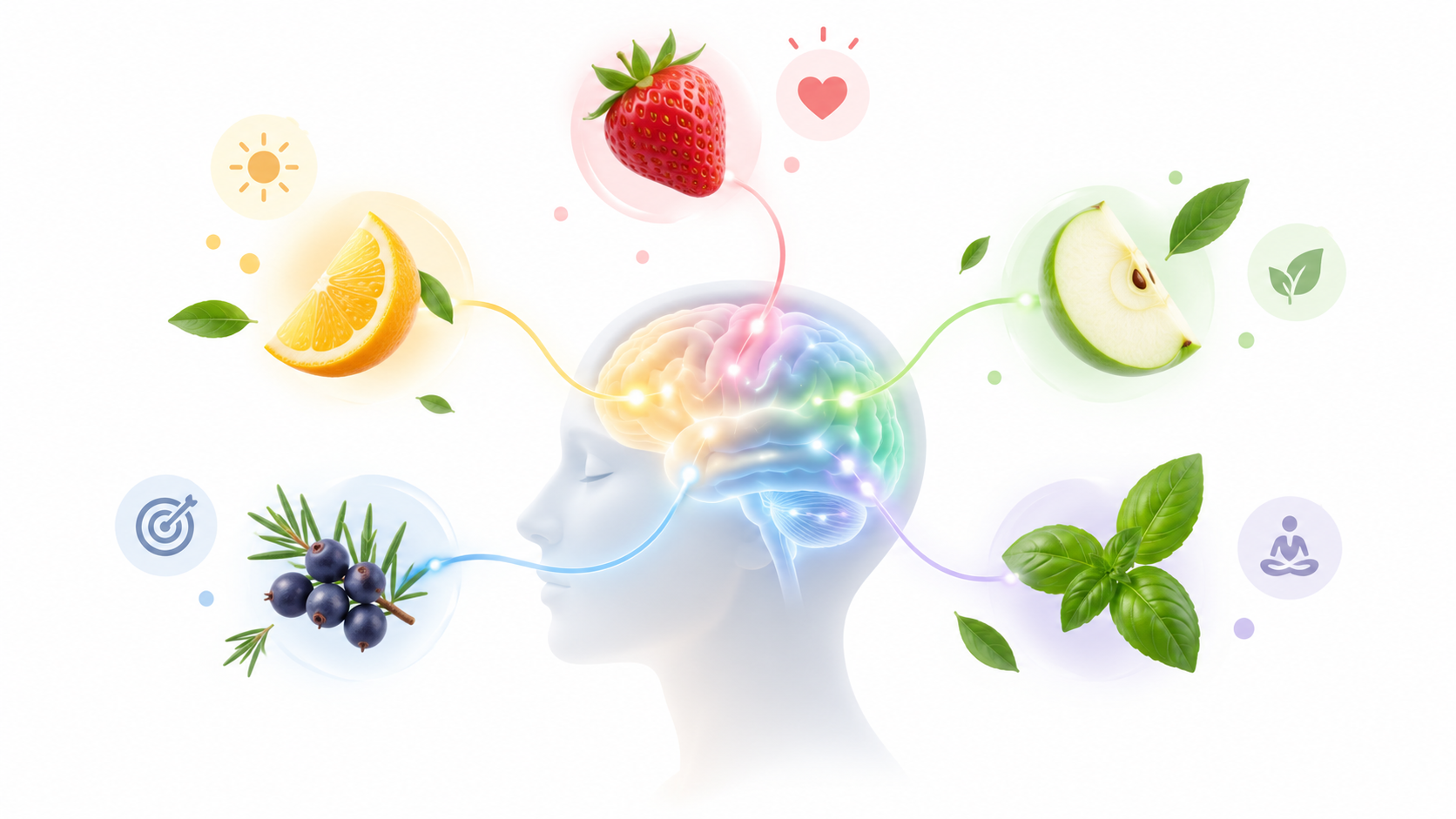
Saturday September 12, 2026 – What if a new beverage or snack started not with the question “What should this taste like?” but with “How should this make someone feel?”
That idea—designing flavor toward a feeling—is emerging as a potentially important new direction in food and beverage innovation.
IFF’s Mood Intelligence platform is built around this concept. By combining consumer research, sensory science, behavioral measures and neuroscience, the company is investigating relationships between flavors, ingredients and emotional or cognitive experiences such as happiness, comfort, energy, focus, relaxation and adventure.
The development is significant because it could change where emotion enters the flavor-development process. Traditionally, developers create a product and then test whether consumers like it or whether it generates the intended experience. Mood-driven flavor design reverses that sequence: define the desired feeling first, then use sensory and scientific evidence to help determine which flavor directions may support it.
From Flavor Profile to Feeling Profile
Flavor development has traditionally been organized around sensory targets: strawberry, citrus, chocolate, vanilla, spicy, creamy, roasted or savory, for example. Technical requirements such as sweetness, acidity, aroma, texture, cost and stability then help determine the final formula.
The emerging “feeling flavor” model adds another potential design parameter: emotion.
A development brief could therefore ask not only whether a beverage should taste like apple, but whether the apple experience should feel refreshing, comforting, energizing, sophisticated or joyful.
Those distinctions matter because consumers do not experience flavor as a collection of chemical compounds alone. Flavor is a highly multisensory perception integrating taste and smell with factors such as texture, temperature and, in many situations, visual and auditory information. Cognitive-neuroscience research has increasingly demonstrated the complexity of this integration. (PubMed)
Emotional experience is another layer.
Research into food-evoked emotions has grown because simple measures such as “liking” cannot always capture the complete relationship between consumers and products. Scientific reviews have documented increasing use of explicit, behavioral and physiological methods to understand emotional responses to food beyond conventional hedonic ratings. (ScienceDirect)
That gives the feeling-flavor idea a broader scientific context: food is not merely tasted; it is perceived, interpreted, remembered and emotionally experienced.
IFF's Flavor Feelings Maps the Emotional Side of Taste
Within IFF's Mood Intelligence platform, Flavor Feelings is designed to identify relationships between flavors and emotions using consumer research conducted across countries and cultures.
The premise is straightforward. If research repeatedly indicates that a sensory profile is associated with a particular emotional territory, that information can give flavorists an evidence-based starting point.
A flavorist working on a product intended to communicate happiness, for example, could explore flavors that have demonstrated stronger associations with happiness rather than selecting a profile purely by intuition and validating the emotional reaction afterward.
IFF says its Mood Intelligence work draws on more than 25 years of research, approximately 2.5 million consumer observations and a global database covering 34 emotional clusters. (IFF)
The scale of the database is important, but so is its international dimension. Flavor-emotion relationships should not automatically be assumed to be universal. Culture, familiarity, memory, product category, geography and consumption occasion can influence how a sensory experience is interpreted.
A flavor that signals nostalgia in one market, for example, could mean very little to consumers who did not grow up with it.
BrainEmotions Adds Neuroscience to the Flavor-Emotion Equation
IFF's BrainEmotions methodology introduces a second dimension.
Rather than relying only on what consumers consciously say they feel, BrainEmotions investigates patterns of brain activity associated with emotional and cognitive responses to sensory stimuli. IFF describes the approach as connecting ingredients and flavors with brain networks related to targeted emotional and cognitive benefits. (IFF)
That distinction between conscious reporting and implicit measurement is important.
Consumers may be able to tell researchers that they like a flavor, find it comforting or associate it with energy. But people cannot necessarily describe every neurological or physiological process taking place during a sensory experience.
Mood Intelligence therefore attempts to combine two forms of evidence: what consumers report and what researchers can measure.
IFF says its BrainEmotions approach can study multiple consumer brain networks, while Flavor Feelings focuses on consumer associations between particular flavors or ingredients and emotional or cognitive states. (IFF)
The tools are complementary rather than interchangeable.
Flavor Feelings asks: Which flavors do people associate with this feeling?
BrainEmotions asks: What measurable neurological activity accompanies the sensory experience?
When those different sources of evidence point in the same direction, developers potentially gain more confidence in a flavor concept.
The Bigger Change: Moving From Measurement to Prediction
The most interesting aspect of IFF's recent BrainEmotions development is not simply the use of neuroscience.
It is when the neuroscience is used.
IFF says its newly patented methodology allows its researchers to connect ingredients with brain activity and use established relationships to help predict emotional or cognitive benefits. That potentially moves the technology beyond post-formulation validation into screening and early product design. (IFF)
In other words, instead of:
Create the flavor → test the flavor → determine how consumers feel
the process could increasingly become:
Choose the feeling → identify promising flavor territories → formulate → test and refine
That is a fundamentally different innovation model.
It transforms emotion from an outcome researchers observe into a parameter developers can potentially design toward.
Flavor Becomes Experiential Design
The shift fits a broader evolution in sensory science.
Researchers have increasingly described flavor as one of the most complex multisensory experiences humans encounter. Food perception involves interactions among taste, aroma, texture and other sensory information, while learning and previous experiences can influence the hedonic meaning consumers attach to those combinations. (PubMed)
This helps explain why flavor can be so closely connected to memory, familiarity, reward and emotion.
For product developers, it suggests that flavor can be treated as part of experience design, rather than simply a mechanism for delivering a recognizable taste.
IFF gives examples of the creative possibilities. Its flavorists might combine strawberry with lively green basil notes to create a more energized impression, or introduce pine-like juniper nuances to apple in a composition developed around happiness. (IFF)
The important point is not that basil inherently equals energy or that juniper automatically creates happiness. Emotional associations are more complicated than a one-ingredient/one-emotion formula.
Instead, the objective is to use research to identify promising sensory directions and then allow flavorists to interpret those insights creatively.
Science Does Not Replace the Flavorist
Mood-driven flavor development could easily sound like an algorithm choosing ingredients from a database.
IFF's approach suggests something different.
Data narrows the creative territory. The flavorist still creates the experience.
Two flavorists asked to formulate around “joy,” “calm” or “energy” could produce completely different profiles. Their challenge is to translate abstract emotional objectives into aroma, taste, texture and sensory balance.
This makes the approach surprisingly similar to fine fragrance, where individual aromatic notes are composed to create a broader impression rather than simply reproduce one recognizable smell.
IFF has been researching connections between fragrance and emotion for decades, and its BrainEmotions work has roots in its scent research as well. The company documented BrainEmotions applications involving natural fragrance ingredients as early as 2018 and previously developed broader wellness programs combining neuroscience and consumer perception research. (IFF)
Food and beverage development appears to be extending this thinking more directly into flavor.
Why Feeling Flavor Could Matter to Food and Beverage Brands
The commercial opportunity goes beyond creating products that taste good.
Consumers encounter products within emotional contexts: morning energy, afternoon focus, post-work relaxation, indulgence, celebration, nostalgia or comfort. Brands often already promise these experiences through packaging and marketing.
The flavor itself does not always reinforce that promise.
Mood-driven flavor development could help make the sensory experience more consistent with the intended brand experience—a concept IFF refers to as product resonance. (IFF)
That could become particularly valuable in beverages, snacks, dairy, confectionery and functional foods, where manufacturers increasingly compete on experiences as well as conventional flavor.
It could also help developers explore less obvious combinations. An unfamiliar flavor pairing may become strategically interesting when there is evidence that it supports a clearly defined emotional territory.
Important Limits: Flavor Is Not a Mood Drug
The idea needs careful framing.
Showing an association between a sensory stimulus and particular emotional responses does not mean a flavor will reliably cause a specific psychological state in every person.
Individual experience, culture, expectations, context, memory and product format all matter. Scientific reviews of food-evoked emotions also note substantial methodological differences across studies and no single universally accepted measurement approach. (ScienceDirect)
Consumer-facing claims about mood or cognition also face regulatory requirements that vary by product, claim and market. IFF itself notes that manufacturers need to evaluate the local regulatory status of claims associated with intended product uses. (IFF)
The more appropriate interpretation is therefore not “this flavor makes people happy,” but rather “this sensory direction has evidence of association with an emotional territory and can be investigated as part of intentionally designed product experiences.”
The Future of Flavor May Begin With a Feeling
The most compelling idea behind IFF's Mood Intelligence work is ultimately very simple.
Flavor development has traditionally started with what people should taste.
It may increasingly start with what people should experience.
That means a future product-development brief could include happiness, energy, relaxation, focus or comfort alongside sweetness, acidity, aroma, mouthfeel and color.
Consumer research could identify the emotional territory. Flavor Feelings could highlight sensory directions associated with it. BrainEmotions could add neuroscientific evidence. And the flavorist could translate those insights into an actual product.
The result would not be flavor created by neuroscience.
It would be flavor informed by neuroscience and designed around human experience.
That distinction may be the most important part of the emerging feeling-flavor concept. The objective is no longer simply to formulate something consumers like. It is to understand the experience a brand wants to create—and then intentionally design the flavor toward that feeling.
###