Fermentation in Flavor Formulation: Chemistry, Process Control, and Shelf-Life Impact
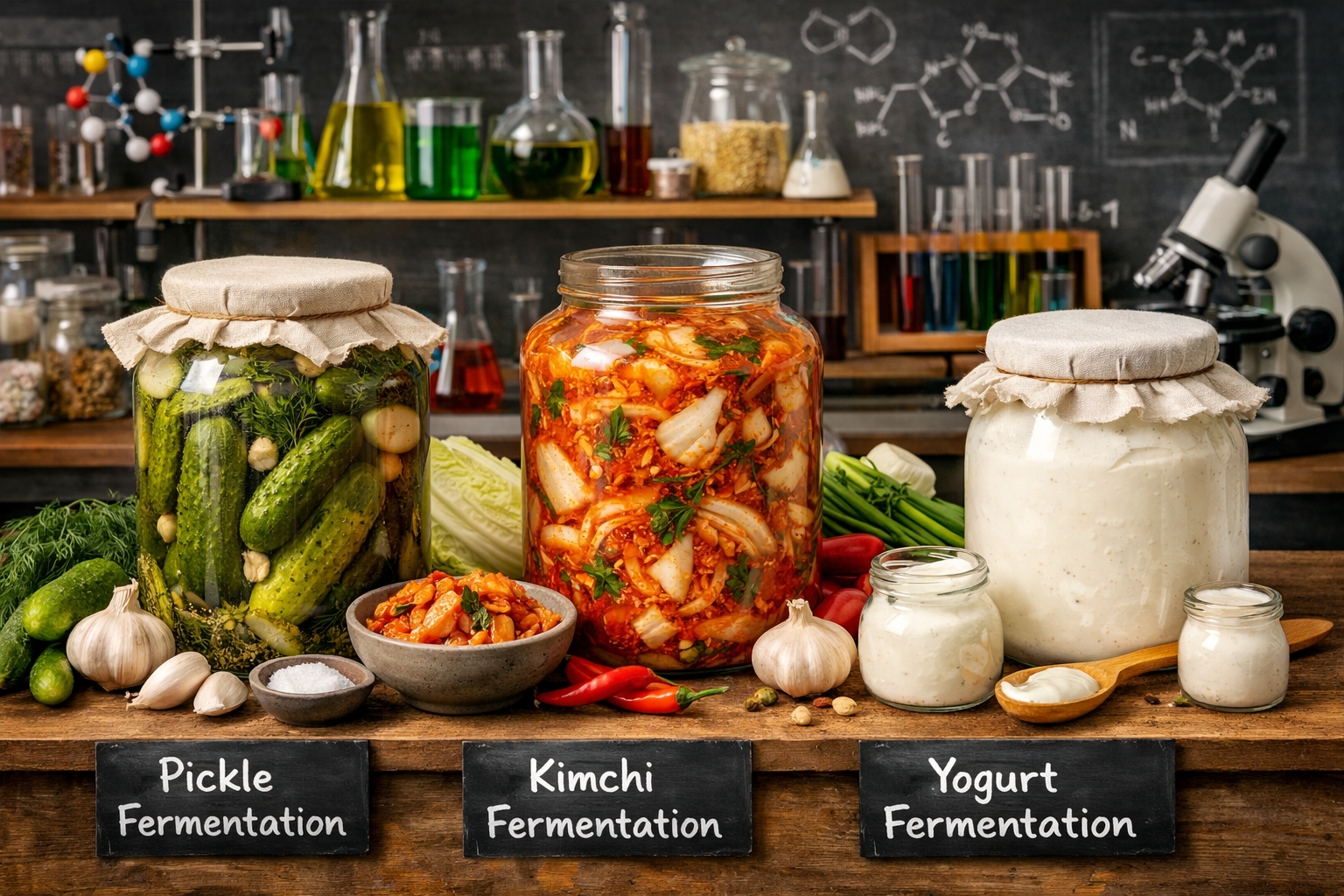
Fermentation is a microbial or microbiological transformation process in which microorganisms such as yeast strain Saccharomyces Cerevisias, which is typically used to make beer, convert substrates (primarily sugars, amino acids, and lipids) into chemical compounds (considered natural) including flavor-active compounds such as alcohols, acids, esters, aldehydes, and sulfur compounds. It plays a critical role in creating complex flavor systems used in beverages, savory products, dairy analogs, and natural flavor ingredients.
Fermentation can refer to food fermentation, which does not involve the separation and purification of fermentation products—examples include yogurt—or industrial fermentation, which requires downstream processing such as purification. Products derived from industrial fermentation are often pure chemicals.
The Society of Flavor Chemists expects flavorists to understand fermentation as a process related to flavor and its potential impact on flavors. This type of fermentation is likely food fermentation. It certainly does not require flavorists to be fermentation engineers or biochemists.
The Science of Flavor: How Fermentation Shapes Taste, Aroma, and Formulation
In the world of flavor creation, fermentation is not merely a preservation method—it is a powerful tool for biotransformation. It takes simple, often bland ingredients and unlocks a spectrum of complex flavors that cannot be replicated through conventional mixing or heating. From the umami depth of soy sauce to the sharp tang of aged cheese and the floral notes of craft spirits, fermentation is the bridge between raw substrates and sensory complexity.
This guide explores the chemistry, controlling factors, and strategic formulation techniques that define fermentation’s role in flavor development, as well as its critical impact on aging and shelf stability.
1. Chemical Groups Involved and Conditions Required for Flavor Development
Flavor in fermented products is the result of microbial metabolism acting on specific chemical precursors. The goal of flavor formulation is to control this metabolic pathway to produce a desired sensory outcome.
Key Chemical Groups (Precursors to Flavor)
- Carbohydrates: The primary energy source, but also a direct precursor to flavor.
- Simple Sugars (Glucose, Fructose): Fermented rapidly, producing sharp, clean acidity (lactic acid) or ethanol.
- Complex Polysaccharides (Starch, Cellulose): Require enzymatic hydrolysis (e.g., by Aspergillus oryzae in koji) to release sugars. This slower release allows for the generation of more complex, savory, and sweet flavor profiles over time.
- Proteins and Amino Acids: The foundation of umami and savory notes.
- During fermentation, proteases break down proteins into peptides and free amino acids.
- Glutamic acid is the primary source of umami (as seen in soy sauce, miso, and aged cheese).
- Other amino acids contribute to specific flavors: proline (sweetness), arginine (bitter notes), and cysteine (savory, meaty precursors).
- Lipids (Fats and Oils): Key contributors to mouthfeel and complex aromatics.
- Lipases break down triglycerides into free fatty acids.
- These fatty acids can undergo beta-oxidation or be converted into methyl ketones (in blue cheese) and lactones (creamy, coconut-like aromas).
- Lipid oxidation during aging can produce aldehydes and ketones that contribute to aged, nutty, or rancid notes—desirable in controlled amounts.
- Secondary Plant Metabolites: Compounds inherent to the raw ingredients.
- Phenolic Compounds: In grapes, grains, and olives, these are transformed by microbes into complex volatile phenols (e.g., guaiacol – smoky; eugenol – clove-like).
- Glucosinolates: In cruciferous vegetables (cabbage, mustard), these break down into pungent isothiocyanates, contributing to the characteristic bite of fermented vegetables.
Required Conditions for Flavor-Oriented Fermentation
- Controlled Microbial Ecology: Flavor formulation relies on either:
- Successional Fermentation: A sequence of microbes where initial species (e.g., Leuconostoc) create conditions for later, more flavor-potent species (e.g., Lactobacillus).
- Coculture Fermentation: Using multiple microorganisms simultaneously (e.g., yeast and bacteria in sourdough or lambic beer) to generate layered flavor compounds.
- Specific Temperature Regimes: Temperature dictates which enzymes and metabolic pathways are active.
- Low Temperature (10–15°C / 50–59°F): Promotes ester formation (fruity aromas) in yeast and slows lactic acid bacteria, allowing for complex, slow acid development.
- High Temperature (30–50°C / 86–122°F): Accelerates protease activity, enhancing umami in soy sauce, miso, and certain cheeses.
- Controlled Oxygen Exposure (Redox Potential):
- Microaerophilic Conditions: Limited oxygen encourages the production of specific aroma compounds. For example, Brettanomyces yeast requires trace oxygen to produce spicy, “barnyard” phenolic notes.
- Aerobic Conditions: Essential for acetic acid bacteria to convert ethanol into vinegar (acetic acid), creating sharp, pungent notes.
2. Factors Accelerating or Inhibiting Fermentation and Flavor Formulation Considerations
When formulating for flavor, the goal is not simply to accelerate fermentation but to direct the metabolic pathway toward a desired sensory profile.
Factors Accelerating (or Directing) Flavor Development
- Enzyme Addition: Exogenous enzymes (e.g., glucoamylase for saccharification, papain for proteolysis) can accelerate the breakdown of substrates, allowing formulators to bypass long aging times while still achieving complex flavor precursors.
- Starter Culture Selection: The choice of microbial strain is the most critical flavor decision.
- Specific Strains: Different strains of Saccharomyces cerevisiae produce vastly different ester profiles. Some are selected for high ethyl acetate (fruity) production, others for low fusel alcohol (clean) profiles.
- Mixed Cultures: Deliberate co-inoculation of yeast and lactic acid bacteria (e.g., in sour beer) creates synergistic flavor development that cannot be achieved through single-strain fermentation.
- Nutrient Modulation: The ratio of nitrogen to sugar (YAN – Yeast Assimilable Nitrogen) controls the metabolic focus.
- High Nitrogen: Promotes vigorous growth and higher ester production (fruity flavors).
- Low Nitrogen: Stresses microbes, leading to increased production of sulfur compounds (struck match, tropical fruit) or higher alcohols (pungent, complex).
Factors Inhibiting (or Misdirecting) Flavor Development
- Over-Sanitization: While necessary for safety, excessive antimicrobial control can eliminate desirable wild microbes that contribute unique, terroir-driven flavor complexity (e.g., in natural wines or traditional dry-cured meats).
- Uncontrolled Temperature Fluctuations: Temperature swings can shock microbes, leading to the overproduction of fusel alcohols (harsh, solvent-like flavors) or the premature cessation of enzymatic activity, resulting in flat, one-dimensional flavor.
- Lipid Oxidation: While controlled oxidation can add aged character, uncontrolled exposure to oxygen post-fermentation leads to rancidity, cardboard-like flavors, and the loss of delicate esters.
Considerations During Flavor Formulation
- Substrate Selection for Flavor Precursors:
- For umami profiles: Use high-protein substrates (soybeans, grains, milk) and select cultures with high proteolytic activity.
- For fruity/estery profiles: Use simple sugars and select Saccharomyces strains known for high ester production, fermenting at cooler temperatures.
- For pungent/spicy profiles: Utilize substrates rich in phenolic precursors (rye, wheat, certain fruits) and employ Brettanomyces or specific lactic acid bacteria that possess hydroxycinnamate decarboxylase activity.
- pH as a Flavor Control Parameter: The rate and extent of pH drop influence final flavor.
- A rapid pH crash can halt enzymatic activity prematurely, resulting in a clean but simple flavor profile.
- A slow, controlled pH decline allows proteases and lipases to work for extended periods, generating deeper umami and fatty acid-derived flavors.
- Salt and Water Activity: Salt is a selective inhibitor. In vegetable and protein fermentations (kimchi, miso, cured meats), the salt concentration is carefully calibrated to suppress gram-negative spoilage bacteria while allowing salt-tolerant, flavor-positive microbes (Tetragenococcus, Debaryomyces) to thrive and contribute unique savory and meaty notes.
3. Examples of Flavor-Generating Fermentation Reactions
These examples illustrate how specific reactions are harnessed in flavor formulation.
Example 1: Ester Formation for Fruity Aromas (Beverages)
Process: The condensation of an alcohol and an organic acid, catalyzed by yeast enzymes (alcohol acyltransferases).
Reaction:
Alcohol + Organic Acid (Yeast) -> Ester + Water
- Flavor Application: Fruity Ale Beer or White Wine
- Chemical Groups Involved: Ethanol and acetyl-CoA combine to form ethyl acetate (solvent-like at high levels, fruity at low levels); isoamyl alcohol and acetic acid form isoamyl acetate (banana aroma).
- Conditions: Fermentation at cooler temperatures (15–20°C / 59–68°F) preserves volatile esters; specific Saccharomyces cerevisiae strains are selected for high ester yield.
- Flavor Outcome: Provides primary fruity notes (pear, banana, apple) that define the aromatic profile of the beverage.
Example 2: Proteolysis for Umami and Savory Depth (Soy Sauce)
Process: The enzymatic breakdown of proteins into amino acids and small peptides.
Reaction:
Protein (Soybean/Wheat) {Proteases (Aspergillus, Lactobacillus)} -> Amino Acids (Glutamate) + Peptides
- Flavor Application: Soy Sauce and Miso
- Chemical Groups Involved: Soybean proteins (glycinin, β-conglycinin) and wheat gliadins are hydrolyzed.
- Conditions: A two-stage process. First, Aspergillus oryzae (koji) is cultivated on soy and wheat to produce proteases and amylases. Then, a high-salt brine fermentation with Zygosaccharomyces rouxii and Tetragenococcus halophilus proceeds for months.
- Flavor Outcome: The liberation of glutamic acid creates the foundational umami taste. Concurrent production of pyrazines, furanones, and phenolic compounds builds a complex savory, sweet, and roasted flavor profile.
Example 3: Lipolysis and Methyl Ketone Formation for Pungent, Creamy Notes (Blue Cheese)
Process: The breakdown of milk fat followed by the conversion of free fatty acids into methyl ketones.
Reaction (Methyl Ketone):
Free Fatty Acid (Penicillium roqueforti) -> β-ketoacid→Methyl Ketone+CO2
- Flavor Application: Blue Cheese
- Chemical Groups Involved: Milk triglycerides are hydrolyzed by lipases from Penicillium roqueforti into free fatty acids (butyric, caproic, caprylic).
- Conditions: The cheese is pierced to introduce oxygen, which is required for the Penicillium mold to convert fatty acids into methyl ketones (e.g., 2-heptanone, 2-nonanone).
- Flavor Outcome: Methyl ketones contribute the characteristic pungent, spicy, and creamy notes. The combination with free fatty acids and peptides creates the cheese’s sharp, complex, and umami-rich profile.
4. Impact of Fermentation Reactions on Flavor Aging and Shelf Life
Fermentation does not end with the removal of the microbial culture. The metabolites and enzymes left behind continue to evolve during aging, fundamentally altering both flavor and stability.
Impact on Flavor Aging
- Ester Hydrolysis and Reformation: During aging, esters are in a constant state of equilibrium. Initially dominant, sharp, fruity esters may hydrolyze back into acids and alcohols, mellowing the flavor. Simultaneously, new, more complex esters can form over long periods, adding depth. This is why aged wines, spirits, and cheeses develop “bottle bouquet” or aged complexity that is absent in young products.
- Struvite and Crystal Formation: In aged cheeses and fermented fish products, tyrosine and calcium lactate crystals form over time. While textural, these crystals also create localized bursts of umami (tyrosine) and a slight textural contrast that is often considered a marker of high-quality aging.
- Oxidative Flavor Development: Controlled, slow oxidation during aging (e.g., in sherry wine or aged balsamic vinegar) transforms aldehydes into acetals and allows for the polymerization of phenolic compounds. This reduces astringency and introduces rancio (nutty, dried fruit) notes, which are highly valued in premium aged products.
- Maillard Reaction Continuation: In fermented products that undergo cooking or prolonged aging at ambient temperatures (e.g., soy sauce, miso, aged balsamic), residual reducing sugars and amino acids continue to undergo non-enzymatic browning. This deepens color and generates roasted, caramelized, and toasty flavor notes over months or years.
Impact on Shelf Life Through Flavor Stability
- Natural Preservation via Flavor Compounds: The same compounds that define the flavor profile also extend shelf life:
- Phenolic Compounds: In smoke-fermented products or those fermented with Brettanomyces, volatile phenols (e.g., 4-ethylphenol) have antimicrobial properties.
- Fatty Acids: Medium-chain fatty acids (caprylic, capric acid) produced during lipolysis exhibit antifungal activity, protecting the surface of aged cheeses and cured meats.
- pH Stability: Once a fermented product reaches a pH below 4.0 (for lactic fermentations) or achieves a sufficient alcohol content (>10% for wines), the environment becomes self-preserving. This chemical stability ensures that the flavor profile—once developed—remains consistent without the risk of further unwanted microbial spoilage.
- Antioxidant Formation: Some fermentation processes generate natural antioxidants. For example, certain lactic acid bacteria produce exopolysaccharides and phenolic metabolites that act as free radical scavengers. This slows oxidative rancidity in fermented meats and plant-based products, extending their flavorful shelf life without the need for synthetic preservatives.
Conclusion
For flavor formulators, fermentation is a dynamic palette of biochemical reactions. By strategically selecting substrates, microbial strains, and environmental conditions, it is possible to direct the generation of specific aroma and taste molecules—from bright, fruity esters to deep, savory amino acids. The process does not end with fermentation; aging allows these compounds to further evolve through enzymatic activity, oxidation, and esterification, creating layered complexity. Ultimately, the interplay of these reactions not only defines the sensory identity of a product but also establishes its safety and stability, making fermentation one of the most powerful and versatile tools in the art and science of flavor creation.
###