Book: Food Flavour Technology, 2nd Edition - The Essential Modern Compendium for Every Flavor Scientist and Flavorist
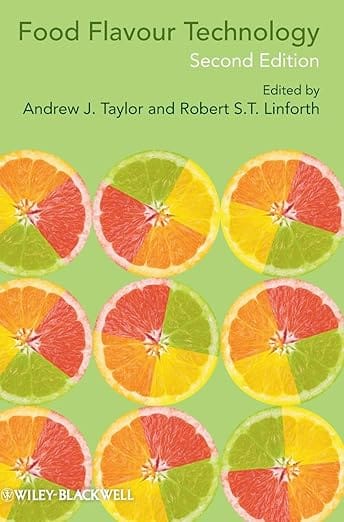
Rating: ★★★★★ (5/5)
As a professional flavor chemist with over fifteen years in the industry, I have seen textbooks come and go. Many offer either overly simplistic overviews or dive so deep into niche chemistry that they lose practical utility. "Food Flavour Technology, 2nd Edition" by Andrew J. Taylor and Robert S.T. Linforth is the rare exception—a masterfully balanced, comprehensive, and indispensable resource that deserves a permanent place on the desk of every serious flavorist and food scientist.
This book stands out because it perfectly bridges the critical gap between foundational scientific theory and the complex, constraint-driven realities of our daily work. It doesn't just tell you what flavor compounds are; it meticulously details how they are created, delivered, and analyzed within the modern commercial and regulatory landscape.
Why This Book is a Game-Changer for Practitioners:
- Holistic, Industry-Centric Structure: The book's organization mirrors the actual workflow and challenges of flavor development. It begins with the creation of flavorings, immediately grounding you in the methodologies and very real constraints (cost, stability, source materials) that flavorists face. This practical starting point is invaluable.
- Critical Focus on Legislation and "Natural" Demands: A standout chapter addresses international legislation. In today's global market, navigating the differing regulatory regimes of the EU, US, Asia, and others is a major part of the job. The book provides a crucial framework for understanding these constraints, which is often glossed over in purely academic texts. Furthermore, it consistently addresses the industry's pivot toward "natural" labels, discussing the adjustments in raw materials and processes (thermal generation, biogeneration) required to meet this consumer demand without sacrificing cost-effectiveness or quality.
- From Theory to Delivery: The coverage doesn't stop at creation. The sections on flavor delivery and analysis are where this edition truly shines. The discussion on encapsulation technologies and the role of the food matrix is essential reading. Understanding how a flavor interacts with and is released from different matrices (fats, gels, proteins) is fundamental to achieving the desired sensory impact in a final product, and this book explains these complex interactions with remarkable clarity.
- Modern Analytical Toolkit: The book dedicates significant space to the analysis of flavors, covering instrumental, sensory, and modeling techniques. This integration is vital. It reinforces that our work is not just about gas chromatography-mass spectrometry (GC-MS) peaks but must always be correlated back to human sensory perception. This multi-pronged approach to analysis is the bedrock of successful flavor development and troubleshooting.
Who Should Buy This Book:
This is not an introductory text for casual readers. It is precisely crafted for:
- Practicing Flavor Chemists & Flavorists: To consolidate knowledge, solve formulation problems, and stay current with methodologies.
- Food Scientists & Technologists in product development who need a deep, functional understanding of flavor ingredients.
- Quality Assurance & Analytical Personnel tasked with flavor analysis and compliance.
- Advanced Students in food science, chemistry, or biotechnology aiming for a career in this field.
The Verdict:
While the second edition was published in 2010, the core principles, regulatory frameworks, and scientific methodologies it so expertly outlines remain profoundly relevant. The "newer methodologies and recent advances" it introduced at the time have now become standard industry practice, making this book more of a validated classic than a dated volume.
The price point reflects its status as a specialized professional and academic reference text. For anyone whose career involves the serious science and art of flavor, this is not an expense—it is a critical investment. The knowledge contained within will pay dividends in solved formulation challenges, compliant product launches, and innovative thinking.
In short, "Food Flavour Technology" is the single most comprehensive and practically useful volume I have encountered in my career. If you are committed to excellence in the field of flavor, this book is an essential tool. I recommend it without reservation.