Functional Beverages Are Reshaping the Coffee Industry as Consumers Prioritize Health and Wellness
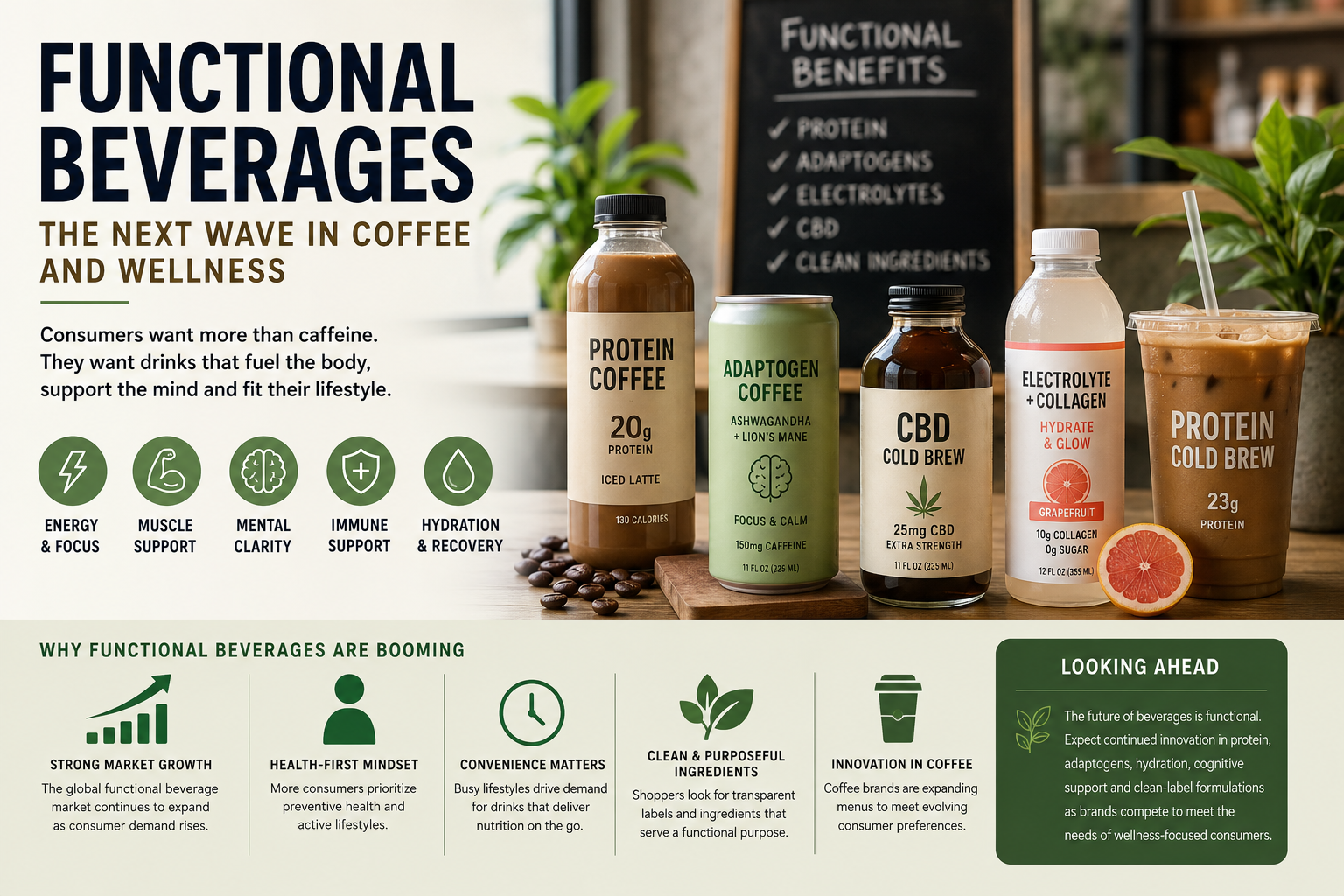
The line between coffee, nutrition and wellness is becoming increasingly blurred. What was once a simple morning caffeine ritual is evolving into a broader health-focused experience, with protein coffees, adaptogenic drinks, CBD-infused beverages and other functional products gaining traction across cafés, grocery stores and convenience retailers.
Industry analysts say this shift reflects changing consumer expectations. Today's shoppers increasingly want beverages that do more than provide refreshment—they are looking for products that support energy, focus, recovery, hydration or overall well-being.
Protein Coffee Emerges as a Fast-Growing Category
Among the fastest-growing trends is protein coffee, sometimes called "proffee." The concept combines traditional coffee with added protein, creating a beverage that appeals to fitness enthusiasts, busy professionals and consumers seeking a more filling breakfast option.
Adding protein can help increase satiety and may support muscle maintenance when consumed as part of a balanced diet. For many consumers, combining caffeine and protein into a single beverage offers both convenience and perceived nutritional value.
Large coffee chains and beverage companies have begun experimenting with protein-enhanced drinks, while supermarket shelves continue to fill with ready-to-drink protein coffees featuring anywhere from 15 to 30 grams of protein per serving.
Functional Ingredients Move Into the Mainstream
Protein is only one part of a much larger movement. Beverage manufacturers are increasingly incorporating ingredients associated with wellness benefits, including:
- Adaptogens such as ashwagandha and ginseng
- Electrolytes for hydration
- Collagen peptides
- Prebiotic and probiotic ingredients
- Mushroom extracts including lion's mane and reishi
- Green tea extracts and natural caffeine sources
- CBD in markets where regulations permit
Although scientific evidence varies widely depending on the ingredient, consumer interest remains strong. Many buyers view functional beverages as an easy way to incorporate wellness habits into their daily routines.
Coffee Chains Expand Beyond Traditional Drinks
Major coffee retailers are responding by diversifying their beverage menus beyond espresso-based drinks. Protein-enhanced cold beverages, energy drinks and wellness-inspired menu innovations are becoming increasingly common as brands compete for health-conscious customers.
This strategy also allows coffee companies to attract consumers throughout the day rather than relying primarily on morning coffee purchases. Afternoon energy drinks, post-workout beverages and meal-replacement options create new sales opportunities while helping brands differentiate themselves in a crowded market. Recent product testing by leading coffee chains illustrates how established brands are exploring protein-enhanced beverages as part of this broader functional beverage strategy.
The Functional Beverage Market Continues to Grow
The global functional beverage industry has expanded rapidly over the past decade, driven by several long-term consumer trends:
- Greater focus on preventive health
- Rising demand for high-protein foods and beverages
- Growth of active lifestyles and fitness culture
- Increased interest in clean-label ingredients
- Preference for convenient nutrition solutions
Millennials and Generation Z consumers have been particularly influential, often seeking products that align with both health goals and busy lifestyles.
Challenges Remain
Despite growing popularity, functional beverages face several hurdles.
Regulatory oversight differs depending on the ingredient and country, particularly for products containing CBD or novel botanical extracts. Companies must also balance health claims with scientific evidence, ensuring marketing messages remain accurate and compliant.
Taste presents another challenge. Functional ingredients can alter flavor, texture or appearance, making product formulation more complex than traditional beverages.
Price is also a consideration, as premium ingredients often result in higher retail costs compared with standard coffee or soft drinks.
Looking Ahead
The convergence of coffee, nutrition and wellness appears to be more than a passing trend. As consumers continue seeking products that offer both convenience and added functionality, beverage companies are expected to invest further in innovation across protein, hydration, cognitive support and energy-enhancing formulations.
Whether through protein-infused coffee, botanical energy drinks or other functional beverages, the industry is increasingly focused on delivering products that fit modern lifestyles where consumers expect every purchase to provide more than just taste.