Horseradish as a Natural Flavoring: A Comprehensive Technical Guide
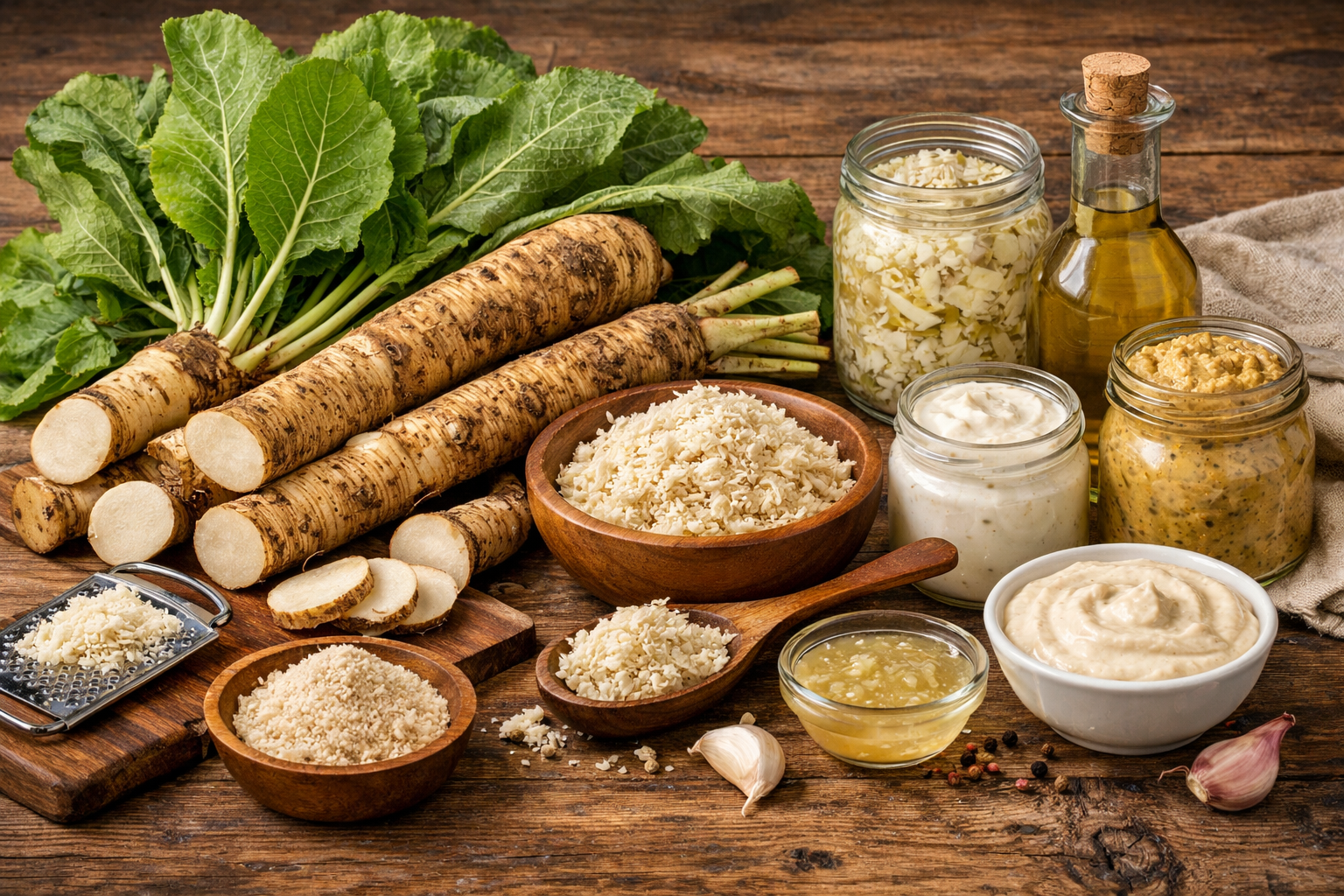
Here is a comprehensive technical guide for Horseradish, structured in the same format as the previous guides. All key information for flavorists has been incorporated.
Horseradish as a Natural Flavoring: A Comprehensive Technical Guide
The Society of Flavor Chemists requires certified flavorists to be able to identify the plant part used, derivatives, organoleptic characteristics, and major chemical component(s) characterizing the aroma and flavor of the 80 natural flavorings listed on its syllabus for the qualification test and interview. Horseradish is included among these essential items.
Introduction
Horseradish (Armoracia rusticana G. Gaertn., B. Mey. & Scherb.) is a perennial plant in the Brassicaceae (mustard) family, native to southeastern Europe and western Asia. Known for its intensely pungent, sharp, and sinus-clearing heat, horseradish has been used for centuries as a condiment, medicine, and flavoring agent. Its distinctive pungency is unlike the heat of chili peppers (which is a burning sensation) or ginger (which is a warming sensation); instead, horseradish produces a sharp, volatile, nasal-clearing sensation that is felt primarily in the sinuses and eyes.
For flavorists, horseradish offers a powerful, volatile, and distinctive pungency that is essential in cocktail sauces, prepared horseradish, wasabi (often imitated with horseradish), and various savory applications. Unlike many other flavoring materials, horseradish's pungency is not present in the intact root. It is generated enzymatically when the root is crushed, similar to garlic and mustard. The enzyme myrosinase converts the precursor sinigrin (a glucosinolate) into allyl isothiocyanate (AITC), which is the primary character-impact compound responsible for the sharp, volatile, and penetrating heat.
A critical consideration for flavorists is the volatility and instability of allyl isothiocyanate. It is highly volatile and degrades quickly when exposed to heat, air, and light. Stabilization techniques (such as acidification, encapsulation, or cold processing) are essential for maintaining potency in finished products.
Plant Parts Used
The root (taproot) is the plant part used for flavoring purposes. The following characteristics are notable:
- Source Plant: Armoracia rusticana G. Gaertn., B. Mey. & Scherb., a member of the Brassicaceae (mustard) family.
- Root Description: A large, fleshy, white to cream-colored taproot, typically 20–40 cm long and 5–10 cm in diameter. The root has a rough, brownish outer skin and a white, fibrous interior. The pungency develops only when the root is crushed or grated.
- Harvesting: Horseradish is typically planted in early spring and harvested in late autumn after the first frost, which increases the sugar content and improves flavor. The roots can be stored for months in cool, humid conditions.
- Processing: Fresh horseradish root is the most potent form. For commercial products, the root is often grated and preserved in vinegar (which stabilizes the pungency by lowering pH and inactivating the enzyme) or processed into extracts and oils.
The essential oil (allyl isothiocyanate) is obtained by steam distillation of crushed horseradish root or by enzymatic conversion of sinigrin followed by extraction.
The Chemistry of Horseradish Flavor
Horseradish's characteristic pungency is unique in that it is generated enzymatically upon cell disruption, similar to garlic and mustard.
Intact Root:
- Contains non-volatile, odorless precursor sinigrin (a glucosinolate; potassium allyl glucosinolate)
- Contains the enzyme myrosinase (β-thioglucosidase) in separate cellular compartments
When Root is Crushed/Grated:
- Myrosinase is released and hydrolyzes sinigrin
- Allyl isothiocyanate (AITC) is formed
- AITC is a volatile, pungent compound responsible for the characteristic sharp, nasal-clearing heat
Upon Acidification (Vinegar):
- The enzyme is inactivated at low pH (typically <3.5)
- No further AITC is generated; existing AITC is stabilized
- This is the basis for prepared horseradish (horseradish preserved in vinegar)
Upon Heating:
- The enzyme is denatured at temperatures above 70°C (160°F)
- AITC is also volatile and can be driven off by heat
- Heating destroys the pungency
Upon Storage:
- AITC degrades over time, especially when exposed to air, light, and heat
- The pungency diminishes
Derivatives
Horseradish is commercially available in several forms. The following details include technical specifications important for procurement and formulation.
Allyl Isothiocyanate (AITC) – Synthetic or Natural
Production Method: Natural AITC is produced by enzymatic conversion of sinigrin (from horseradish or mustard seed) followed by steam distillation or extraction. Synthetic AITC is produced by chemical synthesis.
Description: Colorless to pale yellow mobile liquid with an intensely pungent, sharp, volatile, and penetrating, sinus-clearing aroma. The liquid can cause severe irritation to eyes and mucous membranes.
Technical Notes: AITC (CAS No. 57-06-7) is the primary character-impact compound. It is highly volatile, flammable, and reactive. Natural and synthetic AITC are chemically identical. Storage in a cool, dark place in tightly sealed containers is essential.
Horseradish Oil
Production Method: Steam distillation of crushed horseradish root. The oil is primarily allyl isothiocyanate (AITC) with minor amounts of other isothiocyanates.
Description: Colorless to pale yellow mobile liquid with an intensely pungent, volatile, sinus-clearing aroma.
Technical Notes: Yield is very low (0.1–0.3%). The oil is essentially AITC. Storage requires extreme care to prevent volatilization.
Prepared Horseradish (Stabilized)
Production Method: Fresh horseradish root is grated and immediately mixed with vinegar and salt. The vinegar lowers the pH, inactivating myrosinase and stabilizing the existing AITC. May also contain sugar, beet juice (for color), and other ingredients.
Description: White to cream-colored paste with a characteristic pungent, sharp, sinus-clearing aroma and flavor.
Technical Notes: The most common commercial form. Shelf-stable when refrigerated. Pungency diminishes over time.
Horseradish Extract (Liquid)
Production Method: Solvent extraction (typically ethanol) of horseradish root, often with added AITC.
Description: Clear to pale yellow liquid with characteristic pungent aroma.
Technical Notes: Used in flavor systems where the full root character is desired.
Horseradish Powder (Dehydrated)
Production Method: Dehydration and milling of horseradish root. The powder may be "stabilized" (enzyme-inactivated) or "active" (enzyme-active).
Description: Off-white to light brown powder.
Technical Notes: Active powder will develop pungency when rehydrated with water. Stabilized powder has been heat-treated to inactivate myrosinase and will not develop pungency.
Organoleptic Characteristics
Aroma Profile
When evaluated, freshly grated horseradish reveals an intensely pungent, volatile, and penetrating aromatic profile:
- Primary Note: Intensely pungent, sharp, volatile, sinus-clearing
- Allyl Isothiocyanate Character: Sharp, mustard-like, pungent, nasal-irritating—the signature note
- Sulfurous: Slightly cabbage-like, mustard seed-like
- Green: Fresh, slightly vegetal
- Bitter: Subtle, pleasant bitterness
- Volatile: The aroma is highly volatile and dissipates quickly
The overall aroma is often described as "intensely pungent, sharp, and sinus-clearing—the unmistakable scent of freshly grated horseradish."
Taste Characteristics
At typical usage levels, horseradish provides:
- Pungent: Sharp, volatile, nasal-clearing heat
- Bitter: Slight, pleasant bitterness
- Sulfurous: Mustard-like, cabbage-like notes
- Sharp: Penetrating, biting sensation
- Sinus-Clearing: Sensation felt primarily in the sinuses and eyes (not a burning heat on the tongue like chili)
The Key to Horseradish's Unique Flavor
Horseradish's characteristic sharp, volatile, sinus-clearing pungency comes from allyl isothiocyanate (AITC) , a volatile isothiocyanate formed by the enzymatic hydrolysis of sinigrin:
- Allyl Isothiocyanate (AITC): A volatile isothiocyanate that provides sharp, pungent, mustard-like, sinus-clearing heat. AITC activates the TRPA1 receptor, producing the characteristic sharp, nasal-clearing sensation. It is highly volatile and reactive.
Other Isothiocyanates (Present in Minor Amounts):
- Phenethyl Isothiocyanate: Contributes additional pungency
- Butyl Isothiocyanate: Contributes pungent notes
- Methyl Isothiocyanate: Contributes pungent notes
Comparison: Horseradish vs. Mustard vs. Wasabi vs. Chili
| Characteristic | Horseradish | Mustard | Wasabi (True) | Chili |
|---|---|---|---|---|
| Primary Pungent Compound | Allyl isothiocyanate | Allyl isothiocyanate (varies) | Allyl isothiocyanate | Capsaicin |
| Receptor | TRPA1 | TRPA1 | TRPA1 | TRPV1 |
| Sensation | Sharp, volatile, nasal-clearing | Sharp, volatile, nasal-clearing | Sharp, volatile, nasal-clearing | Burning, hot, lingering |
| Generation | Enzymatic (sinigrin) | Enzymatic (sinigrin) | Enzymatic (sinigrin) | Non-enzymatic (capsaicinoids) |
| Heat Stability | Unstable; destroyed by heat | Unstable; destroyed by heat | Unstable; destroyed by heat | Stable; heat-tolerant |
Major Chemical Components
Key Aroma Compounds (Horseradish)
| Component | Typical Percentage (in oil) | Organoleptic Contribution | CAS No. |
|---|---|---|---|
| Allyl Isothiocyanate | 80–99% | Sharp, pungent, volatile, sinus-clearing; characteristic horseradish note | 57-06-7 |
| Phenethyl Isothiocyanate | 1–10% | Pungent, slightly floral | 2257-09-2 |
| Butyl Isothiocyanate | trace–1% | Pungent | 592-82-5 |
| Methyl Isothiocyanate | trace | Pungent | 556-61-6 |
| Sinigrin (precursor) | N/A (in root) | Non-volatile precursor | 3952-98-5 |
Comparison: Allyl Isothiocyanate vs. Capsaicin
| Characteristic | Allyl Isothiocyanate | Capsaicin |
|---|---|---|
| Source | Horseradish, mustard, wasabi | Chili peppers |
| Receptor | TRPA1 | TRPV1 |
| Sensation | Sharp, volatile, nasal-clearing, short-lived | Burning, hot, lingering |
| Volatility | Highly volatile | Non-volatile |
| Heat Stability | Unstable (destroyed by heat) | Stable |
| Solubility | Slightly soluble in water; soluble in alcohol | Insoluble in water; soluble in oils/alcohol |
Applications in Flavoring
Regulatory Status
Horseradish and its derivatives are approved as natural flavoring substances:
- United States: Horseradish is generally recognized as safe (GRAS). Horseradish oil (allyl isothiocyanate) is listed under 21 CFR §172.510 as a natural flavoring substance (FEMA No. 2034 for horseradish oil, 2035 for allyl isothiocyanate).
- European Union: Permitted for use in food flavorings under Regulation (EC) No 1334/2008.
- China: Approved food flavor under GB 2760.
Typical Usage Levels (mg/kg)
The following usage levels are based on FEMA GRAS determinations and industry standards:
| Application | Allyl Isothiocyanate (mg/kg) | Horseradish Oil (mg/kg) |
|---|---|---|
| Non-alcoholic beverages | 0.5–5 | 0.5–5 |
| Alcoholic beverages | 1–10 | 1–10 |
| Baked goods | 1–10 | 1–10 |
| Hard candy | 1–15 | 1–15 |
| Frozen dairy | 0.5–5 | 0.5–5 |
| Gelatins and puddings | 0.5–5 | 0.5–5 |
| Soft candy | 1–10 | 1–10 |
| Chewing gum | 1–15 | 1–15 |
| Meat products | 2–20 | 2–20 |
| Sauces and condiments | 5–50 | 5–50 |
Note: These ranges represent typical industry usage. Allyl isothiocyanate is extremely potent; use at very low levels.
Usage & Dosage Best Practices
Flavorists should observe the following guidelines when working with horseradish:
Start Extremely Low: Allyl isothiocyanate is extremely potent. Begin at the lower end of typical usage ranges (e.g., 0.5–2 mg/kg) and titrate upward.
Stabilization is Essential: Without stabilization, the pungency will degrade quickly. Common stabilization methods:
- Acidification: Lowering pH (<3.5) inactivates myrosinase and stabilizes existing AITC. This is the basis for prepared horseradish.
- Cold Processing: AITC is volatile; cold temperatures slow degradation.
- Encapsulation: Encapsulated AITC can protect against volatilization and degradation.
- Oil-in-Water Emulsions: Can stabilize AITC to some extent.
Avoid Heat: Heat destroys both myrosinase (prevents formation of new AITC) and volatilizes existing AITC. For products with heat processing, encapsulated or stabilized forms are essential.
Pre-Dilution: Pre-dilute in ethanol or propylene glycol for easier handling and more even dispersion. Work in a well-ventilated area; AITC is a strong lacrimator.
Flavor Synergies: Horseradish pairs exceptionally well with:
- Beef: Prime rib, roast beef (classic pairing)
- Seafood: Oysters, shrimp, smoked fish
- Sauces: Cocktail sauce, tartar sauce, remoulade
- Mustard: Enhances mustard heat
- Vinegar: Acidity stabilizes and complements
- Cream: Sour cream, crème fraîche (balances heat)
- Beets: Classic Eastern European pairing
- Herbs: Dill, chives, parsley
Flavor Applications: Horseradish serves as a primary flavor or modifier in:
- Sauces and condiments: Cocktail sauce, prepared horseradish, horseradish cream sauce, remoulade
- Meat dishes: Roast beef, prime rib, steak, sausages
- Seafood: Oysters, shrimp cocktail, smoked fish, crab cakes
- Sandwiches: Roast beef sandwiches, deli meats
- Vegetable dishes: Beet and horseradish relish, potato dishes
- Dips and spreads: Horseradish aioli, cream cheese spreads
- Beverages: Bloody Mary (as a modifier)
Example Formula: Cocktail Sauce Flavor Base
The following formula demonstrates the use of horseradish in a classic cocktail sauce flavor system.
Cocktail Sauce Flavor Concentrate
| Component | Percentage (%) | Function | Technical Note |
|---|---|---|---|
| Allyl isothiocyanate (1% pre-dilution) | 20.0 | Primary heat | Provides sharp, pungent horseradish heat |
| Tomato flavor (natural) | 40.0 | Tomato base | Provides ketchup-like character |
| Vinegar flavor | 10.0 | Acidity | Adds tanginess |
| Lemon oil | 5.0 | Citrus brightness | Adds freshness |
| Worcestershire flavor | 5.0 | Savory depth | Adds complexity |
| Tabasco flavor | 5.0 | Chili heat | Adds additional heat |
| Garlic oil | 5.0 | Savory note | Adds depth |
| Onion oil | 5.0 | Savory note | Adds depth |
| Propylene glycol | 5.0 | Solvent | Food grade |
| Total | 100.0 |
Usage Instructions: Use at 0.1–0.5% in finished cocktail sauce. This concentrate should be added to a tomato-based sauce (ketchup or tomato sauce) and acidified to pH <3.5 for stabilization.
Alternative: Prepared Horseradish (Stabilized) – Full Formula
| Component | Percentage (%) | Function |
|---|---|---|
| Fresh horseradish root (grated) | 40.0 | Primary source of pungency |
| Distilled white vinegar (5% acidity) | 30.0 | Stabilizer (inactivates enzyme) |
| Water | 20.0 | Carrier |
| Salt | 5.0 | Flavor enhancer |
| Sugar | 3.0 | Sweetness balance |
| Ascorbic acid | 1.0 | Antioxidant |
| Beet juice (optional) | 1.0 | Color |
| Total | 100.0 |
Method: Grate fresh horseradish root. Immediately mix with vinegar, salt, sugar, and ascorbic acid. The low pH (<3.5) will inactivate myrosinase, stabilizing the existing AITC. Package in airtight containers and refrigerate.
Alternative: Allyl Isothiocyanate Pre-Dilution for Lab Use
| Component | Percentage (%) | Function |
|---|---|---|
| Ethanol (190 proof) | 90.0 | Solvent |
| Allyl isothiocyanate | 10.0 | Active ingredient |
Method: Mix thoroughly in a well-ventilated area, using appropriate protective equipment. Store in tightly sealed amber glass bottles in a cool, dark place. Use 0.1–1.0% in flavor formulations.
Shelf Stability & Storage
Understanding the stability of horseradish ingredients is critical for maintaining flavor quality.
Allyl Isothiocyanate (Neat)
Storage Recommendation: Store in a full, airtight container (preferably under nitrogen blanketing) in a cool, dark place. Refrigeration is strongly recommended. AITC is flammable and should be stored away from heat and ignition sources.
Stability Notes: AITC is highly volatile and susceptible to degradation. It polymerizes and decomposes over time, especially when exposed to light, air, and heat. Shelf life is typically 6–12 months when properly stored.
Prepared Horseradish
Storage Recommendation: Store in airtight containers in the refrigerator (0–5°C). Keep tightly sealed to prevent volatilization.
Stability Notes: Refrigerated, prepared horseradish maintains acceptable pungency for 4–6 months. Pungency diminishes over time as AITC degrades.
Horseradish Powder (Active)
Storage Recommendation: Store in airtight containers in a cool, dry place. Freezing extends shelf life.
Stability Notes: Active powder (with intact myrosinase) is stable when dry. Once hydrated, it will develop pungency within minutes.
Stability in Finished Products
- Heat stability: AITC is destroyed by heat. For cooked products, use encapsulated AITC or add after processing.
- pH stability: AITC is relatively stable at low pH (<3.5). At higher pH, it degrades more rapidly.
- Volatility: AITC is highly volatile and will be lost from open containers or in processes with evaporation.
- Light sensitivity: Protect from light.
Safety Considerations
General Safety
Horseradish and its derivatives are generally recognized as safe (GRAS) for use as flavorings at approved levels (FEMA 2034, 2035). However, allyl isothiocyanate has significant safety considerations.
Important Considerations
- Lacrimator (Tear Gas): Allyl isothiocyanate is a potent lacrimator (tear gas). It causes severe eye irritation and tearing. Handle in a well-ventilated area with appropriate eye protection.
- Respiratory Irritant: Inhalation can cause respiratory irritation, coughing, and burning sensation.
- Skin Irritation: Can cause skin irritation, burning, and blistering. Wash immediately with soap and water.
- Mucous Membrane Irritation: Extremely irritating to mucous membranes.
- Flammable: AITC is flammable (flash point 46°C/115°F).
- Pregnancy: Safe in food amounts; concentrated AITC should be avoided during pregnancy.
- Allergies: May cause allergic reactions in sensitive individuals.
Protective Measures
- Eye protection: Wear safety goggles or a face shield.
- Respiratory protection: Use in a fume hood or well-ventilated area. Use a respirator if necessary.
- Gloves: Wear chemical-resistant gloves (nitrile or neoprene).
- Protective clothing: Wear a lab coat or apron.
Quality Control & Sourcing
Flavorists should implement the following quality checks when sourcing horseradish ingredients.
Essential Requirements for Certificates of Analysis (COA)
For Allyl Isothiocyanate:
- Purity: >98% (GC analysis)
- Source: Natural (from horseradish or mustard) or synthetic (specify)
- Physical properties: Specific gravity (1.010–1.030), refractive index (1.520–1.535)
- Flash point: 46°C (115°F)
For Prepared Horseradish:
- pH: <3.5 (stabilized)
- AITC content: Specify (HPLC)
- Microbiological: Free from pathogens
Common Adulteration Risks
- Allyl isothiocyanate: Dilution with other solvents; mislabeling of natural/synthetic origin
- Prepared horseradish: Excessive fillers; low AITC content; use of artificial pungency
Sourcing Considerations
| Form | Origin | Characteristics |
|---|---|---|
| Fresh Root | USA, Europe, Asia | Most pungent; seasonal availability |
| Prepared Horseradish | USA, Europe | Stabilized; convenient |
| AITC (Natural) | Mustard/horseradish | Expensive; natural source |
| AITC (Synthetic) | Chemical synthesis | Cost-effective; chemically identical |
Traditional and Culinary Applications
Traditional Uses
- European: Traditional condiment for roast beef, prime rib, and sausages
- Jewish: Used with gefilte fish and in bitter herbs for Passover
- Eastern European: Horseradish with beets (ćwikła) as a relish; horseradish cream sauce
- American: Cocktail sauce for seafood; Bloody Mary garnish
Culinary Pairings
Horseradish pairs well with:
- Proteins: Beef, prime rib, roast beef, sausages, smoked fish, oysters, shrimp
- Vegetables: Beets, potatoes, cabbage, radishes
- Sauces: Cocktail sauce, tartar sauce, remoulade, sour cream
- Acids: Vinegar, lemon
- Herbs: Dill, chives, parsley, tarragon
- Spices: Black pepper, mustard, paprika
Summary
Horseradish (Armoracia rusticana) is a powerful and unique natural flavoring prized for its sharp, volatile, sinus-clearing pungency. The key to its character is allyl isothiocyanate (AITC) , a volatile isothiocyanate formed enzymatically from the precursor sinigrin when the root is crushed. AITC is highly potent, volatile, and unstable, requiring stabilization (typically through acidification) to maintain its pungency in finished products.
Key characteristics:
- Primary pungent compound: Allyl isothiocyanate (AITC)
- Aroma profile: Intensely pungent, sharp, volatile, sinus-clearing
- Typical usage: 0.5–50 mg/kg (extremely potent)
- Primary applications: Cocktail sauce, prepared horseradish, roast beef condiments, seafood sauces
Critical considerations for flavorists:
- Extreme potency: Use at very low levels (0.5–5 mg/kg).
- Stabilization: Acidification (pH <3.5) is essential to stabilize AITC and prevent degradation.
- Heat sensitivity: AITC is destroyed by heat; use encapsulated forms or add after processing.
- Volatility: AITC is highly volatile; protect from evaporation.
- Safety: AITC is a lacrimator; handle with appropriate protective equipment.
- Shelf life: Limited; store properly and use within recommended timeframes.
References and Further Reading
The information presented in this guide is synthesized from:
- Regulatory documents from FDA, FEMA (Nos. 2034, 2035), and international food safety authorities.
- Published scientific literature on Armoracia rusticana and allyl isothiocyanate.
- Standard textbooks on natural flavoring materials.
- Industry technical data from major suppliers.
- Traditional culinary knowledge documented in public domain sources.
Key References:
- FEMA Flavor Ingredient Library: Horseradish Oil (FEMA 2034), Allyl Isothiocyanate (FEMA 2035)
- Journal of Agricultural and Food Chemistry: Glucosinolates in horseradish
- TGSC Information System: Allyl Isothiocyanate
Disclaimer: This article is for educational and training purposes only. When using horseradish in commercial products, always verify current regulatory status in your jurisdiction, conduct appropriate safety assessments, and source ingredients from reputable suppliers who can provide documentation of botanical identity, origin, and quality. Allyl isothiocyanate is a potent lacrimator; handle with appropriate protective equipment (eye protection, gloves, fume hood). The formulas and usage levels provided are illustrative examples and may require adjustment based on specific product requirements and regulatory compliance.
###