How Food Color Changes Can Influence Flavor Perception: Why Natural Colors Matter More Than Ever
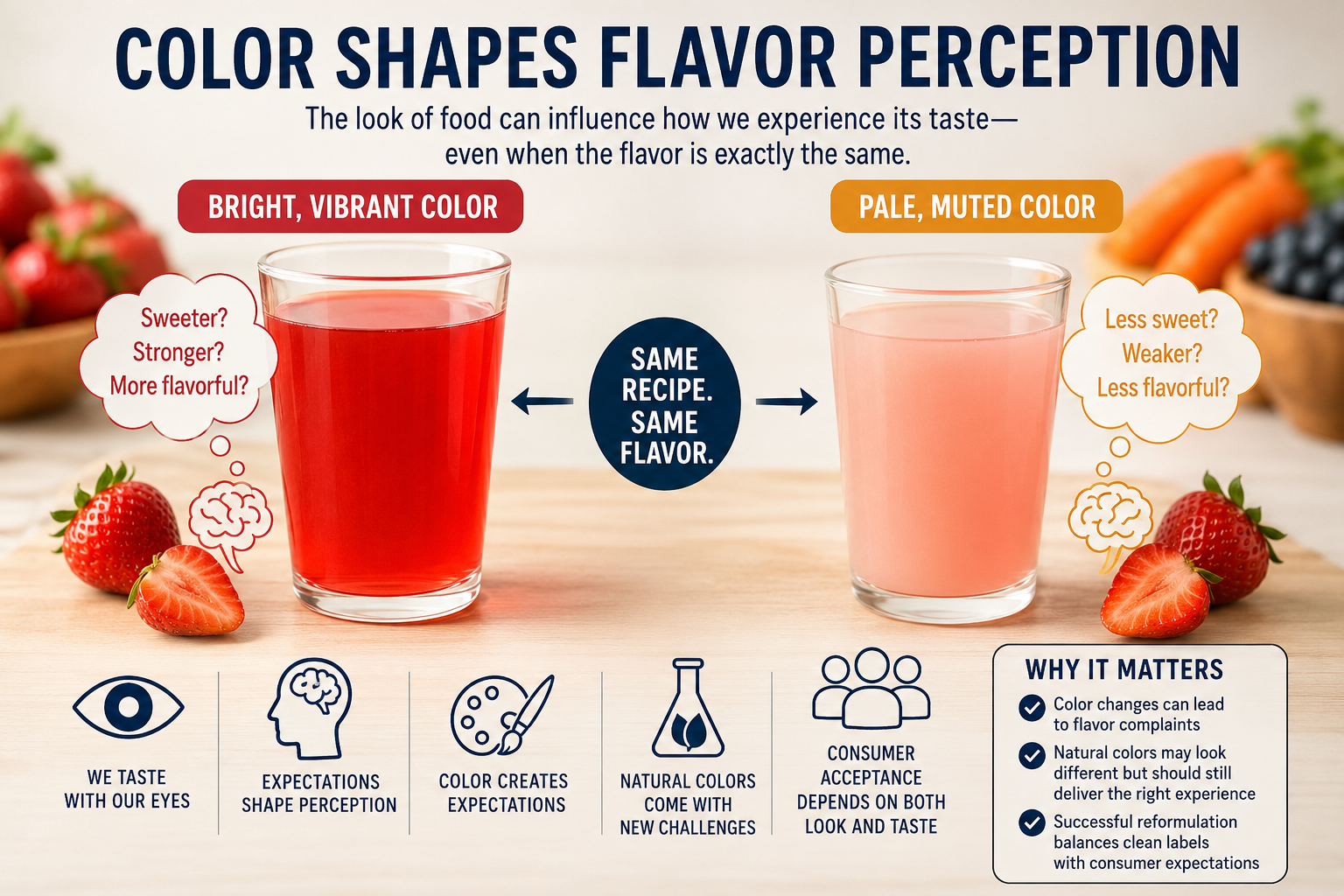
As food manufacturers accelerate the transition from artificial food dyes to naturally derived colors, they are discovering that changing a product's appearance can have an unexpected consequence: consumers may believe the flavor has changed—even when the recipe remains exactly the same.
This phenomenon highlights an important principle in food science: people don't experience flavor through taste alone. Vision, smell, texture, and even expectations all work together to shape the overall eating experience.
Why Color Influences Taste Perception
Consumers often "taste with their eyes" before taking the first bite. The color of a food or beverage creates expectations about sweetness, freshness, intensity, and quality. When those visual cues change, the brain may interpret the product differently, altering the perceived flavor even if the ingredients remain unchanged.
For example:
- A bright red fruit drink is often expected to taste sweeter and more intense than a lighter-colored version.
- A pale orange beverage may seem less citrusy than a vibrant one.
- Chocolate products with lighter brown shades can appear less rich than darker versions.
Research in sensory science has repeatedly demonstrated that visual appearance influences how people perceive sweetness, fruitiness, freshness, and overall flavor intensity. These effects occur because the brain combines information from multiple senses to create a single eating experience.
The Shift Toward Natural Food Colors
Across the food industry, manufacturers are replacing synthetic food dyes with colors sourced from fruits, vegetables, algae, spices, and other natural ingredients. Consumer demand for cleaner ingredient labels, along with evolving regulatory and market pressures, has accelerated this transition.
However, natural colors present several formulation challenges:
- They may produce softer or less vibrant shades.
- Color stability can vary with heat, light, acidity, and storage conditions.
- Matching the appearance of long-established products is often difficult.
As a result, companies must carefully balance clean-label goals with maintaining the familiar visual identity consumers expect.
Why Flavor Complaints Can Increase After a Color Change
According to executives at Sensient Technologies, manufacturers sometimes receive customer complaints about flavor after switching color systems—even though the flavor formulation itself has not changed.
The reason is psychological rather than chemical. When consumers see a product that looks different from what they remember, they may assume it tastes different as well. This expectation can influence the actual eating experience, leading to reports that the product has become weaker, less sweet, or simply "not the same."
For established brands, even subtle shifts in color can affect customer satisfaction because consumers associate a specific appearance with a familiar taste.
Flavor and Color Development Now Go Hand in Hand
As natural color adoption increases, flavor scientists are working more closely with color specialists during product development.
Naturally sourced pigments can sometimes introduce slight botanical notes or interact differently with other ingredients. To address this, flavor houses have developed technologies that help mask unwanted notes and ensure the finished product delivers the intended sensory profile.
Rather than treating color and flavor as separate formulation challenges, many food companies now develop them simultaneously to preserve the overall consumer experience.
Consumer Expectations Remain Critical
Maintaining visual consistency has become one of the biggest challenges in food reformulation.
Consumers generally welcome cleaner labels and naturally sourced ingredients, but they also expect their favorite products to look and taste familiar. If a cereal, beverage, candy, or snack suddenly appears less vibrant, shoppers may assume its flavor or quality has declined—even before trying it.
This is why manufacturers often conduct extensive consumer testing before launching reformulated products. Evaluating both appearance and flavor perception helps ensure that changes made for ingredient transparency do not unintentionally reduce customer acceptance.
Investment in Natural Color Technologies
The growing demand for natural colors is driving significant investment across the food ingredient industry.
Sensient Technologies recently reported strong growth in its color business and announced continued investments in expanding natural color production capacity. Company leadership also emphasized the increasing integration of color and flavor technologies as food manufacturers reformulate products for the evolving marketplace.
Looking Ahead
The movement toward naturally sourced food colors is expected to continue as consumers seek simpler ingredient lists and manufacturers adapt to changing market expectations.
Success will depend on more than simply replacing one coloring ingredient with another. Food developers must preserve the sensory experience that consumers associate with their favorite products, ensuring that appearance, flavor, aroma, and texture remain aligned.
Ultimately, the science behind color perception reminds us that flavor begins long before food reaches the palate. What consumers see can be just as influential as what they taste, making color one of the most powerful—and often underestimated—components of product development.
###