How to Formulate a Pineapple Flavor Using the Note Method
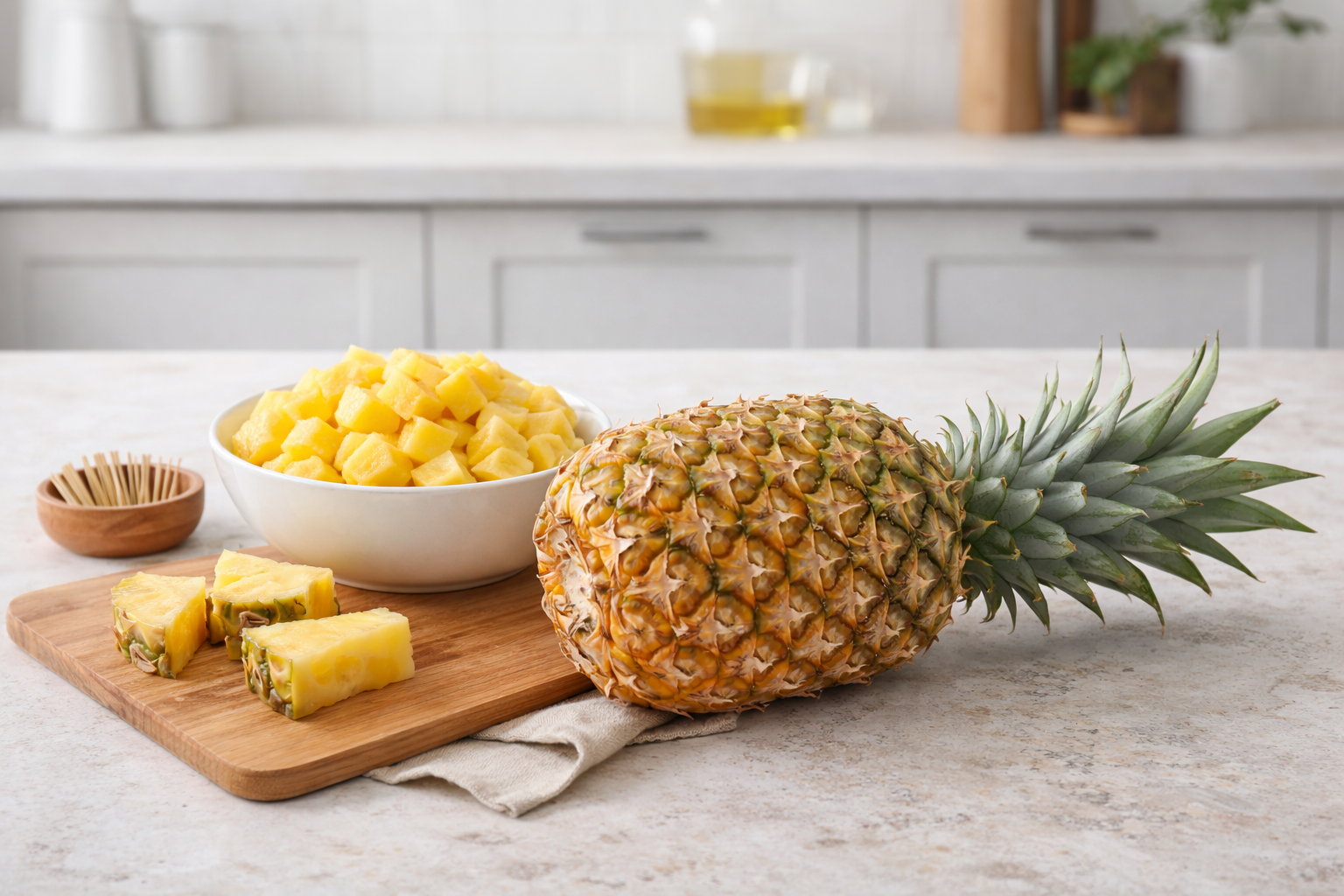
This summary reviews the 2020 case report "A pineapple flavor imitation by the note method" by Guangyong Zhu and Genfa Yu (Shanghai Institute of Technology, China). The report is particularly useful for individuals seeking to understand the practical process of constructing compound flavors.
1) The Flow of the Note Method for Flavor Creation
Based on the document, the process of creating a flavor using the "note method" follows a systematic, sensory-driven workflow:
- Identify Target Notes: First, analyze the target flavor (in this case, fresh pineapple) through smelling and tasting. Break down the overall flavor perception into its fundamental odor characteristics, or "notes."
- Become Familiar with Raw Materials: Smell and evaluate a wide range of natural and synthetic aroma ingredients using smelling slips. The goal is to become intimately familiar with the odor profile of each individual raw material and identify its dominant note(s).
- Select Matching Ingredients: Based on the notes identified in Step 1, select raw materials from Step 2 that possess the corresponding notes. The selection is based on matching the odor characteristics of the ingredients to the target flavor's profile.
- Construct an Initial Recipe: Define the ratios of the selected ingredients to create an initial recipe. This involves weighing and combining the materials based on the flavorist's judgment.
- Blend and Evaluate: Mix all ingredients thoroughly and evaluate the compounded flavor, typically using smelling slips. Compare the aroma of the blend against the memory or experience of the real fruit.
- Modify and Adjust: Based on the sensory evaluation, modify the recipe by adjusting ingredient ratios. This is an iterative process of blending, smelling, and adjusting until the flavor is harmonious and closely resembles the target. The goal is to achieve a "desired" flavor that has "typical natural odor characteristics."
2) Pineapple Flavor Notes Identified
Through smelling and tasting the pineapple fruit, the authors identified the following seven notes that constitute the pineapple flavor:
- Fruity note
- Winy note
- Vanilla-like note
- Vegetative note
- Beany note
- Sweet note
- Acidic note
3) Pineapple Flavor Formula with Ingredient Notes
Below is the formula extracted from Table 1 of the document. An additional column has been added to specify which flavor note each ingredient primarily renders, based on the descriptions provided in section 3.2 of the paper.
| No | Flavor Ingredient | wt % | Primary Note Rendered (Based on paper's descriptions) |
|---|---|---|---|
| 1 | Allyl hexanoate | 10.83 | Fruity (pineapple-like) |
| 2 | Allyl heptanoate | 10.69 | Fruity (pineapple-like) |
| 3 | Allyl cyclohexanepropionate | 4.72 | Fruity (pineapple-like) |
| 4 | 1% Ethyl 3-methylthiopropionate | 0.15 | Fruity (improves natural character) |
| 5 | 1% Methyl 3-methylthiopropionate | 0.17 | Fruity (improves natural character) |
| 6 | Ethyl butyrate | 0.29 | Fruity (pineapple-like) |
| 7 | Isoamyl acetate | 0.31 | Fruity (banana-like, enriches fruity note) |
| 8 | Isoamyl butyrate | 0.79 | Fruity (banana, apricot, pineapple) |
| 9 | Ethyl acetate | 0.14 | Fruity (brandy, pineapple, enriches fruity note) |
| 10 | Sweet orange oil | 8.70 | Fruity (enhances natural feeling, rounds off notes) |
| 11 | Lemon oil | 0.75 | Fruity (enhances natural feeling, rounds off notes) |
| 12 | Citral | 0.02 | Fruity (lemon, enriches fruity note) |
| 13 | γ-Undecalactone | 0.63 | Fruity (peach-like, enriches fruity note) |
| 14 | γ-Nonalactone | 0.64 | Fruity (coconut, enriches fruity note) |
| 15 | Vanillin | 1.57 | Vanilla-like |
| 16 | Maltol | 1.82 | Sweet (caramel-butterscotch) |
| 17 | 10% Furaneol | 0.26 | Sweet (burnt pineapple) |
| 18 | Ethyl hexanoate | 0.13 | Winy (winy-fruity, pineapple-banana) |
| 19 | Ethyl heptanoate | 0.67 | Winy (winy-brandy, fruity) |
| 20 | γ-Valerolactone | 0.23 | Beany |
| 21 | γ-Hexalactone | 0.21 | Beany |
| 22 | γ-Heptalactone | 0.01 | Beany |
| 23 | Acetic acid | 0.01 | Acidic |
| 24 | 1% Methional | 0.01 | Vegetative (potato, tomato, seafood nuances) |
| 25 | Pineapple base | 2.50 | (Complex base, likely contributes to multiple notes) |
| 26 | Ethanol | 40.7 | Solvent |
| 27 | Propylene glycol | 13.05 | Solvent |
| Total | 100 |
Rationale for Selecting Specific Flavor Compounds for Each Identified Note
Based on the report, the authors' rationale for selecting specific flavor compounds for each identified note is a combination of analytical knowledge (known pineapple volatiles), empirical sensory matching, and practical blending experience. They do not rely on a single source but a holistic approach.
Here is a summary of their reasoning for choosing the compounds for each note, as explained in section 3.2 of the paper:
Overall Guiding Principle
The authors state that the selection of raw materials is "mainly based on the notes of these ingredients." This means they physically smelled each compound and matched its dominant odor characteristic to one of the seven pineapple notes identified earlier. They also note that while some compounds are found in real pineapple, others are not, but can still be used if they contribute the correct sensory profile.
1. Fruity Note
This is the main note, and the authors dedicate the most space to it. Their rationale for selecting specific fruity compounds was:
- Aliphatic Esters as a Foundation: They note that aliphatic esters usually have fruity odors and "contribute to almost all fruity aroma." Therefore, they form the base.
- Specific "Pineapple" Character: Certain esters were chosen because they have a direct pineapple-like aroma. Allyl hexanoate, allyl heptanoate, and allyl cyclohexanepropionate were selected specifically because they are described as having "pineapple-like, fruity aroma" and are considered "the main ingredients to impart odor characteristics of pineapple."
- Sulfur Compounds for Naturalness: Ethyl 3-methylthiopropionate and methyl 3-methylthiopropionate were chosen because, at low concentrations, they have a sweet pineapple aroma and their addition "can improve natural pineapple characteristics."
- Enriching and Broadening the Fruity Profile: Other esters like ethyl butyrate (pineapple-like), isoamyl acetate (banana), and isoamyl butyrate (banana, apricot, pineapple) were selected to "enrich the fruity note."
- Lactones and Citral for Complexity: γ-Undecalactone (peach) and γ-Nonalactone (coconut) were added to enrich the fruity note, adding depth beyond simple esters. Citral (lemon) was also added for the same reason.
- Natural Oils for Rounding: Sweet orange oil and lemon oil were included for two reasons: 1) to "enhance the natural feeling" and 2) because "natural products can suppress the harshness of synthetics, round off the note and produce homogeneity."
2. Winy Note
The rationale for this note was straightforward:
- Specific Esters with Winy Character: The authors selected ethyl hexanoate because it has "a winy and fruity odor" and ethyl heptanoate because it has "a winy-brandy and fruity odor."
3. Vanilla-like Note
The selection was based on the classic aroma profile:
- The Primary Vanilla Compound: Vanillin was chosen because it "takes on a characteristic, vanilla-like aroma."
4. Vegetative Note
The rationale here was based on the specific sensory profile of a single compound at low levels:
- A Key Sulfur Compound: Methional was selected because, while it has a strong onion odor concentrated, at low concentrations it "has taste characteristics of potato, tomato, seafood and vegetative nuances."
5. Beany Note
The authors linked a specific chemical class to this sensory note:
- Lactones for Beany Character: They state that "some lactones also contribute to beany note." Based on this, they selected γ-valerolactone, γ-hexalactone, and γ-heptalactone because "all the three lactones have sweet odor with beany characteristics."
6. Sweet Note
The rationale involved both primary sweeteners and flavor enhancers:
- Caramelic Compounds: Maltol was selected for its "sweet, caramel-butterscotch odor" and its function as a "taste intensifier."
- Specific Pineapple Sweetness: Furaneol was chosen because it has "a burnt pineapple odor" and can "give sweet note."
7. Acidic Note
The choice was based on a fundamental acidulant:
- Basic Acid for Lift: Acetic acid was selected because it has a "typical vinegar aroma" and, importantly, "can also be used to accentuate fruity notes."
###
https://pdfs.semanticscholar.org/0588/0a45143edd2ca21808687b9dfa0bd11cd7c1.pdf