Jammy flavor, Jammy note, all things jammy flavorists need to know
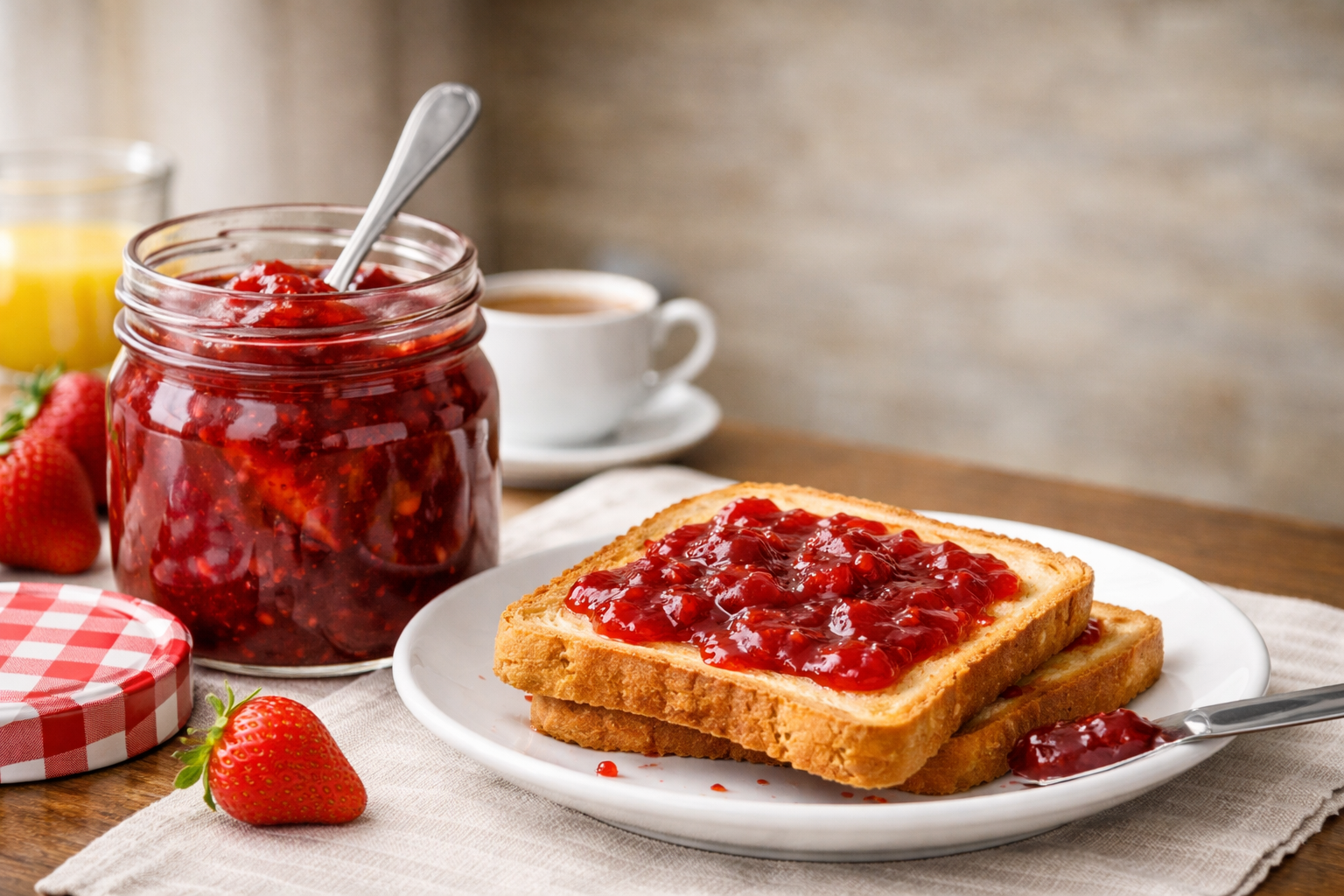
Manipulation of jammy note is a requirement by the Society of Flavor Chemists and questions regarding jamminess may be raised when candidates take the SFC qualification test/interview. This page shows you all things you possibly need to know when formulating a flavor with jammy note.
By definition, the “jammy” note in flavor is a rich, sweet, and fruit-forward aroma reminiscent of cooked fruits, preserves, or stewed fruits. It’s common in strawberries, raspberries, blackberries, and sometimes tropical fruits when concentrated or processed or cooked. Here’s a detailed breakdown:
1. Key Compounds Contributing to Jammy Notes
The jammy character comes mainly from Maillard products, esters, aldehydes, and furans formed either naturally in fruits or during thermal processing:
| Compound Type | Key Examples | Note Contribution |
|---|---|---|
| Furanones | γ‑Decalactone, γ‑Dodecalactone, Furaneol (4‑Hydroxy‑2,5‑dimethyl-3(2H)-furanone), Mesifuran | Sweet, caramelized, cooked fruit aroma; central to strawberry jam note |
| Esters | Ethyl butyrate, Ethyl hexanoate, Methyl anthranilate | Fruity, ripe fruit character, enhances natural fruitiness |
| Aldehydes | Benzaldehyde, Vanillin | Adds cooked fruit/almond or sweet aromatic edge |
| Ketones | β‑Ionone, Damascenone | Enhances richness, “stewed fruit” or prune-like undertone |
| Maillard Products | Hydroxymethylfurfural (HMF), Maltol | Sweet, caramelized warmth, enhances jammy mouthfeel |
Furaneol (strawberry furanone) is particularly potent for the classic jammy strawberry note.
2. How to Increase Jammy Notes
- Use cooked or concentrated fruit extracts – Cooking fruits enhances Maillard and caramelization products.
- Boost key furanones and lactones – e.g., adding γ-Decalactone, Furaneol, or β-Damascenone (very low threshold, potent impact).
- Add complementary sweet aldehydes – Benzaldehyde for cooked cherry/berry nuance.
- Thermal processing in controlled pH – Slightly acidic medium enhances furanone formation (pH ~3–4 typical for berries).
- Use sugar–acid balance – Higher sugar content and moderate acidity favor jammy perception.
- Aging – Certain esters and furans develop over time, enhancing “stewed fruit” depth.
3. How to Reduce or Damp Jammy Notes
- Dilution with neutral carriers – Water, ethanol, or flavorless oil reduces intensity.
- Counter-flavor compounds – Add green, fresh, or citrus notes (e.g., cis-3-Hexenol, Limonene) to shift perception away from cooked jam.
- Lower thermal processing – Avoid excessive heating, which produces Maillard/furanone overtones.
- Use masking agents – Some bitter or astringent compounds can suppress jammy perception subtly.
4. Flavor Compounds That Can Boost or Damp Jammy Notes
| Function | Compounds | Mechanism |
|---|---|---|
| Boost Jammy | Furaneol, Mesifuran, γ-Decalactone, β-Damascenone, Maltol | Increase perception of sweet, cooked fruit |
| Dampen Jammy | Cis-3-Hexenol, Linalool, Limonene, Citral, Isoamyl alcohol | Introduce freshness, green/citrus perception that competes with jammy |
| Round/Enhance Mouthfeel | Vanillin, Ethyl maltol, Hydroxycitronellal | Gives “sweet, smooth, stewed” impression enhancing jammy note |
5. Food Matrix to Maintain Jammy Note
- Sugars – Sucrose, glucose, or fructose stabilize sweetness and enhance jammy perception.
- Acids – Citric or malic acid balances sweetness; too low pH suppresses perception.
- Fat – Low-fat matrices keep jammy note clean; some dairy/fat can soften perception.
- Alcohol – In beverages or confections, ethanol can boost furanone volatility.
- Stability Considerations – Jammy notes are heat-sensitive; protect from prolonged high-temperature processing or light exposure. Encapsulation or emulsions can maintain volatile stability.
Best Matrices: Jams, fruit fillings, confections, beverages with moderate sugar and acid, baked goods with fruit inclusions.
Practical Jammy Flavor Formula Cheat Sheet
Below is a practical “Jammy Flavor Formula Cheat Sheet” for creating or tuning a jammy/berry-cooked fruit note. Presented here are core compounds, boosters, dampeners, and matrix guidance with suggested usage ranges (typical in flavor formulation, ppm or % weight in flavor concentrate).
Jammy Flavor Formula Cheat Sheet
1. Core Jammy Compounds (create primary jammy impression)
| Compound | Typical Use Range | Contribution |
|---|---|---|
| Furaneol (4-Hydroxy-2,5-dimethyl-3(2H)-furanone) | 0.5–5 ppm | Sweet, cooked strawberry/stewed fruit; central jammy note |
| Mesifuran (2,5-Dimethyl-4-methoxy-3(2H)-furanone) | 0.1–2 ppm | Adds caramelized, baked fruit nuance |
| γ-Decalactone | 0.5–10 ppm | Peachy, creamy fruity undertone, enhances jammy depth |
| β-Damascenone | 0.05–0.2 ppm | Potent, prune/raisin/cooked berry aroma; boosts richness |
| Maltol | 10–50 ppm | Caramelized sweetness, enhances mouthfeel and warmth |
2. Supporting Fruity Esters (brighten jammy note, add complexity)
| Compound | Typical Use | Contribution |
|---|---|---|
| Ethyl butyrate | 1–5 ppm | Fresh, ripe fruit note; boosts perception of fruitiness |
| Ethyl hexanoate | 0.5–3 ppm | Sweet, apple/pear nuance; complements cooked berry |
| Methyl anthranilate | 0.1–1 ppm | Adds grape-like or berry sweetness |
3. Sweet/Caramel Enhancers (rounds flavor, adds body)
| Compound | Typical Use | Contribution |
|---|---|---|
| Vanillin | 50–200 ppm | Smooth, sweet, bakery note; softens sharp edges |
| Ethyl maltol | 5–20 ppm | Adds candy-like, sweet warmth; supports jammy perception |
| Hydroxycitronellal | 1–5 ppm | Sweet floral-vanilla undertone; enhances fruit richness |
4. Dampeners / Green & Fresh Modifiers (optional, reduce overcooked perception)
| Compound | Typical Use | Mechanism |
|---|---|---|
| Cis-3-Hexenol | 1–5 ppm | Fresh, green note; cuts overly jammy impression |
| Linalool | 1–10 ppm | Floral freshness; softens cooked impression |
| Limonene | 5–20 ppm | Citrus lift; brightens profile, reduces “overcooked” feel |
| Citral | 0.5–5 ppm | Lemon-like brightness; balances heavy jammy notes |
5. Matrix & Stability Tips
- Sugar: ≥50% sugar in the formulation (sucrose, glucose, or fructose) to stabilize perception.
- Acid: Mild acidity (citric/malic) pH 3–4 maintains jammy freshness.
- Alcohol/Volatile Carrier: 5–15% ethanol (if applicable) enhances furanone volatility.
- Fat: Minimal fat unless creamy jammy note is desired. Some γ-Decalactone blends well with light dairy.
- Processing: Avoid long high-heat treatment (>80°C) after flavor addition to prevent furaneol degradation.
- Encapsulation: For beverages or prolonged storage, microencapsulation stabilizes furaneol and mesifuran.
6. Practical Strategy
- Start with Core Jammy Compounds (furaneol, mesifuran, γ-decalactone, damascenone).
- Layer Esters for natural fruit brightness.
- Round with Vanilla/Maltol/Ethyl Maltol to enhance mouthfeel.
- Adjust Fresh Modifiers (green, citrus) if jammy is too heavy.
- Check matrix compatibility (sugar/acid/fat/alcohol).
Here’s a Jammy Flavor Map concept, visualizing how each compound contributes to perception, broken into Top Notes, Mid/Body Notes, Enhancers, and Dampeners. The map is structured it as a guide such that a senior flavor chemist could use when designing or adjusting jammy notes.
Jammy Flavor Map
             ┌────────────────────────────┐
             │        TOP NOTES           │
             │ (first impression / bright │
             │  fruitiness perceived)     │
             ├────────────────────────────┤
             │ Ethyl butyrate             │
             │ Ethyl hexanoate            │
             │ Methyl anthranilate        │
             │ Limonene (if freshness desired) │
             └────────────────────────────┘

                     ↓ perceptual depth

             ┌────────────────────────────┐
             │        MID / BODY NOTES    │
             │ (heart of jammy, cooked/  │
             │  stewed fruit perception) │
             ├────────────────────────────┤
             │ Furaneol (strawberry jam) │
             │ Mesifuran (baked/caramel) │
             │ γ-Decalactone (peachy cream) │
             │ β-Damascenone (raisin/prune depth) │
             │ Maltol (caramel warmth)   │
             └────────────────────────────┘

                     ↓ mouthfeel & sweetness

             ┌────────────────────────────┐
             │        ENHANCERS           │
             │ (roundness, sweetness,     │
             │  creamy/candy perception)  │
             ├────────────────────────────┤
             │ Vanillin                   │
             │ Ethyl Maltol               │
             │ Hydroxycitronellal         │
             └────────────────────────────┘

                     ↓ optional modifiers

             ┌────────────────────────────┐
             │        DAMPENERS           │
             │ (reduce overcooked jammy   │
             │  or add freshness/green)   │
             ├────────────────────────────┤
             │ Cis-3-Hexenol (green)     │
             │ Linalool (floral)          │
             │ Citral (citrus)            │
             │ Limonene (citrus/bright)   │
             └────────────────────────────┘
How to Use This Map
- Start with MID/BODY NOTES – these are the essence of jammy flavor. Furaneol, mesifuran, γ-decalactone, and damascenone form the core jammy impression.
- Layer TOP NOTES – esters give the initial fruit burst and make the jammy note smell more natural and fresh.
- Add ENHANCERS – vanilla, maltol, and ethyl maltol smooth the flavor, give sweetness, and round the profile.
- Adjust with DAMPENERS – add small amounts of green or citrus notes if the jammy note feels “too cooked” or heavy.
- Matrix Integration – sugar, acid, alcohol, and fat determine how well these compounds are perceived and how long the jammy note lasts.
Here is another to present the map - a ready-to-use, color-coded Jammy Flavor Map.
🎯 JAMMY FLAVOR MAP (TEXT-BASED, COLOR-CODED)
================================================================================
🟡 TOP NOTES (Bright / Fresh / First Impact)
--------------------------------------------------------------------------------
Ethyl Butyrate        → juicy, pineapple-like lift
Ethyl Hexanoate       → apple/pear fruity brightness
Methyl Anthranilate   → grape/berry sweetness
Limonene              → citrus sparkle (optional freshness)

Function:
→ Creates initial fruit burst
→ Prevents jammy note from feeling flat or dull
================================================================================


🔴 MID / BODY NOTES (Core Jammy Character – COOKED FRUIT HEART)
--------------------------------------------------------------------------------
Furaneol              → strawberry jam, caramelized sugar
Mesifuran             → baked fruit, caramel depth
γ-Decalactone         → peachy, creamy fruit body
β-Damascenone         → prune/raisin richness (very potent)
Maltol                → warm caramel, cotton-candy sweetness

Function:
→ Defines "jammy" identity
→ Provides cooked/stewed fruit perception
→ Controls richness and depth
================================================================================


🟠 ENHANCERS (Sweetness / Roundness / Mouthfeel)
--------------------------------------------------------------------------------
Vanillin              → smooth vanilla sweetness
Ethyl Maltol          → candy-like, jammy boost
Hydroxycitronellal    → soft floral sweetness

Function:
→ Rounds harsh edges
→ Adds viscosity perception (“thickness” of jam)
→ Enhances sweetness without increasing sugar
================================================================================


🟢 DAMPENERS / MODIFIERS (Freshness / Balance / Control)
--------------------------------------------------------------------------------
Cis-3-Hexenol         → green, leafy freshness
Linalool              → floral lift
Citral                → lemony brightness
Limonene              → citrus freshness (dual role)

Function:
→ Reduces overcooked/heavy jammy notes
→ Adds freshness and realism
→ Prevents cloying sweetness
================================================================================
⚙️ HOW TO USE THIS IN FORMULATION (PRO WORKFLOW)
Step 1: Build CORE (🔴)
→ Start with Furaneol + Mesifuran + γ-Decalactone
→ Add trace β-Damascenone (VERY LOW)

Step 2: Add TOP LIFT (🟡)
→ Layer esters for realism and diffusion

Step 3: ROUND & SWEETEN (🟠)
→ Add Ethyl Maltol + Vanillin for jam thickness

Step 4: BALANCE (🟢)
→ Add tiny amounts of green/citrus if too heavy

Step 5: MATRIX CHECK
→ Sugar (↑ jammy)
→ Acid (balance)
→ Alcohol (↑ volatility)
→ Heat (can destroy furanones if excessive)
📊 QUICK FORMULATION TEMPLATE (CONCENTRATE BASIS)
Furaneol..................... 1.0
Mesifuran.................... 0.3
γ-Decalactone............... 2.0
β-Damascenone............... 0.05
Maltol....................... 20.0

Ethyl Butyrate.............. 2.0
Ethyl Hexanoate............. 1.0
Methyl Anthranilate......... 0.5

Vanillin..................... 100.0
Ethyl Maltol................ 10.0

Cis-3-Hexenol............... 1.0 (optional)
Limonene.................... 5.0 (optional)

Carrier (PG/Ethanol)........ q.s. to 1000
🧠 ADVANCED FORMULATOR INSIGHT
- Jammy = Furanones + Sugar + Acid balance
- Too jammy? → Add green (cis-3-hexenol) or citrus (citral)
- Not jammy enough? → Increase furaneol + ethyl maltol synergy
- Flat profile? → Increase esters (top notes)
- Too candy-like? → Reduce ethyl maltol, increase damascenone slightly
A reaction-based jammy system
Here is how to build a reaction-based jammy system using precursors to generate furaneol/mesifuran during processing—like industrial strawberry jam flavors. This can make the jammy flavor more sophsticated and complex, adding a sense of more naturalness.
The main targets are:
- furaneol / HDMF for strawberry-jam and cooked-fruit sweetness,
- mesifuran for deeper caramelized jam character,
- HMF / caramelized sugar notes for cooked preserve impression,
- trace β-damascenone-type depth for ripe/stewed fruit richness. Furaneol is a key jammy molecule in strawberry and related systems; in biological and chemical systems it is linked to D-fructose-1,6-bisphosphate chemistry, and mesifuran is formed by methylation of furaneol. HMF rises under acidic heating of sugars and through Maillard-type pathways. β-Damascenone is associated with acid/heat release or formation from carotenoid-derived precursors. (PMC)
1) Core design principle
A jammy reaction system needs four things working together:
- A sugar-rich phase to feed furanone/caramel chemistry.
- Moderate acidity so the system tastes jam-like and supports HMF/cooked-fruit development. Lower pH tends to increase 5-HMF formation during heating. (ScienceDirect)
- Controlled thermal load so you generate cooked-fruit notes without collapsing the top fruit. In strawberry jam work, heating strongly changes the volatile profile and can increase heat-derived notes while reducing fresher esters/alcohols. (ScienceDirect)
- A thick, high-solids matrix so the aroma reads as “jam” instead of “candy syrup.” Xanthan/thickening can also influence furan behavior during jam processing. (ScienceDirect)
2) Practical reaction-based jammy base
This is a process flavor base / jammy reaction concentrate concept, not a regulatory filing or finished commercial spec.
A. Precursor syrup phase
Use this as the reaction medium:
- Sucrose: 35–45%
- Glucose syrup or dextrose: 10–20%
- Fructose: 3–8%
- Water: q.s.
- Pectin: 0.3–0.8%
- Optional xanthan: 0.05–0.15%
- Citric acid or malic acid: adjust to pH 3.1–3.6
Why use them:
- Fructose is especially effective at producing furans/HMF under heat compared with sucrose or glucose. (ScienceDirect)
- A pectin/high-solids acid matrix gives the sensory context people interpret as jam.
B. Mild Maillard / cooked-fruit precursor phase
Use only lightly. The goal is jammy cooked fruit, not roasted or bakery.
- Glycine: 0.02–0.08%
- Alanine: 0.01–0.05%
- Serine: 0.005–0.03%
- Optional trace phenylalanine: 0.002–0.01%
Keep amino acids low. Too much pushes the system toward browned, malty, or cooked-candy notes rather than berry jam.
C. Fruit precursor / depth phase
- Strawberry, raspberry, blackberry, plum, or apricot concentrate/puree solids: 5–20% equivalent
- Optional carotenoid-containing fruit fraction for deeper ripe notes, especially apricot/plum/berry blends
This matters because β-damascenone-like richness is linked to carotenoid-derived precursors and can be promoted by acid/heat handling. (ScienceDirect)
3) Processing strategy
Option 1: Thermal jammy generation
Best when you want the note to form during cooking.
- Build the sugar/pectin/acid matrix.
- Add fruit solids.
- Add the low amino acid package.
- Heat to 85–95°C with mixing.
- Hold 10–30 minutes, watching solids and aroma evolution.
- Cool quickly once the jammy note appears.
- Add fragile top-note esters after cooling if needed.
Why they help:
- Acid + heat favors HMF/cooked sugar formation. (ScienceDirect)
- Jam processing can raise heat-derived sweet/cooked notes while fresher esters drop. (PMC)
Option 2: Split-note approach
Best for cleaner, premium fruit jams.
- Generate only part of the jammy body thermally.
- After cooling below 50°C, add a fresh fruit top-note package.
This lets you keep the jammy body while restoring realism lost during heating.
4) How to bias the reaction toward a stronger jammy note
To increase jammy character:
- Increase fructose share modestly.
- Use slightly lower pH within the fruit-safe range.
- Extend heat hold a little, but not enough to scorch the profile.
- Increase fruit solids from ripe/concentrated berry or stone fruit material.
- Use a thicker matrix so the aroma reads as preserve instead of beverage.
Mechanistically, this tends to favor furanone / HMF / cooked-fruit perception. Acidity and heating are especially important for HMF, while furaneol/mesifuran are central jammy markers in strawberry-like systems. (ScienceDirect)
5) How to keep it from turning muddy or burnt
Reduce these if the system becomes too dark, sticky, or “burned jam”:
- Excess fructose
- Too much amino acid
- Long hold times
- Very low pH
- Excess oxygen exposure during hot hold
Also, add back freshness after reaction with small amounts of:
- ethyl butyrate
- ethyl hexanoate
- linalool
- trace cis-3-hexenol
Those do not create the jammy body, but they keep it from smelling dead.
6) A practical prototype
Prototype: Berry jammy reaction base
Phase A
- Sucrose 40.0
- Glucose syrup solids 14.0
- Fructose 5.0
- Pectin 0.5
- Xanthan 0.08
- Water 34.0
- Citric acid q.s. to pH 3.3
Phase B
- Strawberry puree concentrate 4.0
- Raspberry concentrate 1.5
- Plum concentrate 0.8
Phase C
- Glycine 0.04
- Alanine 0.02
- Serine 0.01
Process
- Mix Phase A to full hydration.
- Add Phase B.
- Add Phase C.
- Heat to 90°C, hold 15 minutes.
- Cool rapidly.
- Optional post-addition top notes after cooling:
- ethyl butyrate trace
- ethyl hexanoate trace
- linalool trace
This should give a red berry jam / cooked preserve direction rather than a fresh berry profile.
7) Mesifuran-focused route
Mesifuran is especially useful when you want a deeper, caramelized strawberry jam tone. In fruit, mesifuran is formed by methylation of furaneol. (PubMed)
In a practical flavor lab, that means:
- First build a system that favors furaneol-like jam body.
- Then add a small finished mesifuran note after reaction, because industrial thermal processing alone is not a reliable way to generate high mesifuran selectively in a clean food matrix.
So the realistic process-flavor strategy is:
- generate the jam body, then
- trim with mesifuran rather than expecting the process to create all of it.
8) Best food matrix to maintain the jammy note
The best matrix is usually:
- High soluble solids
- Moderate acidity
- Low to moderate water activity
- Pectin or hydrocolloid structure
- Limited post-process oxygen exposure
That matrix helps hold the “thick cooked fruit” perception and slows aroma flattening. In jam systems, processing conditions and matrix structure strongly affect furan formation and volatile retention. (ScienceDirect)
Most favorable matrices:
- fruit jam
- fruit filling
- fruit prep for yogurt
- bakery fruit ribbon
- confection fruit center
Less favorable:
- thin beverages
- very low-sugar systems
- neutral pH dairy without acid balance
9) Troubleshooting guide
Too fresh, not jammy enough
- raise fructose slightly
- increase hold time slightly
- lower pH a little
- increase fruit concentrate solids
Too candy-like
- reduce ethyl maltol/vanillin if present
- reduce added esters
- increase natural fruit solids
Too cooked / brown
- cut hold time
- reduce amino acids
- reduce fructose
- add back fresh esters after cooling
Too flat after storage
- improve oxygen barrier
- add a small post-add top-note package
- increase matrix viscosity / solids
10) What to do in practice
For the cleanest industrial result, use a hybrid system:
- Reaction-generated body: sugar + acid + fruit solids + very light amino acid input
- Post-added trims: mesifuran, trace furaneol support, top esters, and maybe trace damascenone support
That gives you a jammy profile that feels naturally formed, but still lets you control it precisely.
Full industrial-style jammy flavor formula
Below is a full industrial-style jammy flavor formula built as a berry jam / cooked red fruit flavor concentrate. It is designed as a compound flavor, not as a thermal reaction base by itself. It assumes you want a concentrated flavor that can be dosed into jams, fruit preps, fillings, gummies, syrups, and yogurt fruit systems.
The formula is built around the chemistry we discussed earlier: furanones for jam body, esters for fruit lift, lactones and ionone/damascenone-type materials for ripe depth, and sweet modifiers for preserve-like roundness. Strawberry-type jam systems are especially associated with furanones plus esters, while HMF is a heat/acid marker of cooked sugar systems, and β-damascenone is a powerful sweet-fruity-baked depth note. (PMC)
Industrial-style jammy flavor concentrate
Profile target: strawberry/raspberry/mixed berry jam
Flavor type: compound concentrate
Carrier system: propylene glycol / ethanol / triacetin compatible
Use level in finished food: usually 0.05–0.25%, depending on matrix and whether real fruit is present
1) Formula: 1000 g concentrate
A. Top-note fruit lift
| Material | g |
|---|---|
| Ethyl butyrate | 8.0 |
| Ethyl hexanoate | 5.0 |
| Ethyl 2-methylbutyrate | 1.2 |
| Hexyl acetate | 1.5 |
| cis-3-Hexenyl acetate | 0.8 |
| Linalool | 1.5 |
Subtotal: 18.0 g
B. Core jammy body
| Material | g |
|---|---|
| Furaneol (HDMF) | 2.5 |
| Mesifuran | 0.8 |
| Maltol | 12.0 |
| Ethyl maltol | 4.0 |
| γ-Decalactone | 2.2 |
| γ-Undecalactone | 0.6 |
| δ-Decalactone | 0.5 |
Subtotal: 22.6 g
C. Ripe / cooked-fruit depth
| Material | g |
|---|---|
| β-Damascenone (1% in solvent) | 2.5 |
| β-Ionone (10% in solvent) | 1.5 |
| Benzaldehyde | 2.0 |
| Phenethyl alcohol | 3.0 |
| Methyl anthranilate | 1.2 |
| Vanillin | 8.0 |
Subtotal: 18.2 g
D. Acidic-fruit / realistic berry support
| Material | g |
|---|---|
| Frambinone / raspberry ketone | 3.0 |
| Acetoin | 2.0 |
| 2,3-Butanedione replacer or creamy diketone-style modifier* | 0.5 |
| Citral | 0.5 |
| Geraniol | 0.8 |
| Nerol | 0.4 |
Subtotal: 7.2 g
*Use only materials allowed by your regulatory/customer framework.
E. Solvent / carrier / handling phase
| Material | g |
|---|---|
| Propylene glycol | 640.0 |
| Ethanol | 180.0 |
| Triacetin | 90.0 |
| Water | 20.0 |
| Antioxidant if permitted / needed | q.s. |
Subtotal: 930.0 g carrier phase before balancing
F. Balance to 1000 g
Current aromatic subtotal = 66.0 g
Carrier subtotal above = 930.0 g
Total = 996.0 g
Add:
| Material | g |
|---|---|
| Propylene glycol | 4.0 |
Final total: 1000.0 g
2) What each block is doing
Top-note fruit lift gives the first “berry” impact and prevents the flavor from reading as flat cooked syrup. Strawberry aroma systems are commonly characterized by esters plus furanones, and linalool is also frequently associated with strawberry flavor systems. (PMC)
Core jammy body is the real preserve note.
- Furaneol = strawberry jam / caramelized fruit sugar
- Mesifuran = deeper cooked strawberry preserve
- Maltol / ethyl maltol = sugar-browned, thick, jam-syrup impression
- Lactones = ripe, creamy, stewed-fruit roundness
Ripe/cooked-fruit depth turns a simple berry flavor into a jam flavor.
- β-Damascenone has a very strong sweet, fruity, honeyed, baked-apple style impact even at tiny levels. (PMC)
- Vanillin and benzaldehyde make the system feel more preserve-like and less raw.
Acidic-fruit support helps the profile survive in real food matrices and keeps it from becoming only candy-like.
3) Manufacturing procedure
- Charge the tank with propylene glycol, triacetin, and about half of the ethanol.
- Dissolve solids first:
- vanillin
- maltol
- ethyl maltol
- furaneol
- Add medium-volatility materials:
- mesifuran
- lactones
- phenethyl alcohol
- benzaldehyde
- raspberry ketone
- Add very potent materials next:
- β-damascenone dilution
- β-ionone dilution
- methyl anthranilate
- Add top notes last:
- ethyl butyrate
- ethyl hexanoate
- ethyl 2-methylbutyrate
- hexyl acetate
- cis-3-hexenyl acetate
- linalool
- citral
- Add remaining ethanol and final PG.
- Mix until clear and homogeneous.
- Rest 24–72 hours before evaluation.
4) Recommended application levels
Jam / fruit spread
0.08–0.18% in finished product
Yogurt fruit prep
0.10–0.25%
Bakery fruit filling
0.12–0.30%
Gummy / confection fruit center
0.05–0.15%
Syrup / topping
0.06–0.12%
If the system already contains real fruit concentrate, start at the low end.
5) Matrix needed to maintain the jammy note
The jammy note lasts best in a matrix with:
- high soluble solids
- moderate acidity
- some viscosity / hydrocolloid structure
- limited oxygen pickup
- moderate heat exposure after flavor addition
That is consistent with the underlying chemistry: acid and heat promote sugar dehydration products like HMF, while storage heat can continue to raise HMF, so excessive thermal exposure pushes the profile from “jammy” toward “cooked/deteriorated.” (PMC)
Ideal matrix target
- Brix: 45–68, depending on product
- pH: 3.0–3.6
- Hydrocolloid: pectin preferred; starch can work in fillings
- Sugar system: sucrose + glucose syrup or fructose-containing fruit solids
- Fat: low fat usually best for clean jam perception
Best product types
- jam
- fruit filling
- fruit prep for yogurt
- syrup
- fruit confection center
Less ideal
- neutral pH dairy
- thin beverages
- very low-sugar systems
- high-heat retort after flavor addition
6) How to tune it
To increase jammy note
Increase slightly:
- furaneol
- mesifuran
- maltol
- vanillin
- γ-decalactone
Also consider a slightly thicker, sweeter matrix.
To reduce jammy note
Reduce:
- furaneol
- mesifuran
- ethyl maltol
- vanillin
Increase slightly:
- ethyl butyrate
- ethyl hexanoate
- cis-3-hexenyl acetate
- linalool
That shifts perception toward fresher fruit and away from cooked preserve.
7) Three quick variants
Strawberry jam direction
Increase:
- furaneol to 3.0 g
- mesifuran to 1.0 g
- ethyl butyrate to 9.0 g
Reduce:
- benzaldehyde to 1.0 g
Raspberry jam direction
Increase:
- raspberry ketone to 4.5 g
- β-ionone dilution to 2.0 g
- linalool to 2.0 g
Reduce:
- γ-decalactone to 1.5 g
Mixed berry jam direction
Increase:
- methyl anthranilate to 1.8 g
- benzaldehyde to 2.5 g
- β-damascenone dilution to 3.0 g
8) Practical caution
This is a flavor-development formula, not a regulatory opinion. Actual commercial use needs:
- FEMA/CoE/customer compliance review
- local regulatory review
- allergen and labeling review
- solvent system review
- sensory and stability validation in the target food
Some materials here are powerful enough that even 10–20% changes are noticeable, especially β-damascenone, mesifuran, and furaneol.
A flavor pyramid chart with top / middle / background percentages and ppm targets in finished food.
Here is a professional “Flavor Pyramid” for a Jammy (Berry Preserve) Flavor, structured exactly the way senior flavorists document and tune systems—showing top / middle / base architecture, weight distribution, and ppm targets in finished food.
🎯 JAMMY FLAVOR PYRAMID (INDUSTRIAL STYLE)
                               ▲
                               │
                        🟡 TOP NOTES
                  (Immediate Impact / Diffusion)
                               │
         Ethyl butyrate • Ethyl hexanoate • Ethyl 2-methylbutyrate
         Hexyl acetate • cis-3-hexenyl acetate • Linalool • Citral

                               │
                               ▼

                        🔴 MIDDLE / BODY
                  (Core Jammy Identity)
                               │
         Furaneol • Mesifuran • Maltol • Ethyl maltol
         γ-Decalactone • γ-Undecalactone • Raspberry ketone
         Methyl anthranilate • Benzaldehyde

                               │
                               ▼

                        🟣 BASE / BACKGROUND
               (Depth / Fixation / Persistence)
                               │
         β-Damascenone • β-Ionone • Vanillin
         Phenethyl alcohol • Lactone residues
📊 WEIGHT DISTRIBUTION (IN CONCENTRATE)
| Layer | % of Flavor | Role |
|---|---|---|
| 🟡 Top Notes | 20–30% | Diffusion, freshness, realism |
| 🔴 Middle / Body | 45–60% | Jammy identity (cooked fruit) |
| 🟣 Base | 15–25% | Depth, persistence, fixation |
👉 Jammy flavors are middle-heavy systems (unlike citrus, which is top-heavy).
📉 PPM TARGETS IN FINISHED FOOD
Assuming 0.1% flavor usage level
🟡 TOP NOTES (final product ppm)
| Compound | ppm |
|---|---|
| Ethyl butyrate | 1–5 |
| Ethyl hexanoate | 0.5–3 |
| cis-3-hexenyl acetate | 0.2–1 |
| Linalool | 0.5–2 |
| Citral | 0.2–1 |
👉 Goal: bright entry, quick release
🔴 MIDDLE / BODY (jam core)
| Compound | ppm |
|---|---|
| Furaneol | 0.5–3 |
| Mesifuran | 0.1–1 |
| Maltol | 5–25 |
| Ethyl maltol | 1–10 |
| γ-Decalactone | 0.5–5 |
| Raspberry ketone | 0.5–5 |
| Benzaldehyde | 0.5–3 |
👉 Goal: define “jammy” perception
🟣 BASE / BACKGROUND
| Compound | ppm |
|---|---|
| β-Damascenone | 0.01–0.1 |
| β-Ionone | 0.05–0.5 |
| Vanillin | 5–20 |
| Phenethyl alcohol | 1–10 |
👉 Goal: linger, roundness, depth
⚙️ DYNAMIC RELEASE CURVE
Time → →

Top Notes      ███████░░░░░░░░   (fast release, quick fade)
Middle Notes   ░░██████████░░░   (dominant perception)
Base Notes     ░░░░███████████   (slow build, long tail)
👉 Jammy flavors are characterized by:
- moderate top
- strong middle plateau
- soft but persistent base
🧠 HOW TO ADJUST USING THE PYRAMID
Increase JAMMY
- ↑ Furaneol / Mesifuran
- ↑ Maltol / Ethyl maltol
- Slight ↑ γ-Decalactone
- Slight ↓ top esters
Make it FRESHER (less jammy)
- ↑ Ethyl butyrate / hexanoate
- ↑ cis-3-hexenol derivatives
- ↓ Ethyl maltol / vanillin
Increase DEPTH / PREMIUM FEEL
- ↑ β-Damascenone (careful!)
- ↑ Ionones
- ↑ Phenethyl alcohol
Fix “CANDY-LIKE” PROBLEM
- ↓ Ethyl maltol
- ↑ Benzaldehyde / natural fruit notes
- ↑ acid balance in application
🧩 MATRIX INTERACTION (CRITICAL)
| Factor | Effect on Pyramid |
|---|---|
| High sugar | Amplifies middle (jammy) |
| Acid (pH 3–4) | Sharpens top + supports jam |
| Heat | Reduces top, strengthens middle |
| Viscosity | Slows release → enhances jam perception |
| Alcohol | Boosts top diffusion |
🏆 PRO INSIGHT (WHAT SEPARATES EXPERT FORMULATORS)
- Jammy flavor is not just compounds—it’s architecture + matrix
- The illusion of “cooked fruit” comes from:
- furanones (core)
- sugar/caramel enhancers
- suppressed green notes
- The best systems use:
- reaction-generated body
- added top-note correction
- controlled base depth
A Jammy Flavor Interaction Map showing synergy (e.g., furaneol × ethyl maltol); suppression (green vs jammy); nonlinear effects (damascenone amplification.
Here’s a Jammy Flavor Interaction Map—the kind of internal tool used by senior flavorists to understand synergy, suppression, and nonlinear amplification across a jammy system.
This goes beyond a pyramid: it shows how molecules behave together, not just where they sit.
🧠 JAMMY FLAVOR INTERACTION MAP
🔷 1. CORE NETWORK (Jammy Engine)
          [FURANEOL] ────────────┐
               │                │
               │ synergy        │ synergy
               ▼                ▼
        [MESIFURAN]      [ETHYL MALTOL]
               │                │
               │                │
               └──────► [MALTOL] ◄──────┘

                    ↓ amplifies

              🍓 JAMMY PERCEPTION 🍓
Key Insight:
- Furaneol = primary driver
- Mesifuran = deep cooked jam
- Ethyl maltol + maltol = sweetness + viscosity illusion
👉 Nonlinear effect:
Furaneol + Ethyl Maltol ≠ additive → multiplicative jammy boost
🔶 2. FRUIT LIFT vs JAMMY BALANCE
     (Fresh / Volatile)                    (Cooked / Dense)

 [ETHYL BUTYRATE] ─────┐        ┌────── [FURANEOL]
 [ETHYL HEXANOATE] ────┼────────┼────── [MESIFURAN]
 [CIS-3-HEXENYL ACETATE] │      │       [MALTOL]
 [LINALOOL] ────────────┘        └────── [ETHYL MALTOL]

            ▲                                ▼
        FRESHNESS                     JAMMY HEAVINESS
Interaction Rule:
- More esters → fresh fruit
- More furanones → jammy / cooked
👉 This is a see-saw system
🔷 3. DEPTH AMPLIFICATION NETWORK
         [β-DAMASCENONE]
                │
        (ultra-low threshold)
                │
                ▼
   ┌────────► amplifies ◄────────┐
   │                             │
[FURANEOL]                 [METHYL ANTHRANILATE]
   │                             │
   └────────► enriches ◄─────────┘

                ▼
         “RIPE / STEWED FRUIT”
Key Insight:
- β-Damascenone acts like a gain knob
- Even tiny increases → huge perceived richness
👉 Nonlinear amplification (critical concept)
🔶 4. GREEN / FRESH SUPPRESSION NETWORK
      [CIS-3-HEXENOL] ─────┐
      [CITRAL] ────────────┼──► suppresses ───► [FURANEOL]
      [LIMONENE] ──────────┘                   [MESIFURAN]

                     ▼
              REDUCED JAMMINESS
Key Insight:
- Green & citrus notes compete perceptually
- They don’t destroy jammy compounds—they mask them
👉 Used for:
- correcting “overcooked”
- adding realism
🔷 5. SWEETNESS & MOUTHFEEL LOOP
     [ETHYL MALTOL] ─────┐
                         │
     [MALTOL] ───────────┼──► increases
                         │
     [VANILLIN] ─────────┘

                ▼
        SWEETNESS PERCEPTION
                ▼
        ↑ JAMMY INTENSITY
Key Insight:
- Sweetness doesn’t just taste sweet—it increases jam perception
- Creates “thickness illusion”
🔶 6. LACTONE ROUNDING SYSTEM
     [γ-DECALACTONE]
     [γ-UNDECALACTONE]
     [δ-DECALACTONE]

            ▼
     CREAMY / RIPE BODY
            ▼
     smooths sharp edges
            ▼
     ENHANCES JAMMY ROUNDNESS
Key Insight:
- Lactones = bridge between fruit & creaminess
- Prevent harsh, artificial edges
📊 MASTER INTERACTION SUMMARY
DRIVERS:
✔ Furaneol (primary)
✔ Mesifuran (depth)
✔ Maltol / Ethyl Maltol (sweet body)

AMPLIFIERS:
✔ β-Damascenone (nonlinear booster)
✔ Vanillin (roundness)

BALANCERS:
✔ Esters (fresh lift)
✔ Green notes (suppression)

MODIFIERS:
✔ Lactones (roundness)
✔ Floral notes (complexity)
⚙️ HOW TO USE THIS MAP (REAL FORMULATION LOGIC)
Scenario 1: “Too flat, not jammy”
→ Increase:
- Furaneol
- Ethyl maltol
- Small β-damascenone
Scenario 2: “Too heavy / cooked”
→ Add:
- Ethyl butyrate
- cis-3-hexenol
- Limonene
Scenario 3: “Candy-like, not natural”
→ Reduce:
- Ethyl maltol
→ Increase: - Benzaldehyde
- Methyl anthranilate
- Trace green note
Scenario 4: “Weak impact”
→ Increase:
- Top esters (diffusion)
- β-damascenone (very small!)
🏆 PRO INSIGHT (CRITICAL)
- Jammy flavor is a network effect, not a single compound
- The illusion of “fruit cooked with sugar” comes from:
- furanones (core)
- sugar enhancers (maltol)
- suppressed freshness
- amplified depth (damascenone)
👉 The best flavorists don’t just add compounds—they tune interactions
###