Juniper Berry as a Natural Flavoring: A Comprehensive Technical Guide
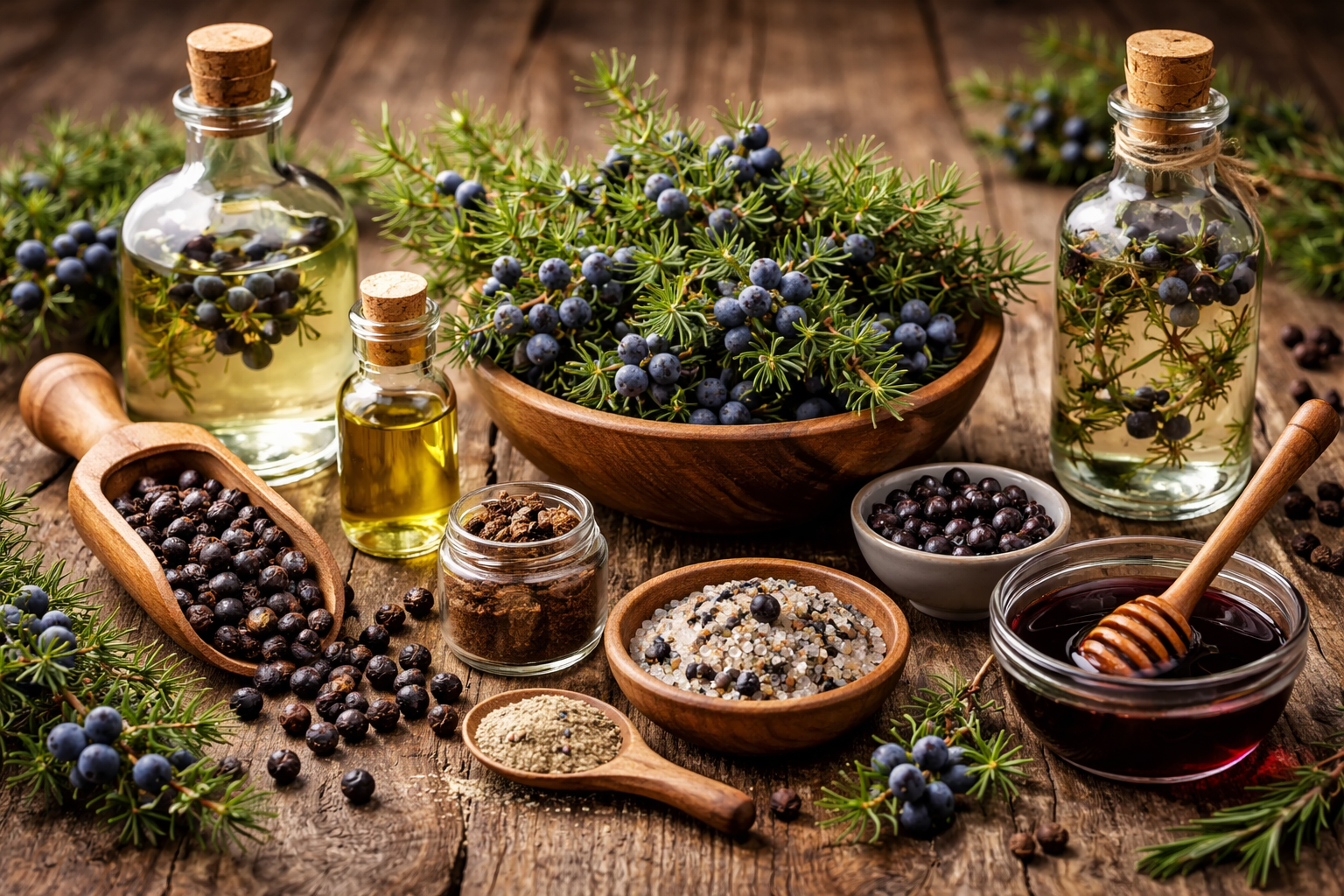
Here is a comprehensive technical guide for Juniper Berry, structured in the same format as the previous guides. All key information for flavorists has been incorporated.
Juniper Berry as a Natural Flavoring: A Comprehensive Technical Guide
The Society of Flavor Chemists requires certified flavorists to be able to identify the plant part used, derivatives, organoleptic characteristics, and major chemical component(s) characterizing the aroma and flavor of the 80 natural flavorings listed on its syllabus for the qualification test and interview. Juniper Berry is included among these essential items.
Introduction
Juniper berries are the seed cones (female cones) of the juniper plant, primarily Juniperus communis L., a coniferous evergreen shrub or small tree in the Cupressaceae (cypress) family. Native to the Northern Hemisphere, juniper is one of the most widely distributed woody plants in the world. The berries have been used for centuries in culinary, medicinal, and beverage applications, most famously as the primary flavoring agent in gin.
For flavorists, juniper berry oil offers a distinctive, fresh, piney, and woody aroma with characteristic fruity, peppery, and balsamic notes. It is dominated by α-pinene (providing the fresh pine character), with supporting contributions from myrcene, limonene, sabinene, and other terpenes. Juniper berry is essential for authentic gin flavors, game meat preparations, and various savory and beverage applications.
A critical distinction for flavorists is the difference between juniper berry oil (derived from the berries) and juniper needle oil (derived from the needles/wood), which have different chemical compositions and flavor profiles. Juniper berry oil has a sweeter, more fruity, and more complex character, while juniper needle oil is more terpenic, harsh, and camphoraceous.
Plant Parts Used
The berries (seed cones) are the plant part used for flavoring purposes. The following characteristics are notable:
- Source Plant: Primarily Juniperus communis L. (Common Juniper), a member of the Cupressaceae (cypress) family.
- Berry Description: Juniper "berries" are actually female seed cones that have become fleshy and berry-like. They are small (4–8 mm in diameter), spherical, and green when immature, ripening to a dark blue-purple to black color over 2–3 years. Each berry typically contains 1–3 seeds.
- Harvesting: Berries are harvested in the autumn (September–November) when they are fully ripe (dark blue-purple). They are typically hand-picked and dried. The essential oil content is highest in fully ripe berries.
- Drying: Dried juniper berries have a wrinkled, dark blue-black appearance and a characteristic piney, fruity, and slightly sweet aroma.
- Essential Oil Content: Dried juniper berries typically yield 0.5–2.0% essential oil.
The essential oil is obtained by steam distillation of the dried, crushed berries. Juniper berry oil is distinct from juniper needle oil (obtained from the needles and branches), which has a harsher, more camphoraceous profile.
Derivatives
Juniper berry is commercially available in several forms. The following details include technical specifications important for procurement and formulation.
Juniper Berry Essential Oil
Production Method: Steam distillation of dried, crushed juniper berries (Juniperus communis).
Description: Colorless to pale yellow to pale greenish-yellow mobile liquid with a characteristic fresh, piney, woody, and slightly fruity, peppery, balsamic aroma. The oil is lighter and more volatile than juniper needle oil.
Technical Notes: Yield is typically 0.5–2.0% from dried berries. The oil is dominated by α-pinene (30–60%), with significant amounts of myrcene, limonene, and sabinene. Storage in a cool, dry place away from light is recommended to prevent oxidation.
Juniper Berries (Whole and Ground)
Production Method: Harvesting and drying of ripe juniper berries. Ground juniper berries are produced by milling the dried berries.
Description: Whole berries are small, spherical, dark blue-purple to black, wrinkled when dried. Ground juniper berry is a dark brown to purple-brown powder with a characteristic piney, fruity aroma.
Technical Notes: Whole berries maintain potency longer than ground berries. Store in airtight containers away from light and heat.
Juniper CO₂ Extract
Production Method: Supercritical carbon dioxide extraction of juniper berries.
Description: Yields a cleaner, more complete extract containing a wider range of components than the essential oil, including heavier, less volatile compounds.
Technical Notes: Often considered superior for applications requiring a more authentic, full-bodied juniper character.
Juniper Tincture
Production Method: Alcohol extraction of dried juniper berries.
Description: Yellow to amber liquid with characteristic juniper aroma.
Technical Notes: Typical concentration is 10–30% berries in ethanol (40–70%). Common form for gin and beverage applications.
Juniper Berry Oil vs. Juniper Needle Oil: Critical Distinction
Flavorists must distinguish between juniper berry oil and juniper needle oil, as they have different compositions, flavor profiles, and applications.
| Characteristic | Juniper Berry Oil | Juniper Needle Oil |
|---|---|---|
| Plant Part | Berries (seed cones) | Needles and branches |
| Primary Components | α-Pinene (30–60%), myrcene (10–25%), limonene (5–15%), sabinene (5–15%) | α-Pinene (30–50%), sabinene (10–20%), limonene (5–15%), bornyl acetate, camphor |
| Aroma Profile | Fresh, piney, woody, fruity, slightly sweet, peppery | Sharp, piney, camphoraceous, harsh, less fruity |
| Flavor Character | Sweet, fruity, complex, less harsh | Terpenic, camphoraceous, harsher |
| Typical Use | Gin, culinary, savory applications | Fragrance, cleaning products, lower-quality gin substitutes |
| FEMA No. | 2602 (juniper berry oil) | Not typically used in flavor |
Organoleptic Characteristics
Aroma Profile
When evaluated, juniper berry oil reveals a fresh, piney, and complex aromatic profile:
- Primary Note: Fresh, piney, woody, slightly fruity
- α-Pinene Character: Fresh, pine, woody, slightly turpentine-like—the signature note
- Fruity: Slightly sweet, berry-like, citrusy (from myrcene, limonene)
- Peppery: Warm, slightly spicy, black pepper-like (from sabinene)
- Balsamic: Slightly sweet, resinous
- Herbal: Subtle, fresh, green undertones
- Woody: Dry, cedar-like undertones
The overall aroma is often described as "fresh, piney, and woody with sweet, fruity, and slightly peppery undertones."
Taste Characteristics
At typical usage levels, juniper berry provides:
- Piney: Fresh, clean, forest-like character
- Fruity: Slightly sweet, berry-like, citrusy notes
- Peppery: Warm, slightly spicy
- Bitter: Slight, pleasant bitterness that adds complexity
- Woody: Dry, balsamic undertones
- Astringent: Slight drying sensation
The Key to Juniper Berry's Unique Flavor
Juniper berry's characteristic fresh, piney, and fruity flavor comes from a combination of monoterpenes:
Primary Components:
- α-Pinene (30–60%): A monoterpene hydrocarbon that provides fresh, pine, woody, and slightly turpentine-like notes—the dominant character
- Myrcene (10–25%): A monoterpene hydrocarbon that contributes fruity, balsamic, and slightly sweet notes
- Limonene (5–15%): A monoterpene hydrocarbon that contributes fresh, citrus notes
- Sabinene (5–15%): A monoterpene hydrocarbon that contributes fresh, woody, and slightly peppery, spicy notes
Supporting Components:
- β-Pinene (1–5%): Contributes woody, pine-like notes
- Terpinen-4-ol (trace–1%): Contributes spicy, earthy notes
- Caryophyllene (trace–1%): Contributes woody, spicy notes
- Bornyl Acetate (trace): Contributes fresh, piney, slightly floral notes (more abundant in needle oil)
The combination of α-pinene (fresh pine) with myrcene and limonene (fruity, citrus) creates the characteristic fresh, fruity, and complex juniper profile that is essential in gin and other applications.
Major Chemical Components
Key Aroma Compounds (Juniper Berry Oil)
| Component | Typical Percentage | Organoleptic Contribution | CAS No. |
|---|---|---|---|
| α-Pinene | 30–60% | Fresh, pine, woody, turpentine-like | 80-56-8 |
| Myrcene | 10–25% | Fruity, balsamic, sweet | 123-35-3 |
| Limonene | 5–15% | Fresh, citrus, sweet | 138-86-3 |
| Sabinene | 5–15% | Fresh, woody, peppery, spicy | 3387-41-5 |
| β-Pinene | 1–5% | Woody, pine-like | 127-91-3 |
| Terpinen-4-ol | trace–1% | Spicy, earthy | 562-74-3 |
| β-Caryophyllene | trace–1% | Woody, spicy | 87-44-5 |
| γ-Terpinene | trace–1% | Herbal, citrus | 99-85-4 |
| Bornyl Acetate | trace | Fresh, piney, floral (higher in needle oil) | 5655-61-8 |
Comparison: Juniper Berry Oil vs. Juniper Needle Oil
| Component | Juniper Berry Oil (%) | Juniper Needle Oil (%) |
|---|---|---|
| α-Pinene | 30–60 | 30–50 |
| Myrcene | 10–25 | 5–15 |
| Limonene | 5–15 | 5–15 |
| Sabinene | 5–15 | 10–20 |
| Bornyl Acetate | trace | 5–15 |
| Camphor | trace | 1–5 |
| Aroma | Fruity, sweet, complex | Sharp, camphoraceous, harsh |
Applications in Flavoring
Regulatory Status
Juniper berry and its derivatives are approved as natural flavoring substances:
- United States: Juniper berry is generally recognized as safe (GRAS). Juniper berry oil is listed under 21 CFR §182.20 as a natural flavoring substance (FEMA No. 2602 for oil, 2603 for berries).
- European Union: Permitted for use in food flavorings under Regulation (EC) No 1334/2008.
- China: Approved food flavor under GB 2760.
Typical Usage Levels (mg/kg)
The following usage levels are based on FEMA GRAS determinations and industry standards:
| Application | Juniper Berry Oil (mg/kg) | Juniper Berries (mg/kg) |
|---|---|---|
| Non-alcoholic beverages | 1–20 | N/A |
| Alcoholic beverages (gin) | 20–200 | 500–5,000 (maceration) |
| Baked goods | 5–40 | 200–1,500 |
| Hard candy | 5–50 | N/A |
| Frozen dairy | 2–20 | 100–800 |
| Gelatins and puddings | 2–20 | 100–800 |
| Soft candy | 5–40 | N/A |
| Chewing gum | 5–50 | N/A |
| Meat products (game) | 5–50 | 200–2,000 |
| Sauces and marinades | 5–40 | 200–1,500 |
Note: These ranges represent typical industry usage. Juniper berry oil is potent; start low and titrate.
Usage & Dosage Best Practices
Flavorists should observe the following guidelines when working with juniper berry:
Select the Correct Form:
- Juniper Berry Oil: Use for fresh, piney, fruity juniper character. Preferred for gin and most flavor applications.
- Juniper Needle Oil: Avoid for flavor; harsher, camphoraceous character.
- Juniper Berries: Use for whole berry macerations (gin, tinctures) or ground in spice blends.
- Juniper CO₂ Extract: Use for a more complete, full-bodied juniper character.
Start Low, Titrate: Juniper berry oil is potent and can become overpowering if overused. Begin at the lower end of typical usage ranges (e.g., 5–10 mg/kg in beverages) and adjust upward.
Pre-Dilution: Pre-dilute in ethanol or propylene glycol for easier handling and more even dispersion.
Flavor Synergies: Juniper berry pairs exceptionally well with:
- Gin botanicals: Coriander, angelica root, orris root, cardamom, citrus (lemon, orange, bergamot), cassia, licorice
- Game meats: Venison, wild boar, pheasant, duck (classic pairing)
- Savory: Sauerkraut, pork, lamb, salmon
- Herbs: Rosemary, thyme, bay, sage
- Spices: Black pepper, coriander, cardamom, caraway
- Citrus: Lemon, orange, grapefruit (adds brightness)
- Fruits: Berry, apple (for sweet applications)
Flavor Applications: Juniper berry serves as a primary flavor or modifier in:
- Gin: The defining botanical; essential for all gin styles
- Other spirits: Genever, aquavit, some vodkas, liqueurs
- Game meats: Venison, wild boar, pheasant, duck, rabbit
- Savory dishes: Sauerkraut, pork, lamb, marinades, sausages
- Pickling: Pickled vegetables, chutneys
- Beverages: Non-alcoholic gin alternatives, tonic waters
- Baked goods: Breads, crackers (especially with game)
- Sauces: Juniper berry sauce for game, red wine sauces
Fragrance Applications
Juniper berry oil is used in perfumery for:
- Masculine fragrances: Adds fresh, woody, piney character
- Forest/outdoor accords: Creates natural, forest-like scents
- Aromatherapy: Used for its grounding, clarifying properties
Blends well with: Bergamot, lavender, rosemary, pine, cedarwood, cypress.
Example Formula: London Dry Gin Flavor Base
The following formula demonstrates the use of juniper berry oil as the primary botanical in a gin flavor system.
London Dry Gin Flavor Concentrate (Alcohol-Based)
| Component | Percentage (%) | Function | Technical Note |
|---|---|---|---|
| Juniper berry oil | 40.0 | Primary botanical | Fresh, piney, fruity gin character |
| Coriander oil | 15.0 | Secondary botanical | Citrusy, aromatic |
| Angelica root oil | 5.0 | Earthy, woody | Adds depth and complexity |
| Cardamom oil | 5.0 | Floral, spicy | Adds warmth |
| Lemon oil | 10.0 | Citrus brightness | Adds freshness |
| Orange oil | 10.0 | Citrus sweetness | Adds roundness |
| Cassia oil | 2.0 | Warm spice | Adds warmth (low level) |
| Ethanol | 13.0 | Solvent | Food grade |
| Total | 100.0 |
Usage Instructions: Use at 0.1–0.3% in finished gin or gin-flavored beverages. For a complete gin, combine with neutral spirit and dilute to desired proof.
Alternative: Game Meat Marinade Flavor
| Component | Percentage (%) | Function |
|---|---|---|
| Juniper berry oil | 30.0 | Primary piney, fruity character |
| Black pepper oil | 20.0 | Spicy warmth |
| Rosemary oil | 15.0 | Herbal note |
| Thyme oil | 10.0 | Herbal note |
| Bay leaf oil | 5.0 | Woody, herbal |
| Red wine flavor | 10.0 | Savory depth |
| Garlic oil | 5.0 | Savory note |
| Vegetable oil | 5.0 | Carrier |
| Total | 100.0 |
Usage Instructions: Use at 0.1–0.3% in marinades for venison, wild boar, or other game meats.
Alternative: Juniper Berry Tincture
| Component | Percentage (%) | Function |
|---|---|---|
| Juniper berries (crushed) | 20.0 | Active ingredient |
| Ethanol (190 proof) | 80.0 | Solvent |
Method: Crush berries to expose interior. Combine with ethanol in a sealed container. Allow to macerate for 7–14 days, shaking daily. Filter. Store in amber glass bottles.
Usage Instructions: Use 0.1–0.5% in finished products.
Shelf Stability & Storage
Understanding the stability of juniper berry oil is critical for maintaining flavor quality.
Juniper Berry Oil
Storage Recommendation: Store in a full, airtight container in a cool, dry place away from light. Refrigeration is recommended for long-term storage.
Stability Notes: Juniper berry oil contains high levels of monoterpenes (α-pinene, myrcene, limonene, sabinene) that are susceptible to oxidation. Oxidation produces off-notes (turpentine-like, piney), and the oil may polymerize and thicken. Shelf life is typically 18–30 months when properly stored.
Juniper Berries (Whole)
Storage Recommendation: Store in airtight containers in a cool, dry, dark place.
Stability Notes: Whole berries maintain potency for 2–3 years.
Juniper Berries (Ground)
Storage Recommendation: Store in airtight, opaque containers; use within 6–12 months.
Stability in Finished Products
- Heat stability: Monoterpenes are heat-sensitive; may degrade during high-temperature processing.
- pH stability: Monoterpenes are susceptible to acid-catalyzed rearrangements; best in neutral to slightly acidic conditions.
- Oxidation: Highly susceptible to oxidation; use antioxidants for long-shelf-life products.
- Light sensitivity: Protect from light.
Safety Considerations
General Safety
Juniper berry and its derivatives are generally recognized as safe (GRAS) for use as flavorings at approved levels (FEMA 2602, 2603).
Important Considerations
- Kidney Irritation: In large quantities, juniper has been used traditionally as a diuretic and may cause kidney irritation. At typical flavoring levels, this is not a concern.
- Pregnancy: Safe in food amounts; concentrated essential oil should be used with caution during pregnancy. Juniper has traditional use as an abortifacient in large doses.
- Skin Irritation: Juniper berry oil may cause skin irritation in sensitive individuals.
- Allergies: May cause allergic reactions in sensitive individuals.
- Photosensitivity: Not known to be phototoxic.
Maximum Usage Levels (IFRA)
For fragrance applications, juniper berry oil is subject to IFRA restrictions. Flavorists developing products for topical applications should consult current IFRA standards.
Skin Safety
- Essential oil: May cause irritation; dilute properly for topical applications.
- Protective measures: Wear suitable gloves when handling concentrated essential oil.
Quality Control & Sourcing
Flavorists should implement the following quality checks when sourcing juniper berry ingredients.
Essential Requirements for Certificates of Analysis (COA)
For Juniper Berry Oil:
- Botanical identity: Juniperus communis L.
- Origin: Italy, Hungary, Bulgaria, Yugoslavia, etc.
- α-Pinene content: 30–60% (GC analysis)
- Myrcene content: 10–25%
- Limonene content: 5–15%
- Sabinene content: 5–15%
- Physical properties: Specific gravity (0.860–0.880), refractive index (1.470–1.485), optical rotation (-5° to -15°)
For Juniper Berries:
- Botanical identity: Juniperus communis
- Physical appearance: Dark blue-purple to black, wrinkled, free from mold
Common Adulteration Risks
- Juniper berry oil: Dilution with synthetic α-pinene or myrcene; extension with juniper needle oil (harsher, camphoraceous); mislabeling of origin; substitution with other Juniperus species
- Juniper berries: Mixing with immature berries; presence of seeds from other species
Sourcing Considerations
| Origin | Characteristics |
|---|---|
| Italy | High-quality; fruity, complex profile |
| Hungary | Good quality; balanced profile |
| Bulgaria | Good quality; high α-pinene |
| Yugoslavia | Traditional origin; good quality |
Traditional and Culinary Applications
Traditional Uses
- Gin: The defining botanical; essential in all gin styles (London Dry, Plymouth, Old Tom, etc.)
- Game Meats: Traditional pairing with venison, wild boar, pheasant, and duck
- Sauerkraut: Used as a flavoring in some traditional recipes
- Scandinavian Cuisine: Used in pickled herring, game dishes, and aquavit
- Alpine Cuisine: Used in mountain cuisines for game and savory dishes
Culinary Pairings
Juniper berry pairs well with:
- Proteins: Venison, wild boar, pheasant, duck, rabbit, pork, lamb
- Vegetables: Sauerkraut, cabbage, root vegetables
- Fruits: Apple, pear, berry (especially in sweet-savory applications)
- Spices: Black pepper, coriander, cardamom, caraway
- Herbs: Rosemary, thyme, bay, sage
- Citrus: Lemon, orange, bergamot
- Beverages: Gin, aquavit, wine
Sustainability and Sourcing
Cultivation and Harvesting
Juniperus communis is widely distributed across the Northern Hemisphere:
- Wild Harvesting: Most juniper berries are wild-harvested. The plant is abundant and not considered at risk.
- Cultivation: Some cultivation occurs, particularly in Italy and Eastern Europe.
- Harvesting: Berries take 2–3 years to ripen. Ripe berries (dark blue-purple) are harvested in autumn.
Quality Considerations
When sourcing juniper berries, consider:
- Origin: Italian and Hungarian berries are traditionally considered high quality.
- Maturity: Fully ripe, dark blue-purple berries have the highest oil content and best flavor.
- Processing: Proper drying prevents mold and preserves volatile oils.
- Certifications: Organic, non-GMO, sustainable wild harvesting.
Summary
Juniper berry (Juniperus communis) is the essential flavoring for gin and a classic pairing for game meats. Its essential oil is dominated by α-pinene (30–60%) , with supporting contributions from myrcene (10–25%) , limonene (5–15%) , and sabinene (5–15%) , creating a fresh, piney, woody, and slightly fruity, peppery profile.
Key characteristics:
- Primary components: α-Pinene (30–60%), myrcene (10–25%), limonene (5–15%), sabinene (5–15%)
- Aroma profile: Fresh, piney, woody, fruity, peppery, balsamic
- Typical usage: Oil 1–200 mg/kg; berries 100–5,000 mg/kg
- Primary applications: Gin, game meats, savory dishes, marinades, pickling
Critical considerations for flavorists:
- Distinguish berry from needle oil: Juniper berry oil is fruity, sweet, and complex; needle oil is harsh, camphoraceous, and not suitable for flavor.
- Gin botanicals: Juniper is the defining botanical; pairs with coriander, angelica, cardamom, and citrus.
- Game meats: Classic pairing; adds fresh, piney character to venison, wild boar, and duck.
- Potency: Start low (5–10 mg/kg); adjust upward.
- Stability: Monoterpenes are susceptible to oxidation; store properly.
- Sourcing: Italian and Hungarian juniper berries are traditionally considered high quality.
References and Further Reading
The information presented in this guide is synthesized from:
- Regulatory documents from FDA, FEMA (Nos. 2602, 2603), and international food safety authorities.
- Published scientific literature on Juniperus communis.
- Standard textbooks on natural flavoring materials.
- Industry technical data from major suppliers.
- Traditional culinary and beverage knowledge documented in public domain sources.
Key References:
- FEMA Flavor Ingredient Library: Juniper Berry Oil (FEMA 2602), Juniper Berries (FEMA 2603)
- Journal of Essential Oil Research: Juniper berry oil composition studies
- TGSC Information System: Juniper Berry Oil
Disclaimer: This article is for educational and training purposes only. When using juniper berry in commercial products, always verify current regulatory status in your jurisdiction, conduct appropriate safety assessments, and source ingredients from reputable suppliers who can provide documentation of botanical identity, origin, and quality. Juniper berry oil and juniper needle oil have different profiles and are not interchangeable. The formulas and usage levels provided are illustrative examples and may require adjustment based on specific product requirements and regulatory compliance.
###