Mandarin as a Natural Flavoring: A Comprehensive Technical Guide
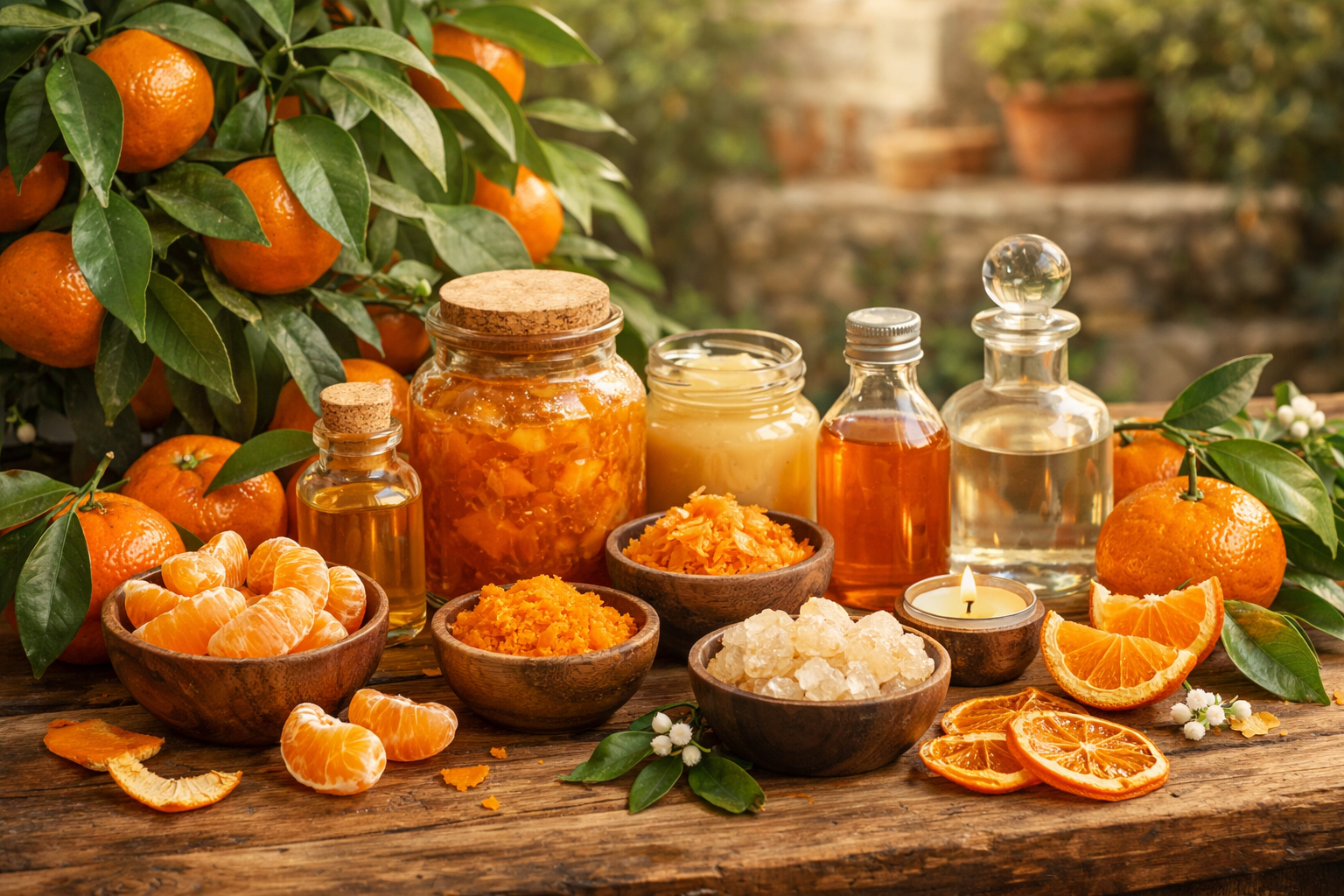
The Society of Flavor Chemists requires certified flavorists to be able to identify the plant part used, derivatives, organoleptic characteristics, and major chemical component(s) characterizing the aroma and flavor of the 80 natural flavorings listed on its syllabus for the qualification test and interview. Mandarin is included among these essential items.
Introduction
Mandarin (Citrus reticulata Blanco) is one of the most important and beloved citrus fruits in the world. Believed to have originated in Southeast Asia, mandarins have been cultivated for thousands of years and are the ancestors of many modern citrus varieties, including sweet oranges (which are a hybrid of mandarin and pomelo). The name "mandarin" refers to the fruit, and "tangerine" is often used interchangeably for certain varieties, particularly those with deeper orange-red color .
For flavorists, mandarin oil offers a uniquely sweet, warm, and intensely fruity-citrus profile that is distinctly different from orange or lemon. Unlike the sharp, bright character of lemon or the straightforward sweetness of sweet orange, mandarin has a complex, floral, and slightly spicy character with a sweet, almost candy-like undertone. Its aroma is often described as a blend of orange, honey, and floral notes with a subtle woody-spicy drydown .
Mandarin is a cornerstone of citrus flavor systems, used extensively in beverages, confectionery, baked goods, and as a flavor modifier to add sweetness and complexity. The essential oil is obtained by cold-pressing the peel, and the fruit is also used for juice and segments.
Mandarin Varieties
Mandarin encompasses numerous varieties and hybrids. The most commercially important for flavorists include:
| Variety | Common Names | Characteristics | Primary Use |
|---|---|---|---|
| Common Mandarin | Citrus reticulata Blanco | Small, orange-yellow fruit; sweet, floral aroma | Juice, essential oil |
| Tangerine | Citrus tangerina | Deeper orange-red color; sweeter, more intense flavor | Juice, essential oil, segments |
| Clementine | Citrus × clementina | Seedless, easy-peeling; sweet, mild, less acidic | Fresh consumption, juice |
| Satsuma | Citrus unshiu | Seedless, cold-hardy; mild, sweet, less acidic | Fresh consumption, juice |
| Tangor (Mandarin × Orange) | Citrus × nobilis (e.g., Temple, King) | Larger, sweeter; complex flavor | Fresh consumption, juice |
| Green Mandarin | Immature fruit | Harvested early; greener, more bitter, more complex | Perfumery, specialty flavors |
Plant Parts Used
The peel (flavedo) is the primary plant part used for flavoring purposes. The juice and segments are also used, particularly in beverages and culinary applications.
- Fruit: Small to medium citrus fruit, typically 5–8 cm in diameter, with a thin, loose peel that is easy to remove. The peel is orange to reddish-orange when ripe.
- Peel (Flavedo): The outer, colored layer of the peel contains numerous oil glands rich in essential oil. Mandarin peel oil is prized for its sweet, floral, and complex character.
- Varieties: Common mandarin varieties include:
- Common Mandarin (C. reticulata): The standard variety; sweet, floral aroma.
- Tangerine (C. tangerina): Deeper orange-red color; sweeter, more intense.
- Clementine (C. × clementina): Sweet, mild, less acidic.
- Green Mandarin: Immature fruit; greener, more bitter, more complex aroma.
- Harvesting: Mandarins are typically harvested in autumn and winter (November–February in the Northern Hemisphere). For essential oil, fruit is harvested when fully colored (orange to reddish-orange) for sweet oil; green mandarins are harvested early for a more bitter, complex oil .
- Essential Oil Content: Fresh mandarin peel yields 0.5–1.5% essential oil.
The essential oil is obtained by cold-pressing (expression) of the fresh peel. Mandarin oil is more delicate and sensitive to oxidation than other citrus oils. Steam-distilled oil is also available but has a less fresh character.
Derivatives
Mandarin is commercially available in several forms. The following details include technical specifications important for procurement and formulation.
Mandarin Oil (Cold-Pressed)
Production Method: Mechanical cold-pressing (expression) of fresh mandarin peel.
Description: Pale yellow to deep orange-yellow mobile liquid with a characteristic sweet, warm, floral, and intensely fruity-citrus aroma. The oil is prized for its complex, sweet character .
Technical Notes: Yield is typically 0.5–1.5% from fresh peel. The oil is dominated by limonene (60–80%), with significant amounts of γ-terpinene, β-pinene, and oxygenated compounds such as linalool, neral, geranial, α-terpineol, and methyl N-methylanthranilate . Storage in a cool, dry place away from light is critical.
Mandarin Oil (Green)
Production Method: Cold-pressing of immature (green) mandarin peel.
Description: Pale yellow to pale green mobile liquid with a more complex, bitter, and slightly "green" character than ripe mandarin oil.
Technical Notes: Used in perfumery and niche flavor applications for its unique, less sweet character.
Tangerine Oil
Production Method: Cold-pressing of tangerine peel.
Description: Deep orange-yellow to reddish-orange mobile liquid with a sweeter, more intense mandarin character .
Technical Notes: Often used interchangeably with mandarin oil in flavor applications.
Mandarin Oil (Steam-Distilled)
Production Method: Steam distillation of mandarin peel.
Description: Colorless to pale yellow mobile liquid with a fresh, citrusy, but less sweet and less complex aroma than cold-pressed oil. Lacks chlorophyll and some delicate top notes.
Technical Notes: Used in applications where color is a concern or where a less volatile oil is desired.
Mandarin Oil (Terpeneless)
Production Method: Fractional distillation or chromatographic separation to remove terpenes (primarily limonene), concentrating the oxygenated components (linalool, terpineol, methyl N-methylanthranilate, etc.).
Description: Pale yellow to colorless mobile liquid with a much more intense, concentrated, and sweet mandarin character. More soluble in alcohol and more stable than whole oil.
Mandarin Juice (Concentrate)
Production Method: Juice extraction from the fruit pulp, followed by concentration.
Description: Orange-yellow to amber viscous liquid with a characteristic sweet, citrusy flavor. Contains sugars, acids, and non-volatile components.
Organoleptic Characteristics
Aroma Profile (Cold-Pressed Mandarin Oil)
When evaluated, cold-pressed mandarin oil reveals a sweet, warm, and complex aromatic profile:
- Primary Note: Sweet, warm, floral, intensely fruity-citrus
- Limonene Character: Fresh, citrus, sweet—the citrus backbone
- Floral: Delicate, rose-like, neroli-like, honeyed (from linalool, α-terpineol, methyl N-methylanthranilate)
- Fruity: Sweet, candy-like, berry-like, slightly peach-like
- Spicy: Subtle, warm, woody (from α-terpinene, β-caryophyllene)
- Green: Slightly fresh, leafy top notes
- Balsamic: Warm, slightly resinous undertones
- Sweet: Pronounced, honey-like sweetness
The overall aroma is often described as "sweet, warm, and intensely fruity-floral with a characteristic honeyed, candy-like character that is unmistakably mandarin."
Taste Characteristics
At typical usage levels, mandarin provides:
- Sweet: Pronounced, honey-like sweetness
- Citrus: Fresh, fruity, mandarin character
- Floral: Delicate, neroli-like notes
- Fruity: Sweet, candy-like, berry-like
- Bitter: Very subtle, pleasant bitterness (more pronounced in green mandarin)
- Sour: Very mild acidity
- Smooth: Round, pleasant mouthfeel
The Key to Mandarin's Unique Flavor
Mandarin's characteristic sweet, floral, and intensely fruity character comes from a combination of terpenes and oxygenated compounds:
Primary Components:
- Limonene (60–80%): A monoterpene hydrocarbon that provides fresh, citrus, sweet notes—the citrus backbone
- γ-Terpinene (10–20%): A monoterpene hydrocarbon that contributes fresh, herbal, citrusy notes
- β-Pinene (1–5%): A monoterpene hydrocarbon that contributes fresh, pine, woody notes
Character-Impact Oxygenated Compounds (Present in Small Amounts):
- Methyl N-Methylanthranilate (trace–1%): An ester that provides sweet, floral, neroli-like, and grape-like notes—a key contributor to the unique mandarin character
- Linalool (0.5–2%): A terpene alcohol that contributes fresh, floral, lavender-like notes
- α-Terpineol (0.5–2%): A terpene alcohol that contributes floral, lilac notes
- Geranial and Neral (citral) (0.5–2%): Contribute sharp, lemon-like, aldehydic notes
- Thymol (trace): Contributes thyme-like, medicinal notes (characteristic of mandarin)
Supporting Components:
- α-Pinene (1–3%): Contributes fresh, pine notes
- Sabinene (0.5–2%): Contributes fresh, woody, spicy notes
- β-Caryophyllene (0.5–2%): Contributes woody, spicy notes
- Octanal, Decanal (trace): Contribute fresh, waxy, citrusy notes
The presence of methyl N-methylanthranilate and thymol gives mandarin its distinctive floral, neroli-like, and slightly medicinal character that distinguishes it from other citrus oils .
Major Chemical Components
Key Aroma Compounds (Cold-Pressed Mandarin Oil)
| Component | Typical Percentage | Organoleptic Contribution | CAS No. |
|---|---|---|---|
| Limonene | 60–80% | Fresh, citrus, sweet; backbone note | 138-86-3 |
| γ-Terpinene | 10–20% | Fresh, herbal, citrusy | 99-85-4 |
| β-Pinene | 1–5% | Fresh, pine, woody | 127-91-3 |
| Linalool | 0.5–2% | Fresh, floral, lavender-like | 78-70-6 |
| α-Terpineol | 0.5–2% | Floral, lilac | 98-55-5 |
| Geranial | 0.2–1% | Sharp, lemon-like | 141-27-5 |
| Neral | 0.2–1% | Sharp, lemon-like | 106-26-3 |
| Methyl N-Methylanthranilate | trace–1% | Sweet, floral, neroli-like, grape-like | 85-91-6 |
| Thymol | trace | Thyme-like, medicinal | 89-83-8 |
| α-Pinene | 1–3% | Fresh, pine | 80-56-8 |
| Sabinene | 0.5–2% | Fresh, woody, spicy | 3387-41-5 |
| β-Caryophyllene | 0.5–2% | Woody, spicy | 87-44-5 |
| Octanal | trace–0.5% | Fresh, waxy, citrusy | 124-13-0 |
| Decanal | trace–0.5% | Fresh, waxy, sweet | 112-31-2 |
Comparison: Mandarin vs. Sweet Orange vs. Tangerine
| Characteristic | Mandarin (C. reticulata) | Sweet Orange (C. × sinensis) | Tangerine (C. tangerina) |
|---|---|---|---|
| Primary Terpene | Limonene (60–80%) | Limonene (90–95%) | Limonene (70–85%) |
| γ-Terpinene | 10–20% (high) | 1–5% (low) | 5–15% (moderate) |
| Methyl N-Methylanthranilate | trace–1% | trace | trace–1% (higher) |
| Aroma Profile | Sweet, floral, complex, candy-like | Sweet, straightforward, clean | Sweeter, more intense, floral |
| Flavor Character | Sweet, honeyed, floral | Sweet, clean | Sweet, intense, slightly spicy |
Applications in Flavoring
Regulatory Status
Mandarin oil is approved as a natural flavoring substance:
- United States: Mandarin oil is listed under 21 CFR §182.20 as a natural flavoring substance (FEMA No. 2657 for mandarin oil; FEMA No. 2658 for tangerine oil).
- European Union: Permitted for use in food flavorings under Regulation (EC) No 1334/2008.
- China: Approved food flavor under GB 2760.
Typical Usage Levels (mg/kg)
The following usage levels are based on FEMA GRAS determinations and industry standards:
| Application | Mandarin Oil (mg/kg) | Tangerine Oil (mg/kg) |
|---|---|---|
| Non-alcoholic beverages | 20–150 | 20–150 |
| Alcoholic beverages | 30–200 | 30–200 |
| Baked goods | 30–150 | 30–150 |
| Hard candy | 50–300 | 50–300 |
| Frozen dairy | 20–100 | 20–100 |
| Gelatins and puddings | 20–100 | 20–100 |
| Soft candy | 30–150 | 30–150 |
| Chewing gum | 50–300 | 50–300 |
Note: These ranges represent typical industry usage. Mandarin oil is used at levels similar to orange oil but is more potent in character.
Usage & Dosage Best Practices
Flavorists should observe the following guidelines when working with mandarin:
Select the Correct Form:
- Cold-Pressed Oil: Use for authentic, sweet, complex mandarin character. Preferred for premium applications.
- Green Mandarin Oil: Use for more complex, bitter, and "green" character in specialty applications.
- Tangerine Oil: Use for sweeter, more intense mandarin character.
- Steam-Distilled Oil: Use when a colorless oil is required or when the fresh character is less critical.
Start Moderate, Adjust: Mandarin oil is pleasant and forgiving but can become soapy if overused. Begin at the lower end of typical usage ranges and adjust upward.
Pre-Dilution: Pre-dilute in ethanol or propylene glycol for easier handling and more even dispersion.
Emulsification: For clear beverages, use an emulsifier such as gum acacia or modified starch.
Flavor Synergies: Mandarin pairs exceptionally well with:
- Other citrus: Orange, lemon, lime, grapefruit, bergamot
- Florals: Neroli, orange blossom, jasmine, rose
- Berries: Strawberry, raspberry, blackberry
- Tropical fruits: Mango, pineapple, passion fruit
- Spices: Cinnamon, ginger, cardamom, vanilla
- Herbs: Mint, basil, rosemary
- Beverages: Champagne, sparkling wine, gin, vodka
- Chocolate: Dark chocolate, milk chocolate
Flavor Applications: Mandarin serves as a primary flavor or modifier in:
- Beverages: Mandarin soda, orange juice blends, cocktails (Mandarin Mimosa, Mandarin Martini), sparkling waters
- Confectionery: Mandarin candies, gummies, chocolates, hard candy
- Baked goods: Mandarin cakes, cookies, scones, muffins
- Dairy: Mandarin sorbet, ice cream, yogurt, panna cotta
- Savory: Mandarin-glazed poultry, seafood, salads, dressings
- Spice blends: Chinese five-spice, holiday spice blends
Fragrance Applications
Mandarin oil is widely used in perfumery for:
- Citrus colognes: Adds a sweet, floral, complex top note
- Floral compositions: Adds sweetness and fruitiness
- Oriental fragrances: Adds warmth and sweetness
- Aromatherapy: Used for its uplifting, calming properties
Blends well with: Bergamot, neroli, orange blossom, jasmine, lavender, vanilla, sandalwood.
Example Formula: Mandarin Mimosa Cocktail Flavor
The following formula demonstrates the use of mandarin oil in a classic champagne cocktail flavor system.
Mandarin Mimosa Cocktail Flavor Concentrate
| Component | Percentage (%) | Function | Technical Note |
|---|---|---|---|
| Mandarin oil (cold-pressed) | 50.0 | Primary citrus | Sweet, floral, complex mandarin character |
| Orange oil (cold-pressed) | 20.0 | Citrus sweetness | Adds depth |
| Champagne flavor | 20.0 | Sparkling wine base | Adds effervescence |
| Lemon oil | 5.0 | Citrus brightness | Adds freshness |
| Vanillin (natural) | 5.0 | Sweet rounding | Adds smoothness |
| Total | 100.0 |
Usage Instructions: Use at 0.1–0.3% in finished beverages. For a complete mimosa, combine with orange juice and sparkling wine.
Alternative: Mandarin-Spice Holiday Flavor
| Component | Percentage (%) | Function |
|---|---|---|
| Mandarin oil (cold-pressed) | 50.0 | Primary citrus |
| Cinnamon oil (Ceylon) | 15.0 | Warm spice |
| Clove oil | 10.0 | Spicy accent |
| Ginger oil | 10.0 | Warm, pungent note |
| Cardamom oil | 5.0 | Floral, spicy |
| Vanillin (natural) | 5.0 | Sweet rounding |
| Nutmeg oil | 5.0 | Warm, nutty spice |
| Total | 100.0 |
Usage Instructions: Use at 0.05–0.2% in baked goods, beverages, or confectionery.
Alternative: Mandarin Oil Pre-Dilution for Lab Use
| Component | Percentage (%) | Function |
|---|---|---|
| Ethanol (190 proof) | 90.0 | Solvent |
| Mandarin oil | 10.0 | Active ingredient |
Method: Mix thoroughly. Store in amber glass bottles in a cool, dark place. Use 0.1–1.0% in flavor formulations.
Shelf Stability & Storage
Understanding the stability of mandarin oil is critical for maintaining flavor quality.
Mandarin Oil (Cold-Pressed)
Storage Recommendation: Store in a full, airtight container (preferably under nitrogen blanketing) in a cool, dry place away from light. Refrigeration is strongly recommended for long-term storage.
Stability Notes: Mandarin oil contains high levels of limonene (60–80%) and γ-terpinene (10–20%), both of which are highly susceptible to oxidation. Oxidation produces off-notes (turpentine-like, piney, metallic) and can polymerize the oil. The delicate floral and sweet notes are also lost upon oxidation. Shelf life is typically 6–12 months when properly stored; terpeneless oil is more stable.
Mandarin Oil (Steam-Distilled)
Storage Recommendation: Same as cold-pressed.
Stability Notes: More stable than cold-pressed due to the removal of some volatile components and chlorophyll. Shelf life is typically 12–18 months.
Terpeneless Mandarin Oil
Storage Recommendation: Store in airtight containers in a cool, dark place.
Stability Notes: More stable than whole oil due to the removal of terpenes (which are prone to oxidation). Shelf life is typically 18–24 months.
Stability in Finished Products
- Heat stability: Limonene and γ-terpinene are heat-sensitive; may degrade during high-temperature processing.
- pH stability: Limonene and γ-terpinene are susceptible to acid-catalyzed rearrangements; best in neutral to slightly acidic conditions.
- Oxidation: Highly susceptible to oxidation; use antioxidants for long-shelf-life products.
- Light sensitivity: Protect from light.
Safety Considerations
General Safety
Mandarin oil is generally recognized as safe (GRAS) for use as a flavoring at approved levels (FEMA 2657, 2658). It has low phototoxicity compared to other citrus oils.
Important Considerations
- Phototoxicity: Cold-pressed mandarin oil contains very low levels of furanocoumarins (bergapten, etc.) compared to bergamot, lemon, or lime. It is considered to have negligible phototoxicity and is not restricted by IFRA for this reason . However, green mandarin oil may have higher furanocoumarin content.
- Skin Sensitization: May cause skin irritation in sensitive individuals. Limonene and other terpenes are known sensitizers when oxidized.
- Allergies: May cause allergic reactions in sensitive individuals.
- Pregnancy: Safe in food amounts; concentrated essential oil should be used with caution during pregnancy.
- Flammability: Mandarin oil is flammable; store away from heat and ignition sources.
Maximum Usage Levels (IFRA)
For fragrance applications, mandarin oil is not subject to phototoxicity restrictions but is subject to general sensitization restrictions. Flavorists developing products for topical applications should consult current IFRA standards.
Skin Safety
- Essential oil: May cause sensitization; dilute properly for topical applications.
- Protective measures: Wear suitable gloves when handling concentrated essential oil.
Quality Control & Sourcing
Flavorists should implement the following quality checks when sourcing mandarin oil.
Essential Requirements for Certificates of Analysis (COA)
For Mandarin Oil (Cold-Pressed):
- Botanical identity: Citrus reticulata Blanco
- Origin: Italy (Sicily), Spain, USA (Florida, California), Brazil, etc.
- Limonene content: 60–80% (GC analysis)
- γ-Terpinene content: 10–20%
- Methyl N-methylanthranilate content: trace–1% (characteristic marker)
- Physical properties: Specific gravity (0.850–0.860), refractive index (1.470–1.480), optical rotation (+60° to +75°)
For Tangerine Oil:
- Botanical identity: Citrus tangerina
- Color: Deep orange-yellow to reddish-orange
- Methyl N-methylanthranilate: Typically higher than mandarin
Common Adulteration Risks
- Dilution with sweet orange oil (different profile, lower γ-terpinene)
- Extension with synthetic limonene or γ-terpinene
- Substitution of cold-pressed with steam-distilled oil (different profile)
- Mislabeling of variety (mandarin sold as tangerine, etc.)
Sourcing Considerations
| Type | Origin | Characteristics |
|---|---|---|
| Mandarin | Italy (Sicily) | High quality; sweet, complex, floral profile |
| Mandarin | Spain | Good quality; well-balanced |
| Mandarin | USA (Florida) | Good quality; sweet profile |
| Tangerine | USA (Florida) | Sweeter, more intense |
| Green Mandarin | Italy | More complex, bitter; used in perfumery |
Traditional and Culinary Applications
Traditional Uses
- Chinese: Mandarins are a traditional symbol of good fortune; used in Lunar New Year celebrations, desserts, and preserves
- Japanese: Satsuma mandarins are widely consumed fresh and used in desserts
- Italian: Sicilian mandarins are prized for their oil and used in confectionery and beverages
- American: Tangerines are popular fresh; used in salads, desserts, and holiday dishes
Culinary Pairings
Mandarin pairs well with:
- Proteins: Duck, chicken, pork, seafood
- Fruits: Orange, lemon, lime, berry, tropical fruits
- Spices: Cinnamon, ginger, cardamom, clove, star anise
- Herbs: Mint, basil, rosemary, thyme
- Chocolate: Dark chocolate, milk chocolate
- Dairy: Cream, yogurt, ice cream
- Beverages: Champagne, sparkling wine, gin, vodka
Sustainability and Sourcing
Cultivation Practices
Mandarin is cultivated in subtropical regions worldwide:
- Italy (Sicily): High-quality mandarin oil; traditional production.
- Spain: Large-scale production; good quality.
- USA (Florida, California): Significant production; tangerine varieties.
- Brazil: Major producer; commercial production.
- China: Largest producer of fresh mandarins; significant production.
Quality Considerations
When sourcing mandarin oil, consider:
- Origin: Sicilian mandarin oil is traditionally considered the highest quality.
- Variety: Specify mandarin, tangerine, or green mandarin.
- Processing: Cold-pressed oil is preferred for authentic fresh character.
- Certifications: Organic, non-GMO.
Summary
Mandarin (Citrus reticulata) is a sweet, warm, and complex citrus flavor prized for its intensely fruity-floral character. Its cold-pressed essential oil is dominated by limonene (60–80%) and γ-terpinene (10–20%) , with characteristic trace components including methyl N-methylanthranilate (sweet, floral, neroli-like) and thymol (slightly medicinal). These components give mandarin its distinctive, complex, and honeyed character.
Key characteristics:
- Primary components: Limonene (60–80%), γ-terpinene (10–20%)
- Character-impact components: Methyl N-methylanthranilate, thymol, linalool
- Aroma profile: Sweet, warm, floral, intensely fruity-citrus, honeyed
- Typical usage: Oil 20–300 mg/kg; juice 0.5–10%
- Primary applications: Beverages, confectionery, baked goods, savory glazes
Critical considerations for flavorists:
- Distinguish from orange: Mandarin is sweeter, more floral, and more complex.
- Low phototoxicity: Mandarin oil has negligible phototoxicity compared to other citrus oils.
- Stability: Highly susceptible to oxidation; store properly (refrigeration, nitrogen blanketing) and use within 6–12 months.
- Flavor synergies: Pairs with other citrus, florals, berries, and spices.
- Sourcing: Sicilian mandarin oil is traditionally considered the highest quality.
References and Further Reading
The information presented in this guide is synthesized from:
- Regulatory documents from FDA, FEMA (Nos. 2657, 2658), and international food safety authorities.
- Published scientific literature on Citrus reticulata.
- Standard textbooks on natural flavoring materials.
- Industry technical data from major suppliers.
- Traditional culinary knowledge documented in public domain sources.
Key References:
- FEMA Flavor Ingredient Library: Mandarin Oil (FEMA 2657), Tangerine Oil (FEMA 2658)
- Journal of Essential Oil Research: Mandarin oil composition studies
- TGSC Information System: Mandarin Oil
Disclaimer: This article is for educational and training purposes only. When using mandarin in commercial products, always verify current regulatory status in your jurisdiction, conduct appropriate safety assessments, and source ingredients from reputable suppliers who can provide documentation of botanical identity, origin, and quality. Mandarin oil is highly susceptible to oxidation; store properly and use within recommended timeframes. The formulas and usage levels provided are illustrative examples and may require adjustment based on specific product requirements and regulatory compliance.
###