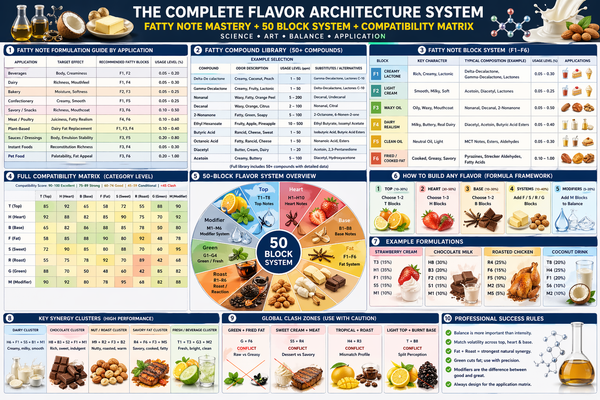
Members only Formulation Fatty Note Chemistry, Application Formulation, Compound Libraries, Block Architecture, and Compatibility Engineering Fatty Note in Flavor: A Beginner-Friendly Guide A fatty note is the part of a flavor that makes it smell or taste like cream, milk fat, butterfat, animal fat, skin-on meat, oil, wax, tallow, coconut fat, nut oil, or rich dairy fullness. It is not always “greasy” in
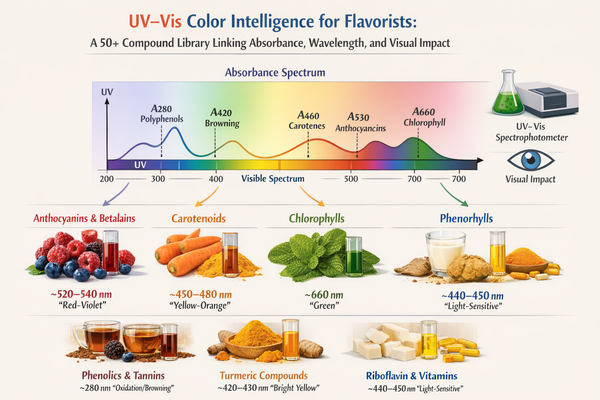
Members only Analytic UV–Vis Color Intelligence for Flavorists: A 50+ Compound Library Linking Absorbance, Wavelength, and Visual Impact, and Color Drifting 50+ Compound Color-Impact vs. Absorbance Library A practical UV–Vis library for flavorists and flavorist trainees This is a working formulation library, not a claim that every compound has one fixed absorbance number under all conditions. In real flavor work, the observed spectrum depends on solvent, pH, oxidation state,
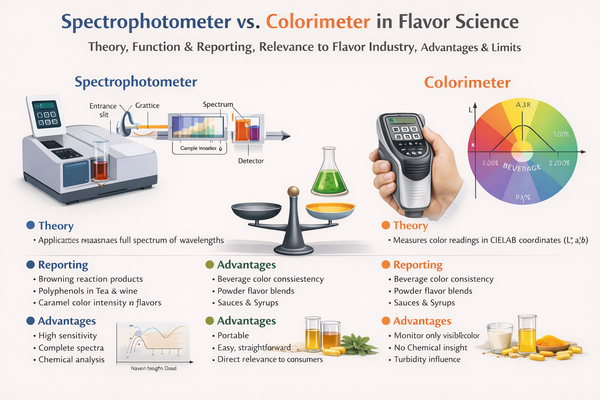
Members only Analytic Spectrophotometer vs. Colorimeter in Flavor Science: Theory, Function, Reporting, and Practical Applications The Society of Flavor Chemists expects certified flavorists to understand the theory, function, reporting, relevance to the flavor industry, and advantages and limitations of more than a dozen instruments used to analyze food and flavor products. These instruments are listed on the syllabus for the Society’s qualification exam. Among
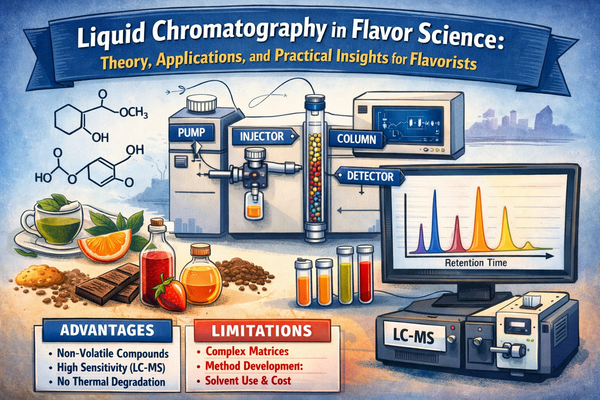
Analytic Liquid Chromatography in Flavor Science: Theory, Applications, and Practical Insights for Flavorists The Society of Flavor Chemists expects certified flavorists to understand the theory, function, reporting, relevance to the flavor industry, and advantages and limitations of more than a dozen instruments used to analyze food and flavor products. These instruments are listed on the syllabus for the Society’s qualification exam. Among
Members only Formulation The Professional Whisky Flavor Engineering System: Full Application × Block Compatibility Matrix and Formulation Framework This post illustrates how to formulate a whisky flavor and how to differentiate it into various styles, such as Scotch, Bourbon, and Irish whisky. Please log in to read. The content is for educational and training purposes only.
Patent Patent Summary: Flavor Enhancer for Matcha-Flavored Foods and Beverages, and Method for Improving Matcha Flavor Using Epoxidized Aldehydes and Alkylpyrazines Summary Summarized here is the patent document (JP6814259B2) in Japanese. The document is translated with google translates. 1) What the Patent Discloses (What Does What?) The patent discloses a flavor enhancer specifically designed for matcha-flavored foods and beverages. This enhancer works by adding specific compounds—previously unused in matcha
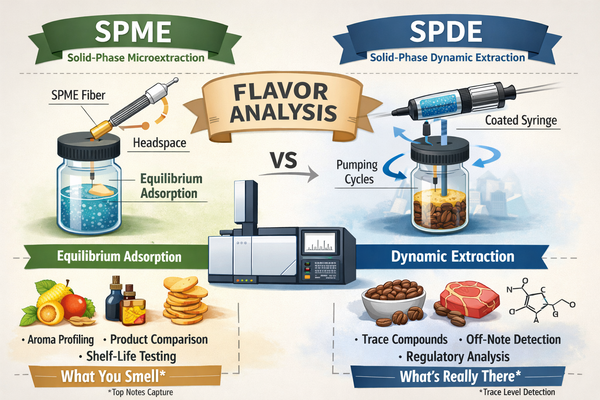
Members only Analytic SPME vs SPDE in Flavor Analysis: From Aroma Perception to Trace Compound Reality Here is a deep, flavorist-oriented explanation of SPME (Solid-Phase Microextraction) and SPDE (Solid-Phase Dynamic Extraction)—covering theory, function, reporting, and practical relevance to flavor work.
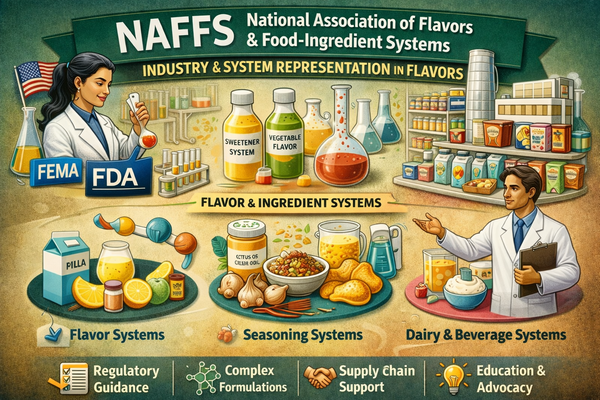
Organizations The National Association of Flavors & Food-Ingredient Systems (NAFFS): Mission, Scope, and Industry Impact National Association of Flavors & Food-Ingredient Systems — Core Overview What NAFFS Stands For The National Association of Flavors & Food-Ingredient Systems (NAFFS) is a U.S.-based industry trade organization representing companies that develop, manufacture, and supply flavors, seasonings, and functional ingredient systems used across the food and
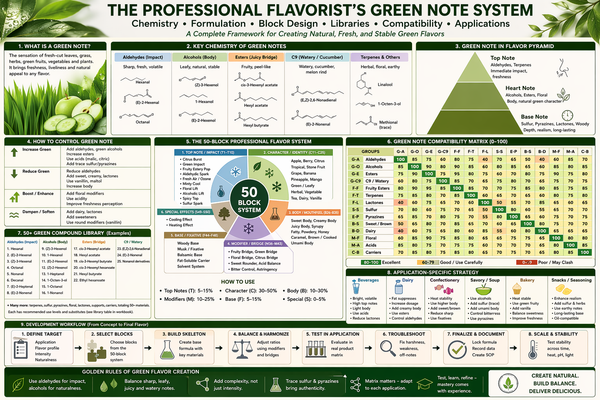
Members only Formulation 🌿 The Professional Flavorist’s Green Note System: Chemistry, Formulation, Block Design, Libraries, Compatibility, and Application Mastery The Society of Flavor Chemists requires flavorists to fully understand roughly 20 essential flavor notes and to skillfully manipulate each note for every application. The brown note is one of them. A green note is the part of a flavor that smells like fresh-cut leaves, crushed stems, raw peas,
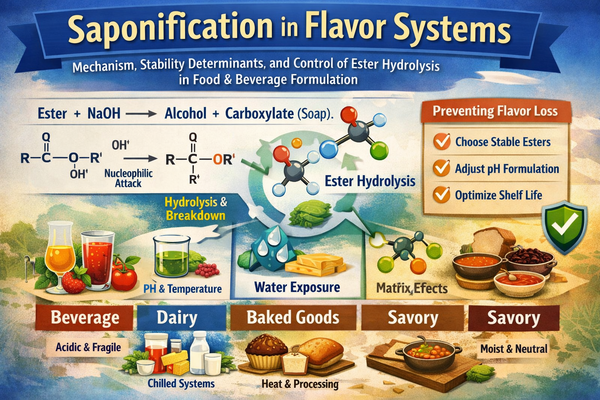
Members only Reactions Saponification in Flavor Systems: Mechanism, Stability Determinants, and Practical Control of Ester Hydrolysis in Food and Beverage Formulation The Society of Flavor Chemists requires flavorists to fully understand approximately two dozen reactions and processes that can occur in flavor systems. Flavorists must be able to control these reactions or physical processes to enhance flavor or improve its stability and shelf life. Saponification is one of the physical processes
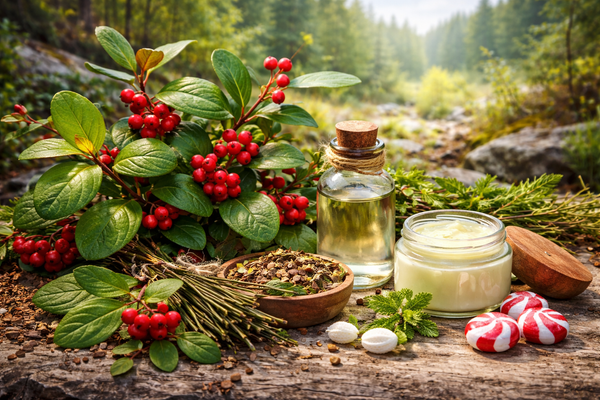
Flavorings Wintergreen as a Natural Flavoring: A Comprehensive Technical Guide The Society of Flavor Chemists requires certified flavorists to be able to identify the plant part used, derivatives, organoleptic characteristics, and major chemical component(s) characterizing the aroma and flavor of the 80 natural flavorings listed on its syllabus for the qualification test and interview. Wintergreen is included among these
Flavorings Violet Leaf as a Natural Flavoring: A Comprehensive Technical Guide The Society of Flavor Chemists requires certified flavorists to be able to identify the plant part used, derivatives, organoleptic characteristics, and major chemical component(s) characterizing the aroma and flavor of the 80 natural flavorings listed on its syllabus for the qualification test and interview. Violet Leaf is included among
Flavorings Vetiver as a Natural Flavoring: A Comprehensive Technical Guide The Society of Flavor Chemists requires certified flavorists to be able to identify the plant part used, derivatives, organoleptic characteristics, and major chemical component(s) characterizing the aroma and flavor of the 80 natural flavorings listed on its syllabus for the qualification test and interview. Vetiver is included among these
Flavorings Thyme as a Natural Flavoring: A Comprehensive Technical Guide The Society of Flavor Chemists requires certified flavorists to be able to identify the plant part used, derivatives, organoleptic characteristics, and major chemical component(s) characterizing the aroma and flavor of the 80 natural flavorings listed on its syllabus for the qualification test and interview. Thyme is included among these
Flavorings Tea Tree as a Natural Flavoring: A Comprehensive Technical Guide The Society of Flavor Chemists requires certified flavorists to be able to identify the plant part used, derivatives, organoleptic characteristics, and major chemical component(s) characterizing the aroma and flavor of the 80 natural flavorings listed on its syllabus for the qualification test and interview. Tea Tree is included among
Flavorings Tarragon as a Natural Flavoring: A Comprehensive Technical Guide The Society of Flavor Chemists requires certified flavorists to be able to identify the plant part used, derivatives, organoleptic characteristics, and major chemical component(s) characterizing the aroma and flavor of the 80 natural flavorings listed on its syllabus for the qualification test and interview. Tarragon is included among these
Flavorings Sweet Birch (Black Birch) as a Natural Flavoring: A Comprehensive Technical Guide The Society of Flavor Chemists requires certified flavorists to be able to identify the plant part used, derivatives, organoleptic characteristics, and major chemical component(s) characterizing the aroma and flavor of the 80 natural flavorings listed on its syllabus for the qualification test and interview. Sweet Birch is included among
Flavorings St. John's Bread (Carob) as a Natural Flavoring: A Comprehensive Technical Guide The Society of Flavor Chemists requires certified flavorists to be able to identify the plant part used, derivatives, organoleptic characteristics, and major chemical component(s) characterizing the aroma and flavor of the 80 natural flavorings listed on its syllabus for the qualification test and interview. St. John's Bread
Flavorings Spearmint as a Natural Flavoring: A Comprehensive Technical Guide The Society of Flavor Chemists requires certified flavorists to be able to identify the plant part used, derivatives, organoleptic characteristics, and major chemical component(s) characterizing the aroma and flavor of the 80 natural flavorings listed on its syllabus for the qualification test and interview. Spearmint is included among these
Flavorings Sage as a Natural Flavoring: A Comprehensive Technical Guide The Society of Flavor Chemists requires certified flavorists to be able to identify the plant part used, derivatives, organoleptic characteristics, and major chemical component(s) characterizing the aroma and flavor of the 80 natural flavorings listed on its syllabus for the qualification test and interview. Sage is included among these
Flavorings Rosemary as a Natural Flavoring: A Comprehensive Technical Guide The Society of Flavor Chemists requires certified flavorists to be able to identify the plant part used, derivatives, organoleptic characteristics, and major chemical component(s) characterizing the aroma and flavor of the 80 natural flavorings listed on its syllabus for the qualification test and interview. Rosemary is included among these
Flavorings Rose as a Natural Flavoring: A Comprehensive Technical Guide The Society of Flavor Chemists requires certified flavorists to be able to identify the plant part used, derivatives, organoleptic characteristics, and major chemical component(s) characterizing the aroma and flavor of the 80 natural flavorings listed on its syllabus for the qualification test and interview. Rose is included among these
Flavorings Petitgrain as a Natural Flavoring: A Comprehensive Technical Guide The Society of Flavor Chemists requires certified flavorists to be able to identify the plant part used, derivatives, organoleptic characteristics, and major chemical component(s) characterizing the aroma and flavor of the 80 natural flavorings listed on its syllabus for the qualification test and interview. Petitgrain is included among these
Flavorings Peppermint as a Natural Flavoring: A Comprehensive Technical Guide The Society of Flavor Chemists requires certified flavorists to be able to identify the plant part used, derivatives, organoleptic characteristics, and major chemical component(s) characterizing the aroma and flavor of the 80 natural flavorings listed on its syllabus for the qualification test and interview. Peppermint is included among these
Flavorings Pennyroyal as a Natural Flavoring: A Comprehensive Technical Guide The Society of Flavor Chemists requires certified flavorists to be able to identify the plant part used, derivatives, organoleptic characteristics, and major chemical component(s) characterizing the aroma and flavor of the 80 natural flavorings listed on its syllabus for the qualification test and interview. Pennyroyal is included among these