Pre-order the Flavor Buyer's Handbook Will be Here on Dec. 30, 2026
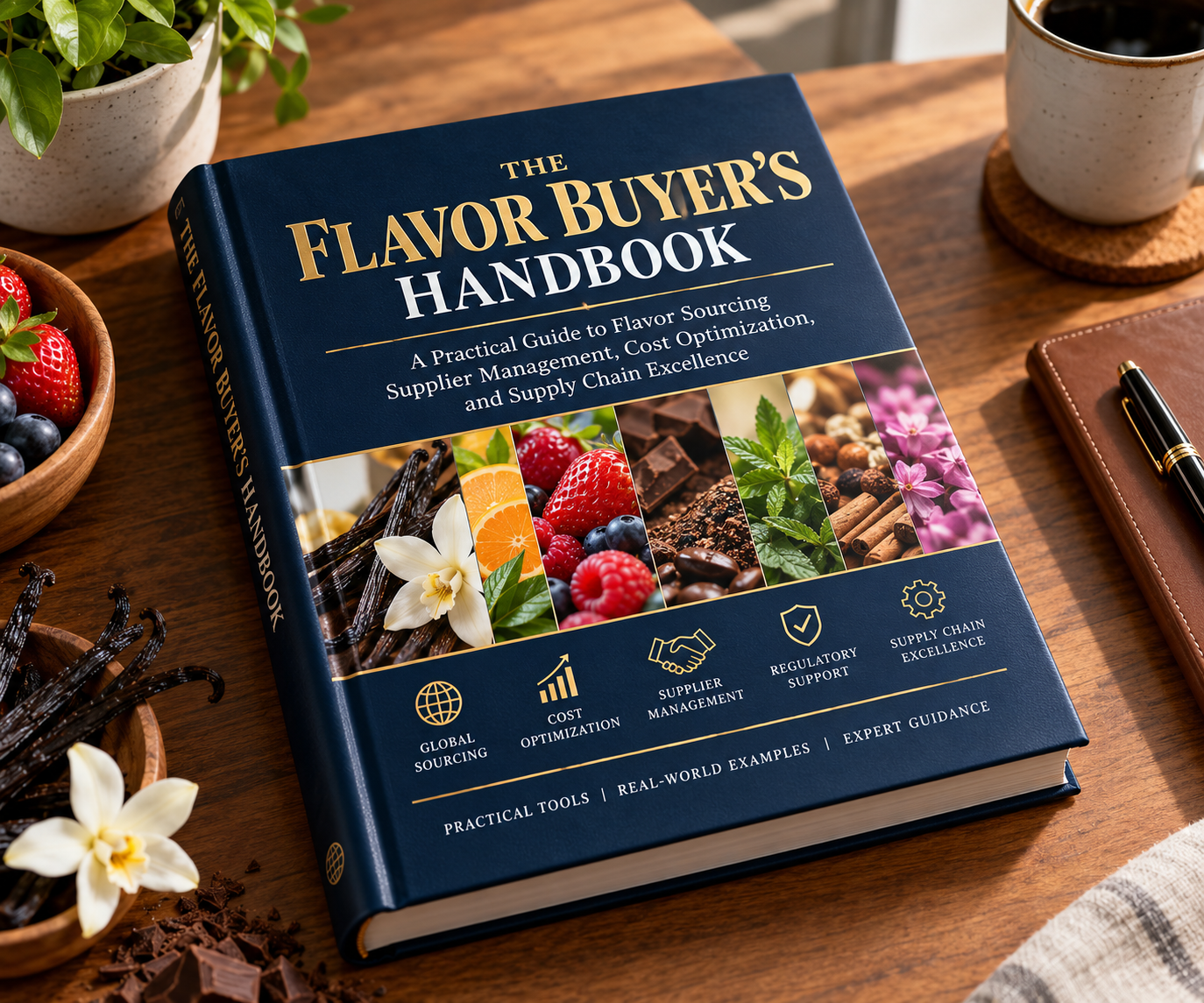
Editor's note: Many have tried hard to find a flavor buyer's book but with no luck—until now. A brand-new Flavor Buyer's Handbook, which runs in more than 400 pages in PDF format, will be released by flavorist.com on Dec. 30, 2026.
The book is designed to provide all things that flavor buyers need to know. The book can help the sellers as well because sellers need to better understand the buyers' needs.
Those who are interested may pre-order the book by following the buy now button below. Those in urgent need of this book contact us at flavorist.com, and we may make a special arrangement.
Pre-order price is $116.50, 30% off the full price $168.00.
The Flavor Buyer's Handbook: a Practical Guide to Flavor Sourcing, Supplier Management, Cost Optimization and Supply Chain Excellence
Flavor is usually one of the smallest ingredients in a food or beverage, often well under 1% of the formula, and one of the most important. It decides whether consumers buy a product again. Yet it is bought in a way unlike almost any other ingredient. Two "strawberry flavors" can differ in everything that matters. The cheapest flavor per kilogram can be the most expensive in the finished product. And a single missing certificate, an oversized minimum order or a supplier with no backup can delay a launch or stop a production line.
The Flavor Buyer's Handbook is a practical guide to buying flavor well. It explains, in plain language, what a commercial flavor is and how the flavor industry works. It covers how to brief a supplier so the first samples are the right ones, and how applications, ingredients, processing and shelf life affect performance. It shows how to compare offers on cost-in-use rather than price, and what documentation stands between a successful sample and a purchase order. It also follows a flavor project from the first brief to commercial launch, then shows how to resolve problems and manage the supplier relationship for the long term.
The book is written from the buyer's side of the table, but it is meant to be read from both sides. Buyers learn how flavor houses develop products and decide which projects get their flavorists' time. Supplier teams learn what their customers measure, how they compare offers and why a flavor that wins on taste can still lose the business.
Inside you will find:
- 15 chapters, from flavor fundamentals to long-term procurement strategy
- 18 printable forms for briefs, quotation comparisons, approvals, inventory planning, supplier scorecards and more
- 50 questions every flavor buyer should ask, and the 25 most common mistakes to avoid
- A 100-term glossary covering sensory, technical, regulatory and purchasing vocabulary
- Five case studies drawn from realistic purchasing decisions
- Guides to international sourcing, negotiation and cost calculation, with worked examples
- A 90-day onboarding plan for new flavor buyers
Who it's for:
- On the buying side: ingredient buyers, purchasing and procurement managers, and the R&D, quality, regulatory and operations teams they work with
- On the supplying side: account managers, flavorists, application technologists and commercial teams at flavor suppliers
- Smaller manufacturers: companies without a dedicated flavor category specialist who want to set up sound practices from the start
Whether you are new to flavor or have bought it for years, this handbook will help you ask right questions, avoid expensive mistakes, and get more value from every flavor you buy or sell.
Below is the table of contents
- Executive Introduction: Why Flavor Buying Is Different
Part I: Understanding Flavors and Their Applications
- Chapter 1: Understanding the Role of Flavor
- Chapter 2: Building an Effective Flavor Development Brief
- Chapter 3: Choosing the Right Flavor Profile
- Chapter 4: Understanding Flavor Types, Classifications and Labeling
- Chapter 5: How Different Food and Beverage Applications Affect Flavor Performance
- Chapter 6: Ingredient Interactions and Flavor Performance
- Chapter 7: Processing and Manufacturing: Protecting Flavor from Pilot Plant to Production
- Chapter 8: Shelf Life and Flavor Stability: Maintaining Quality from Production to Consumption
Part II: Compliance, Suppliers and Commercial Decisions
- Chapter 9: Regulatory, Labeling and Certification Requirements for Flavor Buyers
- Chapter 10: Evaluating Flavor Suppliers: Technical Capability, Service, Reliability and Commercial Fit
- Chapter 11: Flavor Pricing, Cost-in-Use and Commercial Negotiation
- Chapter 12: The Flavor Buyer's Role from Development Brief to Commercial Launch
- Chapter 13: Flavor Troubleshooting: Diagnosing Problems and Working with Suppliers
Part III: Strategic Flavor Procurement
- Chapter 14: Building a Long-Term Flavor Procurement Strategy
- Chapter 15: The Flavor Buyer's Practical Toolkit
Appendices
- Appendix A: The 25 Most Common Mistakes Flavor Buyers Make
- Appendix B: 50 Questions Every Flavor Buyer Should Ask
- Appendix C: The Flavor Buyer's Glossary
- Appendix D: Five Flavor Purchasing Case Studies
- Appendix E: Flavor Buying FAQ
- Appendix F: The First 90 Days as a Flavor Buyer
- Appendix G: The Flavor Buyer's Printable Toolkit
- Appendix H: International Flavor Sourcing
- Appendix I: Flavor Negotiation Playbook
- Appendix J: Flavor Costing and Savings Calculations
- Appendix K: Future Trends in Flavor Procurement