Purple Boba Flavor Is Trending: What Is the Purple Bubble Tea Everyone Is Searching For?
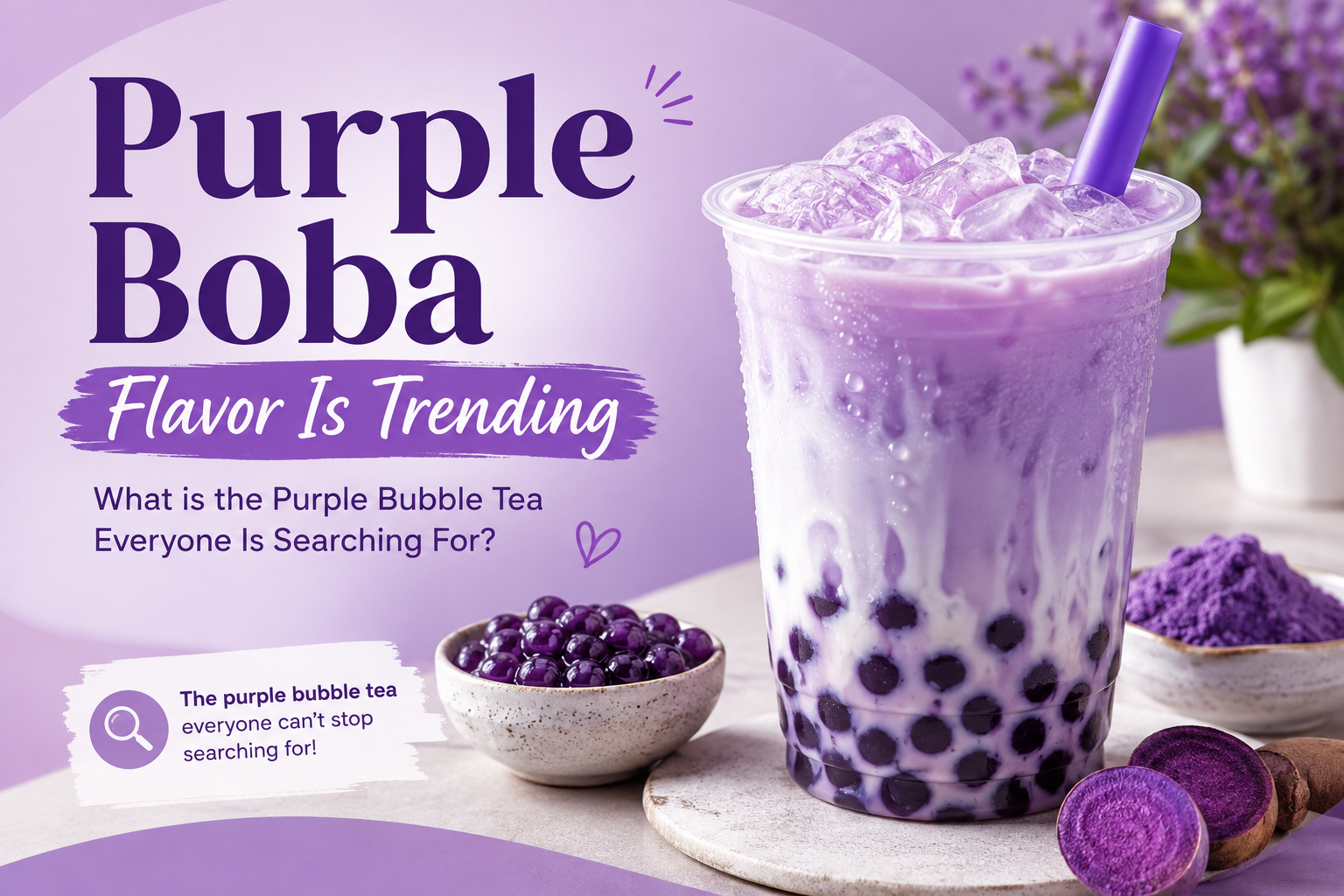
Searches for “purple boba flavor” are surging. Discover why taro is the classic answer, how ube differs from taro, and why purple bubble tea is becoming one of 2026’s biggest drink trends.
What Is the Purple Boba Flavor?
If you have recently searched for “purple boba flavor,” the answer you are probably looking for is taro.
Taro milk tea is one of the best-known purple drinks in the bubble tea world. Typically served with milk, tea and chewy tapioca pearls, the beverage is recognizable for its creamy texture and pale lavender-to-purple appearance.
There is an interesting reason the exact search phrase may look especially familiar: “Purple boba flavor” has appeared as a crossword clue, with TARO as the four-letter answer. The clue appeared in the Universal Crossword on March 13, 2026. (Try Hard Guides)
But there is more behind the growing interest in purple drinks than crossword puzzles.
In 2026, purple beverages have become a much larger food and social-media trend, and another ingredient—ube—is increasingly competing with taro for attention.
Why Is “Purple Boba Flavor” Trending?
One especially timely development arrived on August 14, 2026.
Target launched its exclusive Kuromi x KATSEYE collection, tied to KATSEYE's new WILD music release. The collection spans apparel, collectibles, snacks and beverages—and among the products is an A-SHA Kuromi x KATSEYE Dreamy Boba Tea in taro flavor.
The canned drink features KATSEYE member Lara and Kuromi on light-purple packaging, bringing together several highly visual trends: K-pop, character merchandise, purple aesthetics and boba tea. (Target Corporation)
Because the collection launched on August 14, it provides a notable current connection to renewed interest in taro boba.
However, there is no reliable evidence yet proving that this product launch alone caused the search spike for “purple boba flavor.” Search surges can be driven by several factors simultaneously, including crossword queries, social-media posts, new products and general curiosity about purple drinks.
What Does Taro Boba Taste Like?
Taro has a mild, subtly sweet and nutty flavor. Depending on how a shop prepares it, taro milk tea can also taste creamy and slightly vanilla-like.
The flavor comes from taro, a starchy root vegetable widely used in Asian cuisines.
When turned into bubble tea, taro is commonly combined with milk or creamer, sweetener and sometimes a tea base. Tapioca pearls add the chewy texture associated with traditional boba.
The finished drink frequently has a soft lavender color, although the exact shade depends on whether the shop uses real taro, taro powder or other ingredients.
That photogenic purple appearance is part of its appeal. Gong cha, for example, points to taro milk tea's lavender-purple appearance as one factor helping the drink spread through visual platforms such as Instagram and TikTok. (Gong Cha)
Taro vs. Ube: They Are Not the Same Purple Boba Flavor
One source of confusion around purple boba flavor is the growing popularity of ube.
Taro and ube can both produce purple drinks, but they are different plants with different flavor profiles.
Taro is generally associated with an earthy, mildly nutty and creamy flavor. Ube, a purple yam strongly associated with Filipino cuisine, tends to have a sweeter flavor that can be described as nutty and vanilla-like.
That distinction matters because ube is experiencing a major international moment in 2026.
Recent trend coverage has positioned ube as a potential challenger to matcha, as the vivid purple yam increasingly appears in coffees, milk teas, desserts and other café products. (DitoSaPilipinas.com)
So when someone sees a purple bubble tea today, it could be taro boba or ube boba. Color alone is no longer enough to identify the flavor.
Ube's Rise Is Making Purple Drinks Even More Popular
The expansion of ube helps explain why purple beverages are becoming increasingly visible.
Food-industry research from Datassential says ube has grown 231% on U.S. menus over four years, while consumer awareness increased from 15% in 2021 to 27%. (Datassential)
Major beverage companies have also embraced the ingredient.
Starbucks introduced an Iced Ube Coconut Macchiato as part of its spring 2026 menu, giving the Filipino purple yam additional mainstream exposure. (About Starbucks)
The trend is international as well. Recent European coverage has documented ube appearing in coffee, cakes and ice cream and gaining attention as an alternative to the green matcha aesthetic. (euronews)
For bubble tea businesses, this creates an unusual situation: the classic purple flavor, taro, now shares the spotlight with a rapidly growing purple competitor.
Why Purple Boba Works So Well on Social Media
Taste is only part of the equation.
Purple milk tea is exceptionally visual.
A lavender drink layered with black tapioca pearls creates an immediate color contrast that photographs well. Add whipped cream, purple foam or colorful toppings, and the drink becomes naturally suited to TikTok, Instagram Reels and other image-first platforms.
That visual appeal matters in a beverage market where customers increasingly discover drinks online before ordering them.
The wider bubble tea category is growing, too. Fortune Business Insights recently estimated the global bubble tea market at $2.83 billion in 2025 and projects it to increase from about $3.03 billion in 2026 to $5.62 billion by 2034. (Fortune Business Insights)
Purple drinks therefore sit at the intersection of two trends: continued demand for bubble tea and rising interest in visually distinctive Asian flavors.
Is Purple Boba Taro or Ube?
For anyone searching the exact question “What is the purple boba flavor?”, the simplest answer remains:
Usually, taro.
Taro is the traditional purple bubble tea flavor many consumers recognize, and it is specifically the answer associated with the crossword clue “Purple boba flavor.” (Try Hard Guides)
But ube boba is increasingly common, so consumers should check the menu rather than assuming every purple drink is taro.
A quick rule of thumb is:
- Taro boba: creamy, mildly sweet, earthy and nutty.
- Ube boba: sweeter, richer, nutty and often vanilla-like.
- Both: can produce striking lavender or purple milk drinks and pair well with tapioca pearls.
Purple Boba Flavor Could Be One of 2026's Most Recognizable Drink Trends
The sudden interest in purple boba flavor reflects something bigger than the color of one bubble tea.
Taro remains the classic answer—and the literal answer to the popular crossword clue—but purple beverages now occupy a much larger cultural space.
Ube's rapid growth, social-media-friendly drinks and mainstream menu launches are exposing more consumers to purple flavors. Meanwhile, the August 14 launch of the Kuromi x KATSEYE collection at Target, featuring an A-SHA taro boba beverage, puts taro directly into a current pop-culture and retail collaboration. (Target Corporation)
So if you are wondering “What flavor is purple boba?”, start with taro.
But in 2026, don't be surprised if the purple drink in front of you turns out to be ube instead.
keywords: purple boba flavor, purple boba, taro boba, taro milk tea, purple bubble tea, ube boba, ube milk tea, taro vs ube, what flavor is purple boba, purple boba tea flavor, boba flavors, bubble tea trends 2026