Ripe Note Engineering: Sensory Definition, Molecular Mapping, and Precision Flavor Formulation
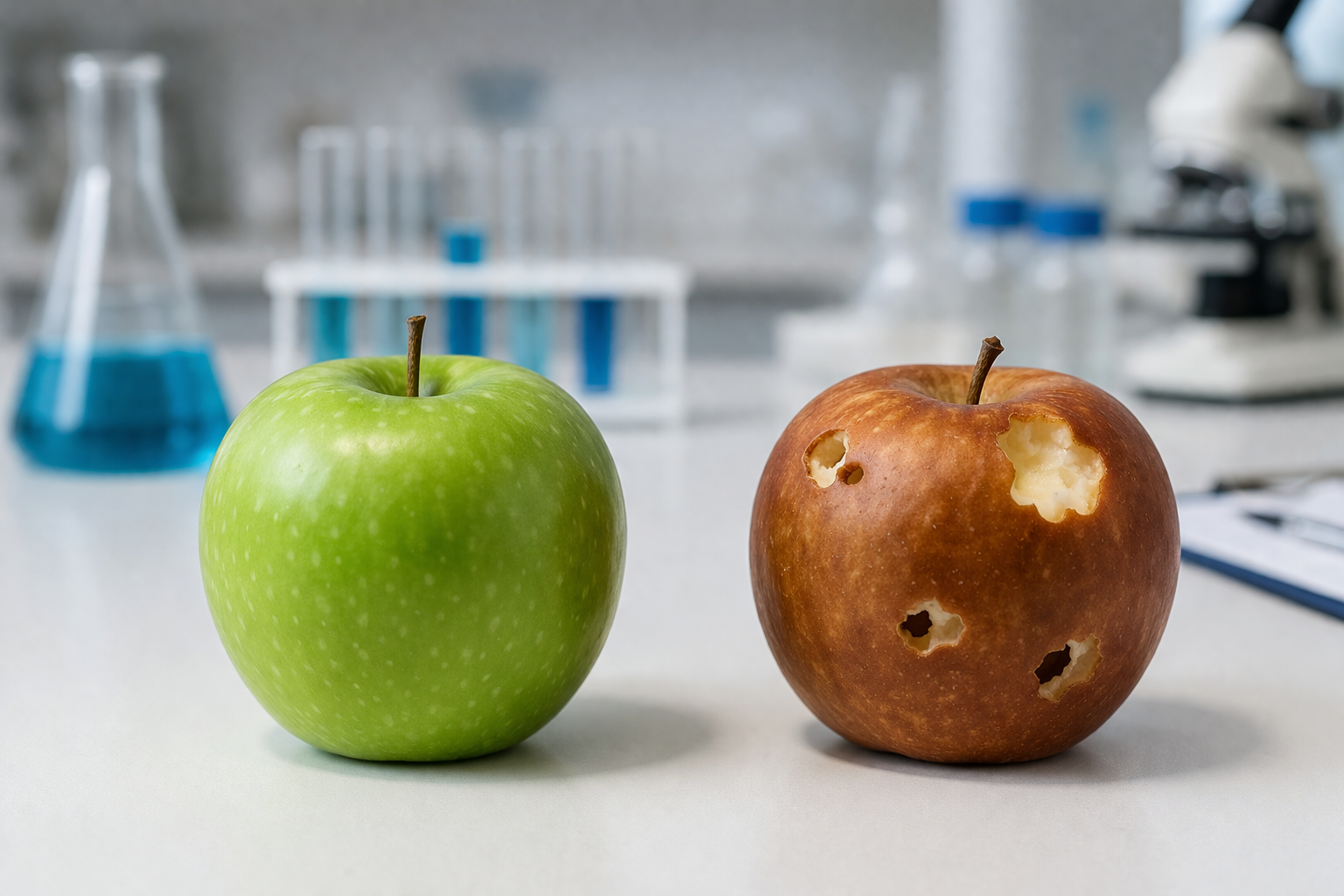
The “ripe” note is one of the core flavor attributes that the Society of Flavor Chemists expects all certified flavorists to understand and control. Mastery of this note is essential for accurately formulating fruit flavors such as mango, apple, and strawberry, where the perception of ripeness plays a critical role in overall flavor authenticity and quality.
In flavor science, a “ripe” note refers to the sensory impression associated with a fruit (or plant-derived material) at optimal maturity, when its aroma and taste are fully developed, rounded, sweet, and characteristic of peak edibility.
🔬 Technical Definition (Flavorist Perspective)
A ripe note is:
A composite aroma/flavor profile resulting from the balanced presence of esters, lactones, aldehydes, alcohols, and minor sulfur compounds that collectively signal physiological maturity of a fruit.
🧪 Key Sensory Characteristics
A ripe note typically includes:
- Sweetness (perceived, not necessarily sugar)
- Full-bodied fruit character
- Reduced green/vegetative harshness
- Soft, rounded top notes (less sharpness)
- Slight fermentative or jammy undertones (in some fruits)
⚖️ Ripe vs. Unripe vs. Overripe
| Stage | Dominant Notes | Chemistry Trend |
|---|---|---|
| Unripe | Green, grassy, sharp, astringent | C6 aldehydes (hexanal, cis-3-hexenal) |
| Ripe | Fruity, sweet, juicy, rounded | Esters (ethyl butyrate, isoamyl acetate), lactones |
| Overripe | Fermented, alcoholic, sulfurous, heavy | Ethanol, acetic acid, sulfur compounds |
🧬 Chemical Drivers of “Ripe” Notes
1. Esters (Primary contributors)
- Ethyl butyrate – pineapple, juicy fruit
- Isoamyl acetate – banana, pear
- Ethyl hexanoate – apple, tropical
👉 Provide juiciness and sweetness perception
2. Lactones (Body & creaminess)
- γ-Decalactone – peach, apricot
- γ-Dodecalactone – creamy, coconut
👉 Add ripe flesh, creamy depth
3. Aldehydes (controlled reduction)
- Hexanal – green, grassy (low in ripe)
- (E)-2-Hexenal – sharp green (suppressed)
👉 Their reduction is critical to achieving ripeness
4. Minor Components
- Alcohols (e.g., hexanol → softer green)
- Ketones (fruity nuances)
- Trace sulfur compounds (in tropical fruits)
🧠 Flavor Formulation Insight
To create or enhance a “ripe” note, flavorists typically:
✅ Increase:
- Fruity esters (top + middle notes)
- Lactones (body)
- Low levels of sugar-associated aromatics (furaneol, maltol)
❌ Reduce:
- Green aldehydes
- Bitter phenolics
- Harsh acids
⚖️ Balance:
- Acidity (too high = unripe; too low = flat)
- Volatility (ripe notes are diffusive but smooth)
🍑 Practical Examples
- Ripe banana → high isoamyl acetate + soft background
- Ripe peach → γ-decalactone dominant with ester support
- Ripe mango → ester + lactone + slight sulfur complexity
- Ripe strawberry → esters + furaneol (jammy sweetness)
🎯 One-Line Summary
A “ripe” note is the harmonized, sweet, and fully developed fruity aroma profile achieved when green notes diminish and ester–lactone systems dominate.
A true “all compounds in all fruits” list would run into hundreds to thousands of molecules, because each fruit has a unique metabolic fingerprint.
What flavorists actually use is a functional “ripeness system map”—grouping compounds that increase (ripening markers) and those that decrease (unripe markers) across most fruits.
Below is a comprehensive, industry-style master map covering the major compound families and key representatives.
🍑 GLOBAL RIPENESS CHEMICAL MAP (ALL FRUITS)
🟢 1. COMPOUNDS THAT DECREASE DURING RIPENING (UNRIPE MARKERS)
These define green, harsh, immature character.
🌿 C6 & C9 ALDEHYDES (Lipoxygenase pathway)
- Hexanal
- (E)-2-Hexenal
- (Z)-3-Hexenal
- Nonanal
- (E)-2-Nonenal
👉 Sharp, कट grass, მწ “green bite”
👉 Rapidly decline as fruit ripens
🌿 GREEN ALCOHOLS
- 1-Hexanol
- (Z)-3-Hexen-1-ol
👉 Softer green notes (persist slightly longer than aldehydes)
🌿 ACIDS (Sharp, immature profile)
- Malic acid
- Citric acid
- Oxalic acid
👉 Perceived sourness decreases (or becomes balanced)
🌿 PHENOLICS / TANNINS (Astringency)
- Catechins
- Chlorogenic acid
- Proanthocyanidins
👉 Decrease or polymerize → less astringent
🌿 SULFUR DEFENSIVE NOTES (in some fruits)
- Methanethiol (early stages)
- Dimethyl sulfide (low levels)
👉 Can decrease or transform into fruity sulfur notes
🔴 2. COMPOUNDS THAT INCREASE DURING RIPENING (RIPE MARKERS)
These create sweet, fruity, juicy, rounded character.
🍍 A. ESTERS (PRIMARY RIPENESS SIGNATURE)
Core universal esters
- Ethyl butyrate
- Isoamyl acetate
- Ethyl acetate
- Ethyl hexanoate
- Ethyl octanoate
- Hexyl acetate
- Butyl acetate
Expanded ester system (fruit-specific tuning)
- Methyl butyrate
- Ethyl 2-methylbutyrate
- Isoamyl butyrate
- Benzyl acetate
- Phenethyl acetate
👉 Main driver of “juicy + ripe fruit” perception
🍑 B. LACTONES (RIPE FLESH / CREAMINESS)
- γ-Decalactone
- γ-Dodecalactone
- γ-Undecalactone
- δ-Decalactone
- Massoia lactone
👉 Increase strongly in stone fruits, mango, coconut
🍓 C. FURANS / CARAMELIZED SWEET NOTES
- Furaneol
- Mesifurane
- 5-Hydroxymethylfurfural
👉 Provide jammy, тәт, cooked sweetness
🍇 D. TERPENES (VARIETY-SPECIFIC RIPENESS)
- Linalool
- Geraniol
- Nerol
- Limonene
- Myrcene
👉 Increase or become unmasked during ripening
👉 Define varietal identity (grape, citrus, mango)
🍌 E. ALCOHOLS (FERMENTATIVE SWEETNESS PRECURSORS)
- Ethanol
- Isoamyl alcohol
- 2-Phenylethanol
👉 Serve as ester precursors
👉 Slight increase → contributes to ripeness perception
🍍 F. KETONES
- 2-Heptanone
- 2-Nonanone
- 6-Methyl-5-hepten-2-one
👉 Add fruity-fatty nuances
🥭 G. SULFUR COMPOUNDS (TROPICAL RIPENESS)
- Methional
- Dimethyl disulfide
- 3-Mercaptohexanol
- 3-Mercaptohexyl acetate
👉 Critical for mango, passionfruit, guava
👉 Increase in trace → powerful impact
🍎 H. NORISOPRENOIDS (CAROTENOID BREAKDOWN)
- β-Ionone
- Damascenone
👉 Provide:
- Floral-fruity depth
- “sun-ripened” character
🍯 I. SUGAR-ASSOCIATED VOLATILES
(Not sugars themselves, but aroma correlates)
- Maltol
- Ethyl maltol
👉 Enhance perceived sweetness / ripeness
⚖️ 3. KEY TRANSFORMATION PATHWAYS DURING RIPENING
🔁 Lipoxygenase → Esterification shift
- Aldehydes ↓
- Esters ↑
🔁 Cell wall degradation
- Pectin → softness → release of volatiles
🔁 Carotenoid breakdown
- → norisoprenoids (β-ionone, damascenone)
🔁 Amino acid metabolism
- → esters + alcohols + sulfur compounds
🧠 4. MASTER RIPENESS BALANCE (WHAT FLAVORISTS CONTROL)
To CREATE “RIPE”:
- Push esters (high)
- Add lactones (body)
- Add furans (sweetness illusion)
- Moderate terpenes
- Add trace sulfur (tropical only)
To REMOVE “UNRIPE”:
- Suppress C6 aldehydes
- Reduce sharp acids
- Mask phenolics/astringency
🎯 FINAL CONSOLIDATED VIEW
⬇️ DECREASING (UNRIPE)
- C6 aldehydes
- Green alcohols
- Sharp acids
- Phenolics/tannins
⬆️ INCREASING (RIPE)
- Esters (dominant driver)
- Lactones (flesh/body)
- Furans (sweet/jammy)
- Terpenes (varietal lift)
- Alcohols (precursors)
- Sulfur (tropical nuance)
- Norisoprenoids (depth)
🧾 ONE-LINE PROFESSIONAL DEFINITION
Ripeness is chemically defined by the decline of lipid-derived green volatiles and the rise of ester–lactone–derived fruity systems, supported by sugar-associated and carotenoid-derived aroma compounds.
Below is a professional, industrial “RIPE NOTE BASE” template that flavor houses use as a modular core system. It is designed to be fruit-agnostic, then tuned toward specific fruits (apple, mango, berry, etc.).
🧪 🍑 INDUSTRIAL RIPE FLAVOR BASE
(Universal Template – Flavorist Grade)
🎯 Purpose
A concentrated flavor base that delivers:
- Juicy, sweet, rounded “ripe” perception
- Suppressed green/unripe notes
- Flexible for top note customization per fruit
⚙️ 1. CORE FORMULA (1000 g batch basis)
🟡 A. ESTER SYSTEM (Primary driver) — 25–40%
| Compound | Function | Typical % |
|---|---|---|
| Ethyl butyrate | Juicy pineapple lift | 6.0 |
| Ethyl hexanoate | Sweet fruity body | 5.0 |
| Ethyl octanoate | Round sweetness | 3.0 |
| Isoamyl acetate | Ripe banana/pear | 4.0 |
| Hexyl acetate | Fresh fruity bridge | 3.0 |
| Ethyl 2-methylbutyrate | Apple/pineapple pop | 2.0 |
| Butyl acetate | General fruitiness | 2.0 |
👉 Total esters: ~25–30%
🟠 B. LACTONE SYSTEM (Flesh / ripeness body) — 3–8%
| Compound | Function | % |
|---|---|---|
| γ-Decalactone | Peach flesh | 2.0 |
| γ-Undecalactone | Apricot depth | 1.5 |
| γ-Dodecalactone | Creamy ripeness | 1.0 |
| δ-Decalactone | Fatty roundness | 0.5 |
👉 Key for “ripe pulp” sensation
🔴 C. SWEET / JAMMY MODULATORS — 1–5%
| Compound | Function | % |
|---|---|---|
| Furaneol | Jammy sweetness | 1.0 |
| Mesifurane | Strawberry depth | 0.3 |
| Maltol | Sweet enhancer | 1.5 |
| Ethyl maltol | Cotton candy sweetness | 0.5 |
🟢 D. TERPENE LIFT (Varietal freshness) — 1–4%
| Compound | Function | % |
|---|---|---|
| Linalool | Floral lift | 0.8 |
| Geraniol | Sweet floral | 0.5 |
| Limonene | Brightness | 1.0 |
| Myrcene | Green-fruity bridge | 0.3 |
🟣 E. NORISOPRENOID DEPTH — 0.01–0.1%
| Compound | Function | % |
|---|---|---|
| β-Ionone | Violet/fruit depth | 0.02 |
| Damascenone | Powerful fruity enhancer | 0.01 |
👉 Extremely potent → ppm-level control
⚫ F. SULFUR TRACE SYSTEM (Optional, tropical) — 0–0.05%
| Compound | Function | % |
|---|---|---|
| Methional | Cooked fruit nuance | 0.01 |
| Dimethyl disulfide | Ripeness realism | 0.005 |
| 3-Mercaptohexyl acetate | Tropical punch | 0.01 |
👉 Use ONLY for mango/passionfruit profiles
🔵 G. GREEN SUPPRESSION / BALANCE — 0.1–1%
| Compound | Function | % |
|---|---|---|
| Benzyl acetate | Smooths harshness | 0.5 |
| Phenethyl alcohol | Floral masking | 0.3 |
⚪ H. SOLVENT / CARRIER — q.s. to 100%
- Ethanol
- Triacetin
- Propylene glycol
👉 Balance volatility and solubility
⚙️ 2. MANUFACTURING PROCESS
Step 1 — Base preparation
- Charge solvent (50–70%)
- Start agitation (low shear)
Step 2 — Add heavy components
- Lactones
- Maltol / ethyl maltol
- Norisoprenoids (pre-diluted)
Step 3 — Add ester system
- Add sequentially (low → high volatility)
Step 4 — Add top notes
- Terpenes
- Sulfur (last, diluted)
Step 5 — Maturation
- Rest 24–72 hours
- Allow equilibrium (critical for “roundness”)
⚖️ 3. RIPENESS CONTROL DIALS
🔼 To increase ripeness:
- ↑ esters (+10–20%)
- ↑ lactones
- ↑ furaneol / ethyl maltol
🔽 To reduce ripeness:
- ↓ esters
- ↑ slight green (trace Hexanal at ppm)
🍎 4. FRUIT-SPECIFIC MODULATION
Apple
- Boost ethyl 2-methylbutyrate
- Reduce lactones
Mango
- Add sulfur system
- Increase lactones
Strawberry
- Boost furaneol + mesifurane
- Add slight green back
Banana
- Increase isoamyl acetate (dominant)
🧠 5. INDUSTRIAL DOSAGE GUIDELINES
| Application | Use Level |
|---|---|
| Beverage | 0.05–0.15% |
| Dairy | 0.1–0.3% |
| Confectionery | 0.2–0.5% |
🚨 6. CRITICAL PROFESSIONAL INSIGHTS
- “Ripe” is NOT sweetness alone → it is ester/lactone balance
- Overuse of esters → artificial / candy
- Underuse → green / thin
- Lactones = difference between “fruit” and “ripe fruit”
🎯 FINAL FORMULA LOGIC
A ripe flavor base is engineered by maximizing ester-driven juiciness, reinforcing with lactone-derived fleshiness, and suppressing lipid-derived green notes while adding trace complexity (furans, sulfur, norisoprenoids).
Below is a ppm-level ripe fruit base template built as a practical flavor-house starting formula for a liquid concentrate. It is suitable as an R&D pilot formula and can be scaled, but it still needs normal commercial checks for regulatory status, purity specs, solvent choice, allergen review, and matrix stability before release.
Ripe Note Base Concentrate
Precision template for production trials
Batch size
1,000 g flavor concentrate
Intended character
A generic ripe mixed-fruit note with:
- strong juicy ripe top note
- rounded fleshy body
- mild jammy sweetness
- very low green character
1) Formula by weight
A. Ester core
| Raw material | g | % w/w |
|---|---|---|
| Ethyl butyrate | 120.000 | 12.000 |
| Ethyl hexanoate | 85.000 | 8.500 |
| Ethyl 2-methylbutyrate | 35.000 | 3.500 |
| Ethyl octanoate | 28.000 | 2.800 |
| Isoamyl acetate | 55.000 | 5.500 |
| Hexyl acetate | 40.000 | 4.000 |
| Butyl acetate | 22.000 | 2.200 |
| Cis-3-hexenyl acetate | 6.000 | 0.600 |
Subtotal esters = 391.000 g
B. Lactone body system
| Raw material | g | % w/w |
|---|---|---|
| Gamma-decalactone | 16.000 | 1.600 |
| Gamma-undecalactone | 9.000 | 0.900 |
| Gamma-dodecalactone | 4.000 | 0.400 |
| Delta-decalactone | 3.500 | 0.350 |
Subtotal lactones = 32.500 g
C. Jammy / sweet modulators
| Raw material | g | % w/w |
|---|---|---|
| Furaneol | 3.500 | 0.350 |
| Mesifurane | 0.600 | 0.060 |
| Maltol | 6.000 | 0.600 |
| Ethyl maltol | 2.200 | 0.220 |
| Vanillin | 1.000 | 0.100 |
Subtotal = 13.300 g
D. Floral / terpene lift
| Raw material | g | % w/w |
|---|---|---|
| Linalool | 5.500 | 0.550 |
| Geraniol | 2.200 | 0.220 |
| Nerol | 1.300 | 0.130 |
| d-Limonene | 7.000 | 0.700 |
| Beta-myrcene | 0.800 | 0.080 |
Subtotal = 16.800 g
E. Deep ripe trace system
| Raw material | g | % w/w |
|---|---|---|
| Beta-ionone | 0.180 | 0.018 |
| Beta-damascenone, 1% in triacetin | 0.800 | 0.080 |
| Phenethyl alcohol | 2.500 | 0.250 |
| Benzyl acetate | 4.500 | 0.450 |
Subtotal = 7.980 g
F. Green-control microdose
These are kept very low so the flavor still feels natural and not candy-flat.
| Raw material | g | % w/w |
|---|---|---|
| Hexanal, 1% in PG | 1.000 | 0.100 |
| Trans-2-hexenal, 1% in PG | 0.400 | 0.040 |
| Cis-3-hexenol, 1% in PG | 1.500 | 0.150 |
Subtotal = 2.900 g
Actual neat content from this section is very small, which is the point.
G. Optional tropical sulfur module
Use only when you want ripe mango/passionfruit/guava direction.
| Raw material | g | % w/w |
|---|---|---|
| Methional, 1% in PG | 0.500 | 0.050 |
| Dimethyl disulfide, 0.1% in PG | 0.200 | 0.020 |
| 3-Mercaptohexyl acetate, 0.1% in triacetin | 0.250 | 0.025 |
Subtotal = 0.950 g
For a non-tropical ripe base, set this section to zero and add the same weight back to carrier.
H. Carrier / solvent
| Raw material | g | % w/w |
|---|---|---|
| Triacetin | 210.570 | 21.057 |
| Propylene glycol | 180.000 | 18.000 |
| Ethanol | 144.000 | 14.400 |
Subtotal carrier = 534.570 g
Total
1,000.000 g
2) What this delivers in sensory terms
- Ethyl butyrate / ethyl hexanoate / ethyl 2-methylbutyrate: juicy ripe fruit burst
- Isoamyl acetate / hexyl acetate: ripe banana-pear-apple bridge
- Lactones: ripe pulp, flesh, creamy maturity
- Furaneol / ethyl maltol: jammy sweet maturity
- Linalool / geraniol / limonene: fresh ripe lift
- Ionone / damascenone: sun-ripened depth
- tiny green system: realism, prevents candy effect
3) Finished-product ppm guide
These numbers show what the finished food or beverage receives when this concentrate is used.
A. At 1,000 ppm use level in finished product
That means 0.10% flavor addition.
Finished-product ppm contribution is:
ppm in finished product = (% in concentrate) × 10,000
Examples:
- Ethyl butyrate at 12.000% in concentrate = 1,200 ppm in finished product
- Gamma-decalactone at 1.600% = 160 ppm
- Furaneol at 0.350% = 35 ppm
- Linalool at 0.550% = 55 ppm
B. At 500 ppm use level
Just divide the above by 2.
C. At 2,000 ppm use level
Double the 1,000 ppm values.
4) Recommended starting use levels by application
Clear beverage
300-1,000 ppm
- start at 600 ppm
Juice drink / nectar
500-1,500 ppm
- start at 900 ppm
Yogurt / dairy
800-2,000 ppm
- start at 1,200 ppm
Gummies / candy
1,000-3,000 ppm
- start at 1,800 ppm
Baked fillings / fruit prep
1,500-4,000 ppm
- start at 2,500 ppm
5) Manufacturing procedure
Step 1
Charge vessel with:
- triacetin
- propylene glycol
- ethanol
Mix 10-15 minutes.
Step 2
Add in this order:
- maltol
- ethyl maltol
- furaneol
- mesifurane
- vanillin
Mix until fully dissolved. Mild warming is acceptable if your materials and plant SOP allow it.
Step 3
Add heavier body materials:
- gamma-decalactone
- gamma-undecalactone
- gamma-dodecalactone
- delta-decalactone
- beta-ionone
- damascenone dilution
- phenethyl alcohol
- benzyl acetate
Mix 15 minutes.
Step 4
Add the ester block:
- ethyl octanoate
- ethyl hexanoate
- ethyl butyrate
- ethyl 2-methylbutyrate
- isoamyl acetate
- hexyl acetate
- butyl acetate
- cis-3-hexenyl acetate
Mix 20 minutes.
Step 5
Add the terpene block:
- limonene
- linalool
- geraniol
- nerol
- beta-myrcene
Mix 10 minutes.
Step 6
Add the pre-diluted microdose materials last:
- hexanal 1%
- trans-2-hexenal 1%
- cis-3-hexenol 1%
- optional sulfur dilutions
Mix gently 15 minutes.
Step 7
Polish filter if needed, then age 24-72 hours before evaluation.
6) Production notes
- Pre-dilute very potent materials before weighing.
- Sulfur and damascenone are easier to control as standard dilutions.
- Keep oxygen exposure low after blending.
- Evaluate at 24 hours, 72 hours, and 1 week.
- Always test in the real matrix, not only on strip or in water.
7) Adjustment dials
More ripe / softer
Increase:
- gamma-decalactone by 2-5 g
- ethyl hexanoate by 10-20 g
- furaneol by 0.5-1.0 g
Reduce:
- cis-3-hexenyl acetate by 1-2 g
- green-control microdoses slightly
More fresh-ripe
Increase:
- linalool by 1-2 g
- limonene by 2-4 g
- hexyl acetate by 5-10 g
More tropical-ripe
Increase:
- lactones
- sulfur module slightly
- ethyl butyrate
- beta-damascenone dilution slightly
Less candy-like
Reduce:
- ethyl maltol
- isoamyl acetate
- furaneol
Increase slightly:
- hexyl acetate
- benzyl acetate
- tiny green system
8) Two cleaner production variants
Non-tropical ripe base
Remove the sulfur module entirely.
Stone-fruit ripe base
Increase:
- gamma-undecalactone to 14 g
- gamma-decalactone to 22 g
Reduce:
- ethyl butyrate to 90 g
- isoamyl acetate to 35 g
9) Practical QC targets
Use this as a working internal spec template:
- Appearance: clear to slightly hazy liquid
- Color: colorless to pale yellow
- Odor: ripe juicy fruity, rounded, sweet, lightly floral
- Specific gravity: establish per solvent grade
- Refractive index: establish from retained standard
- Stability: no haze or major top-note collapse after 2 weeks at room temp and accelerated hold per SOP
10) Important commercial note
This is a serious pilot-scale template, but not a finished regulatory formula pack. Before commercial sale or food use, you would still need:
- raw material identity confirmation
- food-use status review in target market
- solvent compliance review
- customer application testing
- heat, acid, light, and packaging stability work
- final cost optimization
Below is a professional “Ripe Note Engineering Toolkit”—a structured system flavorists use to design, measure, and control ripeness across any fruit profile. It combines molecular modules, ppm targets, ratios, and decision rules so you can engineer ripeness instead of guessing it.
🍑 RIPE NOTE ENGINEERING TOOLKIT
(Industrial Flavor Design System)
1) 🧠 CORE CONCEPT
Ripeness = Ester dominance + Lactone body + Sweet modulators – Green volatiles (controlled trace)
You are balancing four levers:
- Juiciness (Esters)
- Flesh (Lactones)
- Sweet maturity (Furans / sweet aromatics)
- Green suppression (C6 system control)
2) 🧪 MODULE-BASED DESIGN SYSTEM
🔴 MODULE A — JUICY ESTER ENGINE (Top + middle notes)
Primary compounds
- Ethyl butyrate
- Ethyl hexanoate
- Isoamyl acetate
- Ethyl 2-methylbutyrate
📊 Target in finished product:
- 300 – 1500 ppm total esters
⚖️ Internal ratio guideline:
- Ethyl butyrate : Ethyl hexanoate : Isoamyl acetate
👉 3 : 2 : 1
🎯 Function:
- Defines “juicy + ripe” perception
- Too high → candy/artificial
- Too low → thin/unripe
🟠 MODULE B — LACTONE BODY ENGINE (Ripened flesh)
Core compounds
- γ-Decalactone
- γ-Undecalactone
- γ-Dodecalactone
📊 Target:
- 50 – 300 ppm total
⚖️ Ratio:
- γ-decalactone dominant (50–70%)
🎯 Function:
- Converts “fruit” → “ripe fruit flesh”
🟡 MODULE C — SWEET/JAMMY MODULATION
Key compounds
- Furaneol
- Mesifurane
- Maltol
- Ethyl maltol
📊 Target:
- 10 – 80 ppm
🎯 Function:
- Adds perceived sugar / maturity
- Critical for:
- strawberry
- peach
- cooked fruit systems
🟢 MODULE D — TERPENE LIFT (Ripe freshness)
Key compounds
- Linalool
- Geraniol
- Limonene
📊 Target:
- 20 – 200 ppm
🎯 Function:
- Keeps ripeness from feeling flat or cooked
🟣 MODULE E — DEEP RIPENESS (Trace enhancers)
Key compounds
- β-Ionone
- Damascenone
📊 Target:
- 0.01 – 1 ppm
🎯 Function:
- “Sun-ripened” depth
- Extreme potency → overdosing kills realism
⚫ MODULE F — GREEN CONTROL SYSTEM (Critical!)
Key compounds
- Hexanal
- (E)-2-Hexenal
- (Z)-3-Hexenol
📊 Target:
- 0.1 – 5 ppm
🎯 Function:
- Adds natural realism
- Too high → unripe
- Too low → artificial/candy
🔵 MODULE G — SULFUR (Tropical only)
📊 Target:
- 0.001 – 0.05 ppm
🎯 Function:
- Mango / passionfruit realism
- Not used in most temperate fruits
3) ⚖️ RIPENESS INDEX MODEL (Practical Tool)
Define:
Ripeness Index (RI) =
(Esters + Lactones + Sweet modulators)
--------------------------------------
(Green volatiles + Harsh acids)
Interpretation:
| RI Value | Sensory |
|---|---|
| < 1.5 | Unripe |
| 1.5 – 3.0 | Semi-ripe |
| 3.0 – 6.0 | Ripe |
| > 6.0 | Overripe / jammy |
4) 🎯 QUICK FORMULATION ALGORITHM
Step-by-step:
Step 1 — Build ester base
- Set total esters to ~800 ppm
Step 2 — Add lactones
- Start at 100 ppm
Step 3 — Add sweet modulators
- Add 20–40 ppm
Step 4 — Add terpene lift
- Add 50–100 ppm
Step 5 — Add trace depth
- Add ionone/damascenone at ppb–low ppm
Step 6 — Add green back
- Add 0.5–2 ppm hexanal system
5) 🔧 ENGINEERING CONTROL DIALS
Increase ripeness:
- ↑ esters (+20%)
- ↑ lactones (+10–30%)
- ↑ furaneol (+5–20 ppm)
- ↓ green (<1 ppm)
Increase freshness (less overripe):
- ↑ hexyl acetate
- ↑ terpene lift
- ↑ tiny green (1–3 ppm)
Reduce candy/artificial:
- ↓ ethyl maltol
- ↓ isoamyl acetate
- ↑ benzyl acetate
- ↑ trace green
Increase natural realism:
- Add:
- ionone (trace)
- damascenone (trace)
- slight green back
6) 🍎 FRUIT-SPECIFIC TUNING MATRIX
| Fruit | Ester bias | Lactone | Special note |
|---|---|---|---|
| Apple | Ethyl 2-methylbutyrate | Low | Crisp edge retained |
| Banana | Isoamyl acetate dominant | Very low | Reduce green strongly |
| Peach | Balanced | High | Lactone-driven |
| Mango | Ester + sulfur | High | Sulfur critical |
| Strawberry | Mixed esters | Low | Furaneol high |
7) 🚨 COMMON FAILURE MODES
❌ Candy-like
- Too many esters
- No green
- Too much ethyl maltol
❌ Flat / cooked
- No terpene lift
- Too many lactones
❌ Unripe
- Green aldehydes too high
- Not enough esters
❌ Harsh
- Acid imbalance
- Ester ratios wrong
8) 🧾 MASTER FORMULATION TARGET (REFERENCE)
For a balanced ripe profile in finished product:
| Module | Target ppm |
|---|---|
| Esters | 600–1200 |
| Lactones | 80–200 |
| Sweet modulators | 20–60 |
| Terpenes | 50–150 |
| Green | 0.5–2 |
| Ionone/damascenone | 0.01–0.5 |
🎯 FINAL PROFESSIONAL INSIGHT
Ripeness is not created by adding “sweetness”—it is engineered by shifting the volatile balance from lipid-derived green aldehydes to ester–lactone dominated systems, with controlled trace realism.
This piece is generated by ai for educational purpose.
###