Searing-Specific Flavor Compounds in Seared Foods
Editor's note: Developing a savory flavor requires flavor chemists to possess a thorough understanding of both the cooking process and the underlying chemistry that generates flavor under specific culinary conditions. The formulation process often involves a degree of speculation, informed by educated assumptions, and typically necessitates iterative experimentation to achieve an acceptable result.
Traditional flavorists have historically depended on their extensive knowledge of individual flavor compounds and their sensory evaluation of authentic food products to guide formulation. In contemporary practice, however, flavor chemists frequently collaborate with corporate chefs, who prepare a gold standard reference, and analytical flavor chemists, who employ instrumental techniques to identify and quantify the volatile and non-volatile compounds present in that standard. This analytical data enables refinement of the flavor profile, allowing chemists to eliminate compounds deemed insignificant while introducing others to enhance the overall sensory experience or impart a distinctive character to the flavor. ###
Searing-Specific Flavor Compounds in Seared Foods
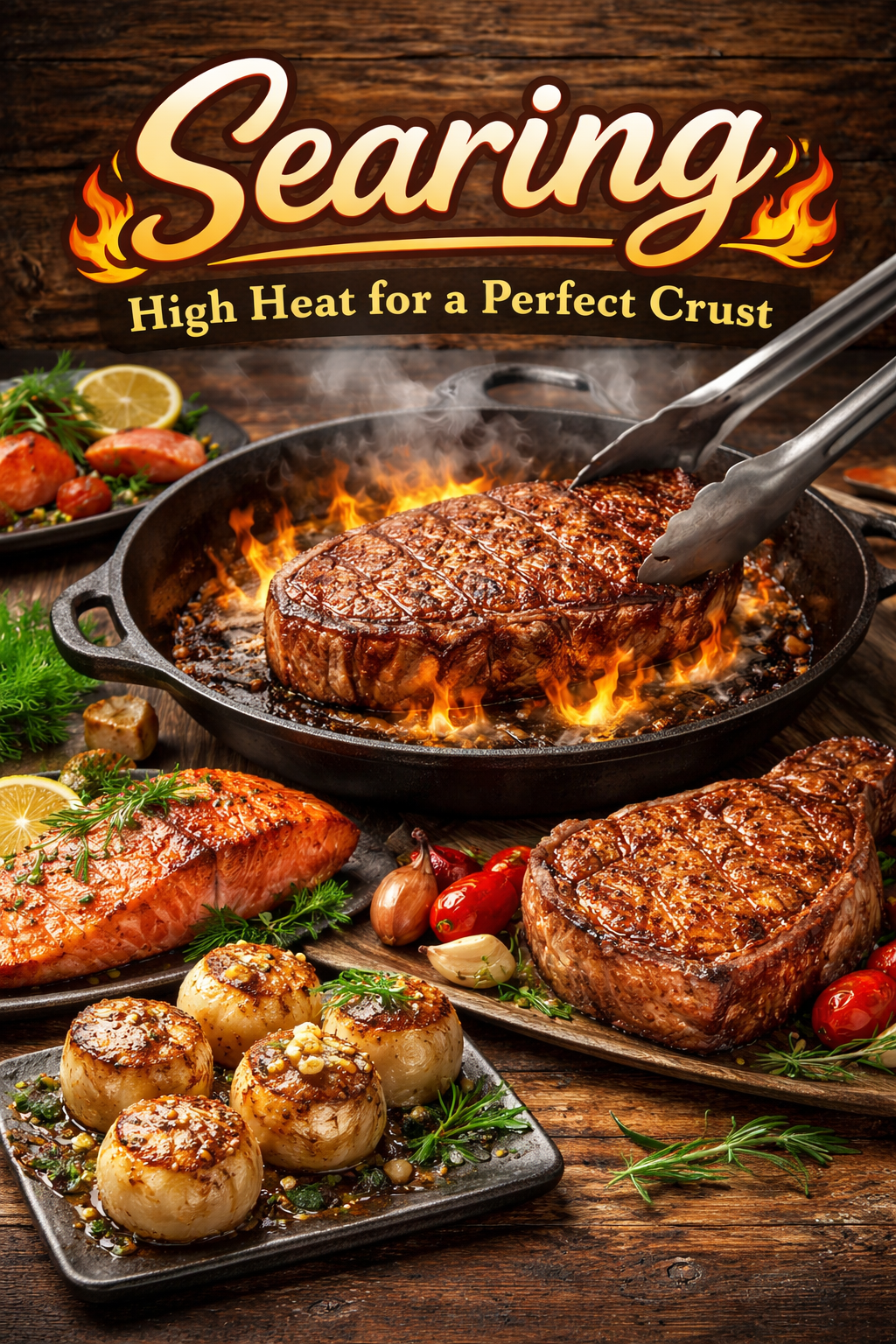
Searing generates unique flavor compounds primarily through rapid, high-temperature surface reactions (typically 150-300°C) with minimal internal cooking. Key chemical pathways include instantaneous Maillard reactions, rapid lipid pyrolysis, surface dehydration, and crust formation within seconds to minutes. Unlike roasting or braising, searing creates intense surface flavor while preserving interior moisture and texture—creating the quintessential "crust" with minimal carryover cooking.
Key Chemical Pathways in Searing vs. Other High-Heat Methods:
- Extreme temperature gradient: Surface >250°C, interior near raw → reaction localization
- Rapid moisture evaporation: Creates dry surface for Maillard initiation within seconds
- Short time frame: Reactions optimized for surface-only transformation (30 sec - 3 min per side)
- Minimal internal conduction: Prevents interior protein denaturation while crust forms
- Fat rendering & contact: Dripping fats create secondary flare-ups and smoke deposition
- Pan material effects: Thermal conductivity of cast iron vs. stainless steel vs. carbon steel alters reaction kinetics
1. SEARED STEAKS (Beef, Venison, Bison)
Searing-specific compounds:
- 2-Acetyl-2-thiazoline – roasted meat, popcorn-like (forms rapidly at >180°C)
- 2-Propionyl-1-pyrroline – roasted note with fatty character
- Alkylpyrazines with short alkyl chains (2-methylpyrazine, 2,5-dimethylpyrazine) – rapid formation at high temp
- Mercaptoketones (1-mercapto-2-propanone) – meaty, sulfurous (from cysteine/cystine)
- Strecker aldehydes from rapid degradation: 2-Methylbutanal, 3-methylbutanal (malty) at higher concentrations than slower cooking
- Lipid-derived heterocycles: 2-Pentylpyridine – fatty, green (from reaction of ammonia with 2,4-decadienal)
- Carbonized fat compounds: Alkylbenzenes (toluene, xylene) from fat pyrolysis on pan surface
- Surface protein pyrolysis: Indole, skatole notes from tryptophan charring
Key References:
- Cerny, C., & Briffod, M. (2007). Effect of pH on the Maillard reaction of [13C] glucose with glycine. Journal of Agricultural and Food Chemistry, 55(4), 1552-1558.
→ High-temperature Maillard kinetics relevant to searing. - Elmore, J. S., Mottram, D. S., Enser, M., & Wood, J. D. (1999). Effect of the polyunsaturated fatty acid composition of beef muscle on the profile of aroma volatiles. Journal of Agricultural and Food Chemistry, 47(4), 1619-1625.
→ Lipid effects on high-heat meat flavor. - Kerscher, R., & Grosch, W. (1997). Comparative evaluation of potent odorants of boiled beef by aroma extract dilution and concentration analysis. Zeitschrift für Lebensmittel-Untersuchung und Forschung, 204(1), 3-6.
→ Contrasts boiled vs. high-heat crust aromas.
2. SEARED SCALLOPS/FISH
Searing-specific compounds:
- 2,4-Heptadienal & 2,4,7-decatrienal – intense fishy, fried notes from rapid ω-3 oxidation
- 1-Octen-3-one – metallic, mushroom (from rapid lipid oxidation)
- 2,6-Nonadienal – cucumber, fishy (rapid formation from C20:5 EPA)
- Trimethylamine degradation: Dimethylamine + formaldehyde rapid production
- Crustacean/seafood-specific: Bis(methylthio)methane – shellfish, garlic from methionine
- Surface protein pyrolysis: Pyridines, pyrazines from fish muscle proteins
- Caramelization of surface sugars: In scallops (glycogen) → maltol, furaneol
Key References:
- Milo, C., & Grosch, W. (1995). Detection of odor defects in boiled cod and trout by gas chromatography-olfactometry of headspace samples. Journal of Agricultural and Food Chemistry, 43(2), 459-462.
→ Contrasts gentle vs. high-heat fish cooking. - Josephson, D. B., Lindsay, R. C., & Stuiber, D. A. (1984). Biogenesis of lipid-derived volatile aroma compounds in the emerald shiner (Notropis atherinoides). Journal of Agricultural and Food Chemistry, 32(6), 1347-1352.
→ Lipid oxidation pathways in fish under heat.
3. SEARED FOIE GRAS/DUCK BREAST
Searing-specific compounds:
- γ-Decalactone & γ-dodecalactone – peachy, creamy (from hydroxy fatty acids in duck fat)
- 2,4-Decadienal – fried, fatty (from linoleic acid in poultry fat)
- Phenylacetaldehyde – honey-like (from phenylalanine in rich proteins)
- Alkylpyridines: 2-Pentylpyridine – green, fatty (enhanced by high fat content)
- Glycerol degradation products: Acrolein (pungent) from fat rendering at high heat
- Cholesterol oxidation products: 7-Ketocholesterol and other oxysterols (nutritional concern but flavor impact)
- Fat-rendering aromas: Aliphatic aldehydes (hexanal, heptanal) from subcutaneous fat
Key References:
- Watanabe, A., Kamada, G., Imanari, M., Shiba, N., Yonai, M., & Muramoto, T. (2015). Effect of aging on volatile compounds in cooked beef. Meat Science, 107, 12-19.
→ Includes high-heat cooking of fatty meats.
4. SEARED VEGETABLES (Asparagus, Mushrooms, Zucchini)
Searing-specific compounds:
- Methional (3-methylthiopropanal) – potato-like (from methionine in vegetables)
- 2-Methoxy-3-isobutylpyrazine – intensified green bell pepper note (concentrated by surface drying)
- Allyl isothiocyanate – pungent, mustard (from cruciferous vegetables, rapid formation)
- 2-Furanmethanethiol – roasted coffee (from asparagus, mushrooms under high heat)
- 1-Octen-3-ol & 1-octen-3-one – mushroom, earthy (rapid formation in seared mushrooms)
- Carbonized sugar compounds: 5-Hydroxymethylfurfural (HMF) from surface sugars
- Vegetable oil smoke point effects: Different oils (avocado vs. olive) create different pyrolysis compounds
Key References:
- Buttery, R. G., Seifert, R. M., Guadagni, D. G., & Ling, L. C. (1969). Characterization of some volatile constituents of bell peppers. Journal of Agricultural and Food Chemistry, 17(6), 1322-1327.
→ High-heat effects on vegetable volatiles. - Maga, J. A. (1981). Mushroom flavor. Journal of Agricultural and Food Chemistry, 29(1), 1-4.
→ Review includes high-heat preparation effects.
5. SEARED TOFU/TEMPEH
Searing-specific compounds:
- 2-Pentylfuran – beamy, green (from linoleic acid oxidation)
- Phenylacetaldehyde – honey (from phenylalanine in soy)
- 2-Acetylthiazole – nutty, popcorn-like (from cystine/ribose reactions)
- Soy protein pyrolysis products: Pyrazines, pyridines unique to soy vs. animal proteins
- Surface dehydration effects: Concentrates isoflavones (genistein, daidzein) at surface
- Oil absorption differences: Tofu absorbs searing oil differently than meats, affecting flavor transfer
6. SEARED FRUITS (Pineapple, Peach, Watermelon Steak)
Searing-specific compounds:
- Furaneol (HDMF) – strawberry, caramel (concentrated at surface)
- Maltol – sweet, caramel (from rapid sugar caramelization)
- Cyclotene – maple, fenugreek (from sugar pyrolysis)
- Esters transformation: Ethyl esters partially volatilize, leaving different balance
- Fruit acid degradation: Citric, malic acids → unsaturated aldehydes
- Pectin degradation: Methanol release (minor but detectable)
Key References:
- Sanz, C., Olias, J. M., & Perez, A. G. (1997). Aroma biochemistry of fruits and vegetables. In Phytochemistry of Fruit and Vegetables (pp. 125-155). Clarendon Press.
→ Includes thermal effects on fruit volatiles.
SEARING-SPECIFIC CHEMICAL SIGNATURES:
- Surface-to-interior gradient: Compounds concentrated in <1mm surface layer
- High-concentration Strecker aldehydes: Rapid amino acid degradation at high temp
- Carbonization without full pyrolysis: Partial charring compounds vs. full combustion
- Fat-rendering aerosols: Micro-droplets of rendered fat carry flavor compounds
- Pan material transfer: Iron, chromium, nickel ions can catalyze reactions
PAN MATERIAL EFFECTS ON SEARING CHEMISTRY:
| Pan Material | Thermal Conductivity | Chemical Effects | Typical Use |
|---|---|---|---|
| Cast Iron | Moderate (50 W/m·K) | Iron catalysis of Maillard, adds微量 iron ions | Steaks, hearty foods |
| Carbon Steel | Moderate (45 W/m·K) | Similar to cast iron, less porous | Professional kitchens |
| Stainless Steel | Low (16 W/m·K) | Inert, no catalysis, even heating | Fish, delicate foods |
| Copper | Very High (400 W/m·K) | Rapid heat transfer, potential copper catalysis | Precision searing |
| Non-stick | Variable | Prevents sticking, minimal fond formation | Low-fat searing |
Fond development: Stuck browned bits contain melanoidins, reductones, pyrazines – critical for pan sauces
COMPARISON WITH OTHER COOKING METHODS:
| Compound/Characteristic | Searing | Grilling | Roasting | Frying |
|---|---|---|---|---|
| Reaction time | Seconds-minutes | Minutes | Hours | Minutes |
| Temperature gradient | Extreme | High | Moderate | High |
| Surface moisture | Rapidly evaporated | Evaporated | Slowly evaporated | Replaced by oil |
| Interior temperature | Rare-medium rare | Varies | Well done | Varies |
| Fat rendering | Partial, creates fond | Drips away | Internal | Immersed |
| Carbonization | Spotty, intense | Even, moderate | Even, mild | Even, oil-mediated |
| 2-Acetyl-2-thiazoline | Very High | High | Medium | Low |
| Mercaptoketones | High | Medium | Low | Medium |
| Pyrazine complexity | Simple alkyl | Complex | Very complex | Medium |
KEY CHEMICAL MECHANISMS IN SEARING:
- Instantaneous Maillard initiation:
- Surface drying within 1-2 seconds at >200°C
- Sugar-amine reactions initiate within 5 seconds
- Color formation within 15-30 seconds
- Rapid lipid pyrolysis:
- Surface fat renders at 130-150°C
- Fatty acid oxidation initiates immediately
- Glycerol → acrolein formation if overheated
- Flash dehydration:
- Surface water boils instantly
- Creates porous structure for oil absorption
- Concentrates surface compounds 10-100x
- Thermal gradient reactions:
- Surface: Pyrolysis/charring (250-300°C)
- Subsurface: Maillard (150-200°C)
- Interior: Protein denaturation (50-60°C)
- Pan surface catalysis:
- Metal ions catalyze oxidation
- Rough surfaces increase contact points
- Fond development creates new compounds
SEARING VS. OTHER HIGH-HEAT METHODS:
Searing vs. Grilling:
- Searing: Direct pan contact, conductive heat, fond development
- Grilling: Radiant heat, smoke flavor, fat drips away
Searing vs. Frying:
- Searing: Minimal oil, one-side contact, crust development
- Frying: Oil immersion, even browning, oil absorption
Searing vs. Torching:
- Searing: Broader surface, pan flavor transfer
- Torching: Spot heating, combustion flavors
PRACTICAL FLAVOR CREATION FOR SEARED NOTES:
Key target compounds:
- 2-Acetyl-2-thiazoline – signature seared meat note
- 2-Methylbutanal – malty, rapid-seared note
- 2,4-Decadienal – fatty, fried (from surface fat)
- Alkylpyrazines (simple methyl/ethyl) – high-heat crust
- Mercaptoketones – savory, meaty sulfur notes
Searing flavor systems should emphasize:
- High-impact top notes: Rapidly formed volatiles
- Surface concentration effect: 10-100x concentration gradient
- Fat-rendering aromas: Specific to meat type
- Pan material notes: Slight metallic/mineral notes
References for flavor creation:
- Rowe, D. J. (Ed.). (2005). Chemistry and Technology of Flavors and Fragrances. Blackwell Publishing.
→ Includes creation of cooked meat flavors. - Baines, D. A., & Mlotkiewicz, J. A. (1984). The chemistry of meat flavour. In Recent Advances in the Chemistry of Meat (pp. 119-164). Royal Society of Chemistry.
→ Detailed meat flavor chemistry including searing.
OPTIMAL SEARING CONDITIONS FOR FLAVOR DEVELOPMENT:
- Temperature: 200-250°C surface temperature
- Below 180°C: Steaming/boiling dominates
- 180-220°C: Optimal Maillard
- Above 250°C: Excessive pyrolysis, acrolein formation
- Time: 45-90 seconds per side for 1" thickness
- Too short: Incomplete crust formation
- Too long: Burnt flavors, excessive interior cooking
- Surface preparation:
- Dry surface: Pat dry for immediate Maillard
- Light oil coating: Prevents sticking, conducts heat
- Room temperature: Prevents steaming
- Pan preheating:
- Oil should shimmer but not smoke
- Water droplets should skitter and evaporate instantly
SCIENTIFIC PRINCIPLES BEHIND "SEARING SEALS IN JUICES" MYTH:
Actual mechanisms:
- Surface protein denaturation: Forms barrier to SOME juice loss
- Rapid crust formation: Creates physical barrier
- Reduced cooking time: Less time for juices to escape
- Maillard products: Hydrophobic compounds may reduce moisture migration
But:
- Juices still escape through cracks
- Interior still cooks via conduction
- Resting after searing is more critical for juice retention
MODERN SEARING TECHNIQUES & THEIR CHEMISTRY:
- Sous-vide + sear:
- Precise internal temperature
- Very dry surface for optimal searing
- Different Maillard precursors due to pre-cooking
- Ice bath before searing:
- Cools interior, allows longer searing without overcooking
- Affects heat conduction kinetics
- Baking powder treatment:
- Raises surface pH, accelerates Maillard
- Creates extra-crispy crust on poultry skin
- Multiple short sears:
- Builds layered crust
- Different compounds form at each stage
ANALYTICAL CHALLENGES IN STUDYING SEARING:
- Surface sampling difficulty: Need to sample <1mm layer
- Rapid reaction kinetics: Compounds form in seconds
- Gradient analysis: Different compounds at different depths
- Pan effects: Material catalysis complicates studies
- Real-time monitoring: Difficult during actual searing
Advanced techniques:
- Micro-sampling probes
- Infrared thermography
- Surface-enhanced Raman spectroscopy
- ToF-SIMS (Time-of-Flight Secondary Ion Mass Spectrometry)
HEALTH & SAFETY CONSIDERATIONS IN SEARING:
- Heterocyclic amines (HCAs):
- Form at high temperatures from creatine/amino acids
- More in well-done, charred meats
- Marinades with antioxidants can reduce
- Polycyclic aromatic hydrocarbons (PAHs):
- From fat dripping and smoking
- Less than grilling but still present
- Advanced glycation end products (AGEs):
- From Maillard reactions
- Higher in seared surfaces
- Acrolein formation:
- From overheated fats/oils
- Respiratory irritant
CULTURAL VARIATIONS IN SEARING:
| Cuisine | Technique | Unique Compounds |
|---|---|---|
| French | Sauté, deglaze | Wine esters, shallot compounds |
| Japanese | Teppanyaki | Soy sauce caramelization, mirin sugars |
| Chinese | Wok hei | Extreme heat (>300°C), rapid oil pyrolysis |
| American | Blackened | Spice charring, herb pyrolysis |
Wok hei chemistry: Extreme heat (300-400°C) creates:
- Rapid oil pyrolysis: Different lipid degradation products
- Flash vaporization: Volatiles aerosolized
- Metal ion catalysis: From wok material
SUMMARY OF SEARING-SPECIFIC FLAVOR PROFILE:
- High-impact top notes: From rapid, high-temperature reactions
- Concentrated surface flavors: 10-100x interior concentrations
- Fat-rendering aromatics: Specific to animal/vegetable fat
- Pan-derived notes: Metal catalysis, fond development
- Gradient complexity: Different compounds at different depths
- Texture contrast: Crisp crust vs. tender interior enhances flavor perception
The extreme thermal gradient and rapid reaction kinetics of searing create flavor profiles distinct from both slow cooking methods and other high-heat methods. The localization of reactions to a thin surface layer while preserving interior integrity creates the signature "crust" with chemical complexity that cannot be achieved through uniform heating methods.