Sensory-directed flavor analysis of key odorants compounds in frying oil and French fries
Plus a practical guide to formulating French fries flavor.
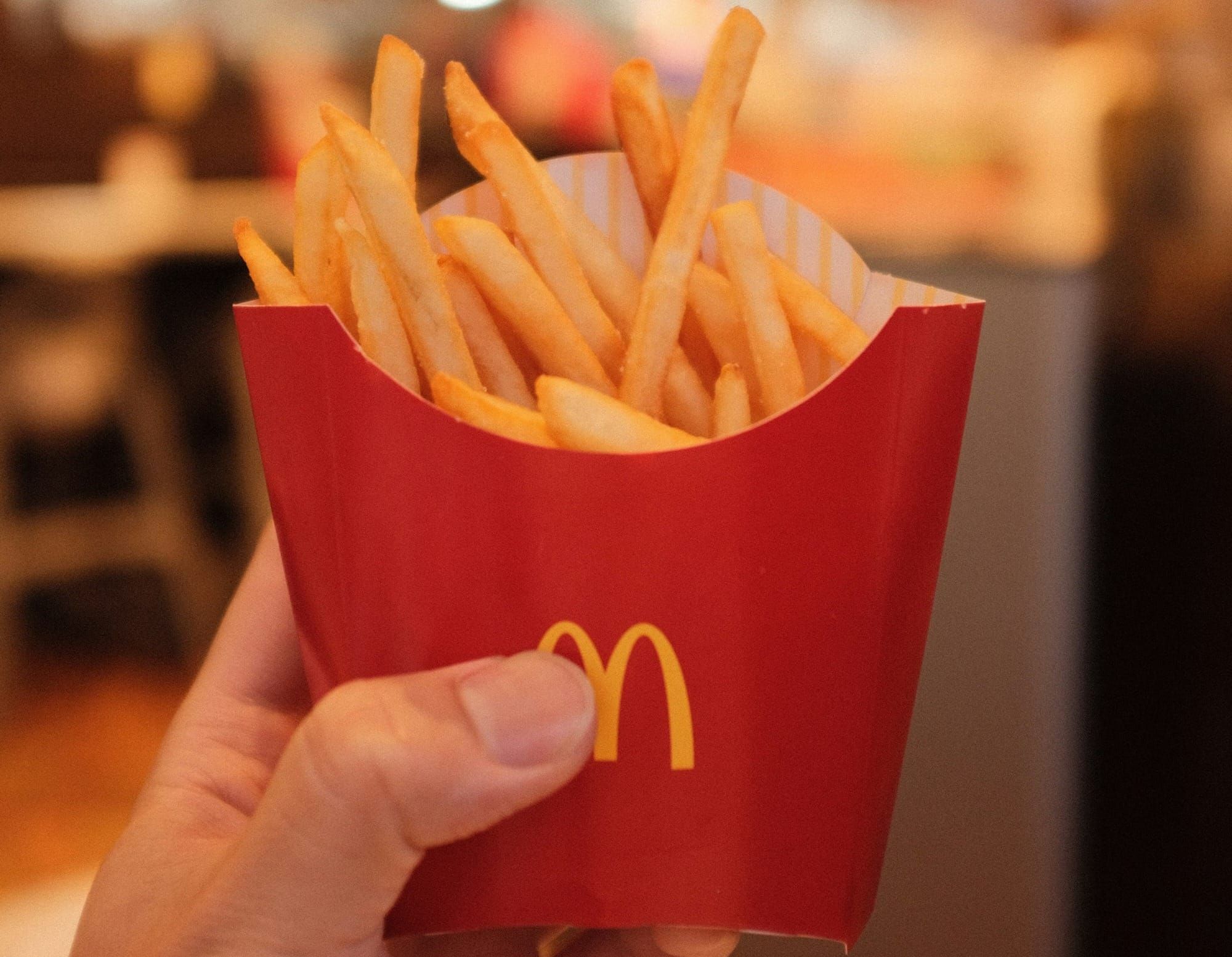
Xu and colleagues (2023, Food Science and Human Wellness 12:140–150) studied how the aroma of French fries and their frying oil changes as the oil is reused. Blumenthal's frying oil quality curve describes break-in, optimum and degrading stages, but only from sensory scores. The authors wanted to identify the compounds behind each stage.
Potatoes (cv. Helan15) were fried in high-oleic rapeseed oil at 170 °C for 5 min, one batch per hour, over 16 h in total. The team followed the oil's fatty acids, acid value, peroxide value, p-anisidine value and total polar compounds (TPC). They also measured fry moisture, oil uptake and color, and an 80-member consumer panel scored flavor. Fries and oil at three points were analyzed in depth: 3.5% TPC (start), 14.5% TPC (6 h) and 26.96% TPC (16 h). The work combined GC-olfactometry with dilution analysis, quantitation and odor activity values, and recombination and omission tests judged by 12 trained panelists.
Flavor followed three stages. Fries were bland while TPC was below 7.5%. They scored best and held steady between 7.5% and 22.18% TPC, roughly hours 2 to 12. Above 22.18% they declined. Over the 16 h, oleic acid fell from 72.8% to 60.4%, and linoleic and linolenic acids also dropped. The p-anisidine value rose sharply between hours 6 and 8.
The authors detected 26 odor-active compounds in the oil and 33 in the fries. Lipid oxidation produced the aldehydes, dienals, epoxydecenal and fatty acids. The fries also carried Maillard and Strecker products: methional, furaneol, pyrazines, phenylacetaldehyde and 2-methylbutanal. (E,E)-2,4-Decadienal, which gives the deep-fried note, peaked at 14.5% TPC, with an odor activity value of 943 in the oil and 98 in the fries. The roasted pyrazines were still high at that point.
By 27% TPC the picture had changed:
- hexanoic, heptanoic and nonanoic acids had formed, giving rancid and sweaty notes
- hexanal and nonanal had increased
- phenylacetaldehyde rose and gave a stale note
- trans-4,5-epoxy-(E)-2-decenal strengthened the metallic note
- the pyrazines and decadienal had declined
Recombination models scored 2.4 to 2.6 out of 3 for similarity to the originals. The omission tests showed that the acids and several alkenals mattered only in the degraded samples.
The study has limits. SPME quantitation is semi-quantitative, and some values for the fries look high: methional is about 54 mg/kg and phenylacetaldehyde reaches 66 mg/kg. odor thresholds for the fries were taken from oil data. Very volatile and sulfur compounds were probably missed. Only one oil and one potato cultivar were tested.
The practical conclusion is that the best fries come from oil in mid-life, when the deep-fried and roasted notes peak before acids, stale aldehydes and metallic epoxides build up. The authors recommend keeping frying oil below about 22% TPC.
A French fries flavor may find an application in some foods
A French fry flavor is most useful wherever you want a "just fried" taste without frying, or where real frying flavor gets lost in processing. The main candidates:
Better-for-you versions of fried foods. This is probably the biggest opportunity.
- Oven-baked and air-fryer frozen fries, wedges and hash browns, which lack the fried-oil note.
- Baked or popped potato chips and crisps, and vacuum-fried or reduced-fat snacks.
- Lower-fat formats in general, where the fried-oil accord (decadienals) carries much of the "real" taste.
Snacks and extruded products
- Fry-shaped extruded snacks and puffed potato or corn snacks.
- Pellet snacks (e.g., potato sticks, rings).
- Pretzels, crackers and rice crackers with a fried-potato twist.
- Popcorn seasoning.
Seasonings and condiments
- Fry seasonings and topping salts.
- Fries-and-ketchup or fries-and-mayo flavored dips.
- Burger and fast-food sauces.
- Flavored ketchup or mayo marketed as "fry sauce."
Prepared and convenience foods
- Dehydrated mashed potatoes and instant potato flakes.
- Potato soups, potato croquettes and tots.
- Frozen meals with a fries component.
- Plant-based burgers or meal kits aiming for a fast-food profile.
- Microwave foods, where browning and frying notes are hard to achieve.
Foodservice and frying oils
- Flavored frying oil or shortening for fresh oil, to skip the bland break-in stage the Xu paper describes.
- Oil blends for restaurants that change oil often.
Novelty and limited editions
- Fry-flavored chips, nuts and crackers.
- Savory-sweet items such as fries-and-shake ice cream or chocolate.
- Fast-food-themed seasonings and crossover snacks.
Pet foods
- Treats and kibble coatings, where fried and potato notes boost palatability. This requires pet-food regulatory checks.
The strongest commercial cases are usually oven or air-fryer fries, baked snacks, instant potato products and fresh frying oil. In those, the flavor restores something consumers expect but the process doesn't deliver.
A practical guide to formulating a French fries flavor is available from flavorist.com for $30.
The 12-page guide, based on data from Xu's paper and others, shows how to build a realistic French fry flavor, starting from published aroma research and ending with a bench-ready formula. You will learn which compounds make fries smell like fries, how they group into potato, roasted, fried-oil and fatty-green notes, and which ones turn the profile stale or rancid. You will also learn how to convert research data into usable dosages, adapt the flavor for oils, seasonings and emulsions, and test and fine-tune it against real fries. The last sections cover the stability, sourcing and regulatory checks to make before scaling up.
###