The Artisan vs. The Scientist: Unraveling the Nuance Between Flavorist and Flavor Chemist
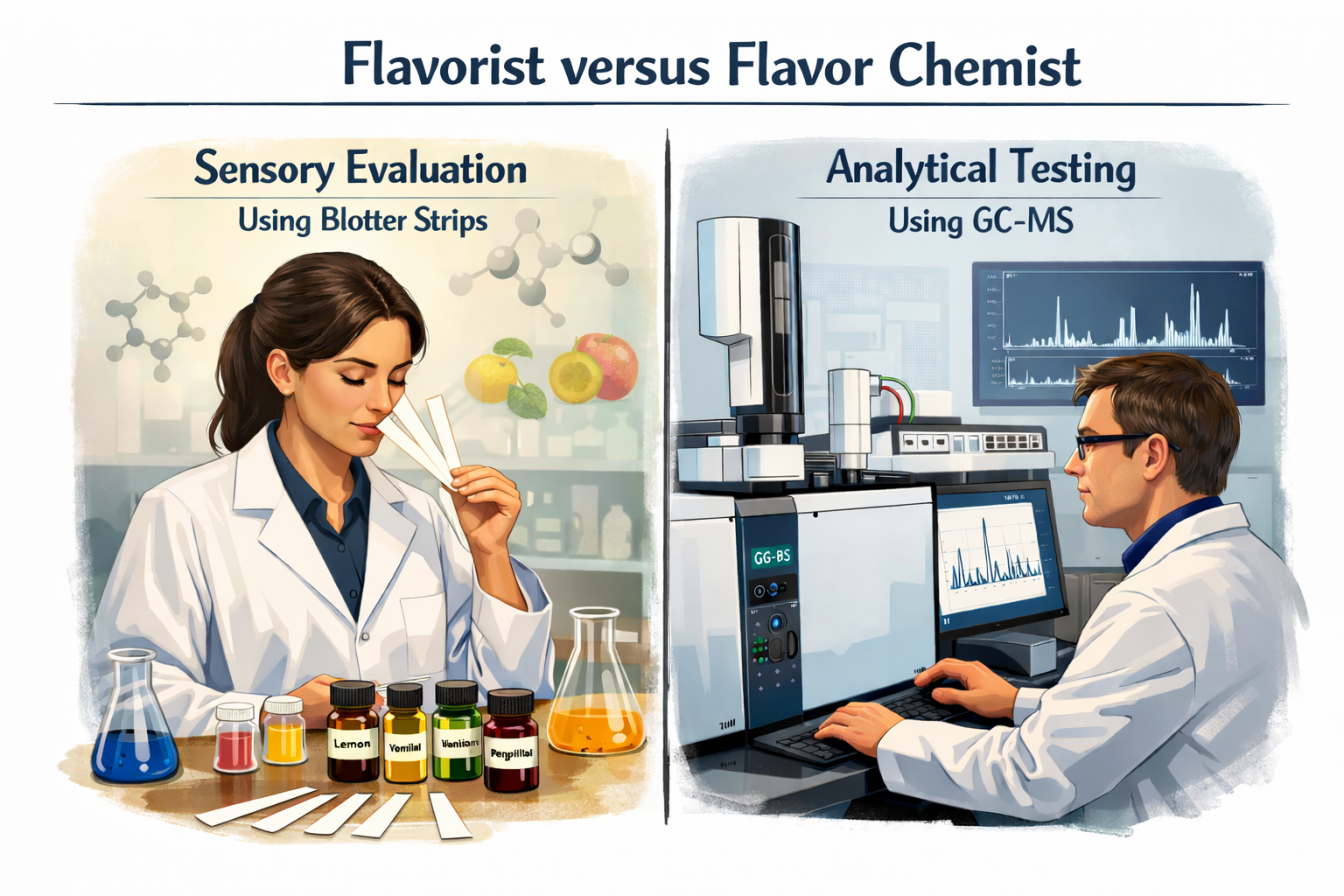
Is a flavorist the same as a flavor chemist? While the terms are often used interchangeably in industry parlance, a subtle and fascinating distinction exists—one that speaks to the blend of art and science in the world of taste and aroma.
The Flavorist: The Creative Alchemist
Think of the flavorist as a perfumer for the palate—a flavor technologist who masters the craft through seasoned experience and hands-on training. With an almost intuitive touch, they blend natural and synthetic aroma compounds to create or modify flavors, often under the pressing demands of tight deadlines. Their expertise is practical and application-driven, rooted more in the art of flavor creation than in formal academic study. They are the virtuosos who translate a concept—"summer strawberry," "wood-smoked bacon"—into a consistent, market-ready reality.
Modern flavorists may also use analytical data of a food sample or flavor sample to identify the flavor compounds present in the food or flavor. But flavorists rarely have any interest in learning the science of these flavor compounds. Again, their focus is on formulating flavors.
The Flavor Chemist: The Investigative Mind
In contrast, a flavor chemist (sometimes called a flavor scientist) delves into the why behind the what. This role leans more toward the rigorous study of flavor chemistry, science, and technology. They investigate reaction pathways, analyze volatile compounds, and explore how processing affects sensory perception. While they also create flavors, their work often includes foundational research, making them the bridge between pure science and industrial application.
Flavor chemist may be tasked to formulate flavor products just like flavorists do. But some flavor chemists actually conduct research and try to understand the chemistry of flavor compounds, but not flavor formulas. So this title can mean two types of jobs.
The Professional Landscape: Who Uses Which Term?
In practice, the choice of title often reflects the culture of the workplace:
- Flavor houses (specialized flavor manufacturers) traditionally favor the title flavorist, honoring the craft's artistic heritage. Flavorists working for flavor houses in many cases have to be certified by the Society of Flavor Chemists.
- Food companies and ingredient suppliers more frequently use flavor chemist, analytical flavor chemist, flavor scientist etc., aligning with their broader R&D and scientific frameworks. These flavor professionals are more likely uncertified.
Even geography plays a role. Data from Google Trends reveals intriguing patterns: states like Oregon, Missouri, and South Carolina show stronger searches for "flavor chemist"—regions with significant food innovation hubs but fewer dedicated flavor houses. Elsewhere, "flavorist" dominates or the terms blend in use.
The Institutional Nuance
This naming nuance is subtly acknowledged in professional circles. Notably, the Society of Flavor Chemists selects "flavor chemist" as its official designation, even though many of its members work in flavor houses where they are called flavorists day-to-day.
Furthermore, in academia, the term flavor chemist is occasionally applied to researchers like Dr. Chi-Tang Ho at Rutgers University, who explore the fundamental chemistry of flavor. Yet, such scholars are more broadly recognized as food chemists or simply chemists, as "flavor chemist" remains predominantly an industry title.
The Core Takeaway
At its heart, the difference is one of emphasis:
- Flavorists are primarily creators and modifiers, focused on delivering bespoke flavor profiles that meet specific market needs.
- Flavor Chemists may share that creative role but are also more likely to engage in fundamental research, pushing the boundaries of what we know about flavor itself.
Both roles are indispensable. They represent two sides of the same coin—where instinct meets investigation, and where the craft of flavor-making is continually refined by the science behind it. Whether one is called a flavorist or a flavor chemist, their work begins with the same delicious imperative: to captivate our senses, one molecule at a time.