The Ultimate Guide to pH Meters: Theory, Function, and Industrial Applications
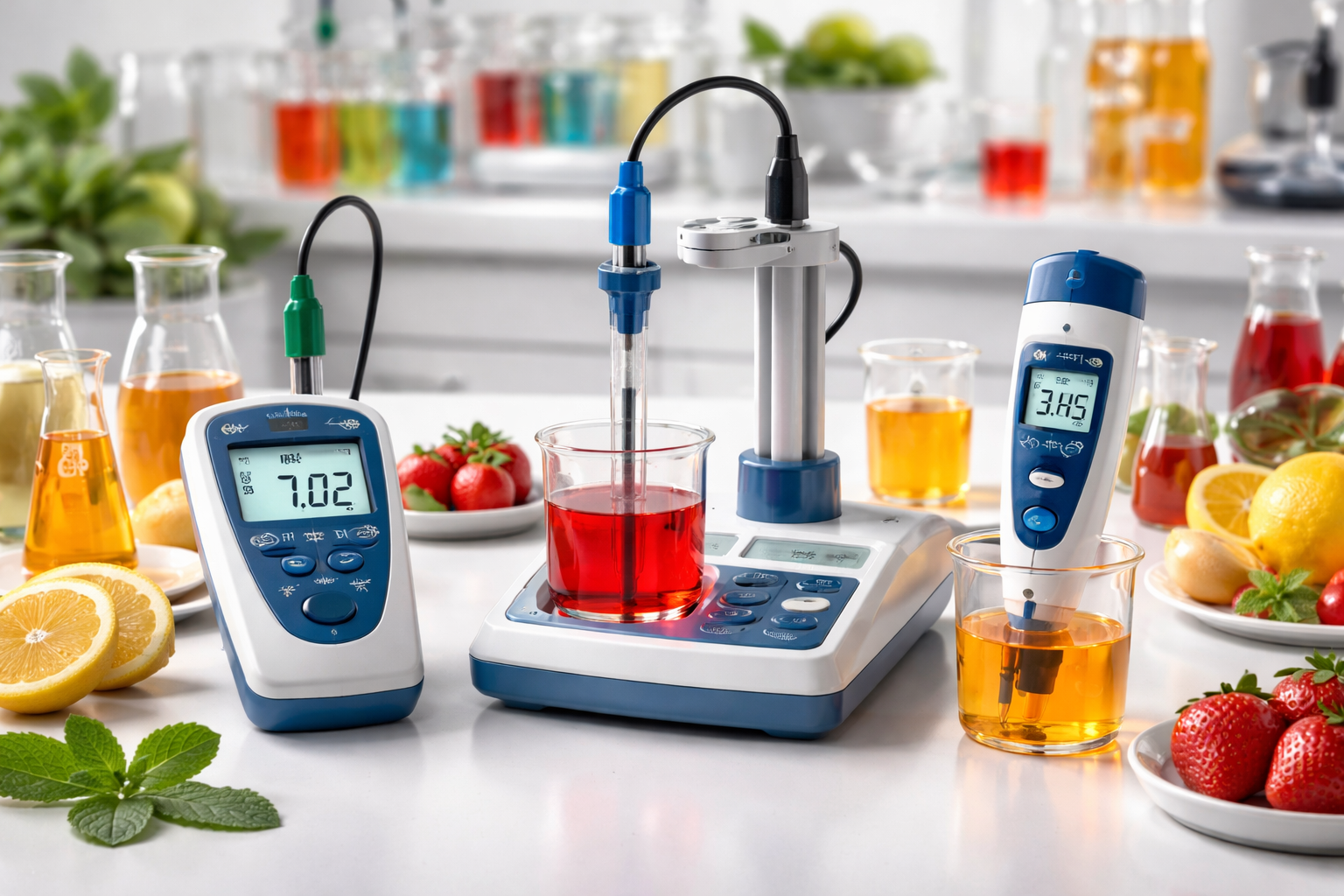
The Society of Flavor Chemists requires certified flavorists to understand and operate more than a dozen instruments used for testing food and flavor products. These instruments are listed on the syllabus for the Society's qualification exam. The pH meter is one of these required instruments.
Meta Description: Discover everything you need to know about pH meters. Learn how they work, their critical role in the flavor industry, and their advantages and limitations. A complete guide for would-be flavorists, flavorists, flavorist trainees, flavor technicians, compounders, and students.
Introduction
In the world of science and industry, few measurements are as fundamental as pH. Whether you are formulating a new beverage, treating wastewater, or conducting advanced chemical research, understanding the acidity or alkalinity of a solution is crucial. The tool that stands at the forefront of this analysis is the pH meter.
This guide provides a deep dive into the technology behind pH meters, explaining the scientific principles, operational steps, and industrial relevance, specifically within the flavor industry. We will also explore the pros and cons to give you a complete picture of this essential instrument.
Chapter 1: The Theory Behind the pH Meter
1.1 What is pH?
To understand the meter, you must first understand the subject it measures. pH stands for "potential of Hydrogen." It is a logarithmic scale used to specify the acidity or basicity (alkalinity) of an aqueous solution. The scale ranges from 0 to 14, with 7 being neutral. Values below 7 indicate acidity, while values above 7 indicate alkalinity. Mathematically, it is the negative decimal logarithm of the hydrogen ion activity in a solution:
pH=−log10[H+]
This means that a solution with a pH of 3 has ten times the concentration of hydrogen ions ([H^+]) as a solution with a pH of 4.
1.2 The Science of Potentiometric Measurement
A pH meter does not directly count hydrogen ions. Instead, it measures the voltage (electrical potential) generated between two electrodes immersed in the test liquid. This principle is known as potentiometry.
The core of the measurement relies on a specialized glass membrane. When this membrane comes into contact with a solution, an electrochemical interaction occurs. Hydrogen ions in the test solution interact with the outer surface of the glass, creating a difference in electrical charge compared to the inner surface (which is in contact with a stable internal buffer solution). This creates a tiny voltage—a potential difference—that is proportional to the pH of the sample.
1.3 Anatomy of a pH Probe: The Combination Electrode
Modern pH meters almost universally use a "combination electrode," which houses both necessary electrodes in a single, convenient probe. Let's break down its components:
- The Glass Electrode (Sensor): This is the business end. It consists of a special hydrogen-ion-sensitive glass bulb. Inside this bulb is a solution of constant pH (usually potassium chloride buffered at pH 7). A silver wire coated with silver chloride (Ag/AgCl) inside this solution carries the electrical signal generated at the glass membrane to the meter.
- The Reference Electrode: This electrode provides a stable, unchanging reference voltage against which the measuring electrode's signal is compared. It typically consists of another Ag/AgCl wire housed in a tube filled with a concentrated electrolyte solution (often KCl). This tube has a small opening, called a junction (often made of porous ceramic or fiber), which allows a slow, controlled flow of the electrolyte to the sample. This flow completes the electrical circuit without the reference solution contaminating the sample.
- The Temperature Sensor (ATC): Most quality pH meters include a third element: a temperature probe (Automatic Temperature Compensation or ATC). Because the voltage output of the glass electrode changes with temperature, the ATC probe measures the sample's temperature and sends that data to the meter so it can automatically adjust the reading to the correct value.
1.4 The Nernst Equation
The relationship between the measured voltage (E) and the pH is defined by the Nernst Equation. At 25°C, the equation simplifies to show that a change of 1 pH unit corresponds to a voltage change of 59.16 millivolts. This theoretical value is what the meter uses during calibration to translate voltage into a readable pH value.
Chapter 2: How a pH Meter Functions
Using a pH meter is a straightforward process, but it requires attention to detail for accurate results. The key steps are calibration, measurement, and maintenance.
2.1 The Critical First Step: Calibration
Calibration is non-negotiable. Electrodes are not perfect; their response changes slightly over time due to aging, coating, or temperature changes. Calibration corrects these small errors.
- How it works: The meter is placed into a buffer solution—a liquid with a precisely known and stable pH (e.g., 4.01, 7.00, or 10.01). The user tells the meter what value the buffer should be (e.g., "pH 7.00"). The meter reads the voltage from the electrode and then adjusts its internal settings so that the displayed number matches the known buffer value.
- Multi-Point Calibration: For the best accuracy, a two-point or three-point calibration is performed. This corrects for both the offset (zero error) and the slope (sensitivity) of the electrode across the pH scale. A common routine is to calibrate with pH 7.00 as the "zero" point and then with pH 4.01 (for acidic samples) or pH 10.01 (for alkaline samples).
2.2 Taking a Measurement
Once calibrated, the measurement process is simple:
- Rinse the electrode with distilled or deionized water to remove any traces of the previous solution or buffer.
- Blot the electrode tip gently with a soft, lint-free tissue. Do not wipe the glass bulb, as this can create static electricity and damage the sensitive membrane.
- Immerse the tip of the probe into the test solution. Ensure the junction (the small hole or ceramic plug) is also submerged.
- Stir gently to ensure the sample is homogeneous and to bring fresh sample to the electrode surface.
- Wait for the reading to stabilize. Most meters have a "ready" indicator. Once stable, record the value and the temperature.
2.3 The Role of Temperature Compensation
pH is temperature-dependent. For example, a buffer labeled as pH 7.00 at 25°C will only be exactly 7.00 at that temperature. Without ATC, you would need to look up the pH value of your buffer at the current temperature. With ATC, the meter does this automatically, ensuring your reading is always referenced to the standard temperature (usually 25°C).
Chapter 3: Reporting pH Results
Proper documentation ensures that a pH reading is meaningful and can be replicated by another user at another time.
- Format: Report the value to the number of decimal places justified by your meter's precision (e.g., 5.23 or 5.2).
- Always Include Temperature: Because pH changes with temperature, a value without a temperature is incomplete. Correct: "The sample had a pH of 4.55 at 23.5°C." Incorrect: "The sample had a pH of 4.55."
- Calibration Log: In professional settings, it is standard practice to record the calibration standards used and the date of calibration to ensure traceability and data integrity.
- Sample Information: Include a clear identification of the sample, the date, and the analyst's name.
Chapter 4: Relevance to the Flavor Industry
In the flavor and food science sectors, pH is not just a number—it is a direct driver of quality, safety, and sensory experience.
4.1 Controlling Taste and Sensory Perception
Acidity is one of the five basic tastes. The human palate is incredibly sensitive to sourness. A pH meter allows flavorists to precisely control the tartness of a product. Whether it's a lemon-flavored candy, a yogurt, or a carbonated soft drink, the pH level dictates whether the sour note is perceived as refreshing, sharp, or overwhelmingly acidic. It allows for the fine-tuning of the sweet-sour balance that defines many popular flavors.
4.2 Ensuring Product Stability and Safety
- Microbial Inhibition: Pathogenic bacteria like Clostridium botulinum cannot grow in high-acid environments (pH below 4.6). For this reason, pH measurement is a critical control point in the production of canned foods, sauces, and dressings. Maintaining a low pH is a primary method of food preservation.
- Chemical Stability: Many flavor compounds, particularly esters (which provide fruity notes), are prone to hydrolysis—a chemical reaction with water that breaks them down. The rate of this reaction is heavily influenced by pH. A beverage that is too acidic or too alkaline may lose its intended flavor profile over its shelf life as the flavor molecules degrade.
4.3 Quality Assurance Across the Supply Chain
- Raw Material Inspection: Upon arrival, ingredients like fruit juices, wine, vinegar, and cultured dairy are tested for pH. This verifies their quality and freshness before they enter the production line.
- In-Process Monitoring: During fermentation (e.g., for soy sauce, yogurt, or beer), pH is a key indicator of microbial activity and process progress. Monitoring it allows technicians to ensure the fermentation is on track.
- Finished Product Testing: Before a batch is released for shipping, it is tested to confirm it meets the strict pH specifications defined during product development. This guarantees that every bottle or package tastes the same and is safe for consumption.
Chapter 5: Advantages and Limitations of pH Meters
Like any scientific instrument, pH meters have distinct strengths and weaknesses.
5.1 Key Advantages
- Superior Accuracy: Compared to test strips or color-changing indicators, a pH meter provides a precise, objective numerical value, often down to 0.01 pH units.
- Speed of Analysis: A reading can be obtained in less than a minute, allowing for high-throughput testing in quality control labs.
- No Subjectivity: Results are digital and consistent. They do not rely on a user's ability to match colors, which can be influenced by lighting or color blindness.
- Versatility: With the correct electrode, pH meters can measure liquids, semi-solids (like meat or soil slurries), and even the surface of solids.
5.2 Key Limitations and Considerations
- Requires Regular Maintenance: The electrode is a consumable item. It must be kept clean and stored in a specific storage solution (never distilled water) to keep the glass membrane hydrated and the junction from clogging. Drying out can permanently ruin the probe.
- Fragility: The glass bulb at the tip of the probe is delicate and can be easily broken if the probe is dropped or banged against the side of a beaker.
- Calibration is Mandatory: You cannot simply turn it on and get an accurate reading. It must be calibrated before each use (or at least daily) with fresh buffer solutions.
- Sample Compatibility: Samples with high protein content (like milk), high fats, or heavy particulates can coat the glass bulb and clog the junction, leading to slow response or inaccurate readings. Special "spear" or "open junction" electrodes are required for such samples.
- Limited Lifespan: Even with perfect care, a pH electrode will eventually wear out, typically after 12 to 24 months, and will need to be replaced.
Conclusion
The pH meter is a masterpiece of analytical chemistry, translating invisible ion activity into actionable data. From the fundamental theory of the Nernst equation to the practical demands of the flavor industry, its role is indispensable. By understanding how to calibrate, use, and maintain this tool, professionals can ensure product quality, safety, and consistency. While it has limitations regarding fragility and maintenance, its advantages in accuracy and speed make it a cornerstone of modern science and industry.
###