Ube Flavor Surges in Search as Purple Yam Goes Global — and Supply Concerns Grow
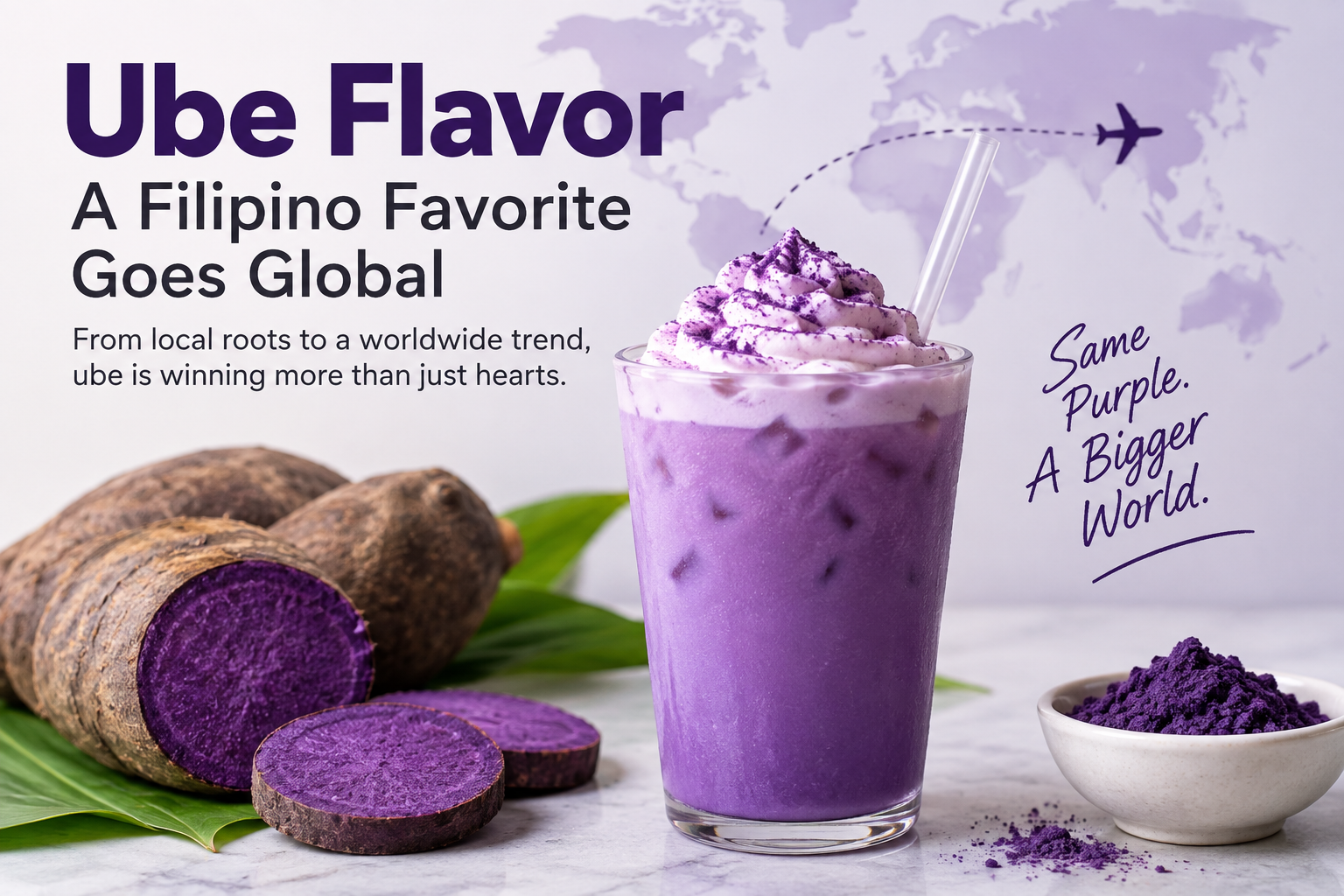
Saturday September 12, 2026 – Interest in ube flavor is surging, and several developments help explain why the vivid purple ingredient is attracting renewed attention.
Ube, pronounced “oo-beh,” is the purple yam strongly associated with Filipino cuisine and desserts. Once unfamiliar to many consumers outside Southeast Asia, it has increasingly appeared in lattes, cakes, ice cream, pastries and other colorful café creations worldwide.
Now two stories are converging: Google data shows rapidly growing consumer curiosity about ube, while the Philippines—one of the countries most closely associated with the crop—is taking steps to protect supplies of fresh purple yam as international demand rises.
That combination of viral appeal and real-world supply pressure could make ube one of the most closely watched food flavors of 2026.
Why Is Ube Flavor Trending?
Google recently highlighted ube as one of the standout emerging flavors in India’s changing beverage culture.
According to a September 9 report from the Google India Team, searches for ube increased steadily over the previous year and reached an all-time high in August 2026. Consumers are not simply searching for “ube.” Queries related to “ube latte” and “ube cafe” are increasing, while combinations such as “ube matcha” and “ube coconut” have registered breakout interest.
Google also reported that Telangana leads Indian search interest in ube.
The numbers suggest that ube is moving beyond basic ingredient awareness. People increasingly want to know where to buy it, how to drink it and which other flavors complement it.
Read the original search-trends report from Google India.
That momentum has also been picked up by Indian media. Moneycontrol reported on September 11 that ube and roasted Japanese tea hōjicha are emerging alongside matcha as consumers experiment with less familiar café flavors.
Read Moneycontrol’s report on the ube search trend.
What Does Ube Flavor Taste Like?
Ube’s visual appeal may attract the first click, but its flavor helps explain its staying power.
The purple yam has a mildly sweet, creamy and nutty profile, frequently described as having hints reminiscent of vanilla and coconut. Those characteristics make ube particularly easy to incorporate into milk-based drinks and desserts.
Unlike a strongly bitter or acidic ingredient, ube can be paired with flavors consumers already know. Vanilla, coconut, coffee and matcha can all work alongside its gentle sweetness.
Its naturally distinctive purple appearance provides another advantage in the social-media era. An iced ube latte can produce dramatic layers of violet, white and espresso brown, making it instantly recognizable in short-form videos and food photography.
Earlier in 2026, major café operators helped bring the flavor to mainstream consumers. Starbucks, for example, introduced an Ube Vanilla range in several markets and described the ingredient as a purple yam with deep Filipino heritage.
More information is available from Starbucks Stories.
Philippines Restricts Fresh Ube Exports as Demand Soars
The newest development adds an important supply-side dimension to the ube story.
BusinessMirror reported on September 11 that the Philippines had temporarily suspended exports of fresh purple yam and its propagative planting materials. The Bureau of Plant Industry directive was issued in August and remains in effect until further notice.
The goal is to protect planting material at a time when domestic supply is already constrained and international demand is growing.
The restriction is significant, but it should not be misinterpreted as a worldwide ban on ube products. It specifically concerns fresh ube and planting materials, including material that could potentially be used to establish production in other countries.
Processed products and the broad universe of ube-flavored foods are therefore not automatically covered by the suspension.
Read the detailed report from BusinessMirror.
The Philippine government is simultaneously trying to expand production. BusinessMirror reported that the Department of Agriculture has allocated ₱300 million for the ube industry in 2027, with measures including tissue culture, community nurseries and other techniques designed to increase supplies of planting material.
Global Demand Is Testing the Ube Supply Chain
The supply challenge did not appear overnight.
In June, the Philippine Department of Agriculture said demand was booming while supply systems and industry coordination were struggling to keep pace. Government officials have been working with farmers, processors, exporters and other stakeholders to create a more structured ube industry.
Read the Philippine Department of Agriculture’s industry update.
The government has also distributed tens of thousands of purple-yam planting materials to Filipino farmers in an effort to increase production.
The situation illustrates the unusual position ube now occupies. What has long been an important Filipino ingredient is simultaneously becoming a global commercial flavor, creating opportunities for farmers and food companies but also raising questions about supply, agricultural capacity and cultural attribution.
Is Ube the Next Matcha?
Calling ube the “next matcha” makes for an appealing headline, but the comparison only goes so far.
Both ingredients are colorful, visually distinctive and adaptable to premium café drinks. Both have also benefited enormously from social-media-friendly beverages.
But ube is generally sweeter and more dessert-oriented than matcha. It also has its own long-standing culinary identity in the Philippines rather than being a newly invented purple drink trend.
That distinction matters as international brands capitalize on its popularity. For Filipino consumers and cooks, ube predates the current café craze by generations.
What Happens Next for the Ube Flavor Trend?
The latest search data suggests the ube boom still has room to grow.
Consumers are progressing from basic “what is ube?” curiosity toward commercial-intent and experimentation searches such as ube latte, ube cafe, ube matcha and ube coconut. At the same time, increasing global demand is creating enough pressure on the agricultural supply chain for the Philippines to protect fresh planting material and invest heavily in production.
That makes ube more than another Instagram-ready drink color.
The ube flavor trend is becoming a global food-market story, connecting café culture, Filipino culinary heritage, agriculture, international trade and viral consumer behavior.
And with searches climbing while supplies of authentic purple yam become strategically important, the purple wave may only be beginning.
###