Unlocking the Secrets of Taste: A Comprehensive Book Review of "Successful Flavors" Edited by Gerard Mosciano
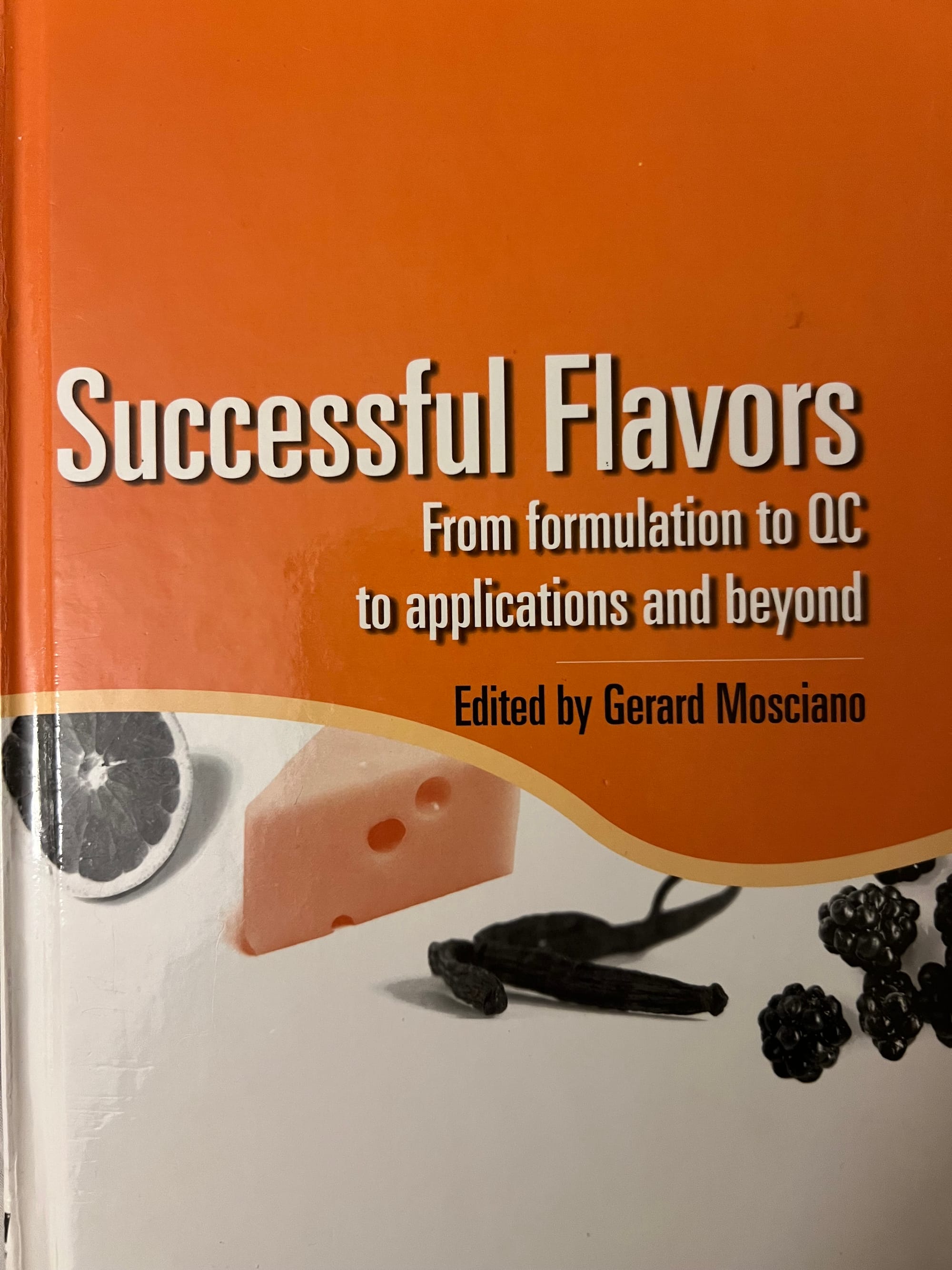
Editor's note: Highly recommended.
In the specialized world of food science, few resources achieve the legendary status of a "cult classic." For years, Gerard Mosciano's Successful Flavors: From Formulation to QC to Applications and Beyond was exactly that—a highly sought-after, out-of-print volume that commanded high prices on the secondary market and occupied a prized place on the bookshelves of seasoned flavorists. Published in 2006 by Allured Business Media, this book represents a unique moment in flavor literature: a masterclass taught not by one, but by a consortium of the most respected palates in the industry .
In late 2025, the industry trade magazine Perfumer & Flavorist "unlocked the vault" and made this text freely available for download, sparking renewed interest in this cornerstone of flavor education
. But does a nearly 20-year-old book hold up in our modern era of analytical chemistry and changing consumer palates? This review dives deep into the contents, legacy, and enduring value of Successful Flavors.
What is "Successful Flavors"?
At its core, Successful Flavors is a comprehensive, 240-page guide that bridges the gap between theoretical chemistry and the practical, artistic craft of flavor creation
. The book's subtitle, From Formulation to QC to Applications and Beyond, perfectly encapsulates its scope. It is not merely a recipe book; it is a philosophical and practical guide on how to think about flavor.
Edited by the legendary Gerard Mosciano—a flavorist with a career spanning decades at IFF, Bush Boake Allen, and beyond—the book compiles insights from industry titans like Judith Michalski, Carl Holmgren, and Michael Fasano
. This roster of contributors transforms the book into a symposium of expertise, where each chapter is written by a specialist who has spent their life mastering a specific domain.
Detailed Content Breakdown
The structure of Successful Flavors is logical, moving from foundational skills to specific product categories. It is designed to cater to "both novices and seasoned professionals," making it a versatile resource.
- The Art and Science of Sensory Analysis: The book opens with a focus on the flavorist's most important tool: the human nose and brain. Mosciano himself contributes a chapter on "The Role of Organoleptic Descriptive Analysis," emphasizing that before one can create, one must be able to describe and deconstruct
- . This section grounds the reader in the discipline of sensory evaluation.
- Quality Control and Application: Moving beyond the creative bench, the book dedicates significant space to the often-overlooked realities of the industry. Chapters on "Quality in the Flavor Industry" and "Flavor Applications" discuss how a flavor behaves in a finished product—whether it's a beverage, a baked good, or a confection—and how to maintain consistency from the lab to the manufacturing plant.
- Deep Dives into Flavor Categories: The heart of the book lies in its specific, technical chapters. These are not overviews; they are ruminations from experts on their life's work.Dairy Flavors: A chapter titled "Ruminations on Some Dairy Flavors" explores the unique complexity of milk, cream, and cheese, noting how these flavors rely on the ratios of similar components to create vastly different profiles.
- Savory and Meat: For those in the savory sector, "Practical Meat Flavor Creation" is a standout. At nearly 50 pages, it is one of the most extensive sections, detailing the Maillard reactions and precursor interactions necessary to build convincing beef, chicken, and pork flavors.
- Classic Profiles: The book also pays homage to foundational ingredients with chapters on "Vanilla: Fruit of the Orchid" and "Mint Flavors Technology," blending botany with chemistry.
Why This Book Remains Relevant
In an age of rapid technological advancement, one might wonder if a 2006 text is outdated. For Successful Flavors, the answer is a resounding no. Here is why it remains a vital resource:
- Fundamental Principles Over Trends: While specific regulations or raw material prices may fluctuate, the core principles of flavor creation are timeless. The way a flavorist balances a mint profile or constructs a meaty note using amino acids and sugars does not change. The book teaches the "why" behind the flavor, which is knowledge that never expires.
- Mentorship in Print: The greatest value of Successful Flavors is the voice of experience. This is tacit knowledge—the kind usually passed down from mentor to apprentice—codified into text. Reading Judith Michalski on dairy or Carl Holmgren on mint is akin to having a senior flavorist guiding your hand. This mentorship aspect is impossible to replicate with AI or modern database searches.
- A Holistic View: The book's structure forces readers to understand the entire lifecycle of a flavor, from the initial sensory idea ("Organoleptic Analysis") to the final quality check ("QC"). It breaks down silos, reminding chemists about applications and applications specialists about the chemistry.
Pros and Cons
Pros
- Unparalleled Expertise: The list of contributors reads like a "who's who" of the flavor industry, offering credibility that single-author texts often lack.
- Practical Application: It focuses on real-world creation and problem-solving rather than abstract theory.
- Broad Spectrum: Whether your interest is in savory, sweet, or natural flavors, there is a chapter written specifically for you.
- Accessibility: The recent free release by Perfumer & Flavorist makes this formerly rare and expensive text available to anyone willing to download it.
Cons
- Age (Pre-2006 Data): While the principles are sound, specific analytical data or references to certain ingredients may be dated. Readers should supplement this book with current research on regulatory statuses and new generation taste modulators.
- Not a Recipe Book: Aspiring flavorists looking for "copy-paste" formulas for popular sodas or candies will be disappointed. The book provides frameworks and insights, not mass-market production recipes.
- Dense Material: This is a technical textbook written by and for scientists. It requires focus and a basic understanding of food science to fully appreciate.
Technical Specifications
For cataloging and reference purposes, here are the key details of the original publication:
- Title: Successful Flavors: From Formulation to QC to Applications and Beyond
- Editor: Gerard Mosciano
- Publisher: Allured Publishing Corporation
- Publication Date: 2006
- ISBN: 1932633197
Physical Description: 240 pages, hardcover
- Dewey Decimal Classification: 664.07
Conclusion: Is It Worth Your Time?
Absolutely. The decision by Perfumer & Flavorist to release Successful Flavors for free is an incredible gift to the food science community. For students, it offers a direct line to the wisdom of masters who helped shape the modern flavor industry. For experienced professionals, it serves as a valuable reference and a chance to revisit foundational concepts that might have become second nature.
While you may need to look elsewhere for the latest information on natural extraction techniques or regulatory compliance, you will be hard-pressed to find a better education on the craft of flavor creation. Successful Flavors is more than a book; it is a time capsule of expertise, a masterclass in print, and a testament to the art that lies at the heart of the food we love. If you work in flavors, or aspire to, securing a copy of this text is not just recommended—it is essential for a well-rounded education.
Where to Find It
As of late 2025, the book is available as a free PDF download from Perfumer & Flavorist magazine. It is also listed in the catalogs of various university and technical libraries worldwide.
References:
- Primary Source - The Book Itself: Successful Flavors: From Formulation to QC to Applications and Beyond, edited by Gerard Mosciano, published by Allured Publishing Corporation in 2006.
- Dewey Decimal Classification: 664.07.
- Physical Description: 240 pages, hardcover.
- ISBN: 1932633197.
- Target Audience: The book is aimed at "both novices and seasoned professionals".
- Editor's Background: Information about Gerard Mosciano's career, including his start at IFF in 1963 and his time at Bush Boake Allen.
- Contributing Authors: The list of contributing authors, including Judith Michalski, Carl Holmgren, and Michael Fasano.
- Chapter 1 - Organoleptic Analysis: Reference to the chapter on "The Role of Organoleptic Descriptive Analysis in the Training of Creative Flavorists".
- Chapter on Quality Control: Reference to the chapter "Quality in the Flavor Industry".
- Chapter on Flavor Applications: Reference to the chapter "Flavor Applications".
- Chapter on Dairy Flavors: Reference to the chapter "Ruminations on Some Dairy Flavors," including the specific insight about dairy flavors relying on ratios of similar components.
- Chapter on Meat Flavors: Reference to the chapter "Practical Meat Flavor Creation," including its page length (pp. 119-166).
- Chapter on Vanilla: Reference to the chapter "Vanilla: Fruit of the Orchid".
- Chapter on Mint: Reference to the chapter "Mint Flavors Technology".
- Chapter on Confections: Reference to the chapter "Flavoring Confections".
- Chapter on Natural Flavors: Reference to the chapter "The Use of Natural Ingredients in Creating Natural Flavors".
- News of Free Release: The September 2025 article from Perfumer & Flavorist announcing the free download of the book.
###