Fermentation-Specific Flavor Compounds in Fermented Foods
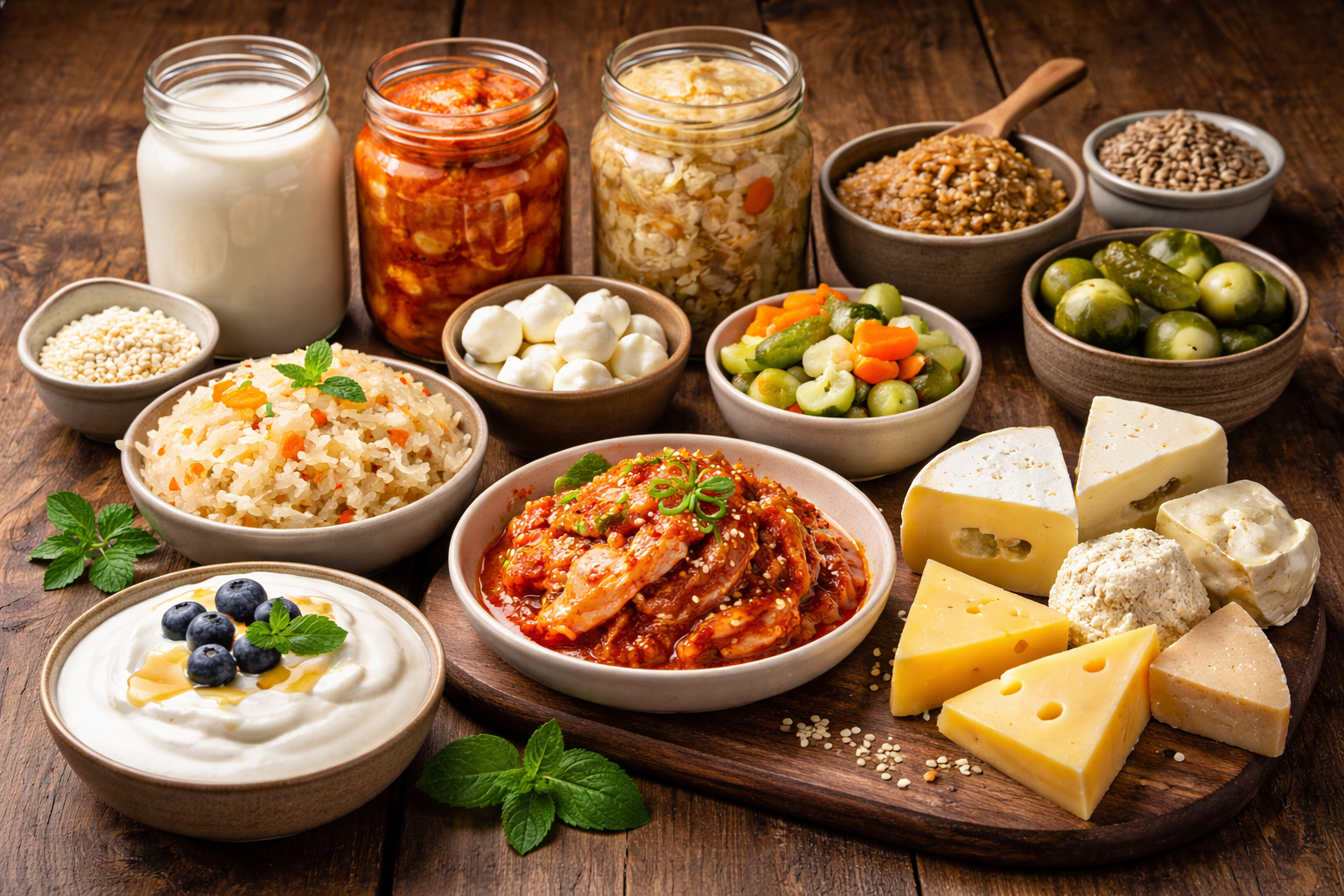
Fermentation-Specific Flavor Compounds in Fermented Foods
Fermentation generates unique flavor compounds through microbial metabolism (bacteria, yeast, molds), enzymatic activity (endogenous or microbial), and biochemical transformations over extended time periods. Fermentation-specific compounds include microbial metabolites (acids, alcohols, esters, carbonyls), enzymatic breakdown products, and unique secondary metabolites from microbial metabolism of food substrates. Unlike thermal processes, fermentation flavors arise from living biological systems transforming substrates at ambient or controlled temperatures.
Key Chemical Pathways in Fermentation vs. Other Food Processes:
- Microbial metabolism: Conversion of sugars → acids/alcohols/CO₂ (primary fermentation)
- Proteolysis & lipolysis: Enzymatic breakdown of proteins/fats by microbial enzymes
- Secondary metabolism: Production of flavor-active compounds at stationary/late growth phases
- Microbial community interactions: Synergistic/antagonistic effects in mixed cultures
- Extended maturation: Slow chemical reactions during aging
- Anaerobic/aerobic conditions: Dramatically different metabolic pathways
- Low-temperature biochemistry: Reactions at 15-40°C vs. 100°C+ in cooking
1. FERMENTED DAIRY (Yogurt, Cheese, Kefir, Sour Cream)
Fermentation-specific compounds:
- Lactic acid – sour, tangy (from Lactobacillus, Streptococcus)
- Diacetyl (2,3-butanedione) – buttery (from Lactococcus lactis ssp. diacetylactis)
- Acetoin – buttery, creamy (diacetyl precursor/reduction product)
- Acetaldehyde – green, yogurt-like (key in yogurt aroma)
- Short-chain fatty acids – butyric (cheesy), caproic (goaty), caprylic
- Ethanol & esters – fruity (especially in kefir from yeasts)
- Ketones: Acetone (fruity), 2-butanone (ethereal)
- Sulfur compounds: Hydrogen sulfide, methanethiol, dimethyl sulfide (Cheddar, surface-ripened cheeses)
- Methyl ketones: 2-Heptanone, 2-nonanone (blue cheeses from Penicillium)
- γ- and δ-lactones: δ-Decalactone (peachy), from hydroxy fatty acids
- Amino acid catabolites: 3-Methylbutanal (malty from leucine), methional (potato-like from methionine)
Key References:
- McSweeney, P. L. H., & Sousa, M. J. (2000). Biochemical pathways for the production of flavour compounds in cheeses during ripening: A review. Lait, 80(3), 293-324.
→ Seminal review on cheese flavor biochemistry. - Ott, A., Hugi, A., Baumgartner, M., & Chaintreau, A. (1997). Sensory investigation of yogurt flavor perception: mutual influence of volatiles and acidity. Journal of Agricultural and Food Chemistry, 45(3), 850-858.
→ Key study on yogurt flavor, highlighting acetaldehyde role. - Urbach, G. (1997). The flavour of milk and dairy products: II. Cheese: contribution of volatile compounds. International Journal of Dairy Technology, 50(3), 79-89.
→ Comprehensive analysis of cheese volatiles.
2. FERMENTED VEGETABLES (Sauerkraut, Kimchi, Pickles, Olives)
Fermentation-specific compounds:
- Lactic acid – primary sour agent
- Acetic acid – vinegar note (from heterofermentative LAB or Acetobacter)
- Ethanol & CO₂ – from heterolactic fermentation
- Manitol – sweet alcohol in kimchi (from fructose reduction by Leuconostoc)
- γ-Aminobutyric acid (GABA) – umami-like (from glutamate decarboxylation)
- Sulfur compounds: Dimethyl sulfide, methanethiol (from cabbage family)
- Esters: Ethyl acetate, hexyl acetate (fruity notes)
- Aldehydes: Hexanal, E-2-hexenal (green notes modified during fermentation)
- Isothiocyanates & nitriles – pungent, mustard-like (from glucosinolates in cruciferous vegetables, different profile than raw)
- Phenolic compounds: Changes in chlorogenic, caffeic acids
Key References:
- Pederson, C. S., & Albury, M. N. (1969). The Sauerkraut Fermentation. New York State Agricultural Experiment Station Bulletin 824.
→ Classic text on sauerkraut biochemistry. - Cheigh, H. S., Park, K. Y., & Lee, C. Y. (1994). Biochemical, microbiological, and nutritional aspects of kimchi (Korean fermented vegetable products). Critical Reviews in Food Science and Nutrition, 34(2), 175-203.
→ Comprehensive kimchi review. - Fleming, H. P., McFeeters, R. F., & Daeschel, M. A. (1992). Fermented and acidified vegetables. In Compendium of Methods for the Microbiological Examination of Foods (pp. 929-952). APHA.
→ Standard reference on vegetable fermentation.
3. FERMENTED MEATS (Salami, Pepperoni, Chorizo, Prosciutto)
Fermentation-specific compounds:
- Lactic acid – tanginess, pH drop
- Acetic acid – sharpness
- Branched-chain aldehydes: 3-Methylbutanal (malty), 2-methylpropanal (fermented) – from amino acid catabolism
- Ethyl esters: Ethyl butanoate, ethyl hexanoate (fruity from esterification)
- Diacetyl & acetoin – buttery
- Methyl ketones: 2-Heptanone, 2-nonanone (blue cheese, musty)
- Sulfur compounds: Dimethyl sulfide, methanethiol (from methionine catabolism)
- Phenolic compounds: 4-Ethylguaiacol (spicy), 4-ethylphenol (horse stable) – from microbial metabolism of ferulic/p-coumaric acids
- Ammonia – from amino acid deamination
- Lipid oxidation products: Different profile due to microbial enzymes vs. thermal oxidation
Key References:
- Berdagué, J. L., Monteil, P., Montel, M. C., & Talon, R. (1993). Effects of starter cultures on the formation of flavour compounds in dry sausage. Meat Science, 35(3), 275-287.
→ Key study linking starter cultures to specific flavor compounds. - Stahnke, L. H. (1995). Dried sausages fermented with Staphylococcus xylosus at different temperatures and with different ingredient levels – Part III. Sensory evaluation. Meat Science, 41(2), 211-223.
→ Temperature effects on fermented meat flavor development. - Toldrá, F. (2002). Dry-cured meat products. Food & Nutrition Press.
→ Definitive text on dry-cured/fermented meats.
4. ALCOHOLIC FERMENTATIONS (Beer, Wine, Sake, Cider)
Fermentation-specific compounds:
- Ethanol – solvent, carrier for other flavors
- Higher alcohols (fusel oils): Isoamyl alcohol (banana), isobutanol (whiskey), phenylethanol (rose)
- Esters: Ethyl acetate (fruity, solvent), isoamyl acetate (banana), ethyl hexanoate (apple), phenethyl acetate (honey, rose)
- Carbonyls: Acetaldehyde (green apple, sherry), diacetyl (buttery), acetoin
- Organic acids: Acetic, lactic, succinic, malic (tartness)
- Sulfur compounds: Hydrogen sulfide (rotten egg), dimethyl sulfide (canned corn), thiols (passionfruit, grapefruit in certain wines)
- Phenolic compounds: 4-Vinylguaiacol (clove, smoke), 4-vinylphenol (medicinal)
- Terpenes & norisoprenoids: Linalool (floral), geraniol (rose), β-damascenone (cooked apple)
Key References:
- Nykanen, L., & Suomalainen, H. (1983). Aroma of Beer, Wine and Distilled Alcoholic Beverages. D. Reidel Publishing.
→ Comprehensive review of alcoholic beverage aromas. - Swiegers, J. H., Bartowsky, E. J., Henschke, P. A., & Pretorius, I. S. (2005). Yeast and bacterial modulation of wine aroma and flavour. Australian Journal of Grape and Wine Research, 11(2), 139-173.
→ Detailed review of microbial contributions to wine flavor. - Meilgaard, M. C. (1975). Flavor chemistry of beer: Part I: Flavor interaction between principal volatiles. MBAA Technical Quarterly, 12(2), 107-112.
→ Classic beer flavor chemistry.
5. FERMENTED SOY PRODUCTS (Soy Sauce, Miso, Tempeh, Natto)
Fermentation-specific compounds:
- 4-Hydroxy-2(or 5)-ethyl-5(or 2)-methyl-3(2H)-furanone (HEMF) – sweet, caramel, soy sauce character impact compound
- 4-Hydroxy-5-methyl-3(2H)-furanone (norfuraneol) – sweet, caramel
- 4-Hydroxy-2,5-dimethyl-3(2H)-furanone (HDMF, furaneol) – caramel, strawberry
- Maltol & ethyl maltol – sweet, caramel
- Esters: Ethyl acetate, ethyl lactate, phenethyl acetate
- Phenolic compounds: 4-Ethylguaiacol (spicy), 4-ethylphenol (horse) – from Brettanomyces/yeast metabolism
- Pyrazines: Tetramethylpyrazine – nutty, roasted (from Bacillus in tempeh, natto)
- Ammonia & amines – pungent, characteristic of natto
- γ-Polyglutamic acid – slimy texture in natto
Key References:
- Sasaki, M., Nunomura, N., & Matsudo, T. (1991). Biosynthesis of 4-hydroxy-2(or 5)-ethyl-5(or 2)-methyl-3(2H)-furanone by yeasts. Journal of Agricultural and Food Chemistry, 39(5), 934-938.
→ Identifies HEMF as key soy sauce compound. - Steinkraus, K. H. (1996). Handbook of Indigenous Fermented Foods (2nd ed.). Marcel Dekker.
→ Comprehensive reference on fermented foods worldwide. - Nunomura, N., Sasaki, M., & Yokotsuka, T. (1976). Shoyu (soy sauce) flavor components: neutral fraction. Agricultural and Biological Chemistry, 40(3), 485-490.
→ Early identification of soy sauce volatiles.
6. BREAD & DOUGH FERMENTATIONS (Sourdough, Yeast Breads)
Fermentation-specific compounds:
- Organic acids: Lactic, acetic (sourness, especially in sourdough)
- Esters: Ethyl acetate, isoamyl acetate (fruity notes)
- Alcohols: Ethanol, isoamyl alcohol, phenylethanol
- Carbonyls: Acetaldehyde (green), diacetyl (buttery)
- 2-Acetyl-1-pyrroline – roasty, popcorn (formed during baking but precursors from fermentation)
- Maltol & isomaltol – sweet, caramel (from baking but influenced by fermentation)
- Pyrazines – from baking but affected by fermentation pH/time
Key References:
- Hansen, A., & Schieberle, P. (2005). Generation of aroma compounds during sourdough fermentation: applied and fundamental aspects. Trends in Food Science & Technology, 16(1-3), 85-94.
→ Reviews sourdough flavor chemistry. - Schieberle, P. (1996). Intense aroma compounds—useful tools to monitor the influence of processing and storage on bread aroma. Advances in Food Science, 18(5-6), 237-244.
→ Key compounds in bread flavor.
7. FERMENTED TEA (Pu-erh, Kombucha)
Fermentation-specific compounds:
- Theabrownins – dark color, earthy taste (polymerized polyphenols)
- Microbial metabolites: Statins (lovastatin in pu-erh), various organic acids
- Modified polyphenols: Epigallocatechin gallate (EGCG) converted to other forms
- Kombucha-specific: Acetic acid, glucuronic acid, ethanol, glycerol
- Earthy/musty compounds: Geosmin (earth), 2-methylisoborneol (musty) – from microbial metabolism
- Esters & alcohols: Similar to other fermentations but with tea polyphenol substrates
Key References:
- Zhou, Z., Zhang, Y., Xu, M., & Yang, C. (2005). Puerh tea fermentation: metabolic pathways and flavor formation. Journal of Food Science, 70(4), R100-R106.
→ Review of pu-erh fermentation chemistry. - Jayabalan, R., Malbaša, R. V., Lončar, E. S., Vitas, J. S., & Sathishkumar, M. (2014). A review on kombucha tea—microbiology, composition, fermentation, beneficial effects, toxicity, and tea fungus. Comprehensive Reviews in Food Science and Food Safety, 13(4), 538-550.
→ Comprehensive kombucha review.
8. FERMENTED FISH (Fish Sauce, Garum, Surströmming)
Fermentation-specific compounds:
- Ammonia & volatile amines – pungent, from intense proteolysis
- Branched-chain fatty acids: Isovaleric acid, 2-methylbutyric acid – cheesy, sweaty
- Sulfur compounds: Dimethyl sulfide, methanethiol, dimethyl trisulfide
- Pyrazines & pyrroles – earthy, roasted notes from amino acid reactions
- Esters – fruity notes from alcohol-acid condensation
- Biogenic amines: Histamine, cadaverine, putrescine – safety concerns
Key References:
- Fukami, K., Ishiyama, S., Yaguramaki, H., Masuzawa, T., Nabeta, Y., & Shimoda, M. (2004). Identification of distinctive volatile compounds in fish sauce. Journal of Agricultural and Food Chemistry, 52(4), 785-790.
→ Modern GC-MS analysis of fish sauce. - Sanceda, N. G., Kurata, T., & Arakawa, N. (1983). Formation of volatile acids and volatile bases during the fermentation of fish sauce. Journal of the Japanese Society for Food Science and Technology, 30(11), 624-632.
→ Early work on fish sauce chemistry.
FERMENTATION-SPECIFIC CHEMICAL SIGNATURES:
- Microbial metabolite patterns: Specific to microbial species/strains
- Acid profiles: Ratios of lactic/acetic/succinic/etc. acids
- Ester/alcohol ratios: Indicate fermentation conditions and microbial ecology
- Amino acid catabolites: Branched-chain aldehydes, amines
- Time-dependent compounds: Appear only after extended fermentation
KEY BIOCHEMICAL PATHWAYS IN FERMENTATION:
Glycolysis/Pyruvate metabolism:
- Homofermentative: Glucose → 2 lactate
- Heterofermentative: Glucose → lactate + ethanol + CO₂
- Diacetyl pathway: Pyruvate → α-acetolactate → diacetyl → acetoin → 2,3-butanediol
Amino acid catabolism:
- Transamination → α-keto acids → aldehydes → alcohols/acids
- Ehrlich pathway: Amino acids → fusel alcohols
Esterification:
- Alcohol + acyl-CoA → ester + CoA
- Microbial esterases also important
Lipolysis & fatty acid metabolism:
- Triglycerides → free fatty acids → β-oxidation → methyl ketones
- Hydroxy fatty acids → lactones
COMPARISON WITH OTHER PROCESSES:
| Compound/Characteristic | Fermentation | Cooking | Curing | Smoking |
|---|---|---|---|---|
| Lactic acid | Very High | None | Medium | Low |
| Diacetyl | High | Low | Medium | None |
| Ethyl esters | High | None | Medium | None |
| Branched-chain aldehydes | High | Medium | High | Low |
| Phenolic compounds | Variable* | Low | Low | Very High |
| Pyrazines | Low** | High | Low | Medium |
| *From microbial metabolism | ||||
| **Except in tempeh, etc. |
MICROBIAL CONTRIBUTIONS TO FLAVOR:
| Microorganism | Key Flavor Compounds | Typical Foods |
|---|---|---|
| Lactobacillus | Lactic acid, diacetyl, acetaldehyde | Yogurt, cheese, sauerkraut |
| Streptococcus | Lactic acid, acetaldehyde | Yogurt, cheese |
| Leuconostoc | Diacetyl, acetoin, mannitol, CO₂ | Dairy, vegetables |
| Propionibacterium | Propionic acid, acetic acid, CO₂ | Swiss cheese |
| Penicillium | Methyl ketones, ammonia, free fatty acids | Blue cheese, salami |
| Saccharomyces | Ethanol, esters, higher alcohols, CO₂ | Bread, beer, wine |
| Acetobacter | Acetic acid | Vinegar, kombucha |
| Bacillus | Pyrazines, ammonia | Natto, tempeh |
PRACTICAL FLAVOR CREATION FOR FERMENTED NOTES:
Key target compounds by category:
- Dairy: Diacetyl, acetaldehyde, short-chain fatty acids
- Vegetables: Lactic acid, acetic acid, dimethyl sulfide
- Meats: 3-Methylbutanal, ethyl esters, diacetyl
- Soy: HEMF, tetramethylpyrazine
- Alcoholic: Esters (isoamyl acetate, ethyl hexanoate), higher alcohols
- Bread: Acetic acid, lactic acid, ethanol
References for flavor creation:
- Berger, R. G. (2007). Flavours and Fragrances: Chemistry, Bioprocessing and Sustainability. Springer.
→ Includes biotechnological production of flavor compounds. - Lambrechts, M. G., & Pretorius, I. S. (2000). Yeast and its importance to wine aroma - a review. South African Journal of Enology and Viticulture, 21, 97-129.
→ Yeast metabolism for flavor production.
CRITICAL FACTORS IN FERMENTATION FLAVOR DEVELOPMENT:
- Starter culture selection: Specific strains produce specific flavor compounds
- Fermentation temperature: Affects microbial growth rates and metabolic pathways
- Time: Flavor compound ratios change over time
- pH: Affects enzyme activity and microbial metabolism
- Oxygen availability: Aerobic vs. anaerobic conditions dramatically change metabolism
- Substrate composition: Amino acids, sugars, fats available for metabolism
- Salt concentration: Affects microbial selection and enzyme activity
- Co-cultures: Microbial interactions create unique flavor profiles
MODERN FERMENTATION FLAVOR TECHNOLOGY:
- Starter culture design: Genetically optimized strains for specific flavor production
- Controlled fermentation: Precision control of parameters for consistent flavor
- Enzyme addition: Supplementation to enhance specific flavor pathways
- Mixed fermentations: Controlled co-cultures for complexity
- Post-fermentation maturation: Controlled aging for flavor development
- Flavor extraction: From fermentations for use as natural flavors
SAFETY CONSIDERATIONS IN FERMENTATION:
- Biogenic amines: Histamine, tyramine, etc. – controlled by proper fermentation
- Mycotoxins: From mold growth – controlled by starter cultures and conditions
- Pathogen growth: Controlled by pH, salt, competitive microbiota
- Ethanol content: In non-alcoholic products
- Allergens: From microbial proteins
ANALYTICAL CHALLENGES IN FERMENTATION FLAVOR:
- Complex mixtures: Hundreds of compounds at varying concentrations
- Dynamic changes: Flavors evolve over time
- Microbial ecology: Difficult to attribute compounds to specific microbes in mixed cultures
- Matrix effects: Food matrix affects compound release and perception
- Threshold variations: Compounds have different thresholds in different matrices
The living, dynamic nature of fermentation creates flavor profiles impossible to achieve through thermal or chemical processes alone. The specificity of microbial metabolism, combined with extended time frames and complex microbial interactions, yields the characteristic flavors of fermented foods that are both highly desired and notoriously difficult to replicate synthetically.