Summary: "Using the Categorizing Technique to Make Flavors" by Frank Fischetti, jr
This is one of the three articles Mr. Fischetti published about how to make flavors.
https://img.perfumerflavorist.com/files/base/allured/all/document/2016/02/pf.9507.pdf
Below is a detailed summary of the article “A Novel Approach to Flavor Development: Using the Categorizing Technique to Make Flavors,” published in Perfumer & Flavorist (Jan/Feb 1995).
Overview and Purpose of the Article
The article presents a structured methodology for flavor creation known as the Categorizing Technique. Rather than relying primarily on intuition, trial-and-error, or copying existing formulas, the authors propose a systematic sensory-driven approach to flavor development. The core philosophy is that flavorists can significantly improve both creativity and technical accuracy by learning to classify raw materials according to their sensory function within a finished flavor.
The paper addresses a central problem in flavor formulation: many flavorists accumulate large libraries of raw materials but lack a structured framework for understanding how each material behaves functionally inside a formula. The Categorizing Technique seeks to solve this by organizing ingredients into defined functional groups and training the sensory memory to recognize those roles across applications.
Core Concept: Functional Categorization of Flavor Materials
At the heart of the method is the classification of flavor ingredients into three primary categories:
- Character Impact Compounds (Characteristic Materials)
- Contributing Compounds (Contribution Materials)
- Differentiating Compounds (Differential Materials)
Each category describes not chemistry, but sensory function in a flavor system.
1. Character Impact Compounds
These are the materials that define the identity of a flavor. They are recognizable and essential. If removed, the flavor loses its core character.
For example:
- In strawberry flavor, a key ester might provide the unmistakable fruity note.
- In a roasted meat flavor, a specific sulfur compound might define the savory character.
These materials often exist at low concentrations but have high impact. They are the “signature” notes of a flavor.
2. Contributing Compounds
Contributing materials support and build the body of the flavor. They may not be individually identifiable but are necessary for fullness, realism, and roundness. They enhance complexity and depth.
Without these contributors:
- A flavor may taste thin.
- The profile may seem artificial or incomplete.
- The character note may appear sharp or isolated.
They provide structure, mouthfeel enhancement, and realism.
3. Differentiating Compounds
Differentiators are the subtle elements that distinguish one version of a flavor from another. For example:
- Fresh strawberry vs. cooked strawberry
- American-style beef vs. Asian-style beef
- Green apple vs. ripe apple
These materials are often nuanced and operate at very low levels. They create uniqueness and allow customization.
Sensory Training as the Foundation
The article emphasizes that categorization cannot be done purely intellectually—it requires disciplined sensory training.
Flavorists must:
- Taste materials individually.
- Record detailed sensory notes.
- Discuss perceptions collectively.
- Re-taste materials multiple times.
The authors stress repetition and active recall as critical for transferring knowledge from short-term memory to long-term sensory memory.
They cite research suggesting that people remember:
- ~10% of what they read
- ~20% of what they hear
- ~30% of what they see
- Much more of what they say and write
Thus, discussion and note-taking are integral components of the method.
The article references the principle articulated by Linus Pauling that generating many ideas increases the probability of creative success. This principle supports their use of open, idea-generating discussion rather than judgment-based evaluation.
Blind Tasting and Bias Control
An important procedural element is blind tasting during initial evaluation.
When materials are first presented:
- The name is not revealed.
- The chemical class is not revealed.
- The tasters evaluate purely by perception.
Only after the first evaluation round are names and chemical types disclosed.
Why?
Because knowledge creates bias.
If a taster knows a compound is sulfur-containing, they may prematurely label it “sulfurous” and miss subtle fruity or roasted aspects. Blind tasting allows perception before categorization.
After disclosure, tasters can integrate chemical knowledge into memory, strengthening associative learning.
The authors acknowledge that revealing chemical class later introduces bias—but they argue that at that stage, bias enhances retention rather than distorts first impressions.
The Role of Discussion
Group discussion is central to the technique.
The article emphasizes that asking “Do you like it?” is counterproductive. Preference shuts down exploration. Instead, discussion focuses on:
- What does it smell like?
- What does it contribute?
- In what application might it function?
- Is it characteristic, contributory, or differentiating?
Discussion serves several purposes:
- It broadens perception.
- It exposes tasters to sensations they may have missed.
- It encourages divergent thinking.
- It reinforces memory.
Importantly, the method encourages exploration over defensiveness. Personal preference is irrelevant; functional role is what matters.
Concentration-Dependent Behavior
A major insight in the article is that materials change character with concentration.
The authors provide examples showing how:
- A compound may smell fatty at one level.
- The same compound may smell cucumber-like at another.
- Or woody at yet another.
This reinforces that categorization is not absolute—it depends on context and dosage.
Thus, tasting must occur at multiple dilutions.
The flavorist must understand:
- Threshold levels
- Optimal impact levels
- Distortion levels
- Matrix interaction levels
This approach trains sensitivity to dose-response relationships—an essential skill in professional formulation.
Influence of Matrix and Medium
The article highlights that materials behave differently in:
- Water
- Oil
- Alcohol
- Emulsions
- Dry powders
Therefore, notes should include the medium in which evaluation occurs.
A compound’s perceived intensity and character can shift depending on:
- Solubility
- Volatility
- Partitioning behavior
- Interaction with other components
Categorization must therefore consider real-world application environments.
Application to Formula Construction
Once materials are categorized, formula building becomes structured rather than chaotic.
The process becomes:
- Identify character-defining materials.
- Add contributory materials for body and realism.
- Add differentiating materials for uniqueness.
- Adjust concentrations iteratively.
This method allows a flavorist to:
- Build systematically from core to nuance.
- Troubleshoot missing elements.
- Modify regional profiles efficiently.
- Substitute materials logically.
For example, if a formula lacks body, one looks to contributory materials rather than adding more character impact compounds.
If a product lacks distinctiveness, one looks to differentiators rather than increasing sweetness or saltiness.
Creativity Through Structure
Interestingly, the article argues that structure enhances creativity rather than limiting it.
By clearly defining roles:
- The flavorist avoids random addition.
- Substitution becomes rational.
- Innovation becomes intentional.
Instead of copying existing formulas, the flavorist can design new ones by manipulating categories.
For example:
- Change differentiators → create regional variation.
- Change contributory backbone → create premium vs. budget versions.
- Change character compounds → create entirely new flavor families.
Structure creates a framework for experimentation.
Memory Development and Professional Growth
The authors strongly emphasize that this technique is a training tool—not just a formulation method.
By categorizing materials repeatedly:
- The flavorist builds a mental database.
- Sensory memory strengthens.
- Material familiarity increases.
Over time, materials are not just names—they are functional tools.
This internalization allows faster development cycles, better troubleshooting, and more confident innovation.
Advantages of the Categorizing Technique
The article suggests several benefits:
- Improved sensory discrimination.
- Better team communication.
- Reduced reliance on guesswork.
- Enhanced formula reproducibility.
- Faster development of new profiles.
- Clearer understanding of ingredient substitution.
- Stronger long-term memory retention.
It transforms flavor creation from mysterious art into structured craft—without eliminating creativity.
Limitations and Realism
The article does not claim the system is rigid or universally fixed. Categorization may change depending on:
- Application
- Cultural context
- Concentration
- Consumer expectations
A material may be characteristic in one formula but merely contributory in another.
Thus, the method is dynamic rather than dogmatic.
Broader Implications
Although written in 1995, the methodology anticipates modern trends:
- Modular flavor design
- Sensory-driven development
- Cross-functional training
- Systematic creativity frameworks
The approach bridges chemistry and perception—recognizing that chemical identity alone does not define functional sensory role.
It also aligns with modern cognitive science insights about active learning, recall, and memory consolidation.
Conclusion
“A Novel Approach to Flavor Development” presents a disciplined sensory-based framework for flavor formulation built on categorizing materials by functional role rather than chemical class alone.
The three central categories—character impact, contributory, and differentiating materials—provide a logical architecture for constructing flavors. The method emphasizes blind tasting, discussion, repeated exposure, concentration studies, and contextual evaluation.
By strengthening sensory memory and functional understanding, the technique empowers flavorists to formulate more efficiently, innovate more confidently, and communicate more clearly within development teams.
Ultimately, the article argues that mastery in flavor creation comes not from memorizing formulas but from deeply understanding how materials behave and interact within structured systems.
It is both a training philosophy and a formulation strategy—one that transforms flavor development into an intentional, teachable, and reproducible process while preserving the creative artistry that defines the profession.
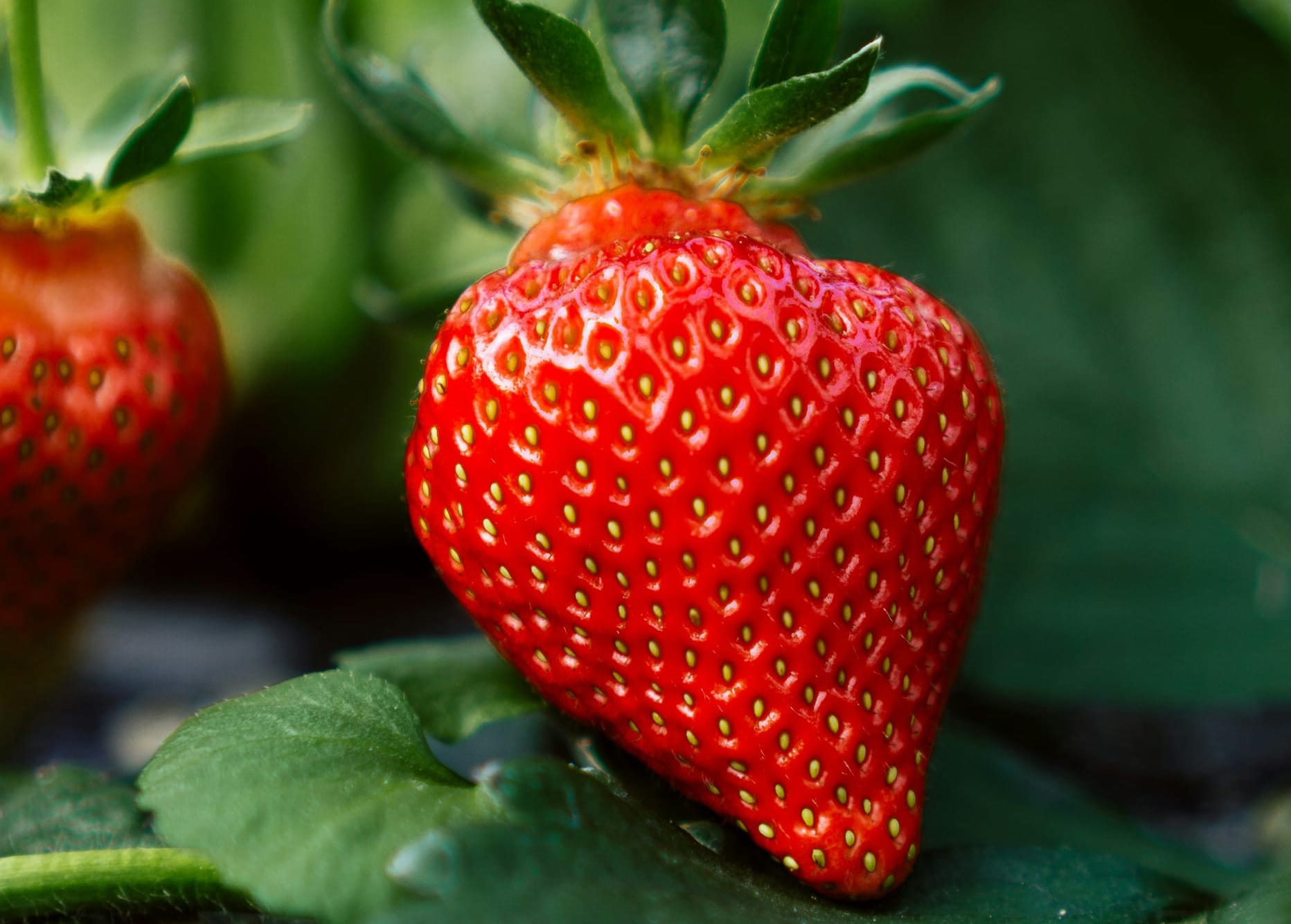
Example: Fresh Ripe Strawberry Flavor (Beverage Application, Water-Soluble)
Here is a real commercial-style flavor formula step-by-step using the Categorizing Technique described in “A Novel Approach to Flavor Development” (Perfumer & Flavorist).
Target Profile
🍓 Fresh Ripe Strawberry Flavor (Beverage Application, Water-Soluble)
We will build this systematically using:
- Character Impact Materials
- Contributing (Body) Materials
- Differentiating Materials
- Bridging & Mouthfeel Support
- Optimization by Concentration
All percentages below are % of flavor concentrate (not finished beverage).
STEP 1 — Define the Sensory Target
Before selecting materials, we define:
- Fresh (not jammy)
- Ripe (not green)
- Bright topnote
- Slight creamy sweetness
- Clean finish (no candy harshness)
Now we begin categorizing.
STEP 2 — Select Character Impact Compounds
These define “strawberry identity.” If removed, the flavor collapses.
| Material | Function | % |
|---|---|---|
| Ethyl Butyrate | Bright fruity lift | 4.00 |
| Ethyl Maltol (10% sol.) | Sweet strawberry candy body | 3.50 |
| Cis-3-Hexenol (1% sol.) | Fresh fruity realism | 0.80 |
| Furaneol (10% sol.) | Ripe strawberry signature | 5.00 |
| Ethyl 3-methylthiopropionate (0.1% sol.) | True berry sulfur nuance | 0.40 |
Why these?
- Furaneol is the primary strawberry character molecule.
- Sulfur ester gives authentic berry realism.
- Green note (cis-3-hexenol) prevents candy effect.
Running subtotal: 13.70%
Already smells like strawberry — but thin and sharp.
STEP 3 — Add Contributing Materials (Body Builders)
These add fullness and realism.
| Material | Function | % |
|---|---|---|
| Ethyl Hexanoate | Juicy fruit body | 6.00 |
| Ethyl 2-methylbutyrate | Fruity brightness | 2.50 |
| Benzyl Acetate | Floral-fruity roundness | 2.00 |
| γ-Decalactone (1% sol.) | Creamy undertone | 1.50 |
| Maltol (10% sol.) | Soft caramel sweetness | 3.00 |
| Linalool | Soft floral lift | 0.80 |
Subtotal added: 15.80%
Running total: 29.50%
Now it smells fuller and juicier.
STEP 4 — Add Differentiating Materials
These define fresh ripe vs jam vs candy.
| Material | Function | % |
|---|---|---|
| Dimethyl Sulfide (0.01%) | Natural berry authenticity | 0.05 |
| Acetoin | Creamy ripeness | 0.80 |
| Damascenone (0.1%) | Deep ripe fruit nuance | 0.30 |
| trans-2-Hexenal (0.1%) | Slight fresh cut top | 0.20 |
Subtotal added: 1.35%
Running total: 30.85%
Now it smells like real strawberry, not candy.
STEP 5 — Bridge & Mouthfeel Adjusters
These materials smooth transitions and stabilize perception.
| Material | Function | % |
|---|---|---|
| Propylene Glycol | Carrier | 55.00 |
| Triacetin | Fixative & diffusion control | 10.00 |
| Citric Acid (trace sol.) | Brightness adjuster | 0.50 |
| Natural Strawberry Extract | Label support & realism | 3.00 |
Subtotal added: 68.50%
Final total: 99.35%
Add:
- Water or PG q.s. to 100%
FINAL FORMULA (Rounded)
🍓 Strawberry Beverage Flavor Concentrate
| Ingredient | % |
|---|---|
| Ethyl Butyrate | 4.00 |
| Ethyl Hexanoate | 6.00 |
| Ethyl 2-methylbutyrate | 2.50 |
| Benzyl Acetate | 2.00 |
| Furaneol (10%) | 5.00 |
| Ethyl Maltol (10%) | 3.50 |
| Maltol (10%) | 3.00 |
| γ-Decalactone (1%) | 1.50 |
| Cis-3-Hexenol (1%) | 0.80 |
| Linalool | 0.80 |
| Acetoin | 0.80 |
| Ethyl 3-methylthiopropionate (0.1%) | 0.40 |
| Damascenone (0.1%) | 0.30 |
| trans-2-Hexenal (0.1%) | 0.20 |
| Dimethyl Sulfide (0.01%) | 0.05 |
| Natural Strawberry Extract | 3.00 |
| Citric Acid sol. | 0.50 |
| Triacetin | 10.00 |
| Propylene Glycol | q.s. to 100 |
STEP 6 — Evaluate in Application
Dose at:
- 0.08–0.12% in finished beverage (10–12 Brix, pH 3.2)
Observe:
| Problem | Adjustment |
|---|---|
| Too candy | Reduce ethyl maltol |
| Too green | Reduce trans-2-hexenal |
| Too flat | Increase ethyl butyrate |
| Too artificial | Increase sulfur slightly |
| Too thin | Increase lactone |
Why This Demonstrates the Categorizing Technique
Notice:
- We did not randomly add materials.
- Every ingredient has a functional role.
- If character collapses → adjust character compounds.
- If body weak → adjust contributing group.
- If realism lacking → adjust differentiators.
This avoids chaotic formulation.
What Happens If We Remove Categories?
Remove differentiators → tastes like strawberry candy.
Remove contributors → tastes thin and chemical.
Remove character compounds → not strawberry anymore.
That is the power of categorizing.
Professional Insight
In commercial R&D:
- Character compounds usually represent 5–20%
- Contributors 20–40%
- Differentiators 0.1–3%
- Carrier 40–70%
The system scales to:
- Meat flavors
- Dairy flavors
- Beverage flavors
- Snack seasonings
If you would like next, I can:
- Build a commercial fried chicken flavor using the same system
- Convert this into a clean-label natural version
- Or show how to reformulate this for high-temperature processing stability