20 Characteristic Flavor Notes the Society of Flavor Chemists Want Flavorists to Understand
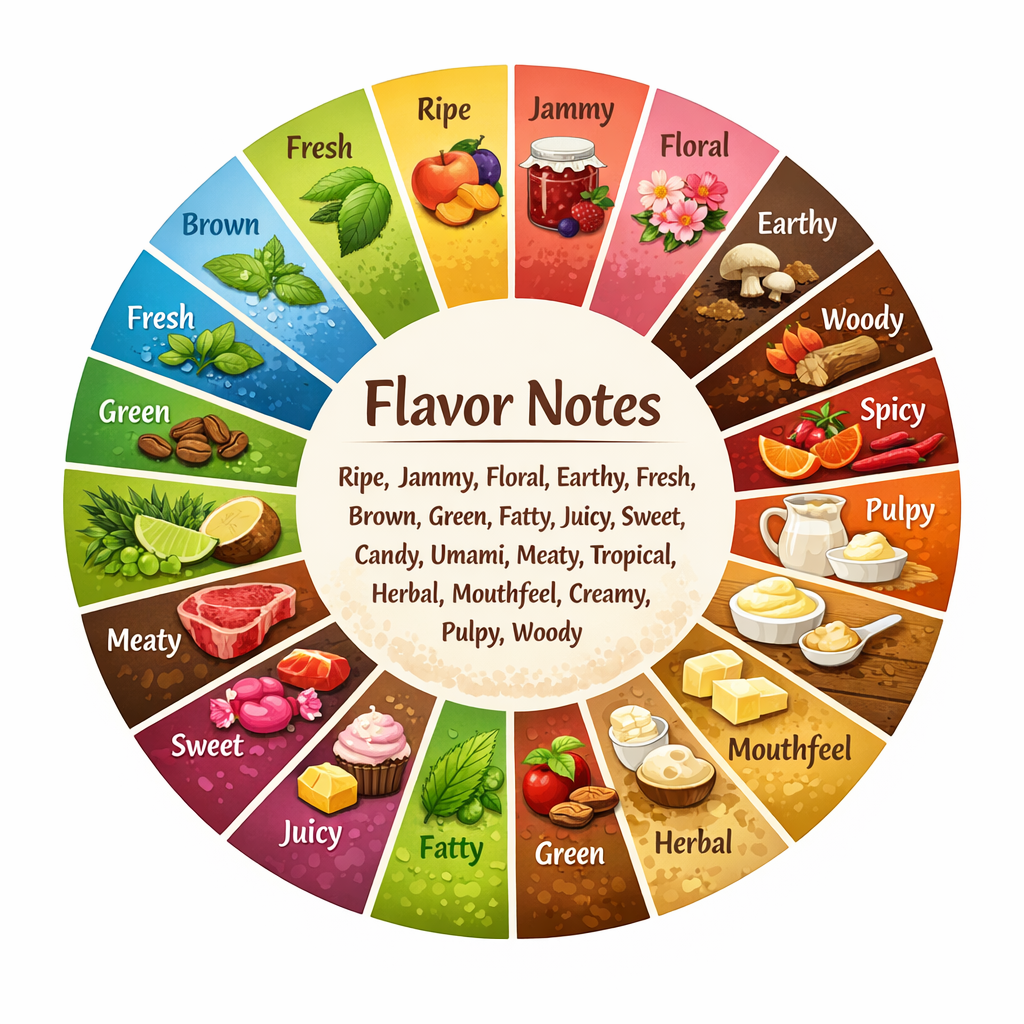
Below are 20 characteristic flavor notes that the Society of Flavor Chemists want every flavorist or would-be flavorist to understand. It is likely that questions regarding these notes will be raised during the qualification test/interview. Read the syllabus -the Society of Flavor Chemists.
The 20 key flavor notes are: Ripe, Jammy, Floral, Earthy, Fresh, Brown, Green, Fatty, Juicy, Sweet, Candy, Umami, Meaty, Tropical, Herbal, Mouthfeel, Creamy, Pulpy, Spicy, and Woody. Together, these descriptors span fruit maturity (ripe, jammy, tropical, pulpy), plant freshness (fresh, green, herbal), thermal development (brown), lipid character (fatty, creamy), sweetness dimensions (sweet, candy), savory depth (umami, meaty), structural perception (mouthfeel), and aging or structural aromatics (earthy, woody, spicy, floral). Collectively, they form a foundational sensory vocabulary that allows flavorists to translate chemical composition into perceptual experience.
Mastery of these 20 notes represents core professional knowledge expected within organizations such as the Society of Flavor Chemists. Understanding not only how to describe these notes but also the underlying chemistry, formation pathways, ingredient interactions, and matrix effects is essential to competent flavor creation. A skilled flavorist must be able to recognize these notes analytically, construct them intentionally in formulation, balance them across applications, and anticipate how processing, storage, and regulatory constraints influence them. Developing fluency in this structured sensory framework is part of the scientific and practical foundation that distinguishes trained flavor chemists from casual compound mixers.