A Comprehensive Guide to Karl Fischer Titration and Moisture Analyzers
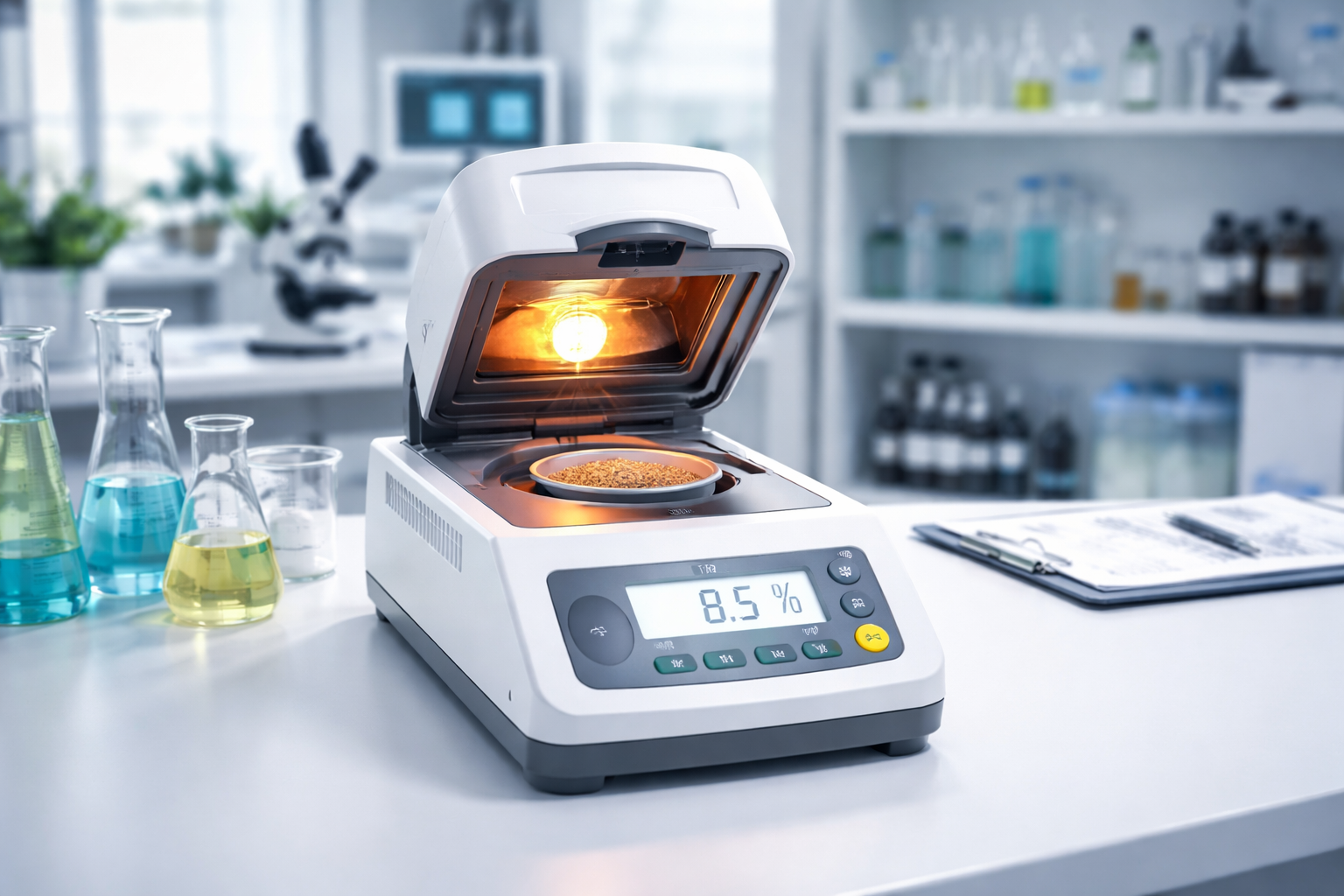
Here is a comprehensive, detailed guide to Karl Fischer Titration and Moisture Analyzers. The Society of Flavor Chemists requires flavorists to know the basics about this analytical method/instrument.
In the realm of analytical chemistry and industrial quality control, accurate moisture analysis is not merely a specification—it is a cornerstone of product stability, safety, and performance. Two dominant technologies exist for this purpose: Karl Fischer Titration and the Halogen Moisture Analyzer. While both aim to quantify water content, their underlying principles, applications, and data interpretation differ significantly.
This guide provides a detailed, technical exploration of both methodologies, their relevance to specialized industries such as flavor manufacturing, and a balanced analysis of their respective strengths and weaknesses.
1. Karl Fischer Titration: Theory, Function, and Reporting
Karl Fischer Titration is widely regarded as the reference method for water content determination. Unlike thermogravimetric methods that measure weight loss, KFT is chemically specific to water.
The Theoretical Foundation
The methodology is named after the German chemist Karl Fischer, who developed the technique in 1935. The reaction is a complex redox process that occurs in a methanolic solution containing a base, typically imidazole or diethanolamine.
The core stoichiometric reaction is as follows:
[
H_2O + I_2 + SO_2 + CH_3OH + 3RN \rightarrow [RNH]SO_4CH_3 + 2[RNH]I
]
In this equation, sulfur dioxide ((SO_2)) and iodine ((I_2)) react with water ((H_2O)) in the presence of a base ((RN)) and an alcohol (methanol). The reaction proceeds quantitatively: one mole of iodine consumes one mole of water. The titration endpoint is reached when the first excess of iodine appears in the solution, signaling the complete consumption of water.
Functional Mechanisms: Volumetric vs. Coulometric
The practical application of this theory branches into two distinct techniques, selected based on the expected water concentration in the sample.
Volumetric Karl Fischer Titration
This method is designed for samples with higher water content, typically ranging from 0.01% to 100% .
- Mechanism: A burette dispenses a titrant containing iodine directly into the sample cell. As the sample is stirred, the iodine reacts with the water present. A dual platinum electrode detects the endpoint by measuring the polarization voltage. When no water remains, the iodine concentration rises sharply, causing a voltage drop that terminates the analysis.
- Application: Ideal for bulk substances like syrups, raw materials, and finished goods where moisture is a significant component.
Coulometric Karl Fischer Titration
This method is reserved for trace moisture analysis, detecting water levels as low as 0.001% (10 ppm) up to 1%.
- Mechanism: In this technique, iodine is not added via a burette but is generated electrochemically within the titration cell. An electrolytic current passes through the anolyte, producing iodine. According to Faraday’s Law of Electrolysis, the mass of iodine generated is directly proportional to the electric current passed. Since the reaction ratio is 1:1 (iodine to water), the instrument calculates the water content based solely on the current required to maintain the endpoint.
- Application: Essential for analyzing anhydrous solvents, petroleum products, and pharmaceutical intermediates where even minute water content can destabilize the final product.
Data Reporting and Standards
Results from Karl Fischer titrators are reported with high precision. Typical output includes:
- Water Content: Expressed as a percentage (%) for volumetric results, or parts per million (ppm) for coulometric results.
- Statistical Analysis: Mean, standard deviation, and relative standard deviation (RSD) for multiple runs.
- Method Validation: Karl Fischer titration is codified in numerous international standards, including ISO 760, ASTM E203, and the United States Pharmacopeia (USP) chapters <921> and <831>, ensuring its acceptance as a definitive test method in regulated industries.
2. Moisture Analyzer: Theory, Function, and Reporting
Also known as a Halogen Moisture Analyzer or Thermogravimetric Analyzer, this instrument provides a rapid alternative to traditional oven-drying methods.
The Theoretical Foundation: Loss on Drying
The operating principle of a moisture analyzer is based on thermogravimetry. It quantifies moisture by measuring the mass of a sample before and after a controlled heating process. The underlying assumption is that the weight lost during the heating cycle is exclusively attributable to the evaporation of water or other volatile components.
Functional Mechanisms: Heating and Weighing
Modern moisture analyzers integrate a high-precision balance with a heating unit. The process is automated to ensure consistency.
- Heating Technology: Most contemporary devices utilize a halogen radiator. Unlike conventional infrared lamps, halogen elements have a lower thermal mass, allowing them to reach maximum temperature almost instantaneously. This rapid heating reduces overall analysis time and provides more uniform heat distribution across the sample.
- Drying Process: The sample is spread in a thin layer on an aluminum foil pan. During the drying cycle, the instrument continuously monitors the weight. The measurement concludes when the weight loss per unit of time (the "switch-off criterion") falls below a predefined threshold, indicating that the drying process has plateaued.
- Endpoint Determination: Users can select from several end-point modes, including:
- Standard (Shut-off): The test ends when a specific weight loss per second is achieved.
- Timed: The test runs for a fixed duration, regardless of whether complete drying has occurred.
- Fast: Uses an accelerated algorithm to predict the final moisture content based on the initial drying rate.
Data Reporting
The report generated by a moisture analyzer is straightforward but critical for production QC. Key data points include:
- Initial Weight (g): The starting mass of the sample.
- Final Moisture (%): The calculated percentage of weight lost during the drying process.
- Drying Parameters: The set temperature (typically 50°C to 200°C) and the selected switch-off criterion.
- Graphical Curve: Many instruments display a drying curve, showing the rate of weight loss over time, which helps operators assess the behavior of the sample.
3. Strategic Relevance to the Flavor Industry
The flavor industry presents unique analytical challenges due to the complex chemical nature of its products, which often contain volatile organic compounds (VOCs), essential oils, and heat-sensitive encapsulates. The choice between Karl Fischer and moisture analysis is dictated by the matrix of the product.
Karl Fischer Titration in Flavor Manufacturing
For flavor houses producing liquid extracts, emulsions, and essential oils, KFT is indispensable.
- Volatile Solvents: Liquid flavors frequently utilize carriers such as ethanol, propylene glycol, or triacetin. These solvents evaporate readily. If an oven-drying (LOD) method were used, the weight loss would include both water and these valuable volatile solvents, leading to a gross overestimation of moisture content. KFT’s chemical specificity ensures that only water is measured, providing an accurate water activity and stability profile.
- Microencapsulated Powders: Spray-dried flavors are highly sensitive to heat. Using a moisture analyzer on these powders can sometimes scorch the surface, creating a "skin" that traps water inside, resulting in inaccurate readings. KFT allows for the extraction of water from the powder using anhydrous methanol without denaturing the flavor matrix.
- Shelf-Life Prediction: Water acts as a solvent for chemical degradation reactions. In the flavor industry, excess moisture can lead to the hydrolysis of esters or the oxidation of terpenes. The precision of KFT (especially coulometric) allows manufacturers to predict product stability with high confidence.
Moisture Analyzers in Flavor Manufacturing
Despite the advantages of KFT, the moisture analyzer remains a staple in production environments.
- Rapid QC of Incoming Solids: For raw materials like dehydrated garlic powder, onion powder, or maltodextrin (used as carriers), a moisture analyzer provides a pass/fail check in under 10 minutes. This speed is crucial for production lines awaiting raw material release.
- Simplicity and Accessibility: Not all manufacturing floors are equipped with a chemistry lab. Moisture analyzers are designed for ease of use; they require no chemical reagent handling or complex method development, making them ideal for technical staff on the production floor.
- Cost Efficiency for Routine Testing: For solid products where no volatile solvents are present, the moisture analyzer offers a zero-consumable cost solution (aside from the sample pans). This makes it economically preferable for high-volume, repetitive testing of simple matrices.
4. Advantages and Limitations
Selecting the correct moisture analysis technique requires a clear understanding of the trade-offs between specificity, speed, and operational complexity.
Karl Fischer Titration
| Advantages | Limitations |
|---|---|
| Chemical Specificity: Reacts exclusively with water. It does not measure alcohol, solvents, or other volatile organics, ensuring high accuracy in complex mixtures. | Chemical Handling: Requires the use of toxic reagents, including methanol and often chloroform, necessitating proper fume hoods and hazardous waste disposal protocols. |
| Trace Sensitivity: Coulometric KFT can detect water in the parts-per-million (ppm) range, a capability unmatched by thermogravimetric methods. | Interferences: Certain compounds can interfere with the reaction. Strong oxidizing agents (like peroxides) can oxidize iodide to iodine, causing false low readings, while strong acids/bases can alter the pH of the reaction vessel, affecting endpoint detection. |
| Versatility: Capable of analyzing liquids, solids (with dissolution), and gases with appropriate accessories. | Time and Expertise: Method development requires chemical expertise. Analysis time varies but can be longer than LOD for samples that are slow to dissolve or release water. |
Moisture Analyzer
| Advantages | Limitations |
|---|---|
| Speed: Typical analyses take 3 to 15 minutes, significantly faster than traditional Karl Fischer titrations for bulk water content. | Lack of Specificity: This method measures total weight loss. If the sample contains ethanol, acetic acid, or other volatile compounds, these will be reported as "moisture," leading to data distortion. |
| Ease of Use: Operation involves minimal training. Users simply place the sample, close the lid, and press "start." No chemical mixing or burette handling is required. | Matrix Dependency: Accuracy is highly dependent on sample preparation. If the sample does not spread evenly or forms a crust during heating, moisture may be trapped, resulting in incomplete drying. |
| Operational Safety: No hazardous reagents are involved. The only consumables are disposable aluminum sample pans. | Unsuitable for Trace Analysis: Standard moisture analyzers lack the sensitivity for applications requiring detection below 0.01% (100 ppm). |
5. Conclusion
The selection between a Karl Fischer Titrator and a Moisture Analyzer is not a matter of which instrument is "better," but rather which is appropriate for the specific analytical challenge.
For laboratories requiring definitive, specific water content—particularly in liquid, volatile, or highly sensitive matrices—Karl Fischer Titration remains the gold standard. Its adherence to strict pharmacopeial and international standards makes it the only choice for regulated industries and complex chemical analysis.
Conversely, for production environments prioritizing speed, simplicity, and cost-effectiveness—especially for solid raw materials and intermediate products where total volatiles equate to water—the Halogen Moisture Analyzer offers unparalleled efficiency.
A robust quality assurance program often employs both technologies: utilizing the moisture analyzer for rapid routine screening and the Karl Fischer titrator for reference analysis, troubleshooting, and final product certification. d
###