A Detailed Review of Henry B. Heath's Book "Flavor Technology: Profiles, Products, Applications"
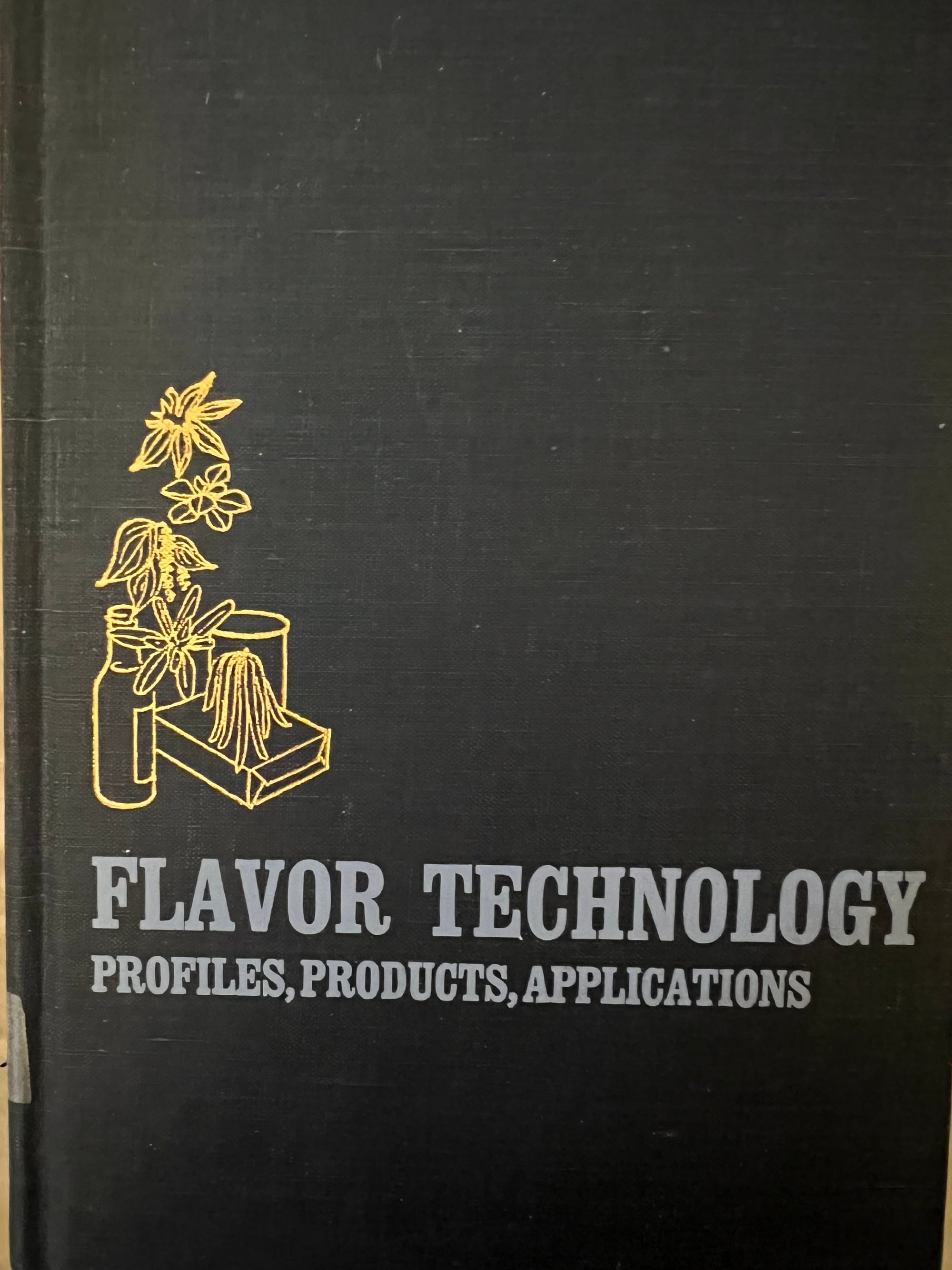
For professionals in the food and flavor industry, certain texts stand as milestones that define a field. Henry B. Heath's Flavor Technology: Profiles, Products, Applications is one such seminal work. Published in 1978 by AVI Publishing Company , this book has served as a critical reference for flavorists, food technologists, and technical service personnel for decades. Its enduring value lies in its systematic approach to a complex subject, bridging the gap between the art of flavor creation and the science of food processing .
This review provides a comprehensive look at the book's structure, core themes, and lasting impact on the flavor industry.
The Vision: A Guide for the Practicing Technologist
"Flavor Technology" was not designed as a theoretical treatise but as a practical guide. Heath's stated intention was to equip professionals with the necessary information on processing techniques and conditions . This focus on the "how" and "why" behind flavor application makes the book an invaluable tool for those in the industry who need to discuss, develop, and apply flavors effectively to achieve the desired sensory outcome in a final product .
The book's authority comes from Heath's extensive experience. Prior to this publication, he co-authored Flavor Chemistry and Technology (1986) with Gary Reineccius , a text that was later revised into a second edition by Reineccius alone in 2006 . This lineage highlights that Heath's work was part of a broader, authoritative contribution to flavor science literature.
Structure and Core Content: A Tripartite Framework
The book is organized into three distinct but interconnected sections, which form the backbone of its title: Profiles, Products, Applications .
| Section | Focus | Key Content Description |
|---|---|---|
| Profiles | Flavor Assessment & Materials | Ordered sequences of natural flavoring materials; guides for evaluating and using flavorings . |
| Products | Flavor Preparation & Selection | Nature, preparation, characteristics, and correct selection of flavorings for food processing . |
| Applications | Industrial Technology & Conditions | Technology of flavor use; an operating guide for applying flavors under specific processing parameters . |
1. Flavor Profiles: A Guide to Assessment
This initial section focuses on the "ordered sequence" of natural flavoring materials that were widely used in foods during that era . By establishing these profiles, Heath provided a systematic method for flavorists to assess ingredients. This framework served as a reference point, helping practitioners understand how different flavorings could be evaluated, compared, and used in combination to build complex, desirable taste experiences. It was a foundational approach to flavor assessment that emphasized a structured understanding of natural ingredients.
2. Flavor Products: From Material to Ingredient
The second section delves into the "nature and preparation" of flavoring materials . This part of the book is a deep dive into the raw materials of the flavorist's craft. It details the characteristics of various flavoring substances and provides critical guidance on the "correct selection of flavoring for specific products" . For a food technologist, this section would have been an essential resource for understanding the functional properties of different flavors and how to choose the right one for a given application, considering stability, compatibility, and processing needs.
3. Flavor Applications: Technology in Practice
The final and perhaps most practical section reviews the "technology and use of flavorings in industry" . This is where the book directly addresses the challenges of real-world food manufacturing. It acts as an "operating condition guide," outlining the parameters that dictate how a flavor should be applied . Topics likely covered include how flavors behave under heat during baking or extrusion, how they interact with fats and emulsifiers, and how their stability is affected by storage conditions. This focus on the interaction between flavors and food matrices was a key highlight, addressing issues that remain central to modern food product development.
Critical Reception and Lasting Value
Upon its release, Flavor Technology was recognized as a significant contribution to the field. It was reviewed in academic journals like Economic Botany, which noted its comprehensive nature and practical utility . The book has been cited in numerous scientific papers over the years, covering topics ranging from the analysis of vanilla in ice cream to the supercritical fluid extraction of aromatic oils . This citation record, with over 35 known citations , is a testament to its lasting relevance as a source of foundational knowledge.
While the book's specific technical data—such as processing parameters and lists of available ingredients—are now decades old, its core principles remain sound. The structured methodology for flavor selection and application is timeless.
For those interested in the modern evolution of these concepts, the text Flavor Chemistry and Technology, which Heath co-authored with Gary Reineccius , was updated into a second edition in 2006 . This newer edition addresses contemporary topics such as flavor release in the mouth (explaining why low-fat foods taste different) and the controlled release of flavorings , showing how the foundations laid by Heath have been built upon to solve modern food science challenges.
Conclusion: A Cornerstone of Flavor Education
Henry B. Heath's Flavor Technology: Profiles, Products, Applications is more than just a book; it is a cornerstone of flavor education and a historical landmark in food science. Its enduring value is not in providing up-to-the-minute formulations, but in its clear, structured framework for understanding the complex relationship between flavoring materials, their preparation, and their behavior in food products.
For anyone looking to understand the foundational principles of the flavor industry, Heath's work remains a highly respected and essential reference. It successfully achieved its goal of giving professionals the knowledge to discuss, develop, and apply flavors to achieve the best possible results , a goal that remains at the heart of food technology today.
###