Adsorption and Absorption of Flavor Compounds by Proteins, Carbohydrates, and Fats - A Flavorist Training Guide
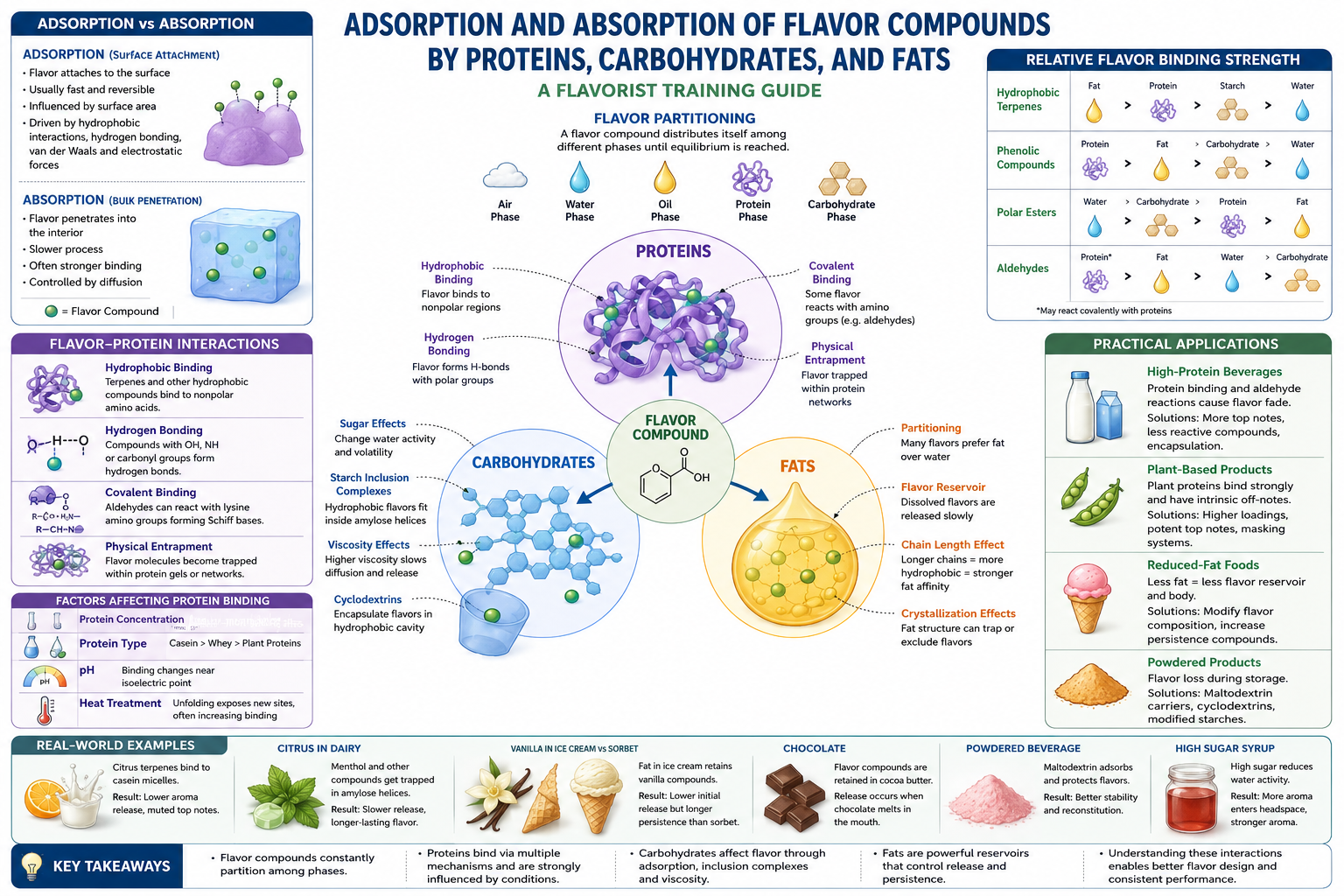
Adsorption and absorption of flavor compounds are critical factors that determine flavor intensity, release, stability, and perception in food systems. Adsorption refers to flavor molecules attaching to the surface of food components, while absorption involves their penetration into the interior of a material. In practice, both processes often occur simultaneously.
Proteins strongly influence flavor behavior through hydrophobic interactions, hydrogen bonding, physical entrapment, and, in some cases, covalent reactions. Hydrophobic flavor compounds such as terpenes readily bind to nonpolar regions of proteins, reducing volatility and aroma release. Protein type, concentration, pH, and heat treatment all affect the extent of flavor binding.
Carbohydrates generally bind flavors less strongly than proteins but can significantly modify flavor release. Sugars alter water activity and volatility, while starches can form inclusion complexes that trap flavor compounds. Hydrocolloids primarily affect flavor by increasing viscosity and slowing diffusion. Cyclodextrins are particularly useful for flavor protection and controlled release due to their ability to encapsulate hydrophobic molecules.
Fats act as powerful reservoirs for many aroma compounds because most flavor molecules possess hydrophobic characteristics. Flavor compounds dissolve into lipid phases, reducing immediate aroma release but increasing flavor persistence. In emulsified systems, flavors partition among water, oil, and interface regions, creating complex release patterns.
For flavorists, understanding these interactions is essential for designing flavors that perform consistently throughout processing, storage, and consumption.