GMO Ingredient Disclosure: Why a U.S. Court Ordered the USDA to Rewrite Part of the Bioengineered Food Labeling Rule
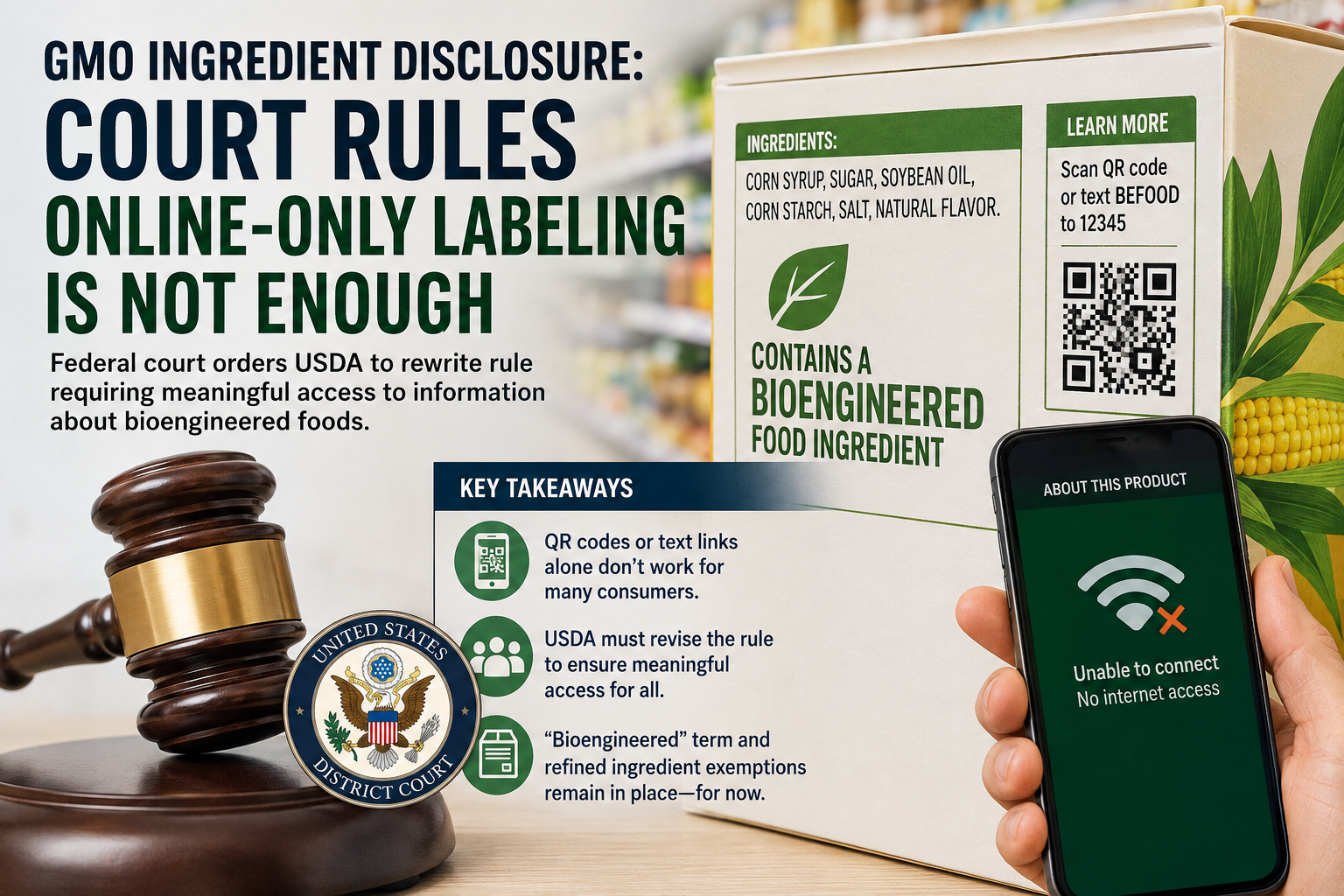
Thursday, 08/06/2026 – The Food Dive article, "GMO ingredient disclosure online is not enough, court rules," examines a landmark federal court decision that reshaped how genetically modified (GMO) foods must be labeled in the United States. The ruling did not eliminate the National Bioengineered Food Disclosure Standard (NBFDS), but it required the U.S. Department of Agriculture (USDA) to reconsider one of its most controversial provisions: allowing companies to disclose genetically modified ingredients solely through digital methods such as QR codes or text-message links. The court concluded that relying exclusively on digital disclosure fails to provide many consumers with meaningful access to labeling information. (Food Dive)
Background: What Are GMOs and Why Does Labeling Matter?
Genetically modified organisms (GMOs) are plants, animals, or microorganisms whose genetic material has been altered using modern biotechnology. In agriculture, genetic engineering is commonly used to improve crop yields, increase resistance to pests and diseases, and enhance tolerance to herbicides or environmental stress.
Common genetically engineered crops in the United States include:
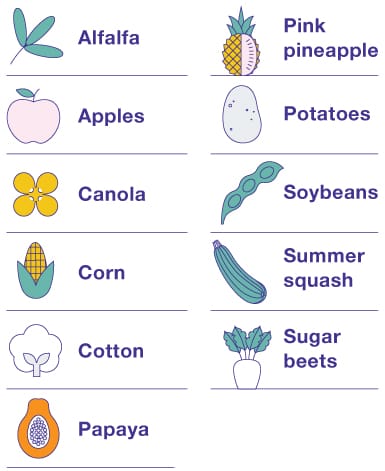
- Most of Corn
- Most of Soybeans
- Canola
- Sugar beets
- Cotton
- Papaya
- Certain varieties of squash
- Some farmed Salmon fish
- Some potatoes
- Alfalfa for dairy cows and other livestock
- Non-browning Arctic apple varieties
Many processed foods contain ingredients derived from these crops, including soybean oil, corn syrup, cornstarch, and sugar made from genetically engineered sugar beets.
Although scientific organizations such as the World Health Organization (WHO), the National Academies of Sciences, Engineering, and Medicine, and other regulatory agencies have generally concluded that approved GMO foods are as safe to eat as conventional foods, public opinion remains divided. Many consumers want labeling not because they believe GMOs are unsafe, but because they value transparency and informed purchasing decisions.
The National Bioengineered Food Disclosure Standard
After years of debate and varying state laws, Congress passed the National Bioengineered Food Disclosure Law in 2016. The law directed the USDA to establish a uniform national labeling standard, replacing a patchwork of state requirements.
Instead of using the familiar term "GMO," the USDA adopted the word "bioengineered." Food manufacturers could comply by using one of several disclosure methods:
- Text on the package
- An official USDA bioengineered symbol
- A QR code
- A text-message system that consumers could access with a smartphone
The flexibility was intended to reduce labeling costs while giving companies multiple compliance options. However, consumer advocacy organizations argued that digital-only disclosures effectively concealed important information from shoppers without smartphones, reliable internet access, or sufficient technological literacy. (Food Dive)
The Court's Decision
The central issue before the federal court was whether a QR code or text-message disclosure alone satisfied Congress's intent to provide meaningful consumer access to GMO information.
The court ruled that it does not.
Evidence presented included a USDA study showing that many consumers experience barriers to accessing digital disclosures, including:
- Limited smartphone ownership
- Poor cellular reception inside grocery stores
- Lack of mobile data
- Difficulty using QR code technology
- Limited digital literacy among some populations
Because these barriers prevent many shoppers from obtaining disclosure information while making purchasing decisions, the court ordered the USDA to reconsider this portion of its regulation. Importantly, the ruling did not invalidate the overall labeling law or eliminate disclosure requirements. It required only that the USDA rewrite the section allowing digital-only disclosure. (Food Dive)
What the Court Did Not Change
Although advocacy groups challenged several other aspects of the labeling law, the court upheld most of the USDA's framework.
1. The term "bioengineered"
Consumer groups argued that most Americans recognize the word "GMO," not "bioengineered," making the USDA terminology confusing.
The court disagreed, finding that Congress did not prohibit manufacturers from voluntarily using the term "GMO" alongside the required disclosure. Therefore, the USDA may continue using "bioengineered" as its official terminology. (Food Dive)
2. Highly refined ingredients
One of the most controversial parts of the labeling rule concerns highly refined ingredients.
Many foods contain ingredients produced from genetically engineered crops, but extensive refining removes detectable modified DNA. Examples include:
- Soybean oil
- Corn oil
- High-fructose corn syrup
- Refined sugar from sugar beets
Under USDA rules, these ingredients generally do not require mandatory disclosure because the modified genetic material is no longer detectable. Consumer organizations argued that this exemption leaves many GMO-derived foods unlabeled.
The court upheld the USDA's interpretation, concluding that the agency followed the language established by Congress. (Food Dive)
Why Consumer Advocates Object
Groups supporting stronger labeling believe the current law still falls short of providing full transparency.
Their primary concerns include:
- Consumers understand "GMO" better than "bioengineered."
- Many processed foods made from genetically engineered crops remain exempt because of refining.
- QR-code labeling shifts responsibility onto consumers instead of providing clear information directly on packages.
These organizations argue that shoppers should not need smartphones or internet access to learn what is in their food.
Industry Perspective
Food manufacturers generally supported flexible disclosure options because they reduce packaging costs and allow companies to update product information digitally.
Many manufacturers already include both a printed statement and a QR code, minimizing legal risk while giving consumers multiple ways to access information. Because mandatory GMO labeling has been controversial for years, companies often seek approaches that comply with regulations without drawing unnecessary attention to genetically engineered ingredients. (Food Dive)
Broader Implications
The ruling reflects a larger trend in consumer protection law: digital disclosure cannot always replace clear, accessible information provided directly to consumers.
As more industries use QR codes for nutrition information, product traceability, and sustainability claims, regulators may increasingly ask whether digital-only communication disadvantages certain populations.
The decision also reinforces the principle that accessibility is part of effective disclosure. Information hidden behind technology is not equally available to all consumers.
Why This Matters for Consumers
For shoppers, the decision could eventually lead to clearer package labeling if the USDA revises its regulations. More products may need visible on-package disclosures rather than relying solely on digital links.
The ruling also highlights the continuing debate between transparency and regulatory practicality. While scientists generally agree that approved genetically engineered foods are safe, many consumers continue to request straightforward labeling so they can make purchasing decisions based on personal values, dietary preferences, or environmental concerns.
Conclusion
The Food Dive article explains an important legal development in U.S. food labeling policy. The federal court concluded that QR codes and other digital-only methods are not sufficient for mandatory disclosure of bioengineered ingredients because many consumers cannot reliably access them. At the same time, the court preserved most of the National Bioengineered Food Disclosure Standard, including the use of the term "bioengineered" and the exemption for highly refined ingredients without detectable modified DNA. (Food Dive)
From an SEO perspective, this decision is significant because it intersects several highly searched topics, including GMO labeling, bioengineered food, USDA food regulations, QR code food labels, consumer food transparency, and genetically modified foods. As the USDA revises its rules, both consumers and food manufacturers will continue to navigate the balance between technological innovation, regulatory compliance, and the public's right to clear and accessible food information.
###