Animal-Free Dairy Gets a Boost: Precision Fermentation Casein Clears Major FDA Hurdle
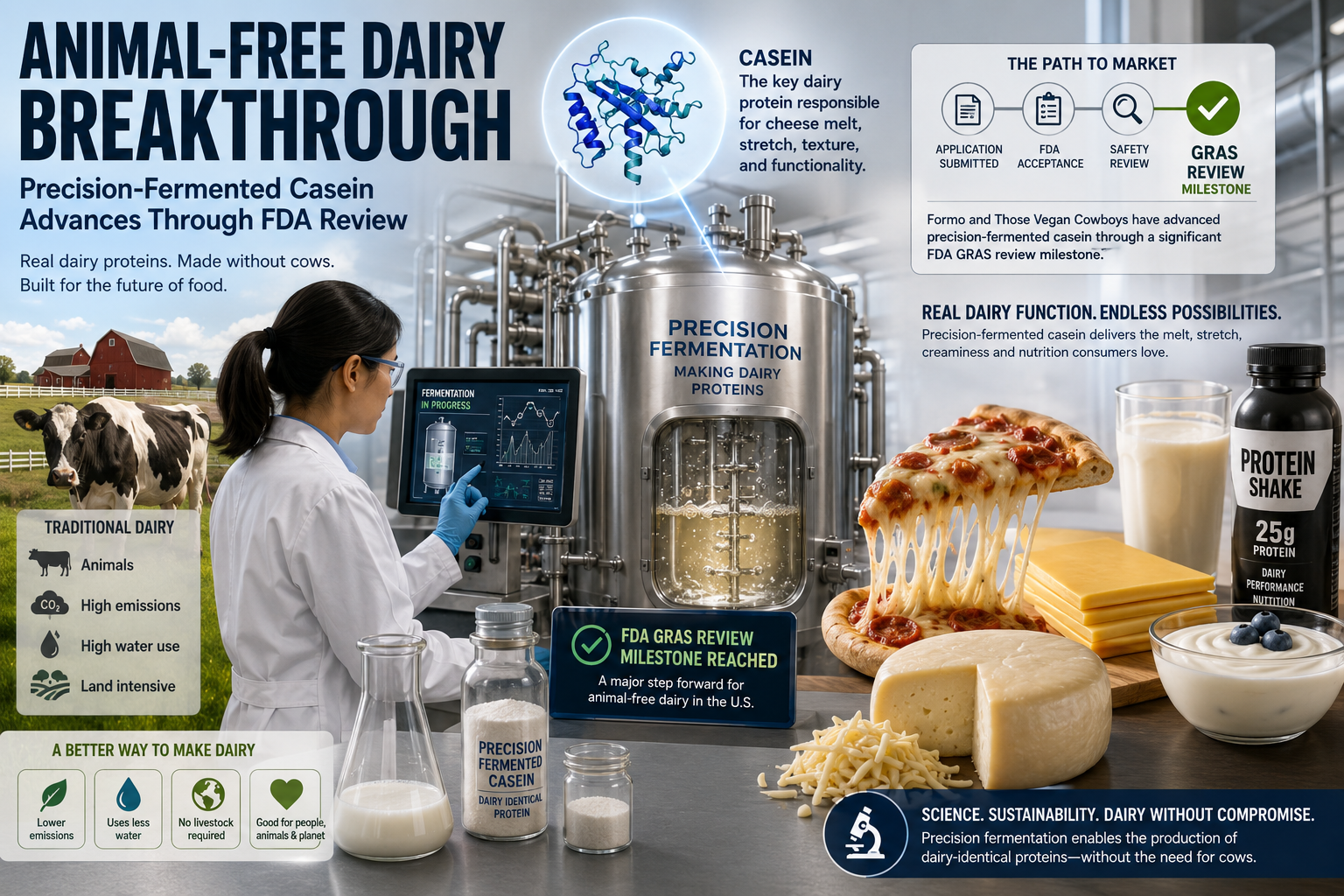
Formo’s recombinant casein protein, identical to the one found in cow’s milk, receives a “no questions” letter from the FDA, paving the way for realistic, meltable vegan cheese in the U.S. market.
The future of animal-free dairy just took a significant step forward. Berlin-based food-tech company Formo has achieved a critical regulatory milestone in the United States, receiving a “no questions” letter from the U.S. Food and Drug Administration (FDA) for its precision fermentation-derived casein protein. This green light signals that the agency has no further safety queries regarding the ingredient’s Generally Recognized As Safe (GRAS) status, bringing next-generation, meltable vegan cheeses closer to American consumers’ plates.
This development marks a pivotal moment for the alternative protein sector, which has long sought to replicate the authentic taste, texture, and functionality of conventional dairy without involving animals.
What is Recombinant Casein and Why Does It Matter?
To understand the breakthrough, it helps to know what makes dairy cheese “cheesy.” The magic lies largely in casein, a family of proteins that make up about 80% of the protein in cow’s milk. Casein is the reason cheese melts, stretches, and has that signature creamy mouthfeel. Until now, creating a truly convincing vegan cheese that performs identically to its dairy counterpart has been the industry’s holy grail, as plant-based alternatives often rely on starches and oils that fall short in melting and stretching.
Recombinant casein is a nature-identical protein, meaning it is molecularly the same as the casein a cow produces, but it is made without the cow.
How is it Produced? The Power of Precision Fermentation
The production process is akin to brewing beer, but instead of alcohol, the microbes churn out specific proteins. Here’s a step-by-step breakdown:
- Gene Identification: Scientists start by identifying the specific genetic sequence in a cow’s DNA that codes for the desired casein protein.
- Micro-Programming: This DNA sequence is then introduced into a harmless microorganism, such as yeast or fungi, effectively turning it into a microscopic protein factory.
- Fermentation: The programmed microorganisms are placed in large fermentation tanks filled with a nutrient-rich broth of simple sugars and minerals. As they grow and multiply, they produce the casein protein with precision.
- Purification: Once the fermentation is complete, the casein protein is separated and purified from the microorganisms and the growth medium. The final product is a pure, isolated milk protein, ready to be used as an ingredient.
This technique is far from new; it has been used safely for decades to produce everything from insulin for diabetics to the rennet enzyme used in most commercial cheeses today.
What the FDA GRAS Status Means for Formo
Receiving a “no questions” letter from the FDA is a de-risking event. It is a strong affirmation of the ingredient’s safety based on a comprehensive dossier of scientific data provided by Formo. While not a formal “approval,” it is the standard commercial pathway for new food ingredients in the U.S. and effectively clears the way for Formo to begin selling its recombinant casein to food manufacturers.
This regulatory success gives Formo a first-mover advantage in the burgeoning U.S. precision fermentation dairy market. The company’s platform goes beyond a single protein; it allows for the creation of specific casein micelles, the complex structures found in milk, which are critical for replicating a full spectrum of dairy textures and functionalities.
Formo is poised to transform the cheese aisle, offering products that promise the indulgent experience of traditional cheese—the perfect melt on a burger, the rich stretch of a pizza—with a dramatically lower environmental footprint, no cholesterol, lactose, or antibiotics, and zero animal involvement. As the company advances toward commercialization, it’s clear that the next generation of dairy is being brewed, not farmed.
That's an excellent and critical question, as labeling is often the final frontier for market access after regulatory clearance. The article itself doesn't specify Formo's exact labeling strategy, but we can construct a clear, SEO-friendly analysis based on U.S. regulations and industry precedent.
Decoding the Label: How Will “Animal-Free” Precision Fermentation Casein Be Listed in the U.S.?
With Formo’s recombinant casein clearing FDA safety review, the conversation shifts to its name on the ingredient list. Will it be “non-animal casein,” “animal-free milk protein,” or something else?
As Formo’s precision fermentation casein moves closer to U.S. store shelves, a crucial question arises for both manufacturers and consumers: What will this novel ingredient actually be called on a food label? The product is derived from recombinant DNA technology, yet it is molecularly identical to the cow-derived protein it replaces. Navigating this duality is a delicate balance of regulatory compliance, consumer transparency, and marketing appeal.
Here’s how the labeling is likely to be determined, based on existing FDA frameworks and industry practices.
The Core Principle: The Name Must Describe the Ingredient
The U.S. Food and Drug Administration (FDA) mandates that ingredients be declared by their “common or usual name.” The central debate for recombinant casein is whether its name should focus on what it is (a milk protein) or how it was made (via fermentation).
Scenario 1: The Functional Name – “Casein” or “Milk Protein”
This approach treats the ingredient based on its molecular identity and nutritional function. Since Formo’s product is analytically indistinguishable from bovine casein, a straightforward argument is that its common or usual name is simply "casein" or "milk protein."
- Pro: Simplest for a manufacturer, as it fits seamlessly into a standardized ingredient list. For example, a cheese label might just read: "Ingredients: Water, casein, coconut oil, salt..."
- Con: May face challenges regarding consumer transparency, as the source is non-traditional. The FDA might request a clarifying term to distinguish it from conventionally sourced casein, especially for allergen purposes.
Scenario 2: The Qualified Name – "Non-Animal Casein" or "Fermentation-Derived Casein"
This is the most likely path, as it bridges clear communication with regulatory prudence. The FDA has set a powerful precedent with the approval of Perfect Day’s precision fermentation whey protein. The agency accepted the term “non-animal whey protein” as the common or usual name. By direct extension, "non-animal casein" is the leading candidate for Formo’s ingredient.
- How it would appear on a label: "Ingredients: Non-animal casein (produced via fermentation), water, sunflower oil..."
- The GMO Nuance: Crucially, this product is derived from a genetically engineered microorganism but is highly purified and contains no detectable genetic material from the host. Under the USDA’s National Bioengineered Food Disclosure Standard (the "BE" labeling law), foods that contain ingredients like refined sugars and oils from bioengineered crops, or purified proteins from a bioengineered fermentation, are often exempt from mandatory BE disclosure if the modified genetic material is not detectable. This means the product would not necessarily require a “bioengineered” symbol. Instead, a voluntary “Made with biotechnology” or “Contains non-animal casein derived from fermentation” statement could be used.
Addressing Allergens and Dietary Claims
- Milk Allergen Labeling: Because the protein is identical to the major milk allergen, the FDA will almost certainly require a mandatory “Contains: Milk” allergen statement. This is a public health necessity, but it creates a perceptual challenge for products marketed as “dairy-free.”
- The "Animal-Free" Claim: This is a marketing term, not a regulatory standard. A brand could pair the ingredient name “non-animal casein” with a front-of-pack claim like “Animal-Free Dairy Cheese.” This distinguishes the product from both traditional dairy and plant-based alternatives while clearly communicating its unique origin.
Learning from Industry Precedent: The "Apeel" Model
While not a dairy protein, Apeel Sciences’ plant-derived edible coating for produce provides another labeling template. Their ingredients are listed with a combined descriptive and functional name, followed by the manufacturing process in parentheses, e.g., "monoacylglycerides (plant-based coating)." Formo’s label could adopt a similar syntax, resulting in an ingredient name like "milk protein (produced from fermentation)."
The Bottom Line for Consumers
Expect to see an ingredient name that adds a transparent qualifier to the familiar protein. The final declaration will be a carefully crafted sentence that aims to simultaneously signal safety for milk-allergy sufferers, clarify the ingredient’s non-animal origin for vegan and environmentally conscious consumers, and openly invite the curious to try the next generation of cheese. The most probable outcome on a shredded mozzarella package is an ingredient list that reads: "Non-animal casein, water, coconut oil... Contains: Milk."
###