Beef Tallow Makes a Mainstream Comeback as Major Food Companies Embrace the 'MAHA' Fat
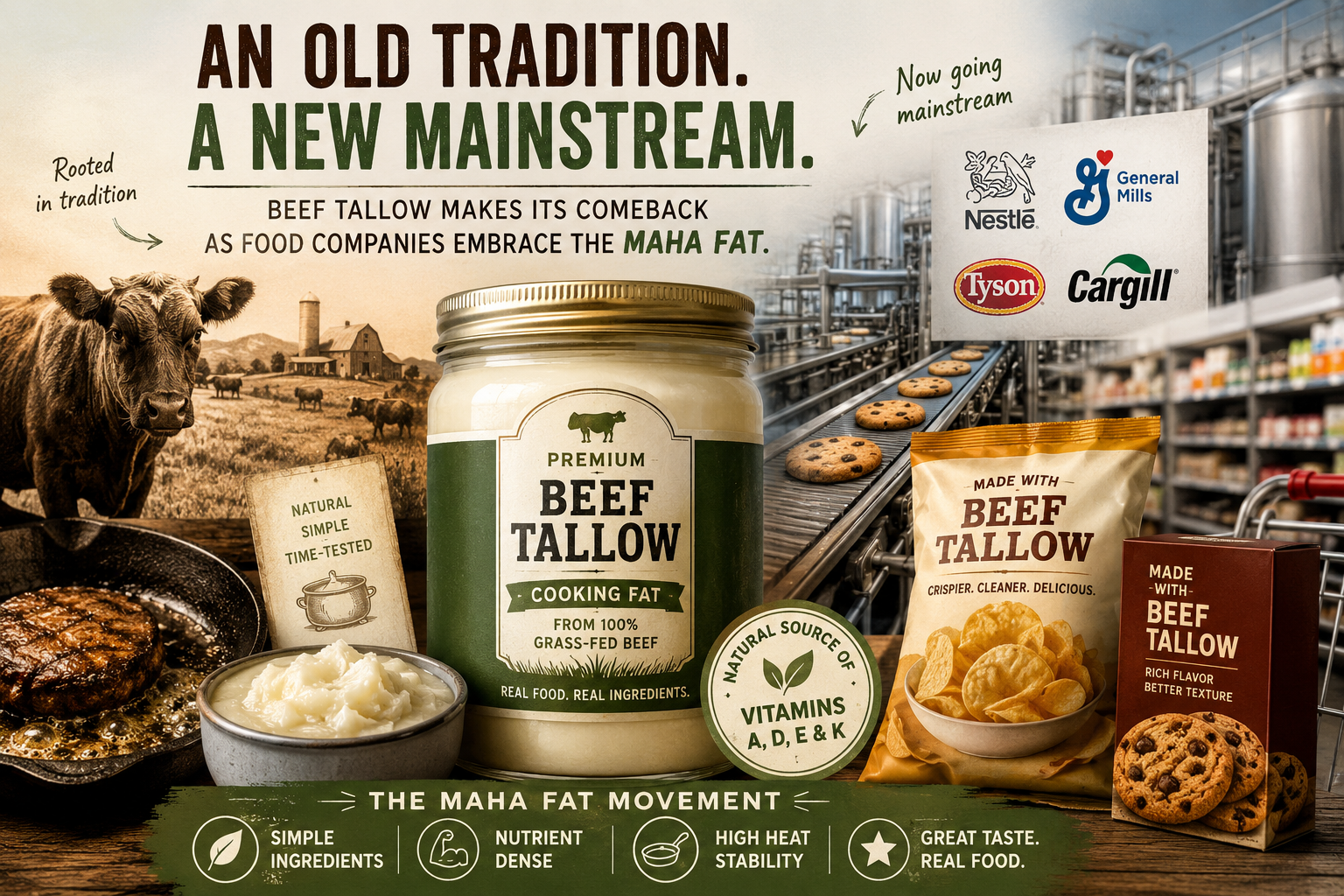
June 22, 2026 - Once a staple in grandmother's kitchen, beef tallow is experiencing a remarkable renaissance. This rendered animal fat, pushed aside for decades by vegetable oils, is sizzling its way back into the spotlight. Fueled by new federal dietary guidelines that champion its use and a growing consumer interest in traditional, less-processed foods, beef tallow is no longer a niche ingredient for the health-conscious elite.
Major food manufacturers, including snack giants like Utz Brands and Conagra Brands, are now incorporating beef tallow into their products, signaling a significant shift in the food industry . This move marks a potential turning point for the ingredient, transforming it from a trend among smaller, better-for-you brands into a mainstream staple.
The Numbers Tell a Sizzling Story
The surge in popularity is backed by impressive sales data. According to the data firm Spins, sales of food products containing beef tallow skyrocketed to $1.1 billion for the 52 weeks ending March 22, a staggering 275% increase from the same period three years ago. This explosive growth highlights a significant consumer pivot, largely influenced by the "Make America Healthy Again" (MAHA) movement.
The Tallow Trendsetters: Big Food Makes Its Move
While smaller brands initially pioneered tallow's comeback, corporate giants are now taking notice.
- Utz Brands has launched a new version of its Boulder Canyon Classic Sea Salt chips cooked in beef tallow. This is the company's second product to feature the fat, following its Grandma Utz Kettle-Style potato chips. CEO Howard Friedman noted a "significant interest" in tallow within natural and organic channels, giving the company confidence to invest in the trend .
- Conagra Brands, in a bold move for a major corporation, uses beef tallow to double-cook its Rebel Roots crispy fries. The brand prominently highlights the ingredient on its packaging, using it as a key differentiator in a crowded snack market.
From Guidelines to Grocery Shelves: The RFK Jr. Effect
The ingredient's popularity received a major boost in January when the FDA updated national dietary guidelines. The new guidelines spotlight beef tallow, along with butter and olive oil, as healthy fats to incorporate into one's diet . This endorsement came at the behest of Health and Human Services Secretary Robert F. Kennedy Jr., a vocal proponent of the ingredient who has promoted it over seed oils and has been known to demonstrate "cooking the MAHA way" by deep-frying a turkey in a vat of tallow .
A Niche Ingredient, or the New Normal?
Retailers are also taking note. Whole Foods Market has even named beef tallow its top food trend prediction for 2026, highlighting its appeal to consumers interested in ancestral ingredients and its alignment with the "nose-to-tail" philosophy of using more parts of the animal . This trend extends beyond retail, with restaurants experimenting with herb-infused and whipped tallow to elevate dishes like french fries and pastries.
The Saturated Fat Debate
Despite its surging popularity, the rise of beef tallow is not without controversy. Health advocates, including the American Heart Association (AHA), have expressed concerns due to the ingredient's high saturated fat content, which is linked to an increased risk of heart disease . In response to the new dietary guidelines, the AHA reiterated its recommendation to limit high-fat animal products.
A Steep Climb Ahead?
While the trend is gaining momentum, questions remain about long-term consumer acceptance. Data from Innova Market Insights shows that nearly 70% of consumers have not changed their use of seed oils. Of the small percentage that have, only 10% switched to beef tallow, with the majority choosing olive oil instead .
Erin Lash, a senior director of consumer equity research at Morningstar, suggests that tallow products may remain a niche category. She notes that the premium price and unfamiliarity of the ingredient could "turn off" the traditional mass-market shopper at major retailers like Walmart. However, in specialty and health food stores, beef tallow is already shining.
A Culinary Comeback
Beef tallow's resurgence is more than just a fad; it represents a confluence of nostalgia, changing dietary guidelines, and a consumer shift towards understanding what's in their food. Whether it will become a permanent fixture on grocery store shelves or a fleeting trend may depend on ongoing consumer education, further research into its health impacts, and whether the political winds continue to favor its use.
###