Book Review: "Flavor of Meat, Meat Products, and Seafoods" Second Edition by F. Shahidi
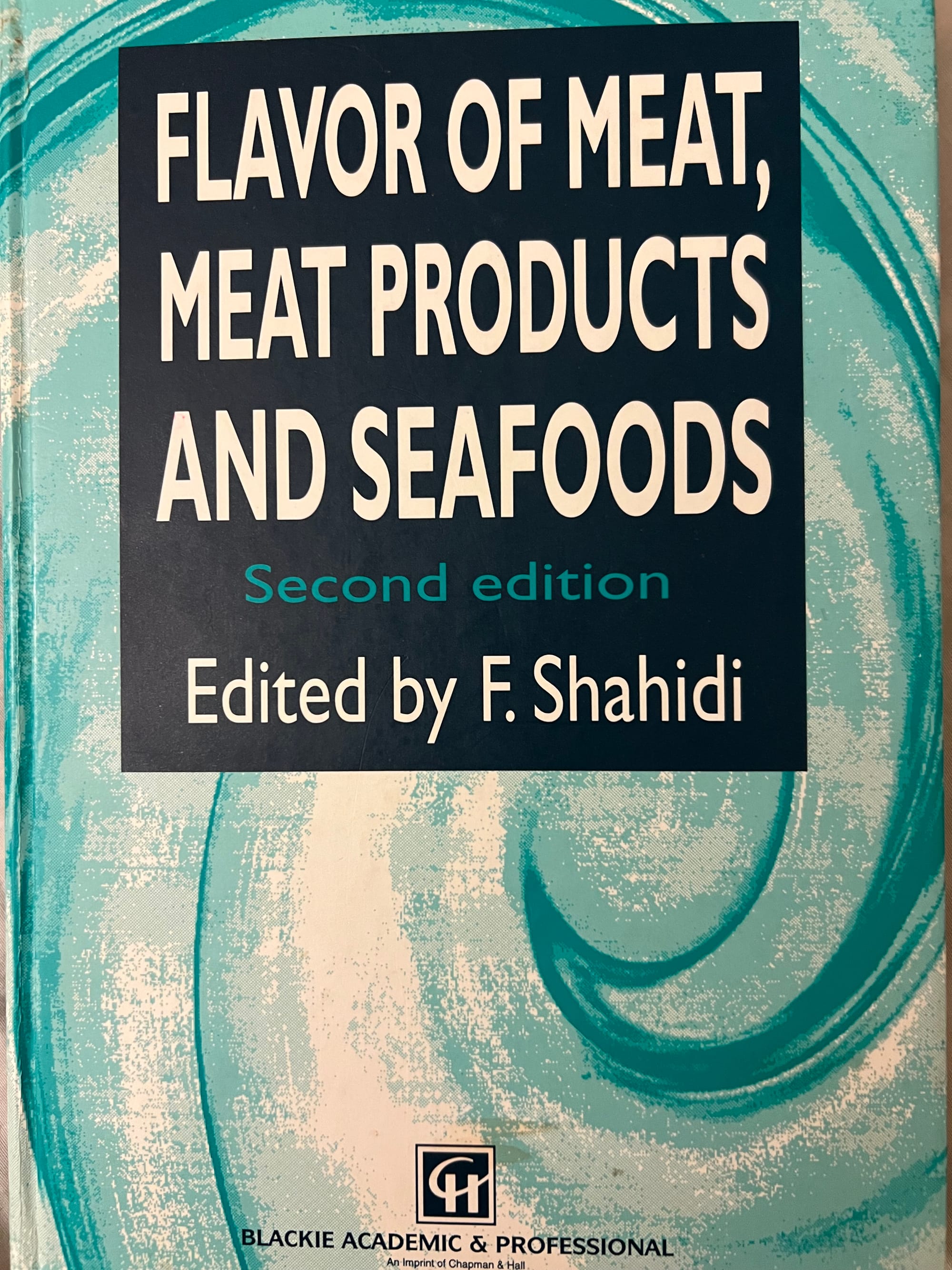
In the complex and multifaceted world of food science, few elements are as critical to consumer acceptance as flavor. For professionals in the meat and seafood industries, understanding the intricate chemistry behind flavor is not just an academic exercise—it is a commercial necessity. "Flavor of Meat, Meat Products, and Seafoods," Second Edition, edited by the renowned Fereidoon Shahidi, stands as a seminal text in this specialized field. Published in 1998 by Blackie Academic & Professional (an imprint of Springer) , this volume has served as a cornerstone reference for scientists, technologists, and quality professionals seeking to decode the complexities of muscle food flavor.
Building on the success of its predecessor, Flavor of Meat and Meat Products—which was lauded as "the best compilation of data on meat flavor yet published"—this second edition broadens its scope significantly to include the latest developments in both meat and fish flavor . This review provides a comprehensive overview of the book's content, its enduring value, and its target audience.
Book Details at a Glance
| Attribute | Details |
|---|---|
| Title | Flavor of Meat, Meat Products, and Seafoods |
| Editor | Fereidoon Shahidi, PhD |
| Edition | Second Edition |
| Publication Date | 1998 |
| Publishers | Blackie Academic & Professional / Springer |
| ISBN | 0751404845 / 9780751404845 |
| Page Count | xvi, 429 pages |
| Format | Hardcover |
Editorial Scope and Structure
Dr. Fereidoon Shahidi, a highly respected figure in food chemistry and bioactive compounds, has curated a collection of contributions that systematically dissects the topic of flavor. The book is logically structured into three distinct parts, allowing readers to navigate from foundational knowledge to specific applications and finally to analytical techniques .
Part I: Species Flavors
This section provides an in-depth exploration of the unique flavor profiles associated with different types of muscle foods. It covers a wide spectrum, including:
- Red Meats: Beef, pork, and sheep .
- Poultry: The specific flavor constituents of chicken and turkey.
- Seafood: A significant expansion from the first edition, this part delves into the flavors of both finfish and shellfish .
This section is crucial for understanding why the flavor of lamb differs so markedly from beef, or what gives a particular species of fish its characteristic taste and aroma.
Part II: The Role of Constituents and Processing on Flavor
Here, the book shifts focus to the fundamental building blocks of flavor and how they are transformed by human intervention. Key topics include:
- Meat Constituents: The role of fats, proteins, and carbohydrates in generating flavor precursors .
- Processing Effects: How cooking, curing, fermentation, and other processing methods initiate complex chemical reactions (like the Maillard reaction and lipid oxidation) that create volatile flavor compounds .
- Cured Meat Flavor: A dedicated look at the unique flavor profiles of products like ham, bacon, and sausages .
- Flavor Deterioration: An examination of off-flavors and the consequences of meat deterioration, such as rancidity .
Part III: Analytical Methodologies for Flavor Assessment
The final part of the book is dedicated to the practical aspects of measuring and evaluating flavor. It provides a comprehensive overview of the techniques used to assess flavor quality :
- Instrumental Analysis: Chemical methods, including gas chromatography-mass spectrometry (GC-MS), used to identify and quantify volatile flavor compounds.
- Sensory Evaluation: The principles and practices of using human taste panels to assess flavor attributes like taste, aroma, and texture.
- Correlating Data: Insights into how instrumental data can be correlated with sensory perceptions to provide a complete picture of flavor quality.
Key Strengths and Enduring Value
Even though nearly three decades have passed since its publication, the second edition of Flavor of Meat, Meat Products, and Seafoods retains significant value for several reasons.
- Foundational Knowledge: The book provides a deep dive into the fundamental chemistry of muscle food flavor. The basic principles of lipid oxidation, Maillard reactions, and the contribution of precursors to meat flavor are timeless. For new students or professionals entering the field, it offers an unparallelled education in the core science.
- Comprehensive Coverage: The book's scope is remarkably broad. By covering everything from basic constituents to processing and final analysis, it serves as a complete resource. The integration of both meat and seafood in one volume was a significant update at the time and remains a useful feature, highlighting both the similarities and differences between these two major food categories .
- Cited and Respected: As a standard reference, it is frequently cited in subsequent research papers and academic works. Its reputation, cemented by the praise for the first edition, means that it is a trusted source of information .
- Practical Application: The book is not purely theoretical. Its detailed sections on the effects of processing (like curing and cooking) and on analytical methodologies provide direct, practical value for industry professionals working in product development and quality control .
Target Audience
The book is "highly recommended" for a diverse group of professionals :
- Flavor Chemists and Flavor Applicationists: This is a book that every flavorist, particularly, savory flavorist, needs to read even though those who have not ever taken flavor chemistry nor organic chemistry may find it a bit challenging. This book mostly focuses on the real reaction flavor chemistry. It is not about compounding flavors.
- Food Scientists and Technologists: Those working in research and development within the meat, poultry, and seafood industries will find it an indispensable guide to creating meat flavors.
- Academics and Students: It serves as an excellent reference or source book or supplementary reading for advanced courses in food chemistry, meat science, and seafood technology.
Conclusion
"Flavor of Meat, Meat Products, and Seafoods," Second Edition by F. Shahidi, is more than just a book; it is a comprehensive repository of knowledge on the science of muscle food flavor or meat flavors. Its well-structured format, moving from specific species flavors to the effects of processing and finally to analytical methods, provides a logical and thorough learning pathway. While the industry has undoubtedly advanced since 1998, the foundational chemistry and principles laid out in this text remain as relevant as ever . For anyone serious about understanding what gives meat and seafood their characteristic and coveted flavors, this volume remains an essential and highly respected resource in the canon of food science literature .