Coca-Cola and Noodles & Company Introduce Fanta Vanilla Cherry Spritz: A Strategic Look at Flavor Pairing in Foodservice
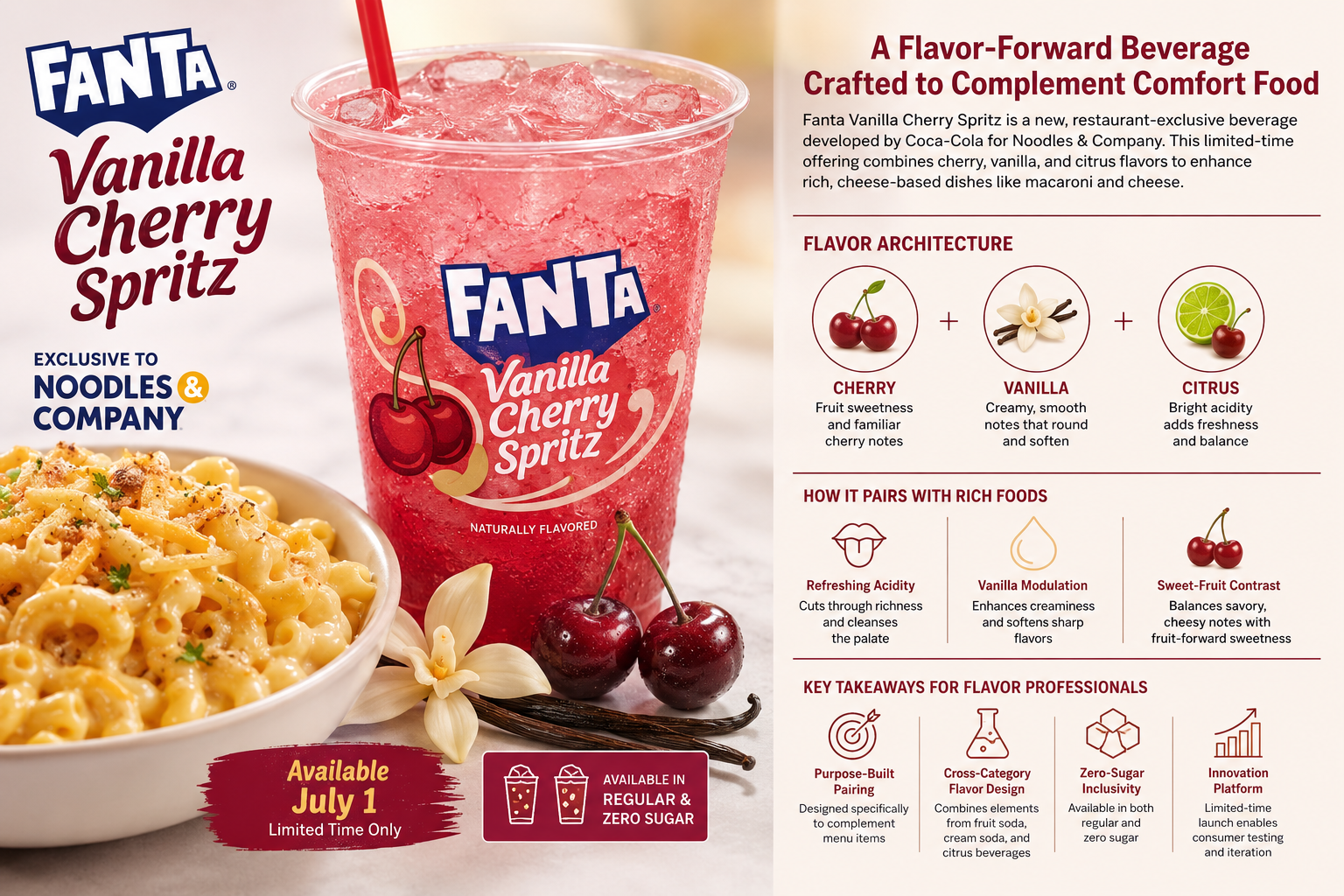
Fanta Vanilla Cherry Spritz Highlights the Growing Role of Menu-Specific Beverage Development
The foodservice industry continues to move beyond simply offering beverages alongside meals. Increasingly, restaurant-exclusive drinks are being formulated as intentional flavor companions that enhance the overall eating experience. Coca-Cola's new Fanta Vanilla Cherry Spritz, developed exclusively for Noodles & Company, represents a notable example of beverage engineering designed around food pairing rather than standalone refreshment.
Available beginning July 1 for a limited promotional period, the beverage combines cherry-forward fruit flavors with vanilla and citrus components to complement the chain's signature macaroni and cheese offerings. The product will be offered in both regular and zero-sugar formulations, expanding consumer accessibility while maintaining flavor consistency. (Allrecipes)
Flavor Architecture
According to product information released by the companies, the beverage incorporates three recognizable flavor systems:
- Cherry sweetness from Fanta Cherry
- Creamy vanilla notes inspired by Sprite Vanilla
- Bright citrus acidity from Minute Maid Cherry Limeade
From a flavor chemistry perspective, this combination creates multiple layers of sensory interaction:
Cherry esters provide familiar confectionery and stone-fruit characteristics that reinforce indulgent comfort foods.
Vanilla compounds soften sharp acidity while contributing creamy aromatic notes that naturally align with dairy-rich dishes.
Citrus acids introduce freshness and palate cleansing, helping reduce flavor fatigue when consuming rich, cheese-based meals.
Rather than competing with the entrée, the beverage appears designed to refresh the palate between bites while reinforcing the perception of creaminess.
Why Vanilla Works with Cheese-Based Foods
Although vanilla is traditionally associated with desserts, it has become an increasingly valuable modifier in savory product development.
Small amounts of vanilla can:
- round harsh acidic notes
- increase perceived creaminess
- soften bitterness
- extend sweetness perception without significantly increasing sugar intensity
These properties explain why vanilla frequently appears in premium cream sodas, dairy beverages, coffee drinks, and increasingly, restaurant-exclusive beverage concepts.
For macaroni and cheese, vanilla contributes aromatic smoothness that complements cheddar's dairy character without overwhelming the savory profile.
Cherry and Citrus Create Contrast
Successful food pairings often rely on contrast rather than similarity.
Rich cheese sauces are high in fat and lingering dairy flavors. Cherry introduces fruity sweetness that contrasts with savory notes, while lime-derived acidity refreshes the palate and restores flavor perception after each bite.
This sweet-acid balance helps prevent sensory saturation during consumption of rich comfort foods.
Implications for Flavor Professionals
The launch reflects several broader trends influencing beverage innovation:
Purpose-Built Pairing
Rather than creating a universally appealing soft drink, the formulation appears optimized for a specific menu category, demonstrating how beverages can function as part of the overall dining experience.
Limited-Time Flavor Innovation
Restaurant-exclusive beverages provide manufacturers with opportunities to evaluate consumer response before considering broader commercialization.
Cross-Category Flavor Design
The product combines attributes from multiple beverage styles—including fruit soda, cream soda, and citrus refresher—illustrating how familiar flavor systems can be recombined into differentiated concepts.
Zero-Sugar Flavor Replication
Offering both regular and zero-sugar versions underscores the industry's continued emphasis on maintaining sensory equivalence across sweetener systems, an area that remains a significant technical challenge in beverage formulation.
Market Perspective
Restaurant-exclusive beverages have become increasingly important marketing tools because they deliver experiences that cannot be replicated through retail purchases. For beverage manufacturers, these collaborations provide valuable opportunities to test new flavor combinations in controlled foodservice environments while strengthening brand partnerships.
For restaurant operators, proprietary drinks help differentiate menus, increase beverage attachment rates, and create additional reasons for repeat visits.
Looking Ahead
As foodservice operators seek greater menu differentiation, customized beverage development is likely to become more sophisticated. Future innovations may incorporate flavor modulation, aroma pairing, and even consumer sensory data to optimize beverage formulations for specific cuisines or signature menu items.
The Fanta Vanilla Cherry Spritz launch demonstrates how beverage development is evolving from simple refreshment toward integrated sensory design, where flavor, aroma, texture, and meal compatibility are engineered as a unified consumer experience. (Allrecipes)
###