Europe Food & Flavor Industry Business News — October 1–15, 2026
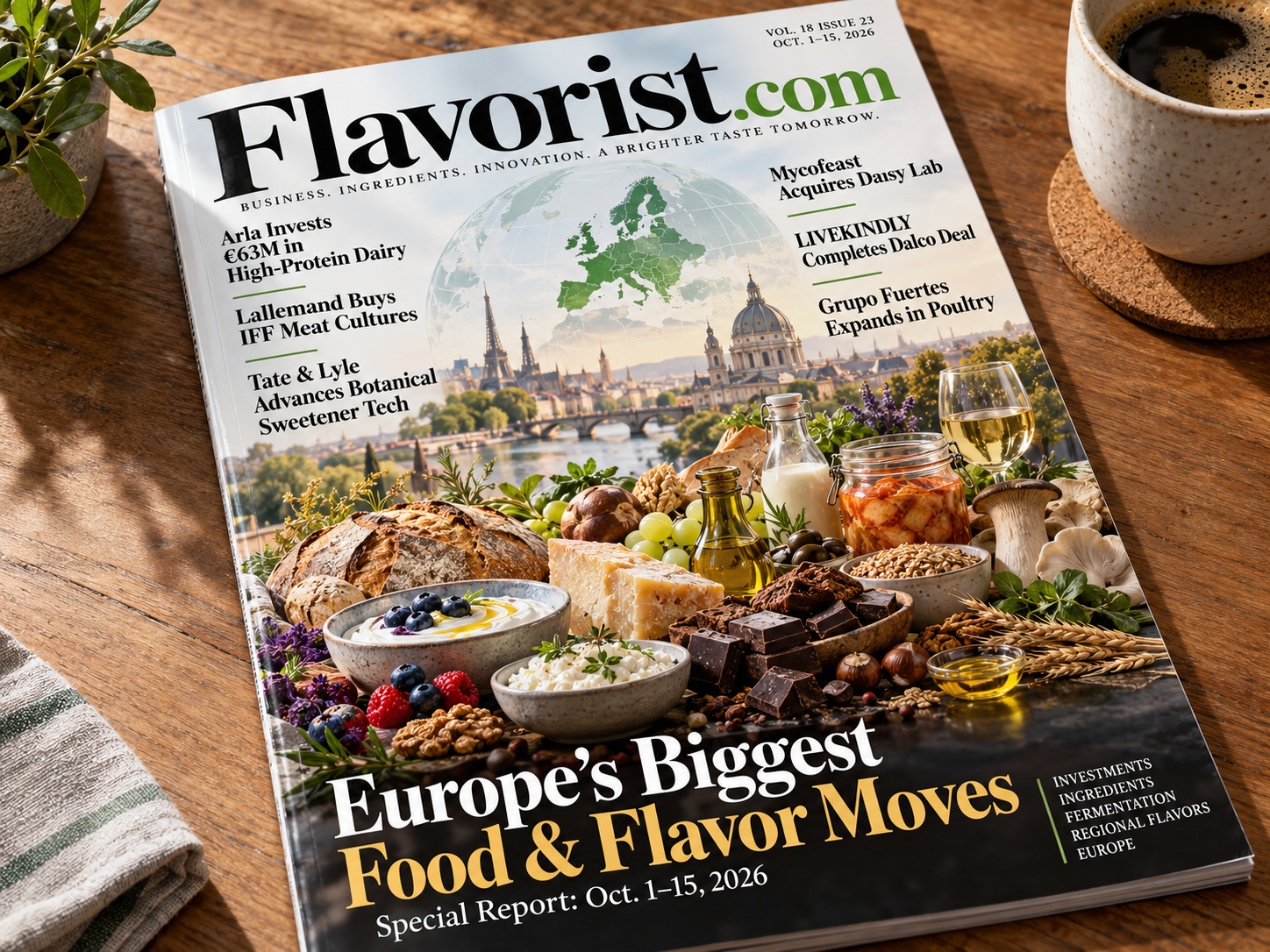
This edition covers commercially significant European food and flavor industry news published between October 1 and October 15, 2026, inclusive. It focuses on investments, acquisitions, manufacturing expansion, food ingredients, flavor innovation, functional nutrition, natural products, and emerging regional businesses. Laws and regulations are excluded.
Geographic coverage: United Kingdom, Germany, France, Belgium, Netherlands, Denmark, Sweden, Switzerland, Spain, Italy, Greece, Estonia, and other European markets.
Each story includes a summary, its significance for the industry, and its source. Where an October article covers a transaction announced earlier, the story carries a date note.
1. Acquisitions and consolidation
1. Lallemand acquires IFF's meat cultures portfolio
October 14, 2026 | France / Europe / International | Food ingredients / Acquisition
Lallemand announced the acquisition of International Flavors & Fragrances' meat cultures portfolio, strengthening its Specialty Cultures business and expanding its capabilities in microbial solutions for food manufacturing.
The acquired portfolio includes Texel starter and surface cultures, along with bioprotective cultures used in meat processing. These microorganisms can help manufacturers develop fermented meat products with consistent sensory characteristics and manufacturing performance.
Lallemand brings approximately 60 years of expertise in meat cultures, including microbial production, application development, and customer technical support.
The company expects the acquisition to broaden its offering and create additional opportunities for innovation and customer collaboration. Financial terms were not disclosed.
The deal also illustrates continued portfolio specialization among global ingredient suppliers, with businesses concentrating resources on technologies that complement their established capabilities.
Industry significance: One of the period's most directly relevant transactions for Flavorist.com readers. Microbial cultures influence fermented-meat flavor, aroma, texture, and product quality.
Source: FoodBev Media — October 14, 2026
2. Mycofeast acquires Daisy Lab to expand precision-fermented dairy proteins
October 15, 2026 | United Kingdom / Poland / New Zealand | Biotechnology / Acquisition
Oxford-based biotechnology company Mycofeast acquired New Zealand precision-fermentation startup Daisy Lab, expanding its capabilities in producing dairy-identical proteins without conventional dairy farming.
Daisy Lab, founded in 2021, has focused particularly on lactoferrin, a high-value milk protein used in specialized nutrition applications.
Mycofeast operates an international biotechnology platform that combines artificial intelligence, microbial strain engineering, high-throughput screening, and fermentation technologies. Its infrastructure includes research capabilities in California and a large industrial fermentation facility in Poland.
The acquisition will allow Daisy Lab's technical team to continue developing lactoferrin and other recombinant dairy proteins within a larger manufacturing and commercialization organization. Financial terms were not disclosed.
Industry significance: The transaction could accelerate commercial production of high-value dairy proteins. It is especially relevant to specialized nutrition, functional foods, fermentation technology, and manufacturers seeking alternative sources of sophisticated protein ingredients.
Sources: FoodBev Media — October 15, 2026; Vegconomist — October 15, 2026
3. LIVEKINDLY Collective completes acquisition of Dutch manufacturer Dalco Food
October 12, 2026 | Netherlands / United Kingdom | Plant-based manufacturing / Acquisition
LIVEKINDLY Collective completed its acquisition of Dutch plant-based food manufacturer Dalco Food from Hilton Food Group.
Dalco specializes in manufacturing meat-alternative products for private-label customers, foodservice operators, and business-to-business clients across European markets.
The transaction was originally agreed in July 2026, when Hilton Food Group disclosed a purchase price of approximately £5.4 million. Completion was reported on October 12.
LIVEKINDLY said it would retain Dalco's existing team and continue operating the business within its manufacturing network.
The acquisition gives LIVEKINDLY additional European production capabilities and strengthens its position as a supplier to retailers and foodservice companies, rather than relying exclusively on consumer-facing brands. For manufacturers developing plant-based foods, dedicated production capacity and contract manufacturing relationships are increasingly important to commercial scale.
Industry significance: A meaningful consolidation in European alternative-protein manufacturing, particularly relevant to plant-based product developers, ingredient suppliers, and private-label food companies.
Source: Vegconomist — October 12, 2026
4. Grupo Fuertes acquires Nutrave in Spanish poultry consolidation
October 12, 2026 | Spain | Poultry manufacturing / Acquisition
Spanish food group Grupo Fuertes acquired Nutrave, a poultry processor headquartered in Bargas, Toledo, strengthening its position in Spain's chicken market.
Nutrave operates an integrated business covering feed production, egg incubation, poultry processing, and distribution. It supplies fresh and processed poultry products to customers through its established production network.
The company's three founding families will retain minority ownership and participate in the transition, while Grupo Fuertes plans to preserve existing employment.
The acquisition follows Grupo Fuertes' earlier expansion into poultry through purchases of Tolvasa and Paasa in Albacete. Spanish poultry production has undergone increasing consolidation, with manufacturers seeking stronger control over supply chains and greater production efficiency.
Industry significance: The deal is important to European meat processors and ingredient suppliers. Increased industrial scale can create additional opportunities for processed poultry, seasonings, marinades, coatings, prepared meals, and value-added protein products.
Source: FoodBev Media — October 12, 2026
5. Greenforce consolidates plant-based egg technology through Neggst acquisition
October 1, 2026 coverage | Germany | Food technology / Acquisition
Munich-based Greenforce Future Food acquired Berlin food-technology company Neggst, adding the startup's plant-based egg alternatives and intellectual property to its portfolio.
Neggst, established in 2021, developed egg alternatives intended to reproduce the functional characteristics of conventional eggs, including separate yolk and white components. Its technology has potential applications in foodservice, bakery, and other prepared-food categories where the cooking behavior and sensory properties of eggs are important.
The acquisition also forms part of broader consolidation involving LIVEKINDLY Collective, which previously signed an agreement to acquire Greenforce. The transaction brings alternative egg technology into a larger commercial structure that may be better positioned to support manufacturing and distribution.
Industry significance: Egg replacement continues to attract technology development and industry consolidation. Manufacturers are seeking alternatives that deliver suitable emulsification, binding, texture, and flavor, particularly in commercial bakery and foodservice.
Date note: The October 1 article revisits an acquisition linked to a July transaction. It is an October business update, not a newly announced acquisition.
Source: Vegconomist — October 1, 2026
6. Parson's Nose acquires premium British online butcher Farmison & Co
October 2, 2026 | United Kingdom | Acquisition / Specialty meat
Farm Traders Limited, trading as Parson's Nose, acquired premium online butcher Farmison & Co from Vestey Holdings for an undisclosed amount.
The acquisition brings together businesses operating in the premium meat category, where product provenance, specialist sourcing, and customer trust are central to commercial positioning. Farmison & Co is known for supplying high-quality meat through online channels, while Parson's Nose operates in specialist retail and foodservice.
The transaction reflects continued consolidation among independent and premium food suppliers competing in a market affected by changing consumer spending, logistical costs, and online retail economics. For smaller food businesses, access to established distribution infrastructure and customer relationships can be particularly important when seeking profitable growth.
Industry significance: The deal illustrates how premium regional food businesses are consolidating to strengthen distribution and operational capabilities. It also reinforces the commercial importance of provenance, specialist food retail, and differentiated products within the British meat industry.
Source: Food Manufacture — October 2, 2026
2. Manufacturing investment and expansion
7. Arla Foods invests more than €63 million in high-protein dairy production
October 1, 2026 | Denmark / Germany / Sweden | Dairy manufacturing
Danish dairy cooperative Arla Foods announced plans to invest more than €63 million to expand production of skyr and cottage cheese, responding to strong European demand for high-protein foods.
The company plans to invest approximately €35 million in its Upahl facility in Germany to increase skyr manufacturing capacity and more than €28 million in its Falkenberg facility in Sweden to expand cottage cheese production. The projects are expected to increase output of each product by approximately 15%–20%.
Arla reported that skyr sales volumes in its main European markets have increased by roughly one-third over three years, while cottage cheese volumes grew approximately one-quarter.
The investments also reflect consumers' increasing interest in protein-rich breakfast foods, snacks, and convenient everyday nutrition.
Industry significance: A major opportunity for dairy culture suppliers, flavor manufacturers, stabilizer producers, and developers of protein-rich products. It shows how mainstream European dairy manufacturing is responding to functional nutrition demand.
Sources: Food Manufacture — October 1, 2026; The Wall Street Journal — Arla investment report
8. Geary's Bakeries secures eight-figure financing to expand Jason's Sourdough production
October 2, 2026 | United Kingdom | Bakery manufacturing / Investment
Geary's Bakeries, manufacturer of Jason's Sourdough, secured an eight-figure financing arrangement with HSBC UK to support further expansion of its production capabilities.
The company is a notable participant in Britain's premium bread market, where sourdough and longer-fermentation bakery products have gained popularity among consumers seeking distinctive flavor, texture, and artisan-style quality. Expanded production capacity will support the company's growth ambitions and its ability to serve major retailers.
Industrial sourdough manufacturing requires careful management of fermentation, dough handling, processing times, and consistency. Scaling production while preserving recognizable product characteristics is a significant operational challenge.
The financing illustrates continued investor and lender interest in bakery businesses capable of combining premium positioning with large-scale manufacturing.
Industry significance: The investment is relevant to commercial bakers, fermentation specialists, flour suppliers, bakery enzyme manufacturers, and flavor developers. It also shows how established regional bakery brands can grow through retail distribution and manufacturing modernization.
Source: Food Manufacture — October 2, 2026
9. Mash Direct prepares further automation investment following improved profitability
October 2, 2026 | Northern Ireland | Prepared vegetables / Manufacturing
Northern Irish vegetable processor and prepared-meal manufacturer Mash Direct reported that profits had increased to approximately £1.46 million, supporting further investment in manufacturing automation.
The company produces convenient vegetable-based products and prepared side dishes, serving consumers seeking familiar foods that require minimal preparation.
Automation offers opportunities to improve processing consistency, production efficiency, and operational costs in categories where raw-material handling and product quality must be carefully managed. For vegetable processors, manufacturing efficiency is especially important because agricultural ingredients can vary in size, moisture content, and other physical characteristics.
The investment direction also reflects continued demand for convenient vegetable products that bridge the gap between traditional fresh produce and fully prepared meals.
Industry significance: Mash Direct's expansion shows how regional European food manufacturers are investing in technology to improve profitability and competitiveness. It is relevant to vegetable ingredient suppliers, processing-equipment manufacturers, seasoning developers, and producers of value-added prepared foods.
Source: Food Manufacture — October 2, 2026
10. Avara Foods plans £10 million automation upgrade at Telford facility
October 6, 2026 | United Kingdom | Poultry processing / Manufacturing technology
British poultry producer Avara Foods announced plans to invest approximately £10 million in advanced technology and automation at its Telford manufacturing facility.
The investment is intended to strengthen production capabilities and improve efficiency in an industry that faces pressure from manufacturing costs, labor requirements, and fluctuating demand.
Automation can help poultry processors improve handling, consistency, production throughput, and operational flexibility. It can also support more efficient packaging and processing operations.
The investment shows that established food manufacturers continue to modernize existing facilities rather than relying exclusively on new factories to increase capacity. Expanded and modernized processing capabilities can create opportunities in marinated poultry products, prepared proteins, seasonings, and value-added convenience foods.
Industry significance: A substantial manufacturing investment in Britain's protein sector, reflecting the continued importance of automation and efficiency for companies competing in mainstream poultry and prepared-food markets.
Source: Food Manufacture — October 6, 2026
11. Beacon Foods expands specialist ingredient production capabilities in Wales
October 12, 2026 | Wales, United Kingdom | Food ingredients / Manufacturing
Welsh ingredient manufacturer Beacon Foods invested approximately £60,000 in specialist equipment to strengthen its production and distribution capabilities.
The company serves the food manufacturing sector with ingredient preparations and solutions that help other businesses develop and manufacture prepared foods.
Although comparatively modest in financial size, the investment matters to the regional ingredient supply chain because smaller specialist manufacturers can provide flexibility and tailored product development that larger businesses may not always offer. Investment in processing capabilities can also improve delivery reliability and manufacturing performance for customers requiring consistent ingredients.
Industry significance: The investment shows ongoing modernization among smaller British ingredient manufacturers. It is relevant to prepared-food producers, savory ingredient suppliers, and businesses seeking flexible regional manufacturing partnerships.
Source: Food Manufacture — October 12, 2026
12. Aldi announces £900 million UK expansion targeting underserved communities
October 9, 2026 | United Kingdom / Germany | Grocery retail / Expansion
German discount retailer Aldi revealed plans for a £900 million expansion program in the United Kingdom during 2027. The investment will support additional stores and reinforce Aldi's strategy of reaching communities where its existing retail presence is limited.
The announcement comes as European grocery shoppers continue emphasizing affordability while expecting convenient access to fresh foods, packaged products, and private-label alternatives.
Discount retail chains increasingly influence supplier selection, packaging formats, product development, and private-label competition. New outlets could create additional distribution opportunities for established suppliers and smaller producers capable of meeting retailers' pricing and manufacturing requirements.
For flavor and ingredient professionals, the expansion reinforces the importance of developing products that deliver attractive sensory quality without excessive formulation costs.
Industry significance: The investment could reshape parts of Britain's grocery market and strengthen the role of competitively priced private-label products across multiple food and beverage categories.
Source: Food Manufacture — October 9, 2026
3. Fermentation, sweeteners and next-generation ingredients
13. Tate & Lyle and BioHarvest achieve milestone in plant-based sweetener development
October 12, 2026 | United Kingdom / International | Sweetener technology / Biotechnology
Tate & Lyle and BioHarvest Sciences reported a significant technical milestone in their collaboration to develop next-generation plant-based sweeteners. BioHarvest's Botanical Synthesis platform has demonstrated the ability to produce the targeted sweetening solution through plant-cell cultivation.
The companies began collaborating in 2024 and subsequently expanded their work to cover multiple sweetener molecules.
Unlike conventional agricultural extraction, plant-cell cultivation offers an alternative route to producing specialized botanical compounds, potentially improving supply consistency and reducing dependence on growing conditions. Further development and commercialization work remains necessary before the technology becomes a broadly available ingredient.
For food and beverage manufacturers, alternative sweetener technologies matter because reducing sugar without compromising taste remains a major formulation challenge.
Industry significance: A particularly important story for flavorists. Future sweetener technologies may help improve sugar reduction, sweetness quality, formulation flexibility, and the availability of specialized botanical ingredients.
Source: FoodBev Media — October 12, 2026
14. Belgium's Zymofix announces €6 million industrial fermentation facility
October 1, 2026 | Belgium | Fermentation technology / Manufacturing
Belgian biotechnology company Zymofix announced plans for its first industrial-scale manufacturing facility in Deinze, supported by approximately €6 million in financing and project funding. The expansion follows customer demand exceeding the capacity of the company's existing pilot operations.
Zymofix specializes in solid-state fermentation using its proprietary Zyft technology, a platform intended to make the cultivation of selected microorganisms more scalable and commercially reliable.
Its funding includes a Series A investment led by First Imagine!, with participation from existing investors VP Capital, HTGF, and The Nest Family Office.
The new facility represents an important step toward translating microbial research into consistent industrial production.
Industry significance: Fermentation technologies have growing applications across ingredients, agricultural biotechnology, and potentially food production. The investment is especially relevant to fermentation specialists and companies developing microorganism-derived products that require reliable scale-up and manufacturing economics.
Source: Vegconomist — October 1, 2026
15. Spain's MOA Foodtech partners with Espiga I+D to commercialize fermented egg replacer
October 8–9, 2026 | Spain | Bakery ingredients / Fermentation
Spanish fermentation company MOA Foodtech announced a partnership with Espiga I+D, a cereal research and pilot-production center near Pamplona, to evaluate its MOA Q5 egg-replacement ingredient in industrial bakery applications. The companies established the Bakery Innovation Alliance to support trials under real production conditions.
MOA Q5 is produced through biomass fermentation using starch-rich industrial byproducts. The ingredient is intended to replace eggs and provide emulsifying functionality in bakery and pastry formulations.
Participating manufacturers can access ingredient samples, pilot formulations, and technical assistance. Espiga's facilities allow formulations to be tested under conditions close to commercial bakery production, helping manufacturers evaluate performance before investing in large-scale changes.
Industry significance: The partnership addresses a major challenge in alternative ingredients: translating laboratory performance into industrial manufacturing. Egg-replacement technologies could give bakery producers more formulation flexibility, more predictable ingredient costs, and consistent finished-product texture.
Source: Vegconomist — October 8, 2026
16. MiAlgae secures £2.5 million to scale omega-3 ingredient production in Scotland
October 13, 2026 | Scotland, United Kingdom | Algae biotechnology / Ingredient manufacturing
Edinburgh-based biotechnology company MiAlgae secured a £2.5 million investment from the Scottish National Investment Bank to support commercialization of its microalgae-based omega-3 ingredients. The financing will help advance production at the company's manufacturing site in Grangemouth.
MiAlgae uses byproducts from whisky distillation as feedstock for growing microalgae, which are then processed into an omega-3-rich powder. The ingredient is intended primarily for aquaculture feed and pet nutrition.
The company expects its workforce to grow from approximately 60 employees to 156 by the end of 2028 as manufacturing capacity expands.
MiAlgae's technology offers an alternative to omega-3 oils from wild-caught fish, with potential benefits for ingredient sourcing and resource use.
Industry significance: A meaningful biotechnology investment showing how industrial byproducts can support the manufacture of higher-value nutritional ingredients.
Scope note: Current commercial applications are principally feed and pet nutrition, not human food.
Source: Vegconomist — October 13, 2026
4. Plant-based, functional and emerging brands
17. Whitworths invests £1.2 million in plant-based Nutty Kitchen Supermince
October 13, 2026 | United Kingdom | Natural foods / Plant-based innovation
British dried-fruit, nut, and snack manufacturer Whitworths announced a £1.2 million investment in its Nutty Kitchen Supermince range as it prepares for expanded Tesco distribution.
The range provides a plant-based alternative to conventional minced meat and is positioned around recognizable ingredients and relatively simple processing. It represents a strategic diversification for a company traditionally associated with dried fruits, nuts, and home-baking ingredients.
Whitworths is entering a segment where consumers increasingly compare meat alternatives on nutrition, ingredient familiarity, convenience, and price. The Tesco expansion gives the products access to a larger national customer base and a chance to test their appeal beyond niche plant-based shoppers.
Industry significance: The investment points to a continued market for plant-based foods built on recognizable ingredients rather than heavily engineered meat analogues. It is relevant to natural ingredient suppliers, texture specialists, and developers of convenient savory products.
Source: Food Manufacture — October 13, 2026
18. ACCRO launches high-protein plant-based foods in major French supermarkets
October 9, 2026 | France | Functional nutrition / Plant-based foods
French plant-based brand ACCRO launched Protéine+, a new range of protein-rich products sold through Carrefour, E.Leclerc, and Auchan. The range includes strips and slices made from pea and wheat proteins grown in France. The products entered stores October 8.
The 180-gram strips contain approximately 28 grams of protein per 100 grams, about 50 grams per package. The sliced product contains approximately 30 grams of protein per 100 grams.
ACCRO is targeting consumers with specific protein goals, including physically active people, vegetarians, and flexitarians. The product strategy emphasizes recognizable agricultural ingredients, nutritional value, and convenient use in sandwiches, salads, and other everyday meals.
At €3.99 per package, the range also reflects efforts to bring functional plant-based products into mainstream retail.
Industry significance: The launch shows European alternative-protein brands shifting toward protein-focused nutrition, simplified ingredients, and practical eating occasions.
Source: Vegconomist — October 9, 2026
19. Oato expands fresh chocolate oat drink into 510 supermarkets
October 12, 2026 | United Kingdom | Plant-based beverages / Retail expansion
Lancashire-based oat beverage producer Oato announced a nationwide supermarket expansion for its chocolate-flavored oat drink. The product is being introduced in 285 Tesco stores and 225 Waitrose stores from October 14, reaching a combined 510 locations.
Oato Chocolate is sold in one-liter bottles with a recommended retail price of £2.20. Unlike many ambient plant-based beverages, it is sold fresh and refrigerated rather than ultra-high-temperature processed.
Oato previously used traditional milk-round delivery services to introduce and test new flavors, including chocolate, strawberry, coffee, and matcha-inspired products. This is the company's first supermarket listing for a flavored oat drink.
Industry significance: Oato shows how emerging plant-based beverage brands can use direct customer relationships to test flavor concepts before expanding through national retailers. The launch also highlights opportunities for refrigerated dairy alternatives and more indulgent plant-based beverage formulations.
Source: Vegconomist — October 12, 2026
20. One Planet Pizza enters frozen plant-based ready meals through Asda
October 1, 2026 | United Kingdom | Plant-based foods / Retail innovation
British plant-based food company One Planet Pizza announced its expansion into frozen ready meals, moving beyond the pizza category that established its business. Three vegan meals were scheduled to launch exclusively in 276 Asda stores from October 12: Tofu Tikka Masala with Basmati Rice, Mac & Cheeze, and Veg & Lentil Ragù Lasagne.
The products pair familiar prepared-meal formats with plant-based ingredients, favoring recognizable dishes over direct imitation of individual meat products.
The Norfolk-based company, founded in 2016, passed £1 million in annual retail sales earlier in 2026. It also plans to introduce selected pizzas through Iceland's Food Warehouse chain from January 2027.
Industry significance: The expansion shows emerging plant-based businesses diversifying into conventional meal occasions. It creates opportunities for savory flavor systems, dairy-free sauces, plant proteins, and frozen-food formulation technologies.
Source: Vegconomist — October 1, 2026
21. Estonia's SUNFLY prepares investment round to expand sunflower-based foods
October 15, 2026 | Estonia | Natural foods / Emerging brands
Tallinn-based SUNFLY announced preparations for an equity crowdfunding campaign to expand its range of sunflower-seed-based foods. The company produces sunflower seed spreads, snack products, and filled dates, and plans to add sunflower seed milk, protein bars, and further snack formats.
SUNFLY reported revenue growth from €116,000 in 2024 to €440,000 in 2025, with approximately €840,000 already recorded in 2026. The company says its products are sold in more than 1,200 stores across 12 countries, including Tesco, Carrefour, and Ocado.
Production takes place in a dedicated facility that processes only sunflower seeds, supporting the brand's positioning as an alternative to common nut-based spreads. The fundraising target and valuation had not yet been disclosed.
Industry significance: SUNFLY shows how smaller European natural-food companies can build differentiated products around familiar agricultural ingredients, allergen-conscious positioning, and regional manufacturing expertise.
Source: Vegconomist — October 15, 2026
5. Beverage, chocolate and confectionery flavor innovation
22. Emmi brings matcha and vanilla ready-to-drink beverages to the UK
October 8, 2026 | Switzerland / United Kingdom | Dairy beverages / Flavor innovation
Swiss dairy company Emmi expanded its Caffè Latte range in the United Kingdom with a ready-to-drink matcha beverage and a new vanilla latte.
The matcha variety combines green tea with fresh Swiss milk and is positioned around the popularity of café-inspired drinks. The lactose-free product contains no artificial flavors or sweeteners.
A 230-milliliter matcha format launched at Tesco at a recommended price of £2.50, with a larger 370-milliliter version scheduled for October 12. The products follow the brand's zero-sugar and high-protein varieties, part of a broader innovation strategy across flavor and nutrition.
For beverage manufacturers, matcha presents formulation work involving earthy, vegetal, and slightly bitter notes that must be balanced against milk sweetness and texture.
Industry significance: The launch shows Asian tea flavors moving into the mainstream of European refrigerated dairy beverages.
Source: FoodBev Media — October 8, 2026
23. Red Bull expands European flavor strategy with Frosted Raspberry
October 12, 2026 | United Kingdom / Austria | Energy drinks / Flavor innovation
Red Bull introduced Frosted Raspberry as its new Glacier Edition energy drink in the United Kingdom. The full-sugar beverage launched through Tesco and Booker on October 12, with wider distribution planned for early 2027.
The launch follows Red Bull's earlier seasonal Pistachio and Berries product, part of a strategy of distinctive limited-edition flavors to maintain consumer interest. Glacier Edition is available in multiple can sizes and multipacks for convenience retailers and supermarkets.
Red Bull said flavored energy drinks had outperformed unflavored variants over the preceding three years. Seasonal launches also give retailers merchandising opportunities and encourage trial purchases.
Industry significance: Flavor extensions remain an important growth tool in European energy drinks, creating opportunities for fruit flavor systems, seasonal concepts, and differentiated sensory profiles.
Source: FoodBev Media — October 12, 2026
24. Barry Callebaut's move beyond chocolate raises questions about its growth strategy
October 9, 2026 | Switzerland | Chocolate ingredients / Corporate strategy
Swiss chocolate and cocoa specialist Barry Callebaut was the focus of October business reporting on its strategy to expand beyond traditional chocolate production toward broader product solutions.
The strategy reflects pressure from changing consumer demand, cocoa-market volatility, and the need to offer customers more value through innovation. For a chocolate supplier, providing complete solutions can mean supporting manufacturers with more sophisticated formulation capabilities, ingredient expertise, and tailored product development.
Investor skepticism highlighted in the report suggests the commercial benefits of diversification remain uncertain. Barry Callebaut has to show that expanding its capabilities creates profitable growth rather than added organizational complexity.
Industry significance: As one of the world's most important chocolate ingredient suppliers, Barry Callebaut's strategic direction matters to European confectionery manufacturers and multinational customers. Its product-development priorities could influence cocoa-based ingredients, alternative formulations, and chocolate innovation.
Date note: October 9 strategic analysis, not a newly announced acquisition or capital investment.
Source: FoodNavigator — October 9, 2026
25. Mars emphasizes protein, bold flavors and affordable indulgence in confectionery strategy
October 14, 2026 | Europe / Global | Confectionery / Product innovation
Mars outlined commercial priorities built around three confectionery and snacking trends: functional nutrition, more adventurous flavors, and affordable indulgence. October coverage of the company highlighted how established confectionery makers are keeping consumer interest through differentiated products rather than relying solely on traditional chocolate and candy formulations.
Protein-oriented products are increasingly relevant as consumers look for snacks that combine indulgence with nutritional benefits. Bold flavors and distinctive sensory experiences offer ways to attract younger shoppers and stand out in competitive categories. At the same time, price sensitivity means new products must stay commercially accessible.
For flavor and ingredient professionals, these trends underline the need to balance taste, texture, nutritional function, and formulation cost.
Industry significance: Mars' priorities are a useful indicator of where major confectionery manufacturers may concentrate product development and supplier collaboration in the coming years.
Source: FoodNavigator — October 14, 2026
26. Mondelēz outlines emerging confectionery and snacking technologies
October 1, 2026 | Europe / Global | Snack innovation / Ingredients
Mondelēz International's SnackFutures innovation unit discussed the trends and technologies expected to shape future confectionery and snack development, including new consumer behaviors, emerging food technologies, and changing expectations of indulgent snacks.
For Mondelēz, staying relevant means balancing the appeal of established brands with products for new consumption occasions. Ingredient innovation is especially important when improving nutritional positioning without weakening the taste and texture that make products sell.
Industry significance: The discussion gives insight into the development priorities of a major European-market confectionery supplier and the openings that may emerge for flavor houses, ingredient technologists, and startup collaborators.
Date note: An industry strategy interview published October 1, not a standalone investment announcement.
Source: FoodNavigator — October 1, 2026
6. Regional markets and flavor trends
27. Greek food exports approach €10 billion as specialty products gain international demand
October 14, 2026 | Greece | Food exports / Regional ingredients
October business coverage examined the international success of Greek food and beverage exports, with the sector approaching €10 billion in value. Major categories include olive oil, feta cheese, yogurt, wine, and other products tied to Greece's agricultural heritage and culinary identity.
The export performance illustrates the commercial weight of geographic provenance and recognizable regional food traditions. International demand for authentic Mediterranean foods gives producers room to strengthen premium positioning, widen distribution, and introduce products inspired by traditional ingredients. Maintaining quality and regional identity matters most when entering markets with different consumer expectations.
For flavor professionals, Greek products offer inspiration across olive and herb notes, cultured dairy characteristics, citrus, Mediterranean seasonings, and savory prepared foods.
Industry significance: Greece's export growth shows the economic value of distinctive regional foods and creates commercial opportunities for specialty ingredient manufacturers, distributors, and companies developing Mediterranean-inspired products.
Source: FoodNavigator — October 14, 2026
28. European flavor forecasts highlight fermentation, global cuisine and spicy flavors
October 15, 2026 | Europe | Flavor trends / Research & development
FoodNavigator published a forward-looking analysis of the flavors expected to shape food and beverage innovation in 2027. The report emphasized global culinary influences and flavor combinations built on fermentation, carbonation, heat, and distinctive sensory experiences.
Fermented ingredients can contribute acidity, umami, and aromatic complexity, while spicy and smoky profiles offer differentiation in savory snacks, sauces, and prepared meals. Beverage manufacturers are also exploring more sophisticated taste combinations for consumers seeking novelty.
For flavor houses and R&D teams, the task is to turn emerging culinary influences into commercially viable formulations that remain accessible to local consumers.
Industry significance: Flavor forecasting helps anticipate ingredient demand and guide development pipelines. The article is particularly relevant to companies planning 2027 launches.
Source: FoodNavigator — October 15, 2026, "Fizz, ferment and fire: What's next in flavour"
7. Other developments
These stories fall within the publication window but have narrower significance or need a different editorial classification.
Date |
Country |
Development |
Editorial assessment |
Source |
October 15 |
United Kingdom |
FoodNavigator examines Saputo's previously announced sale of its UK dairy operations to Lactalis |
Important dairy consolidation, but the announcement predates October |
FoodNavigator |
October 14 |
Germany |
German Protein Alliance launches commercialization initiative |
Collaboration to help protein technologies progress into commercial value chains |
Vegconomist |
October 13 |
France |
Cyberattack disrupts supermarket refrigeration |
Food losses and operational disruption at more than 100 Coopérative U stores |
FoodBev Media |
October 12 |
Sweden |
Arla to close Swedish cheese packaging facility |
Dairy manufacturing restructuring, including changes to the Falbygdens cheese portfolio |
FoodBev Media |
October 9 |
United Kingdom |
British retailers and food brands face stronger private-label competition |
Commercially relevant market analysis |
FoodNavigator |
October 8 |
United Kingdom |
Princes backs Napolina with a six-figure marketing investment |
Relevant to Italian-style ambient foods and brand competition |
Food Manufacture |
October 7 |
United Kingdom |
Morrisons reportedly held earlier merger discussions with Sainsbury's |
Potential industry consolidation; no transaction confirmed |
Food Manufacture |
October 6 |
United Kingdom / International |
Hershey appoints UK-based international business president |
New leadership for international confectionery growth |
FoodBev Media |
October 5 |
United Kingdom |
Lidl GB reports £13 billion turnover and record market share |
Significant retail and private-label development |
Food Manufacture |
Key findings
The strongest European business themes of October 1–15, 2026, were acquisitions in cultures and fermentation, investment in high-protein dairy, progress in alternative ingredient technologies, manufacturing efficiency, and the growth of natural and specialty brands through major retailers.
- Ingredient suppliers are buying into microbes and fermentation. Lallemand's purchase of IFF's meat cultures and Mycofeast's acquisition of Daisy Lab both strengthen fermentation-based ingredient portfolios.
- Protein-rich products are attracting manufacturing investment. Arla's €63 million commitment is among the clearest examples of capacity expansion driven by functional nutrition demand, and ACCRO's Protéine+ range brings the same focus to plant-based retail.
- Fermentation and alternative ingredients are moving toward commercialization. Tate & Lyle, Zymofix, MOA Foodtech, and Greenforce show different routes to scale, from plant-cell sweeteners to solid-state fermentation and egg alternatives.
- Plant-based manufacturing is consolidating. LIVEKINDLY's completion of the Dalco Food deal, alongside the Greenforce–Neggst transaction, shifts capacity toward larger private-label and B2B suppliers.
- Regional manufacturing continues modernizing. Avara Foods, Geary's Bakeries, Beacon Foods, Mash Direct, and Grupo Fuertes are investing in capacity, automation, and supply-chain control.
- Retailers are shaping food innovation. Aldi's UK expansion and new supermarket listings for Oato, One Planet Pizza, and Whitworths show how much growth depends on retail access.
- Flavor variety and provenance remain commercially important. Red Bull's and Emmi's launches, Greece's specialty export performance, and the 2027 flavor forecasts all point to demand for distinctive sensory experiences.
Lead stories for this edition
Verified ingredient and manufacturing transactions lead, followed by major regional investments. Product launches, strategy interviews, and trend pieces (stories 22–28) work best as a separate flavor-and-trends section.
Priority |
Story |
No. |
Primary professional audience |
1 |
Lallemand acquires IFF's meat cultures portfolio |
1 |
Flavor, cultures, fermented meat |
2 |
Tate & Lyle and BioHarvest advance botanical sweetener technology |
13 |
Sweeteners, flavor modulation, sugar reduction |
3 |
Arla invests €63M in high-protein dairy |
7 |
Dairy, protein ingredients |
4 |
Mycofeast acquires Daisy Lab |
2 |
Precision fermentation, specialty nutrition |
5 |
Zymofix's €6M fermentation facility |
14 |
Biotechnology, ingredient manufacturing |
6 |
MOA Foodtech's industrial egg-replacement partnership |
15 |
Bakery, fermentation, ingredient R&D |
7 |
LIVEKINDLY completes Dalco Food acquisition |
3 |
Plant-based manufacturing, private label |
8 |
Grupo Fuertes acquires Nutrave |
4 |
Meat processing, seasonings and marinades |
9 |
Whitworths' £1.2M plant-based investment |
17 |
Natural foods, alternative proteins |
10 |
Geary's Bakeries' eight-figure expansion financing |
8 |
Bakery manufacturing |
11 |
Avara Foods' £10M automation investment |
10 |
Food processing |
12 |
Barry Callebaut's broader chocolate strategy |
24 |
Chocolate and confectionery suppliers |