FDA Moves to Revoke Outdated Color Additive Approvals, Building on Broader Initiative to Phase Out Petroleum-Based Dyes-Citrus Red No. 2
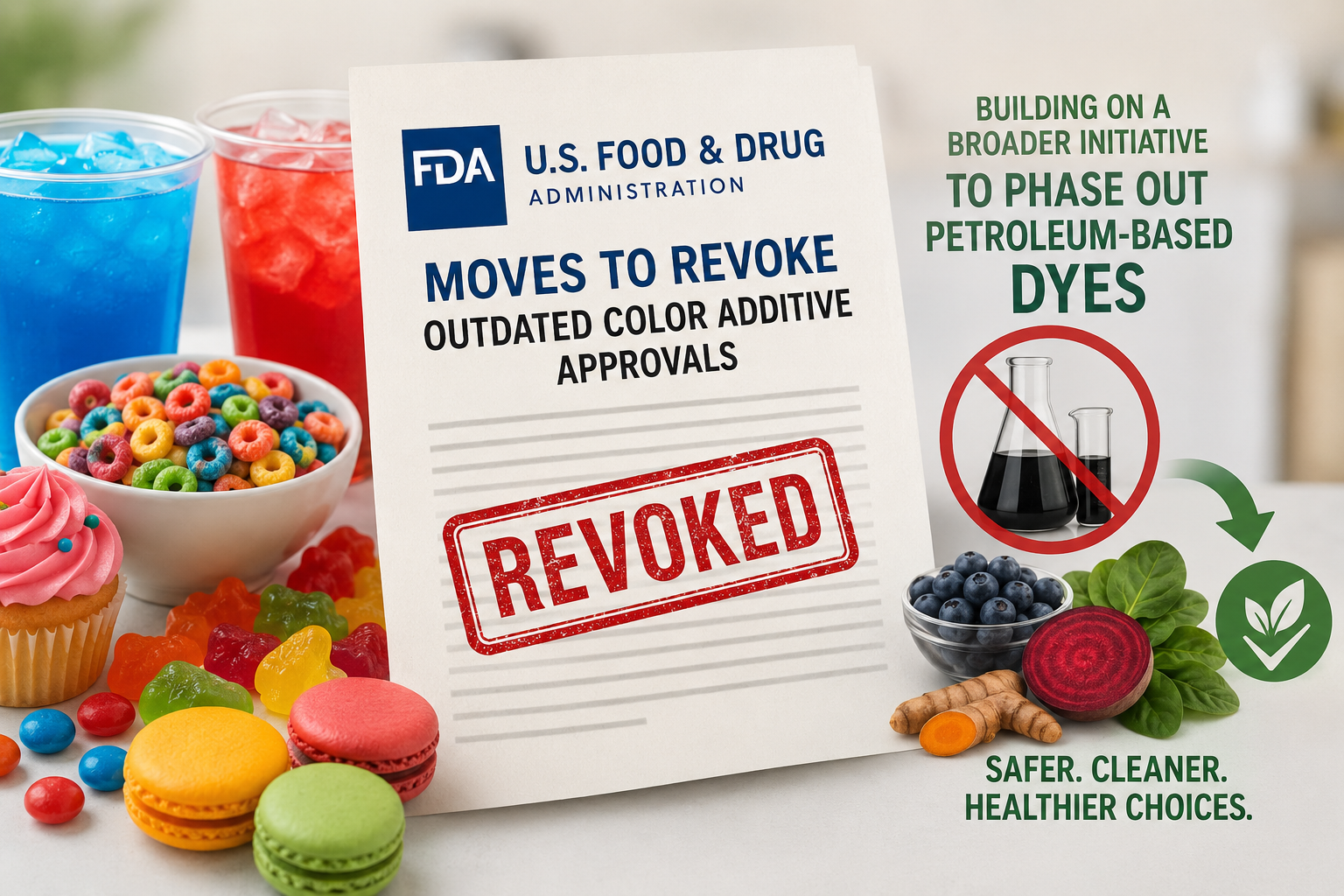
As part of a comprehensive government-wide effort to remove synthetic dyes from the U.S. food supply, the U.S. Food and Drug Administration today announced two new actions targeting petroleum-based color additives. The agency issued a final order revoking the authorization of Orange B for use in food and proposed revoking the approval for Citrus Red No. 2.
These steps build on a bold national initiative announced on April 22, 2025, by the U.S. Department of Health and Human Services and the FDA to phase out petroleum-based food dyes from the American food supply – a key milestone in the Trump Administration’s efforts to Make America Healthy Again (MAHA). As part of that initiative, the FDA is working closely with manufacturers, retailers, and trade associations to eliminate six commonly used certified color additives – FD&C Green No. 3, FD&C Red No. 40, FD&C Yellow No. 5, FD&C Yellow No. 6, FD&C Blue No. 1, and FD&C Blue No. 2 – by the end of 2027. The agency has also already revoked authorization for FD&C Red No. 3 earlier this year.
“The Trump Administration is taking bold steps to enhance the safety of our nation’s food supply,” said Robert F. Kennedy, Jr., Secretary of Health and Human Services. “By eliminating outdated approvals for petroleum-based color additives that are no longer in use, we are updating our food safety rules and advancing our mission to Make America Healthy Again.”
The FDA is proposing to withdraw the regulation permitting Citrus Red No. 2 in food because the agency has tentatively concluded that industry has abandoned its use. This additive had been approved since 1959 for coloring the skins of mature oranges.
“The FDA is dedicated to maintaining a science-based, modern regulatory framework that aligns with today’s manufacturing practices and market conditions,” said Acting FDA Commissioner Kyle Diamantas, J.D. “By removing unnecessary and obsolete authorizations under President Trump’s regulatory reform efforts, we are ensuring our rules remain effective, clear, and true to the agency’s public health goals.”
The FDA also finalized its revocation of Orange B’s authorization. After reviewing public comments on the proposed action, the agency found no new information that would alter its conclusion that industry had abandoned this use.
The FDA is now accepting public comments on the proposed revocation of Citrus Red No. 2 for 30 days. All comments must be submitted by August 24, 2026. Comments can be filed electronically through the Federal eRulemaking Portal at docket FDA-2026-N-6304, or sent by mail to:
Dockets Management Staff (HFA-305)
Food and Drug Administration
5630 Fishers Lane, Room 1061
Rockville, MD 20852
Following the comment period, the FDA will decide whether to finalize the revocation of Citrus Red No. 2.
These actions underscore the FDA’s ongoing commitment to reviewing and updating color additive regulations that are no longer relevant to current industry practices. They also mark important progress in the Administration’s broader effort to phase out petroleum-based color additives from the U.S. food supply. The FDA continues to monitor voluntary industry pledges to remove petroleum-based dyes and maintains a public Tracking Food Industry Pledges to Remove Petroleum-Based Food Dyes webpage, which summarizes commitments from manufacturers, retailers, and trade associations as they transition to alternative color sources and phase out synthetic dyes. Companies across the country are reformulating products with natural color alternatives and setting ambitious timelines to complete the transition, reflecting growing momentum to address concerns from parents and doctors about these additives, which have no nutritional benefit and are linked to health challenges facing children today.
###