Book Review: Fenaroli’s Handbook of Flavor Ingredients: The Gold Standard for Food Science Professionals
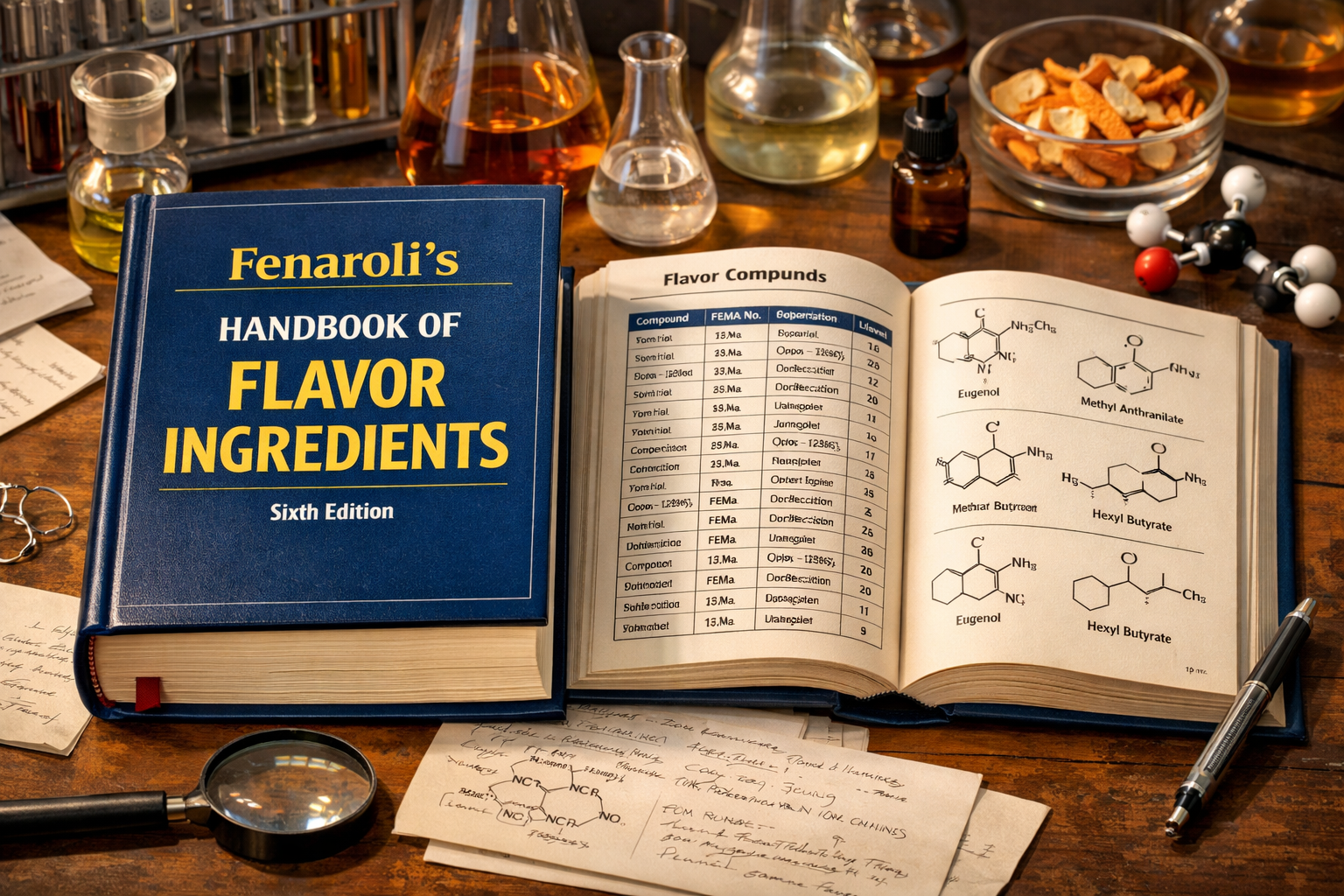
Fenaroli’s Handbook of Flavor Ingredients, Sixth Edition (Edited by George A. Burdock) is one of a dozen books the Society of Flavor Chemists recommends that flavorists read.
Rating: ⭐⭐⭐⭐⭐ (5/5 Stars)
Target Audience: Food Scientists, Flavor Chemists, Regulatory Affairs Specialists, Product Developers, Toxicologists, and Nutritionists.
Overview: Why This Book is a Non-Negotiable Reference
In the complex world of food chemistry and safety, few resources achieve "legendary" status. Fenaroli’s Handbook of Flavor Ingredients, now in its 6th Edition under the expert editorship of George A. Burdock, is one of those rare texts. Originally authored by Giovanni Fenaroli, this handbook has evolved from a simple listing of flavors into the definitive, science-based compendium for flavor ingredient regulation, safety, and application.
If you work in flavor formulation, product development, or regulatory compliance, this is not a book you read cover-to-cover; it is the tool you keep within arm's reach at all times.
What’s Inside? A Deep Dive into the Content
The 6th edition is meticulously organized into two main volumes, offering over 2,000 pages of peer-reviewed data. Unlike amateur online databases, every entry here is backed by regulatory bodies (FDA, FEMA, GRAS) and chemical analysis.
Key Sections Covered:
- Monographs (The Heart of the Book): Over 2,800 flavor ingredients are listed alphabetically. Each entry includes:
- Nomenclature: CAS number, FEMA number, CoE number, synonyms.
- Chemical & Physical Properties: Molecular formula, boiling point, specific gravity, refractive index.
- Organoleptic Characteristics: Detailed descriptions of taste and odor (e.g., "fruity, pineapple-like with a green top note").
- Regulatory Status: GRAS affirmation, FDA regulations, and international limits.
- Safety Data: Acute toxicity, irritation potential, and metabolism.
- Usage Levels: Average maximum concentrations in various food categories (beverages, frozen dairy, candy, baked goods, etc.).
- Regulatory & Safety Updates: The Burdock edition is famous for its rigorous update on the GRAS (Generally Recognized as Safe) list. It includes the FEMA (Flavor and Extract Manufacturers Association) GRAS assessments, which are critical for legal defense of formulations.
- Botanical & Natural Complex Substances: A significant addition in this edition is the detailed treatment of essential oils, extracts, and natural complexes (e.g., vanilla oleoresin, citrus oils), including potential allergens and adulterants.
The Pros: What Makes the Burdock Edition Superior?
1. Authoritative Data Integrity
The internet is full of conflicting MSDS sheets. This book provides a single source of truth. Dr. Burdock is a world-renowned toxicologist, and his editorial oversight ensures that the safety data is current and legally defensible.
2. The "Natural" Identifier
For clean-label product development, this book is indispensable. It clearly distinguishes between natural (derived from botanical/animal sources) and nature-identical/synthetic ingredients, helping developers comply with strict labeling laws (like EU or USDA Organic standards).
3. Practical Formulation Limits
It doesn't just tell you if an ingredient is safe; it tells you how much to use. The tables for average maximum use levels in specific food categories (e.g., "Alcoholic Beverages" vs. "Hard Candy") save formulators weeks of stability and legality testing.
4. Extensive Cross-Referencing
The indices allow you to search by Chemical Abstract Service (CAS) number, FEMA number, or common name. This is a lifesaver when you have a chemical structure but don't know the trade name.
The Cons: Considerations Before Buying
1. The Price Point
This is the biggest barrier. The handbook is expensive (typically $400–$600 USD). It is a luxury for a private individual but a mandatory purchase for corporate R&D labs, regulatory firms, and university libraries.
2. Limited "Natural" Extraction Methods
While it covers the chemistry of natural ingredients, it does not go deep into the process of how to extract them (e.g., supercritical CO2 vs. solvent extraction). That requires a separate engineering text.
3. Heavier than a Brick
At roughly 10+ pounds, this is not a commuter read. It is a desk reference that requires a sturdy bookshelf.
Who NEEDS This Book? (Buyer Persona)
- The Flavorist: You need synonyms to recreate a flavor lost to patent expiration.
- The Regulatory Specialist: You need to prove a substance is GRAS for a FDA filing.
- The QA/QC Manager: You need to verify if a batch of "Ethyl Butyrate" has the correct refractive index.
- The Culinary Scientist: You need to know if "Cinnamon Leaf Oil" is safe at 0.5% in a beverage base.
Final Verdict: Buy or Pass?
Verdict: Essential Buy (for Professionals).
If you are a student, buy the previous edition (5th) used to save money. If you are a working professional, the Burdock 6th Edition is non-negotiable. The updates regarding botanical safety, new GRAS substances (approved between 2005 and 2020), and corrected toxicology data make the 5th edition obsolete for serious regulatory work.
Bottom Line: Fenaroli's Handbook is to flavor chemistry what the Physicians' Desk Reference (PDR) is to medicine. You do not guess; you look it up. This book pays for itself the first time it prevents a costly regulatory violation or an allergic reaction recall.
Where to buy: CRC Press / Taylor & Francis Group (Publisher), Amazon, or specialized technical bookstores like Teseo.
Keywords
- Main Keyword: Fenaroli’s Handbook of Flavor Ingredients review
- Long-tail keywords: Flavor ingredient safety database, GRAS ingredient list 6th edition, Burdock flavor chemistry book, natural flavor compounds reference, food regulatory compliance handbook.
- Related searches: FEMA numbers list, CAS numbers for food flavors, Food toxicology reference text.
###