Gentian as a Natural Flavoring: A Comprehensive Technical Guide
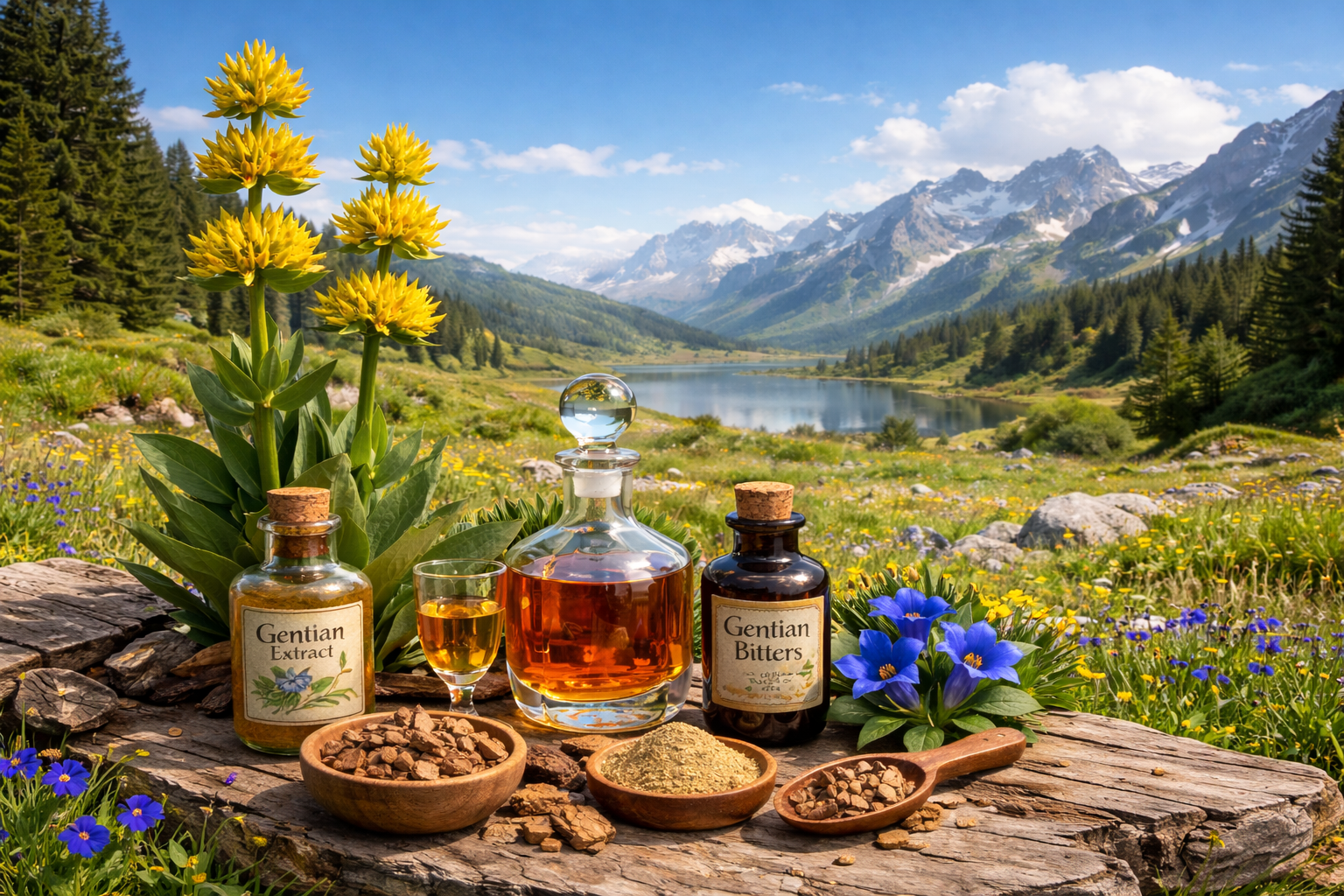
Here is a comprehensive technical guide for Gentian, structured in the same format as the previous guides. All key information for flavorists has been incorporated.
The Society of Flavor Chemists requires certified flavorists to be able to identify the plant part used, derivatives, organoleptic characteristics, and major chemical component(s) characterizing the aroma and flavor of the 80 natural flavorings listed on its syllabus for the qualification test and interview. Gentian is included among these essential items.
Introduction
Gentian is a genus of flowering plants in the Gentianaceae family, comprising over 400 species distributed across temperate regions worldwide. The roots of several species, particularly Gentiana lutea L. (Yellow Gentian), have been used for centuries in traditional medicine and as a flavoring agent, primarily for their intensely bitter properties. Gentian is the quintessential bittering agent—its bitterness is considered the standard against which other bitters are measured.
For flavorists, gentian is indispensable in bitter liqueurs, aperitifs, digestifs, and tonic waters. Its clean, persistent bitterness is distinct from other bittering agents like quinine (which has a more medicinal character) or cinchona (which has additional flavors). Gentian's bitterness comes from a complex mixture of secoiridoid glycosides, primarily gentiopicroside, which are among the most bitter natural compounds known. Beyond bitterness, gentian root also contributes subtle earthy, floral, and root-like notes that add depth to complex flavor systems.
Gentian is a classic component of many traditional European beverages, including Suze (French aperitif), Angostura bitters, and Campari (though Campari's bitterness is primarily from other sources). It is also used in some tonic waters, vermouths, and herbal liqueurs. The root is typically dried and extracted with water or alcohol to produce tinctures, extracts, and bitters.
Plant Parts Used
The root (rhizome and root system) is the plant part used for flavoring purposes. The following characteristics are notable:
- Source Plant: Primarily Gentiana lutea L. (Yellow Gentian), a perennial herb native to the mountains of central and southern Europe. Other species may also be used.
- Family: Gentianaceae.
- Plant Description: Large perennial herb with a thick, fleshy, yellow-brown rhizome and root system. It can grow up to 1–1.5 meters tall with whorled leaves and yellow flowers.
- Root Description: The rhizome and roots are harvested from plants that are at least 4–5 years old (often 7–10 years). The roots are thick, fleshy, yellowish-brown to dark brown, with a characteristic intensely bitter taste.
- Harvesting: Roots are harvested in the autumn from cultivated or wild plants. Due to over-harvesting, Gentiana lutea is protected in some regions, and cultivation has increased.
- Processing: The roots are cleaned, dried, and often aged to develop the characteristic flavor. Dried roots are used whole, ground, or extracted.
The active bitter principles are secoiridoid glycosides, primarily gentiopicroside, amarogentin, and gentisin. Amarogentin is one of the most bitter natural compounds known, detectable at concentrations as low as 1 part in 50 million.
Derivatives
Gentian is commercially available in several forms, with tinctures, extracts, and powders being the most important for flavorists.
Gentian Root (Dried)
Production Method: Harvesting, cleaning, and drying of gentian rhizomes and roots.
Description: Yellow-brown to dark brown, twisted, wrinkled roots with a characteristic earthy, root-like aroma and an intensely bitter taste.
Technical Notes: Dried roots are used whole or ground for tinctures, extracts, and spice blends.
Gentian Tincture
Production Method: Alcohol extraction of dried gentian root (typically 20–40% root in 40–70% ethanol).
Description: Yellow to amber to reddish-brown liquid with a characteristic intensely bitter, earthy, and slightly floral, root-like aroma.
Technical Notes: Tincture is the most common form for flavor applications. Typical concentration is 20–40% root in ethanol.
Gentian Extract (Liquid)
Production Method: Water, alcohol, or water-alcohol extraction of gentian root, often concentrated.
Description: Dark brown to reddish-brown viscous liquid with intense bitterness and earthy, root-like aroma.
Technical Notes: May be standardized to a specific bitterness value (e.g., mg of gentiopicroside per liter).
Gentian Powder (Ground Root)
Production Method: Milling of dried gentian root.
Description: Light brown to dark brown powder with an intensely bitter taste and earthy aroma.
Technical Notes: Used in some dry mixes and herbal preparations. Very bitter; use sparingly.
Gentian Oleoresin
Production Method: Solvent extraction of gentian root, followed by concentration.
Description: Dark brown viscous liquid containing the full spectrum of bitter principles and root components.
Organoleptic Characteristics
Aroma Profile
When evaluated, gentian root and its extracts reveal a subtle, earthy, and complex aromatic profile:
- Primary Note: Earthy, root-like, slightly floral
- Earthy: Woody, rooty, reminiscent of dry soil and forest floor
- Floral: Subtle, honey-like, slightly sweet
- Herbaceous: Slightly green, hay-like
- Bitter: The aroma is not particularly bitter; the bitterness is perceived primarily on the palate
- Warm: Slightly warming, balsamic undertone
The aroma is often described as "subtle, earthy, and root-like with a faint floral sweetness."
Taste Characteristics
Gentian is characterized by its intense, clean, and persistent bitterness:
- Bitter: Intensely bitter, clean, persistent, lingering
- Earthy: Subtle, root-like, grounding character
- Floral: Slight, sweet, honey-like undertones that emerge after the bitterness subsides
- Astringent: Slight drying sensation
- Warm: Slightly warming, balsamic
- Clean: Unlike quinine or other bittering agents, gentian's bitterness is perceived as "clean" without significant additional flavors
The Key to Gentian's Unique Flavor
Gentian's characteristic intense, clean bitterness comes from a complex mixture of secoiridoid glycosides, bitter compounds unique to the Gentianaceae family:
Primary Bitter Principles:
- Gentiopicroside: The most abundant bitter glycoside (typically 2–5% in dried root). Provides intense, clean bitterness.
- Amarogentin: A dimeric secoiridoid glycoside that is one of the most bitter natural compounds known. Present in very low concentrations (0.01–0.05%) but contributes significantly to the bitterness profile. Its bitterness threshold is approximately 1 part in 50 million.
- Gentisin: A xanthone derivative that contributes to the yellow color and adds to the bitter profile.
- Swertiamarin: Another secoiridoid glycoside that contributes to the bitter character.
Supporting Components:
- Gentianose: A trisaccharide that contributes slight sweetness
- Volatile Oils: Present in trace amounts; contribute to the earthy, floral aroma
- Phenolic Acids: Contribute to the astringency and complexity
The combination of gentiopicroside (abundant) and amarogentin (extremely potent) creates a bitterness that is both intense and clean, without the medicinal or additional flavor notes associated with other bittering agents like quinine.
Major Chemical Components
Key Bitter Principles (Gentian Root)
| Component | Typical Concentration | Organoleptic Contribution | CAS No. |
|---|---|---|---|
| Gentiopicroside | 2–5% (dried root) | Intense, clean, persistent bitterness | 20831-76-9 |
| Amarogentin | 0.01–0.05% | Extremely intense bitterness; low detection threshold | 21018-84-8 |
| Gentisin | 0.1–0.5% | Yellow color, contributes to bitterness | 490-52-8 |
| Swertiamarin | 0.1–0.5% | Contributes to bitter profile | 14215-86-2 |
| Gentianose | 1–3% | Slight sweetness | 605-48-1 |
Comparison: Gentian vs. Quinine vs. Cinchona
| Characteristic | Gentian | Quinine | Cinchona (whole bark) |
|---|---|---|---|
| Source | Gentiana lutea root | Cinchona tree bark | Cinchona tree bark |
| Primary Bitter Compounds | Gentiopicroside, amarogentin | Quinine | Quinine, quinidine, cinchonine |
| Bitterness Profile | Clean, persistent, earthy | Bitter, medicinal, astringent | Bitter, astringent, complex |
| Aroma Profile | Subtle, earthy, floral | Mild, woody, medicinal | Complex, woody, spicy |
| Additional Notes | No significant additional flavors | Distinct medicinal note | Complex, with additional flavors |
| Typical Use | Bitters, aperitifs, digestifs | Tonic water, antimalarial | Bitters, tonic water |
Applications in Flavoring
Regulatory Status
Gentian and its derivatives are approved as natural flavoring substances:
- United States: Gentian root is generally recognized as safe (GRAS) for use as a flavoring. Gentian extract is listed under 21 CFR §172.510 (FEMA No. 2506 for gentian root extract).
- European Union: Permitted for use in food flavorings under Regulation (EC) No 1334/2008.
- China: Approved food ingredient.
Typical Usage Levels (mg/kg)
Gentian is used at very low levels due to its intense bitterness. The following usage levels are based on FEMA GRAS determinations and industry standards:
| Application | Gentian Tincture (mg/kg) | Gentian Extract (mg/kg solids) |
|---|---|---|
| Non-alcoholic beverages | 20–200 | 5–50 |
| Alcoholic beverages | 50–500 | 10–100 |
| Baked goods | 10–100 | 2–20 |
| Hard candy | 10–100 | 2–20 |
| Frozen dairy | 5–50 | 1–10 |
| Gelatins and puddings | 5–50 | 1–10 |
| Soft candy | 10–100 | 2–20 |
| Bitters (as primary) | 1,000–10,000 | 200–2,000 |
| Aperitifs/digestifs | 500–5,000 | 100–500 |
Note: These ranges represent typical industry usage. Gentian is extremely bitter; begin at the lowest levels and titrate.
Usage & Dosage Best Practices
Flavorists should observe the following guidelines when working with gentian:
Start Extremely Low: Gentian is one of the most bitter natural substances. Begin at the lowest end of typical usage ranges and titrate upward. Overuse can result in an unpalatably bitter product.
Use as a Bittering Agent: Gentian is primarily used to add bitterness to beverages (bitters, aperitifs, tonic water) and to balance sweetness in certain confections. It can also add complexity to herbal flavors.
Pre-Dilution: Gentian extracts and tinctures are already diluted and easy to handle. For powdered root, pre-dissolve in alcohol or water before adding.
Flavor Synergies: Gentian pairs exceptionally well with:
- Citrus: Lemon, orange, grapefruit (balances sweetness and adds complexity)
- Herbs: Wormwood, angelica, chamomile, hyssop (in herbal liqueurs)
- Spices: Cinnamon, cardamom, ginger, clove (adds depth)
- Quinine: In tonic water (complementary bittering)
- Sweeteners: Sugar, honey, caramel (balances bitterness)
- Botanicals: Juniper, coriander, rosemary (in gin and vermouth)
Flavor Applications: Gentian serves as a primary bittering agent or modifier in:
- Bitters: Angostura-style bitters, orange bitters, aromatic bitters
- Aperitifs: Suze, Aveze, other gentian-based aperitifs
- Digestifs: Fernet, amaro, herbal liqueurs
- Tonic water: Often used in combination with quinine
- Vermouth: Adds complexity and bitterness
- Gin and spirits: Adds a bitter note to some botanical gin formulations
- Herbal teas: Used in bitter digestive teas
- Confectionery: Used in some bitter chocolate and citrus confections
Fragrance Applications
Gentian is not commonly used in fine fragrance due to its subtle aroma, but it may appear in:
- Herbal fragrances: As a supporting note
- Bitter colognes: Traditional formulations
Example Formula: Aromatic Bitters Concentrate
The following formula demonstrates the use of gentian as a primary bittering agent in an aromatic bitters blend.
Aromatic Bitters Flavor Concentrate (Alcohol-Based)
| Component | Percentage (%) | Function | Technical Note |
|---|---|---|---|
| Gentian tincture (30% root) | 30.0 | Primary bittering agent | Provides clean, persistent bitterness |
| Orange bitter oil | 10.0 | Citrus bitterness | Adds bitter orange note |
| Cardamom oil | 5.0 | Floral, spicy note | Adds complexity |
| Cinnamon oil (Ceylon) | 5.0 | Warm spice | Adds warmth |
| Clove oil | 2.0 | Spicy accent | Adds depth |
| Coriander oil | 3.0 | Citrusy, aromatic | Adds complexity |
| Angelica root extract | 5.0 | Earthy, herbal | Adds depth |
| Ethanol | 40.0 | Solvent | Food grade |
| Total | 100.0 |
Usage Instructions: Use at 0.1–1.0% in finished bitters. This is a concentrated base; for a complete bitters, additional sweeteners, water, and caramel color may be added.
Alternative: Tonic Water Bittering Agent
| Component | Percentage (%) | Function |
|---|---|---|
| Gentian extract (liquid) | 30.0 | Clean bitterness |
| Quinine (natural) | 30.0 | Medicinal bitterness |
| Citric acid | 10.0 | Acidity |
| Lemon oil | 10.0 | Citrus top note |
| Lime oil | 10.0 | Citrus freshness |
| Simple syrup | 10.0 | Sweetener |
| Total | 100.0 |
Usage Instructions: Use at 0.1–0.5% in finished tonic water. Adjust quinine and gentian levels to achieve desired bitterness.
Alternative: Gentian Tincture Preparation
| Component | Percentage (%) | Function |
|---|---|---|
| Dried gentian root (crushed) | 20.0 | Active ingredient |
| Ethanol (190 proof) | 80.0 | Solvent |
Method: Crush dried gentian root into small pieces. Combine with ethanol in a sealed container. Allow to macerate for 7–14 days, shaking daily. Filter. Store in amber glass bottles.
Usage Instructions: Use 0.05–0.5% in finished products for moderate bitterness; adjust based on desired bitterness intensity.
Shelf Stability & Storage
Understanding the stability of gentian ingredients is critical for maintaining flavor quality.
Dried Gentian Root
Storage Recommendation: Store in airtight containers in a cool, dry, dark place.
Stability Notes: Dried root maintains potency for 2–4 years when properly stored.
Gentian Tincture
Storage Recommendation: Store in airtight amber glass containers in a cool, dry place away from light.
Stability Notes: Tinctures are stable when stored properly. Gentiopicroside may slowly degrade over time. Shelf life is typically 2–3 years.
Gentian Extract
Storage Recommendation: Store in airtight containers in a cool, dry place away from light.
Stability Notes: Liquid extracts are stable for 12–24 months. Refrigeration after opening recommended.
Gentian Powder
Storage Recommendation: Store in airtight, opaque containers in a cool, dry place.
Stability Notes: Powdered root loses bitterness over time. Use within 12 months.
Stability in Finished Products
- Heat stability: Gentiopicroside is relatively heat-stable but may degrade at high temperatures.
- pH stability: Stable across typical food pH range.
- Light sensitivity: Protect from light to prevent degradation of bitter principles.
Safety Considerations
General Safety
Gentian and its derivatives are generally recognized as safe (GRAS) for use as flavorings at approved levels (FEMA 2506).
Important Considerations
- Gastrointestinal Effects: In large quantities, gentian can cause gastrointestinal irritation and vomiting. At typical flavoring levels, it is well-tolerated.
- Pregnancy: Safe in food amounts; concentrated extracts and tinctures should be used with caution during pregnancy.
- Allergies: May cause allergic reactions in sensitive individuals.
- Blood Pressure: Gentian may have mild hypotensive (blood pressure-lowering) effects.
- Medication Interactions: May interact with certain medications (e.g., antacids, acid-reducing medications) due to its effect on gastric acid secretion.
Quality Control & Sourcing
Flavorists should implement the following quality checks when sourcing gentian ingredients.
Essential Requirements for Certificates of Analysis (COA)
For Gentian Root:
- Botanical identity: Gentiana lutea L. (or other specified species)
- Origin: France, Spain, Italy, Balkans, etc.
- Gentiopicroside content: 2–5% (HPLC)
- Amarogentin content: Should be detectable (HPLC)
- Physical appearance: Yellow-brown to dark brown, wrinkled roots
For Gentian Tincture:
- Extract ratio: Specify (e.g., 1:5, 1:4)
- Alcohol content: Specify
- Gentiopicroside content: Specify concentration
Common Adulteration Risks
- Root: Substitution with other gentian species (different bitter profile); addition of other root materials; use of younger roots (lower bitterness)
- Extract: Dilution with carriers; substitution with synthetic bitterants
Sourcing Considerations
| Origin | Characteristics |
|---|---|
| France | Traditional origin; high-quality; cultivated |
| Spain | High-quality; wild and cultivated |
| Italy | Good quality; traditional use |
| Balkans | Wild-harvested; variable quality |
Traditional and Historical Applications
Traditional Uses
- European: Used for centuries as a digestive aid, appetite stimulant, and treatment for fevers. Classical herbalism recognized gentian as one of the most effective bitters.
- Aperitifs and Digestifs: Used in many traditional European beverages to stimulate appetite before meals and aid digestion after meals.
- Bitters: Essential component in many classic bitters formulations.
Historical Significance
Gentian has been used medicinally since ancient times. It was mentioned by Dioscorides and Pliny the Elder. The name "gentian" is said to derive from Gentius, a king of Illyria (ancient Balkan region) who is credited with discovering its medicinal properties.
Summary
Gentian (Gentiana lutea) is the quintessential bittering agent in the flavorist's palette. Its roots contain secoiridoid glycosides, primarily gentiopicroside (2–5%) and the extremely potent amarogentin, which together provide an intense, clean, and persistent bitterness that is the standard for bitters in the beverage industry.
Key characteristics:
- Primary bitter principles: Gentiopicroside (2–5%), amarogentin (0.01–0.05%)
- Aroma profile: Subtle, earthy, root-like, slightly floral
- Flavor profile: Intensely bitter, clean, persistent
- Typical usage: Tincture 10–10,000 mg/kg; extract 1–2,000 mg/kg
- Primary applications: Bitters, aperitifs, digestifs, tonic water, vermouth
Critical considerations for flavorists:
- Extreme bitterness: Use at very low levels; start low and titrate.
- Clean bitterness: Gentian provides bitterness without significant additional flavors, unlike quinine or other bittering agents.
- Flavor synergies: Pairs with citrus, herbs, and spices in complex beverage formulations.
- Stability: Relatively stable; store properly.
- Sourcing: French and Spanish gentian are traditionally considered highest quality.
- Safety: Generally safe at flavoring levels; avoid overuse.
References and Further Reading
The information presented in this guide is synthesized from:
- Regulatory documents from FDA, FEMA (No. 2506), and international food safety authorities.
- Published scientific literature on Gentiana lutea.
- Standard textbooks on natural flavoring materials and herbal bitters.
- Industry technical data from major suppliers.
- Traditional knowledge documented in public domain sources.
Key References:
- FEMA Flavor Ingredient Library: Gentian Root Extract (FEMA 2506)
- Journal of Ethnopharmacology: Gentian bitter principles
- Phytochemistry: Secoiridoid glycosides in Gentiana species
- TGSC Information System: Gentian Extract
Disclaimer: This article is for educational/training purposes only. When using gentian in commercial products, always verify current regulatory status in your jurisdiction, conduct appropriate safety assessments, and source ingredients from reputable suppliers who can provide documentation of botanical identity, origin, and quality. Gentian is extremely bitter; use at very low levels and adjust carefully. The formulas and usage levels provided are illustrative examples and may require adjustment based on specific product requirements and regulatory compliance.
###