Noteworthy: Fresh Notes in Flavor Chemistry: Compounds, Applications, Usage Levels, and Roles in the Flavor Pyramid
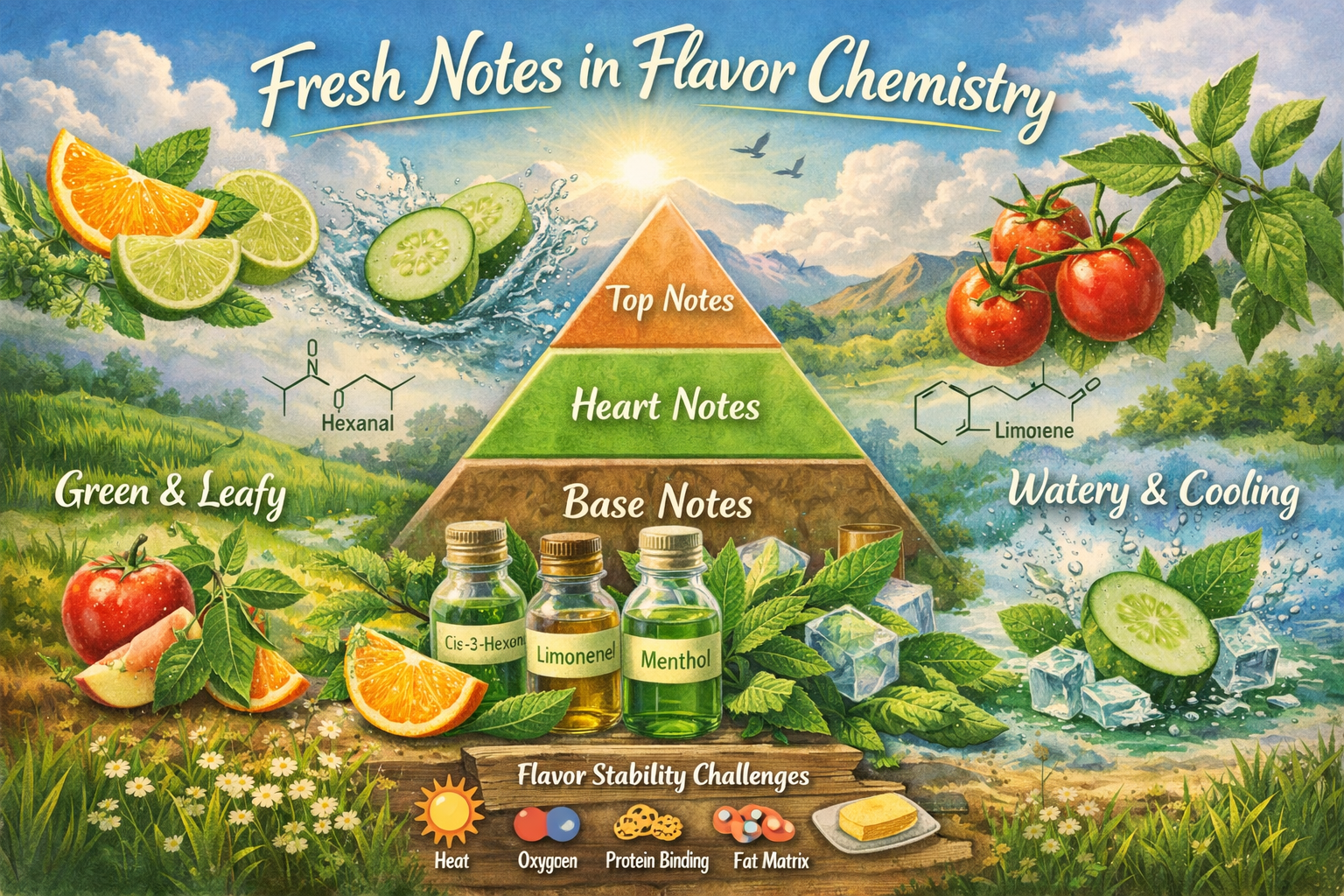
The Society of Flavor Chemists (SFC) requires certified flavorists to understand and be able to manipulate all 20 designated notes—including the fresh note—when formulating or modifying flavors. Provided below is some information about fresh notes that flavorist trainees may find useful when preparing for the Society's qualification exam or interview.
Basics about "fresh" notes
🧪 Key Compounds Defining the "Fresh" Note
The fresh or "green" note is largely defined by volatile compounds produced when plants are damaged. The most critical of these are:
- Cis-3-Hexenal (Leaf Aldehyde): Provides the sharp, "electric," and vibrant green note of freshly cut grass. It is highly unstable and degrades quickly.
- Cis-3-Hexenol (Leaf Alcohol): The industry standard for "green" notes. While more stable than its aldehyde counterpart, it can smell "synthetic" or like "solvent" if used in too high a concentration.
- Trans-2-Hexenal (Leaf Aldehyde): Often the degradation product of cis-3-hexenal. It contributes a green, grassy character but lacks the sharp "flash" of the fresh aldehyde.
These compounds are derived from the oxidative breakdown of unsaturated fatty acids, such as linolenic and linoleic acid, in plant tissues.