Pandan Flavor Surges in Search: Why Southeast Asia’s “Vanilla of the East” Is Becoming a Global Food Trend
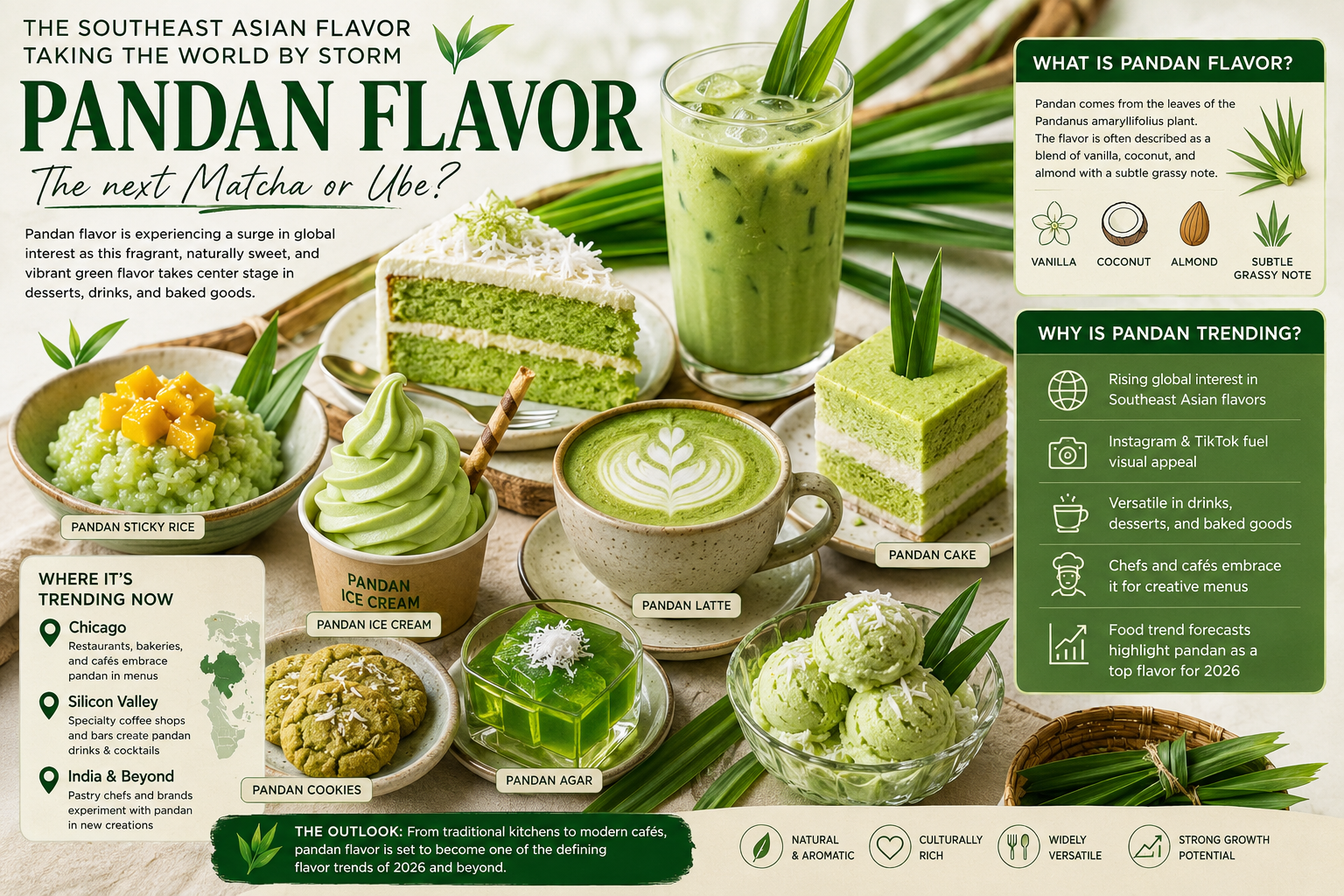
Search interest in pandan flavor has spiked sharply over the past few hours, reflecting a broader trend that has been building throughout 2025 and 2026. Food industry analysts, chefs, bakeries, coffee shops, and social media creators are increasingly highlighting pandan as one of the most promising emerging flavors in the global food and beverage market. Recent reports suggest that pandan is moving beyond its traditional Southeast Asian roots and entering mainstream Western food culture. (Chicago Sun-Times)
What Is Pandan Flavor?
Pandan comes from the leaves of the tropical plant Pandanus amaryllifolius, widely used across countries such as Indonesia, Malaysia, Thailand, Singapore, Vietnam, and the Philippines. The flavor is often described as a unique combination of vanilla, toasted coconut, almond, and subtle grassy notes. Many chefs refer to it as the “vanilla of Southeast Asia” because of its aromatic sweetness and versatility in both desserts and savory dishes. (Bandoeng)
Traditionally, pandan has been used in coconut rice, cakes, custards, jellies, and beverages. Today, it is appearing in lattes, cocktails, ice cream, cookies, pastries, and specialty coffee drinks. (Chicago Sun-Times)
Why Is Pandan Trending Right Now?
Several recent news reports indicate that pandan is following a trajectory similar to previous Asian flavor sensations such as matcha, black sesame, and ube. Food trend forecasters identified pandan as a flavor poised for major growth in 2026, citing its distinctive taste profile, vibrant green color, and strong social media appeal. (IFT)
One major driver is consumer demand for authentic global flavors. As interest in Southeast Asian cuisine grows, consumers are becoming more willing to experiment with ingredients that were once unfamiliar outside Asia. Industry experts have highlighted pandan as one of the next major crossover flavors entering mainstream foodservice and retail markets. (IFT)
Another factor is visual appeal. Like matcha's vibrant green color and ube's striking purple hue, pandan creates highly photogenic food and beverage products that perform well on Instagram, TikTok, and other social platforms. This combination of visual impact and unique flavor has helped accelerate consumer curiosity. (WBEZ)
Chicago Emerges as a Pandan Hotspot
One of the most significant recent news stories comes from Chicago, where restaurants, bakeries, bars, and cafes are rapidly incorporating pandan into menus. A feature published in late May highlighted how local chefs are using pandan in cookies, cakes, cocktails, ice cream, and coffee drinks across the city. Some culinary professionals described the ingredient as potentially becoming “the new ube.” (Chicago Sun-Times)
The trend is especially meaningful for chefs and bakers with Southeast Asian backgrounds, who view pandan not only as a fashionable ingredient but also as a way to share cultural traditions with a broader audience. The growing popularity of pandan allows these businesses to introduce customers to authentic flavors that have long been staples in their home countries. (WBEZ)
Silicon Valley and Specialty Coffee Fuel Growth
Another recent report highlighted pandan’s rapid adoption in Silicon Valley, where specialty cafes and modern cocktail bars are experimenting with pandan-infused beverages. Coffee shops are incorporating pandan syrups and creams into signature drinks, while mixologists are using the ingredient to create tropical and botanical cocktail profiles. (The Almanac)
Industry observers note that pandan's flexibility is one of its strongest advantages. Unlike some niche flavors that work only in desserts, pandan can complement coffee, tea, dairy products, baked goods, savory foods, and alcoholic beverages. This versatility makes it attractive for menu innovation and product development. (Nu Products Seasoning Company)
Food Industry Forecasts Point to Continued Growth
Flavor analysts and food trend reports released over the past year consistently identified pandan as an emerging flavor to watch. Several industry forecasts for 2026 specifically named pandan among the ingredients expected to gain significant traction in North America. (IFT)
Manufacturers are already responding. Reports indicate increasing interest in pandan extracts, flavorings, ready-to-drink beverages, bakery products, and dessert applications. The flavor's growing visibility across cafes, restaurants, and packaged foods suggests it may be moving from trend status toward mainstream adoption. (LinkedIn)
Global Expansion Beyond Southeast Asia
The pandan movement is not limited to the United States. Reports from India show pastry chefs and dessert makers increasingly experimenting with pandan in traditional sweets and contemporary baked goods. Food writers note that pandan offers a flavor profile that feels both exotic and familiar, making it easier for consumers to embrace. (The Times of India)
Meanwhile, food media outlets across Europe and North America continue publishing features about pandan's culinary potential, helping introduce the ingredient to wider audiences. (The Guardian)
Outlook: Could Pandan Become the Next Matcha?
The biggest question surrounding the current search surge is whether pandan can achieve the same level of commercial success as matcha or ube. While it remains early, the indicators are promising. Food trend reports, restaurant adoption, social media engagement, and growing consumer awareness all point toward sustained momentum. (IFT)
Unlike many short-lived flavor fads, pandan benefits from centuries of culinary history, broad application across food categories, and strong cultural authenticity. As more consumers seek novel yet meaningful food experiences, pandan appears well positioned to become one of the defining flavor trends of 2026. (Nu Products Seasoning Company)
###